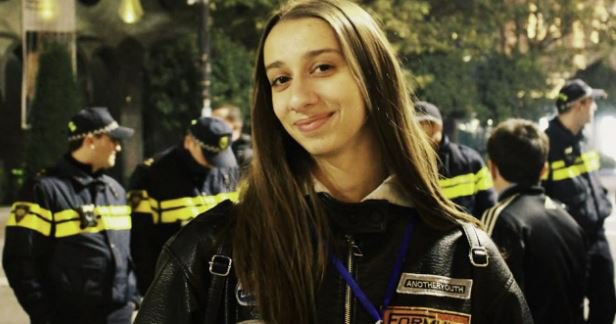
Journalist Vakho Sanaia faces re-arrest over statuses posted on social media

Formula TV presenter Vakho Sanaia is facing administrative detention for the second time over posts he published on social media. The case concerns two sarcastic posts and one video published on Facebook, all of which refer to Speaker of Parliament Shalva Papuashvili. One post was written a few minutes before his arrest (on July 22), and the other after his release from detention (on August 5).

The administrative proceedings against the journalist were initiated by the Interior Ministry’s “Hate Speech Monitoring Division.” This division is one of the government’s tools against freedom of expression, and the authorities use it proactively to punish people critical of them. The new division has been operating within the Interior Ministry since June 1. According to the official statement, its task is to monitor and proactively identify statements disseminated in the public space that degrade human dignity, are insulting, or contain hate speech, where these show signs of an administrative offense.

Vakho Sanaia has already served administrative detention once over posts about Shalva Papuashvili: on July 22, Judge Zviad Tsekvava sentenced him to 14 days. The division has fined or secured administrative detention for a number of civic activists over critical posts.

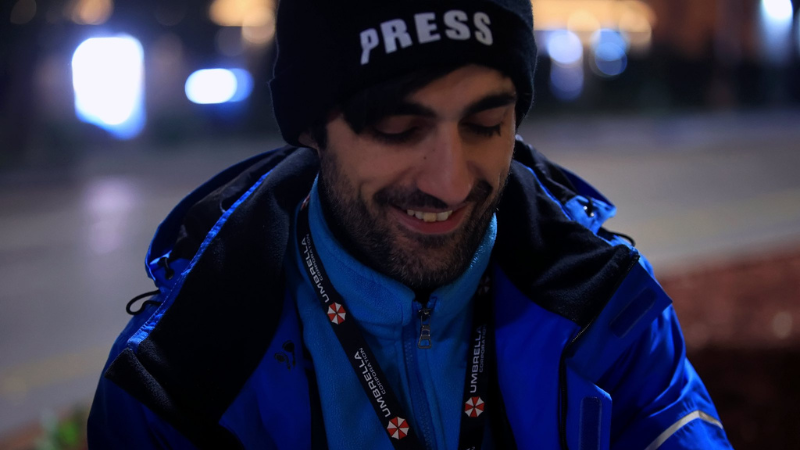
Following a repeated attack on journalist Koba Partenadze, he was placed under administrative arrest

On August 16, in Batumi’s Europe Square, Adjara Public Broadcaster journalist and meteorologist Koba Partenadze was attacked again. According to Partenadze, police officers and an emergency medical service team were present at the scene.

This is not the first instance of an attack and threats against Koba Partenadze. Previously, Partenadze shared a video on social media where an unknown man can be heard threatening to take him aside and stab him. Two individuals were arrested in connection with this case. Later, the Batumi City Court imposed a bail of 7,000 GEL each as a preventive measure on the two individuals accused in the case involving violence and the threat of stabbing carried out against Partenadze.

On August 17, reports emerged that Koba Partenadze himself had been arrested. According to his lawyer, Partenadze was placed under administrative arrest at the 2nd division of the Batumi City Police Department and is currently being held in the Zestaponi temporary detention center. The lawyer stated that they are clarifying the grounds and motive for the arrest at this stage.

According to the Ministry of Internal Affairs (MIA), Partenadze was arrested on the grounds of petty hooliganism and disobedience to a lawful police demand. The agency stated that on August 16, while being interviewed as a witness in a criminal case related to him, Partenadze verbally abused law enforcement officers, which led to the initiation of administrative proceedings. The MIA also stated that during the night hours of August 17, Partenadze was disturbing public order in Batumi with loud cursing and swearing, refused to obey the demands of police officers, and insulted them.

On August 18, Judge Aleksandre Goguadze found Koba Partenadze guilty of an administrative offense and fined him 2,000 GEL.

TV Host Vakho Sanaia Fined Over Social Media Posts

Tbilisi City Court Judge Tornike Kochkian has fined Vakho Sanaia, a journalist and TV host for the “Formula” television company, 6,000 GEL for opinions he expressed on a social network. The Ministry of Internal Affairs (MIA) accused the journalist of insulting state political officials. Social media posts published by Vakho Sanaia regarding the Speaker of the Parliament of Georgia, Shalva Papuashvili, and Member of Parliament, Lado Bozhadze, were ruled to be administrative offenses.

Sanaia had already been fined 4,000 GEL once before for an opinion expressed on a social network. Therefore, the judge made the decision in accordance with the article designated for a repeat offense.

Administrative disputes against citizens for opinions expressed in public spaces are initiated based on protocols from the newly established “Department for the Fight Against Hate Speech” within the MIA. This new department has been operational within the Ministry of Internal Affairs since June 1. The department’s task is to monitor and proactively detect statements in the public sphere that damage human dignity, are insulting, or contain hate speech, provided they show signs of an administrative offense.

According to Radio Free Europe/Radio Liberty, between its launch and July 2, this department identified 170 alleged offenses, 150 of which have already been submitted to the court. Out of these 150 cases, decisions have already been made on 33—resulting in 31 individuals being fined and two receiving verbal warnings. The majority of those fined are citizens and activists. Vakho Sanaia is the first journalist to be fined based on a protocol from this department.

New Division for Public Communication Monitoring to Be Established at the Ministry of Internal Affairs

According to Mamuka Mdinaradze, State Minister for Coordination Among Law Enforcement Agencies, a new division will be established within the Ministry of Internal Affairs. Its function will be to monitor hate speech, offensive campaigns, and aggressive communication in the public sphere.

According to Mdinaradze, the division will observe any type of public communication, including statements that the government assesses as containing hate speech, inciting strife, violating personal dignity, or other communications of a similar nature.

He further stated that the division will operate proactively, and its response will not rely solely on citizen complaints. The agency itself will conduct monitoring and legal assessments, forwarding materials to the court when necessary.

Mdinaradze claimed that the goal of the new mechanism is not to restrict freedom of expression. According to him, “no one will be subjected to an administrative penalty for criticism.” However, in cases where communication takes on an offensive or strife-inciting character, the court may even impose administrative imprisonment.

The initiative to create this new division is particularly noteworthy against the backdrop of recent trends in Georgia, where there have been numerous instances of individuals facing administrative liability for public expression, including social media posts. In response to Mdinaradze’s announcement, Tamar Oniani, Chairperson of the Georgian Young Lawyers’ Association, stated that the proposed mechanism “appears to be a form of censorship and has nothing to do with the balance of interests in a democratic society.”

Law Enforcement Accuses Netgazeti Journalist of “Blocking the Road” While Performing Professional Duties

The Georgian Ministry of Internal Affairs (MIA) is accusing Mariam Dzidziaria, a journalist for the online publication Netgazeti, of “blocking the road” on Rustaveli Avenue. The charges stem from the “Saturday March” rally held on January 31, 2026, where Dzidziaria was performing her professional duties. According to Netgazeti, while covering the protest, Mariam was wearing a press badge and a “PRESS” armband, and was carrying a camera.

On March 6, it was revealed that administrative proceedings on identical charges have been initiated against two other media representatives. The MIA is also accusing Tabula journalist Mariam Kuprava and photographer Giorgi Tarkhnishvili of “blocking the road” while fulfilling their professional duties.

The Georgian Charter of Journalistic Ethics stated that the MIA’s stance toward journalists covering protest rallies raises serious suspicions that the true objective of law enforcement is to intimidate them and force them to stop informing the public about protest sentiments. “Systemic pressure on journalists and the media violates the public’s right to be informed and damages the country’s interests,” the Charter’s statement reads.

Under the repressive legislative amendments passed by “Georgian Dream,” blocking a roadway has become a punishable offense. This is prohibited under Article 174-prime, Part 10 of the Administrative Offenses Code. Later, standing on the sidewalk was also integrated into this same article, leading to the prosecution of protesters as well.

Violating this article carries a penalty of up to 15 days of administrative detention (up to 20 days for organizers). Administrative detention does not apply to pregnant women, mothers with children under 12, minors, or persons with severe or significant disabilities. Instead, they face a fine of 5,000 GEL, or 15,000 GEL if they are an organizer. A repeat of the same “offense” leads to criminal liability.

Since October 26, 2024, more than 40 citations have been issued to journalists on charges of “blocking the road.”

Ministry of Internal Affairs Accuses Photographer Giorgi Tarkhnishvili of “Blocking the Road” While Performing Professional Duties

The Ministry of Internal Affairs (MIA) is accusing photographer Giorgi Tarkhnishvili of obstructing pedestrians by standing on the sidewalk while performing his professional duties. The case pertains to a protest on December 18, 2025, where the photographer was working on assignment.

The court hearing for this case was held on March 6, 2026. Judge Davit Makaradze of the Administrative Cases Panel of the Tbilisi City Court examined the evidence but deferred the announcement of the verdict.

“We presented documents proving he is a journalist, as well as the badges he was wearing. Even his hat is marked ‘PRESS,’ and he is holding a large camera. All of this proves he was fulfilling his professional duties, and the video presented by the MIA clearly shows him taking photos or videos,” Tarkhnishvili’s lawyer, Giorgi Tabatadze, stated in an interview with MediaChecker.

On March 6, it also became known that administrative proceedings on the same charges had been initiated against another media representative. The MIA is similarly accusing Tabula journalist Mariam Kuprava of “blocking the road” while performing her professional duties.

According to a statement from the Georgian Charter of Journalistic Ethics, the MIA’s stance toward journalists covering protests raises a well-founded suspicion that the true goal of law enforcement is to intimidate them and force them to stop informing the public about protest activities. “Systemic pressure on journalists and the media violates the public’s right to be informed and harms the country’s interests,” the Charter’s statement reads.

Under the repressive legislative amendments passed by “Georgian Dream,” blocking a roadway has become a punishable offense. This is prohibited under Article 174-prime, Part 10 of the Administrative Offenses Code. Later, standing on the sidewalk was integrated into this same article, leading to the prosecution of protesters as well.

Violating this article carries a penalty of up to 15 days of administrative detention (up to 20 days for organizers). Administrative detention does not apply to pregnant women, mothers with children under 12, minors, or persons with severe or significant disabilities. Instead, they are subject to a fine of 5,000 GEL, or 15,000 GEL if they are identified as an organizer. A repeat of the same “offense” leads to criminal liability.

Since October 26, 2024, approximately 40 citations have been issued to journalists on charges of “blocking the road.”

Ministry of Internal Affairs Accuses Tabula Journalist of “Blocking the Road” While Performing Professional Duties

The Georgian Ministry of Internal Affairs (MIA) has accused Mariam Kuprava, a journalist for the online publication Tabula, of “blocking the road” on Rustaveli Avenue. The accusation stems from a protest on February 7, 2026, while Kuprava was performing her journalistic duties covering the “Saturday March.” In an official report filed on February 9, the MIA claims that “Mariam Kuprava artificially blocked the motorable part of the roadway.”

The Georgian Charter of Journalistic Ethics issued a statement arguing that the Ministry’s stance toward journalists covering protests raises serious suspicions. They suggest the true objective of law enforcement is to intimidate and force journalists to stop informing the public about protest sentiments: “Systemic pressure on journalists and the media violates the public’s right to be informed and damages the country’s interests,” the Charter stated.

Under repressive legislative amendments passed by “Georgian Dream,” blocking a roadway has become a punishable offense under Article 174-prime, Part 10 of the Administrative Offenses Code. Later, standing on the sidewalk was also integrated into this same article, leading to the prosecution of protesters as well. Violation of this article carries a penalty of up to 15 days of administrative detention (up to 20 days for organizers). Administrative detention is not applied to pregnant women, mothers with children under 12, minors, or persons with severe or significant disabilities; instead, they face a fine of 5,000 GEL, or 15,000 GEL if identified as an organizer. Repeatedly committing the same “offense” leads to criminal liability.

Since October 26, 2024, approximately 40 citations have been issued to journalists on charges of blocking the road.

Update:

On April 2, Judge Tornike Kapanadze of the Administrative Cases Panel of the Tbilisi City Court dismissed the “road blocking” case against Mariam Kuprava. According to her lawyer, Nika Simonishvili, even the footage submitted by the Ministry of Internal Affairs clearly showed the Tabula journalist wearing press identification and performing her professional duties on-site.