
Georgian Dream Officials and Pro-Government Media Renew Their Efforts to Discredit Studio Monitori

An investigative report published by the independent outlet Studio Monitori has been met with discrediting statements from government-affiliated businessman Vano Chkhartishvili. These statements were subsequently amplified by pro-government media in a coordinated campaign.

The backlash centers on a September 25 investigation by Studio Monitori regarding an Estonian businessman who faced ongoing investigations and legal proceedings in Georgia. His properties in Shindisi had been under seizure until a significant portion of the land was purchased by Chkhartishvili, a businessman with close ties to the government. The investigation also highlights an ongoing construction project in Shindisi belonging to the family of Bidzina Ivanishvili.

Following the report’s publication, Chkhartishvili released a letter dismissing the investigation as a “commissioned hit piece” and an attempt to discredit him, claiming it was built on “conspiracies.”

“I hope objective media will take an interest in this issue, ask objective questions, and provide objective analysis, so the public is not left solely with the biased and disinformative content produced by Studio Monitori,” Chkhartishvili stated.

His statement was widely amplified by pro-government broadcasters—Imedi TV, Rustavi 2, and POSTV—which shared it a total of nine times. Specifically, the letter was published five times on Imedi TV’s Facebook page, twice by Rustavi 2, and twice by POSTV.

However, the coordinated attack against Studio Monitori did not stop at simply publishing the statement.

Imedi TV and POSTV dedicated lengthy broadcast segments to targeting the investigation, later circulating edited video excerpts across social media. Media monitoring reveals that Imedi TV, POSTV, and Rustavi 2 produced a total of 14 separate materials directed against the investigative outlet over the course of three days.

In their coverage, Imedi TV labeled Studio Monitori an “organization dependent on foreign grants.” The broadcasts also featured commentary from Prime Minister Irakli Kobakhidze, who accused Studio Monitori of acting as a “foreign agent.” Parliament Speaker Shalva Papuashvili further claimed that “Studio Monitori is part of a group that generally acts against Georgia.”

POSTV described Monitori’s investigative work by stating, “They are incapable of reporting on anything good; they prefer fulfilling dirty commissioned tasks,” while branding the investigation “yet another fake.”

This is not the first time the independent investigative team at Studio Monitori has been the target of a coordinated smear campaign orchestrated by high-ranking Georgian Dream officials and their affiliated media.
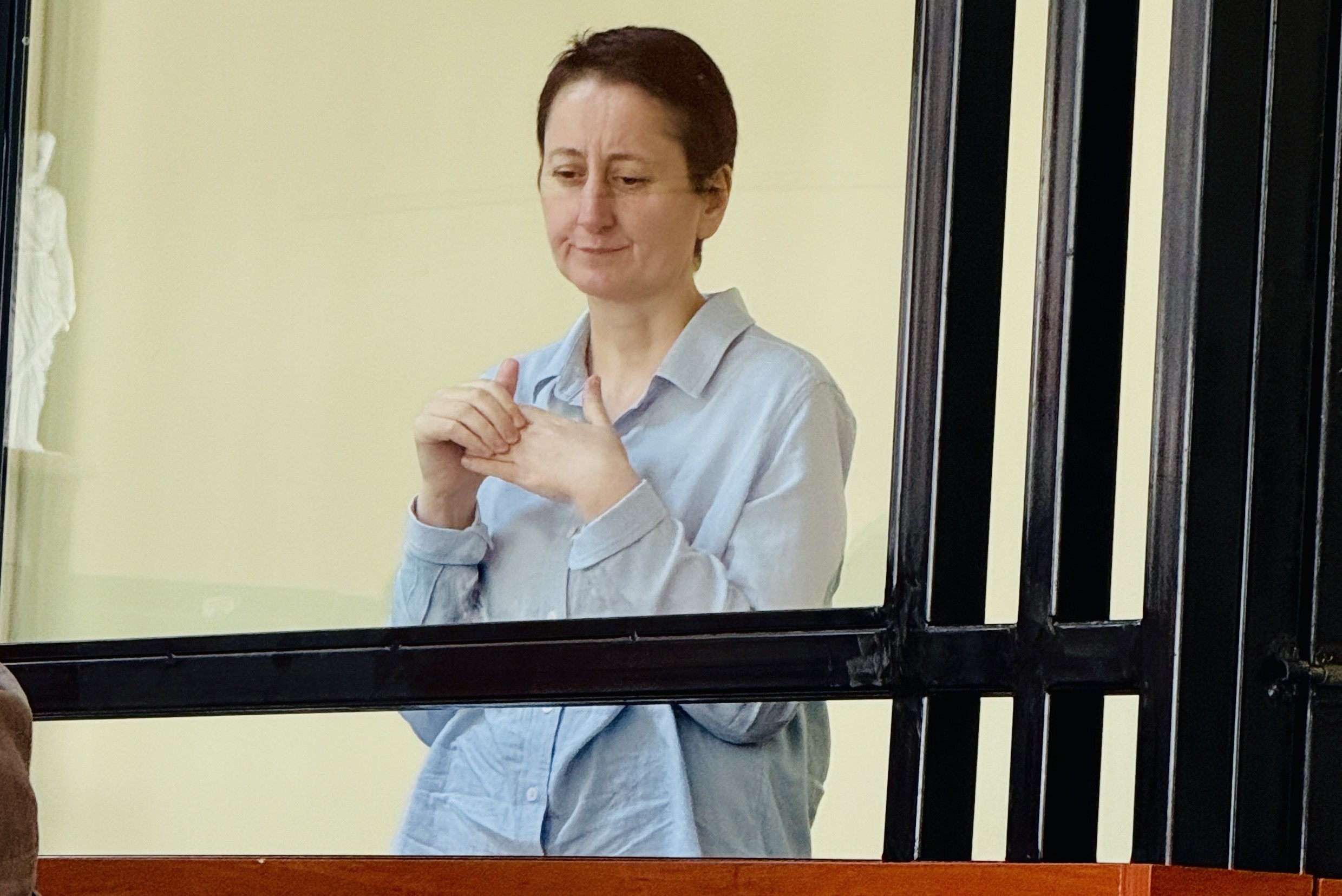
The blocking of ‘Monitor’s’ YouTube was followed by a media discreditation campaign

On August 3, 2026, the blocking of the investigative media outlet “Monitor’s” YouTube channel was followed by a media discreditation campaign from members of “Georgian Dream” and pro-government media.

“Facebook has deleted Studio Monitor’s propagandist page” – with this caption, the pro-government TV channel “Imedi,” which was sanctioned by the UK for spreading Russian disinformation, published a card on social media.

“Georgian Dream” MP Nino Tsilosani shared “Imedi’s” card on her page and deemed the blocking of “Monitor” to be “fair behavior”:

“Unfortunately, for years, ‘Studio Monitor’ has portrayed itself as independent media, while in reality, it is primarily a spreader of lies and political manipulation… Whoever chooses lies and manipulation over facts gives society the greatest grounds to question their credibility. This time, Facebook itself provided the answer to these questions – ‘Studio Monitor’s’ page has been deleted from the social network,” wrote Nino Tsilosani, about whom “Monitor” has also produced an investigative report.

Nino Tsilosani’s post was then picked up and turned into a news story by “Imedinews.” Additionally, this exact same status was disseminated unchanged as news by the pro-government TV channel “POSTV”—which was sanctioned alongside “Imedi”—and the pro-government “Rustavi 2.”

Following European Parliament Resolution, Discreditation Narratives Against Mzia Amaghlobeli Persist in Pro-Government Media

On March 12, the European Parliament adopted a resolution calling on the Georgian authorities to immediately and unconditionally release opposition politician Elene Khoshtaria, journalist and founder of Batumelebi and Netgazeti Mzia Amaghlobeli, and other detained individuals.

The document also addresses the persecution of the opposition and activists, urging the government to repeal restrictive laws and ensure an independent investigation into allegations of potential ill-treatment of detainees and the misuse of legislation.

Following the adoption of the resolution, the television station Rustavi 2 published a report referring to Mzia Amaghlobeli as a “police abuser.” This phrasing serves as a continuation of the discreditation narrative against her, which has been actively promoted in pro-government rhetoric since her arrest.

Pro-Government TV Station “Rustavi 2” Discredits Investigative Studio “iFact”

The pro-government television station Rustavi 2 produced a disinformation segment regarding the investigative studio “iFact,” accusing the media outlet of cooperating with foreign intelligence services and acting against the interests of Georgia.

The Rustavi 2 report, titled “Information Attack Against the Country,” concerned the British government’s sanctioning of pro-government TV channels. The main narrative of the segment was that “the primary tools for foreign powers in Georgia are local NGOs and media outlets, which operate against the country’s interests according to pre-designed schemes coordinated with foreign special services.” As an example, Rustavi 2 cited an investigative report by “iFact” regarding the entry of tankers loaded with Russian oil into the Kulevi terminal.

“One of the tools in the hands of foreign powers has become the media platform ‘iFact,’ which wrote in advance that London would sanction the tankers entering the Kulevi terminal. The information was first published by ‘iFact,’ and subsequently, the United Kingdom added two ships to the sanctions list,” the anchor states, later specifying that this is part of a broader scheme. “Foreign special services make good use of proven methods, and the activities of Georgians in analytical organizations are precisely determined by the intelligence of other countries,” says one of the anchors while introducing the segment [Timecode: 20:28 – 26:40].

According to the founder of “iFact,” Nino Bakradze, such a disinformation report only serves as proof of how deeply the “Georgian Dream” party is unsettled by the studio’s investigations into Russian tankers in Georgian ports.