Monitoring media freedom violations in Georgia – January 2024 – June 2025

The Center for Media, Information and Social Research (CMIS) monitors violations of media freedom in Georgia. This report covers the full calendar year of 2024 and the first half of 2025, through the end of June. During this period, CMIS documented 222 media freedom violation alerts, encompassing 459 individual cases; several media representatives and outlets were impacted more than once. The report provides an overview of the state of media freedom in Georgia, highlights key issues and emerging trends, and offers analysis of the types of media freedom violations recorded, and their perpetrators.

According to CMIS’s documented data, mostly independent media professionals were subjected to a wide range of violations, including an increasing number of physical violence, verbal attacks, such as threats, discreditation and intimidation attempts, and the use of legal and bureaucratic mechanisms to target their activities. The legal actions included fining journalists, detentions, arrests, and imprisonment – Mzia Amaglobeli, founder and director of the online publications Batumelebi and Netgazeti, was arrested and sentenced to two years in prison. Additionally, journalists frequently faced interference with their work in the form of being denied entry into public spaces or events, or being forcibly removed from such venues.

CMIS also observed incidents involving damage to journalists’ equipment and violations of employment rights, among others. CMIS’ monitoring results demonstrate that public protests in 2024 and 2025, and the 2024 parliamentary elections were characterized by the highest concentration and variety of incident types.

Among the identified perpetrators, law-enforcement officers emerged as the primary actors, responsible for the majority of documented violations, followed by administrative bodies and the courts. The document includes a chapter presenting general statistics. The subsequent chapter is dedicated to themes of particular importance during the monitoring period when the incidents occurred.

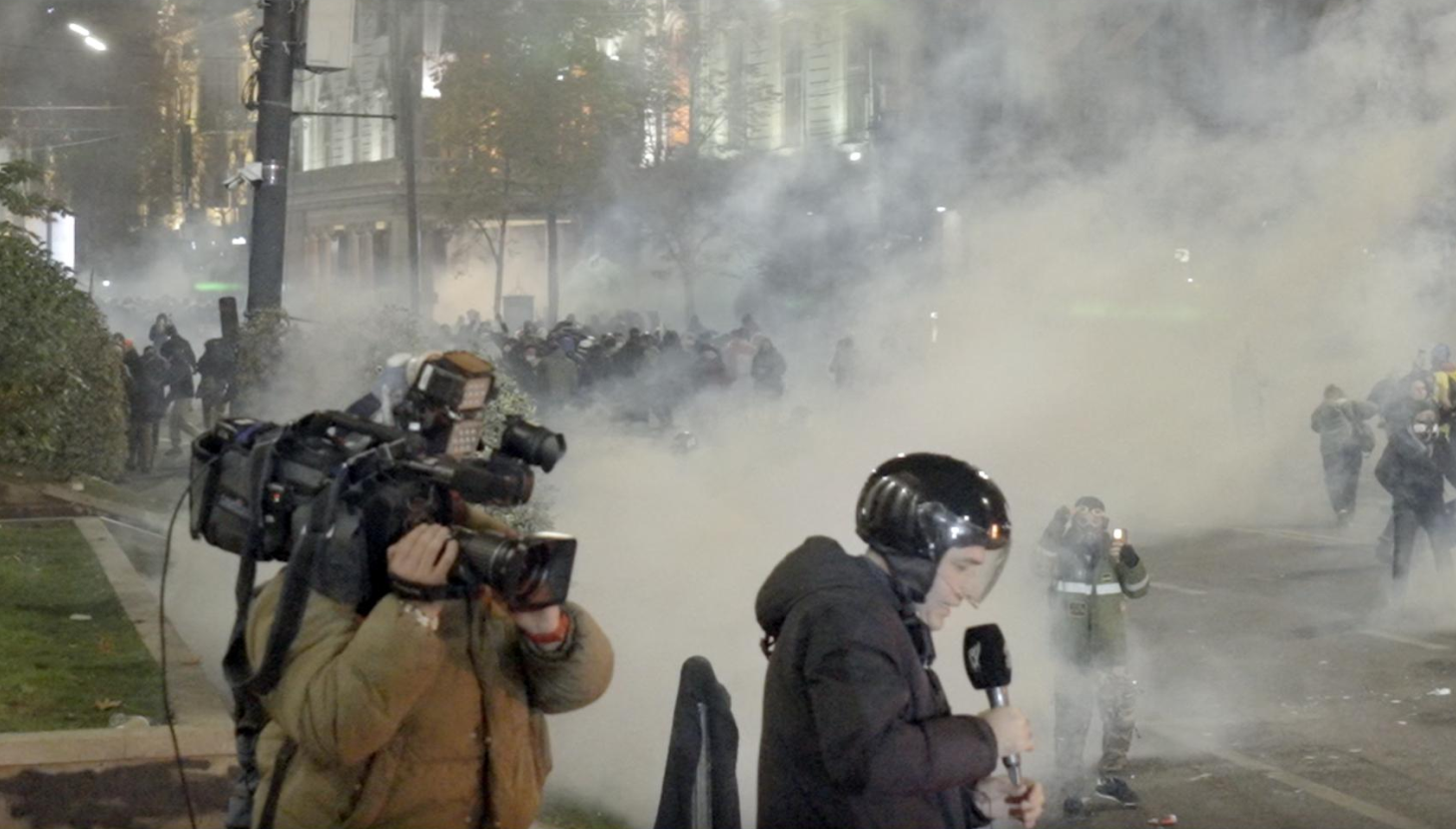
These include developments surrounding mass public protests; the adoption of repressive legislation by the Georgian Dream-led Parliament; violations observed on the 2024 parliamentary election day; violations of journalists’ right to information during court hearings; harassment and intimidation of media workers; and any other contexts in which physical assault, injury, interference or other incidents limited media workers capacity to perform their duties.

This report has been prepared by the Center for Media, Information and Social Research (CMIS), as part of its project dedicated to monitoring and documenting violations of media freedom in Georgia. The alerts forming the basis of this report can be accessed through the alerts webpage – https://cmis.ge/en/incident/.
Violations of Female Journalists’ Rights

The Center for Media, Information and Social Research (CMIS) has documented 542 incidents of violations of the rights of journalists, media organizations, and non-governmental organizations working on media issues between January 2024 and October 2025. These incidents directly or indirectly affected hundreds of individuals.

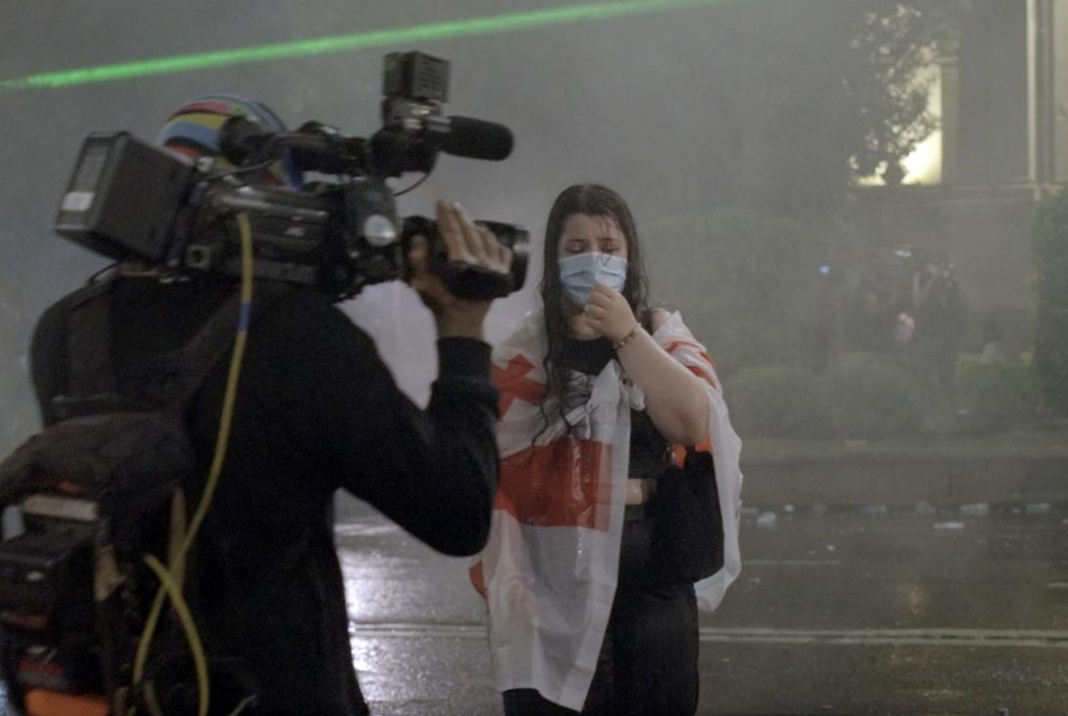
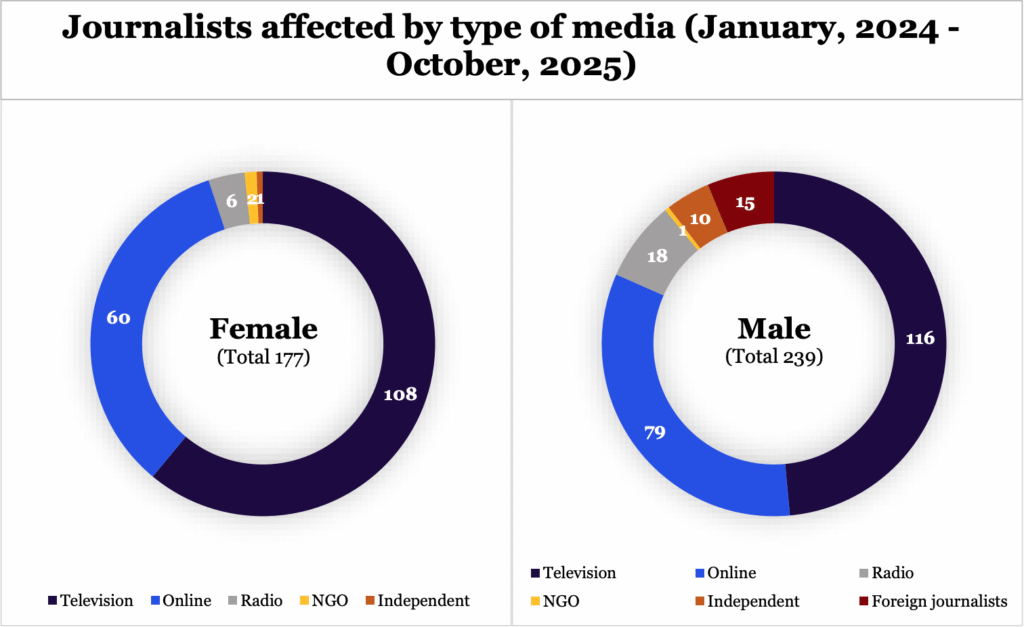
Our monitoring revealed that at least 177 women employed in various media outlets – including journalists, camera operators, photographers, and editors – were among those affected.

Journalists affected by type of media (January, 2024 - October, 2025)

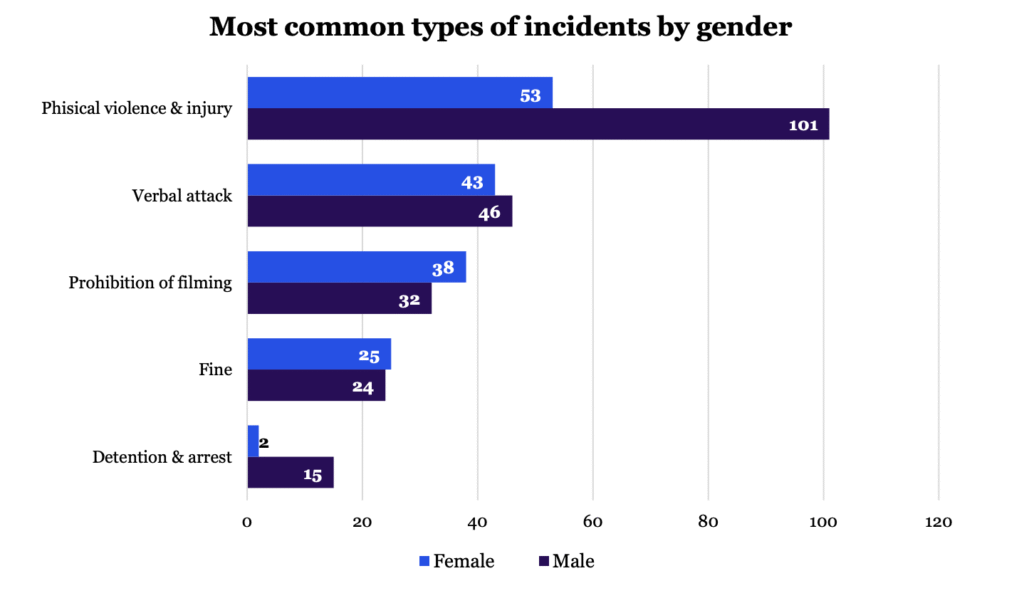
The Most Common Violations Recorded in the Incident Database of the Center for Media, Information and Social Research from a Gender Perspective

On January 12, 2025, Mzia Amaglobeli, the founder of online publications Netgazeti and Batumelebi, was arrested. According to local and international organizations, her arrest and subsequent imprisonment were politically motivated. On August 6, Amaglobeli was sentenced to two years in prison.

Our data analysis shows that at least 53 women were physically assaulted and/or injured during the monitoring period. Some journalist were repeatedly assaulted. It should be noted that there were two cases of arrest among women – both affected Mzia Amaglobeli.

Female media representatives are often targets of verbal attacks, including insults, discrediting, and threats, our monitoring has collected 46 such cases. As for restrictions on professional activities, women were banned from filming 32 times and fined 24 times.

Most common types of incidents by gender

Methodology:

  • The data are based on publicly available sources.
  • In most cases, the rights of the same journalist were violated multiple times.
  • In many instances, the same journalist was subjected to more than one type of violation.

Download the document:

From Foreign-Agent Law to Protest Crackdowns: Assessing Georgia’s Media and Information Environment,  2024

The report portrays an information ecosystem in which Georgia’s handful of independent newsrooms are being targeted from every side. The “foreign agents” and “anti‑LGBT” laws label donor‑backed or minority‑focused outlets as enemies of the state. Covering the protests has become dangerous work—police beatings and other types of attacks injured or violated the rights of more than 200 reporters in 2024, yet no one has been held to account. 

Funding is wielded as another weapon: pro‑government stations enjoy exclusive ad deals and subsidies, while critical channels see revenues gutted by steep fees. Meanwhile, state TV and fake social‑media networks flood the information ecosystem with anti‑Western spin, painting independent outlets as “foreign puppets” who “work “against the interests” of the Georgian society. Together, these tactics cloud the public’s grasp of reality and dim the prospects for Georgia’s democracy. 

Overall, these measures make it harder for people to tell fact from fiction, and may hinder Georgia’s democratic progress.

Please see the full document here: