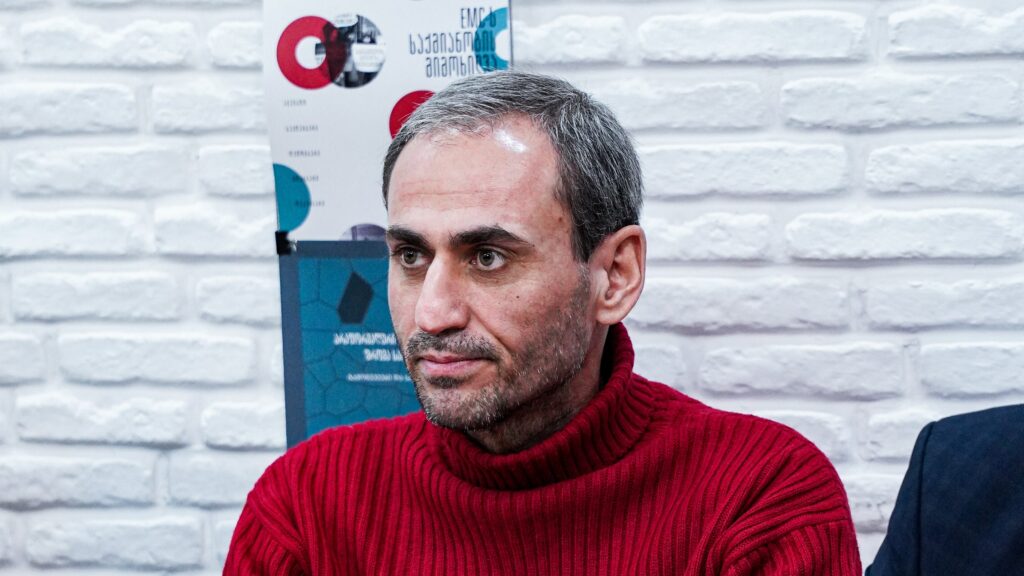
On November 12, 2025, Afghan Sadygov, an Azerbaijani journalist residing in Georgia, was sentenced to administrative imprisonment for the second time under the pretext of blocking a road—he will spend 7 days in prison. He is accused of blocking the road on October 19-21, 2025. Afghan Sadygov had already been imprisoned once on the same charge, having been sentenced to 14 days of administrative imprisonment. At that time, the exiled journalist was accused of blocking the road on October 18.
According to the “Social Justice Center,” the organization defending Sadygov’s interests, at the time of Afghan Sadygov’s first detention, the Ministry of Internal Affairs (MIA) already knew that the journalist would stand on the roadway during the protest on subsequent days, but did not merge the cases: “This circumstance once again indicates that the MIA intentionally did not appeal to the court regarding the remaining days, so that the court would have the opportunity to apply administrative imprisonment against Afghan Sadygov twice. It is obvious that the MIA is trying to make an example of an activist actively involved in the protests by punishing him through the court.”
Since October 19, 2025, after the “Georgian Dream” parliament adopted another set of repressive changes under an accelerated procedure, 13 media representatives have been detained for participating in, and in some cases covering, the ongoing protest on Rustaveli Avenue in Tbilisi. Administrative imprisonment was applied to most of them.
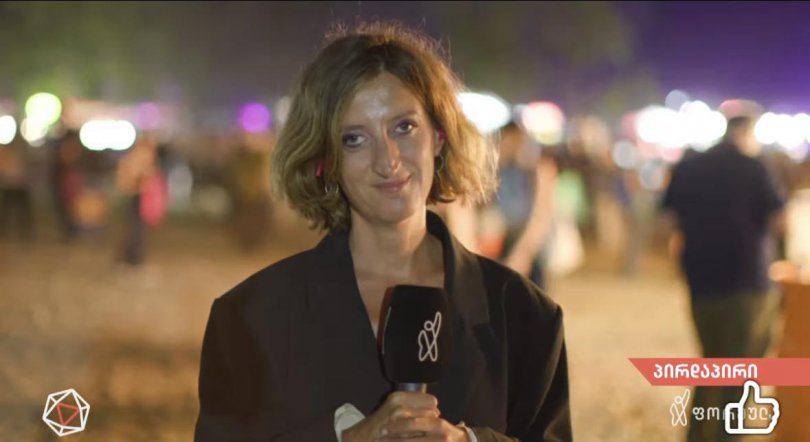
On November 5, 2025, during a protest rally in Tbilisi, the police arrested “Formula” TV company journalist Liza Tsitsishvili. At the time of the arrest, the journalist was performing her professional duties—interviewing rally participants. Video footage recorded by journalists present at the scene shows the police forcibly putting Liza Tsitsishvili into a car. The voices of other journalists can be heard in the video—they tell the police that Liza Tsitsishvili is their colleague; the police reply, “We’ll figure it out.” Liza Tsitsishvili was released ten minutes after her arrest. She says they apologized to her.
This is the second instance in a short period where a journalist is first detained and then released with an apology. On October 24, “Publika” online publication journalist Basti Mgaloblishvili was arrested near her home and released only a few hours later. She was told they had mistaken her for someone else. This is also the second instance where a journalist was detained while performing her professional duties at a rally. Two days before this incident, on November 3, “Media Checker” journalist Ninia Kakabadze was arrested on her way home, despite having a press badge, covering the rally, and having photo and video evidence confirming this.
Since October 19, 2025, after the “Georgian Dream” parliament adopted another set of repressive changes through an accelerated procedure, a total of 12 media representatives have been arrested for participating in, and in some cases covering, the ongoing protest on Rustaveli Avenue in Tbilisi. Administrative imprisonment was applied to most of them.
The Georgian Charter of Journalistic Ethics calls the frequent detentions of journalists “show detentions aimed at intimidating journalists” and urges the Ministry of Internal Affairs (MIA) to stop the persecution and harassment of journalists, and to properly inform its employees of journalists’ rights and instruct them to protect and respect those rights before sending them on assignment.
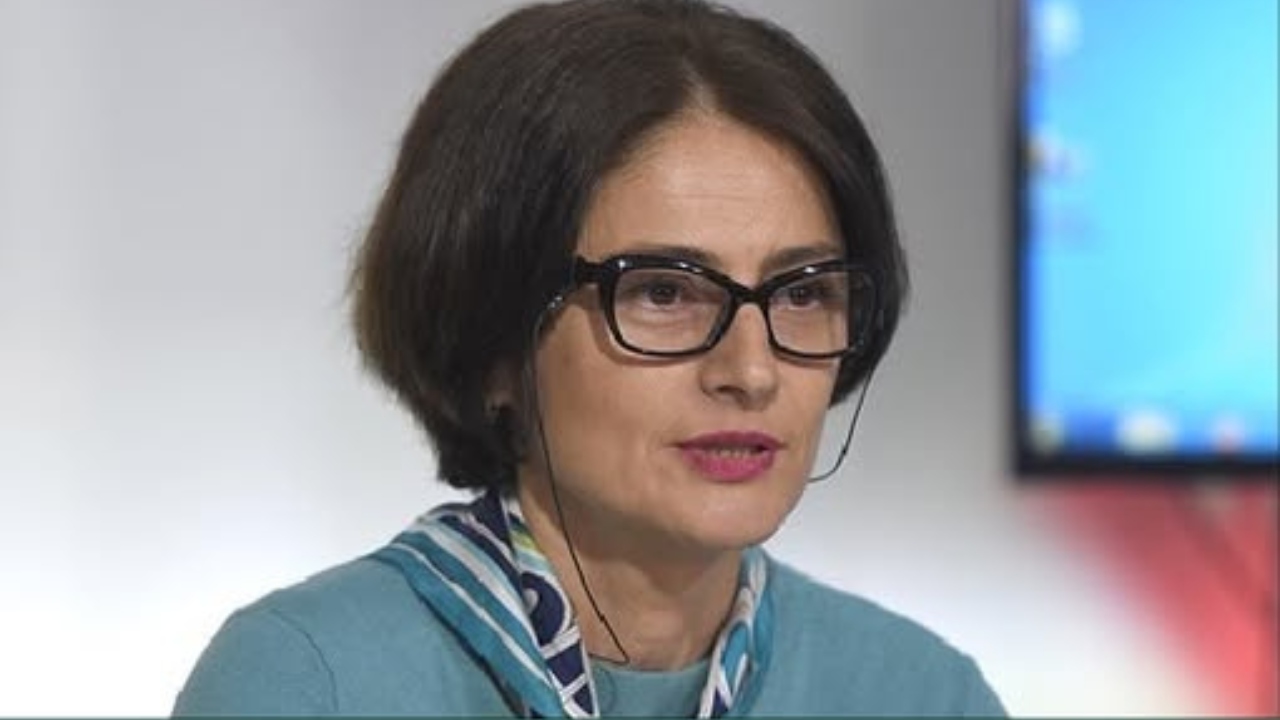
On November 3, 2025, the police arrested Ninia Kakabadze, a journalist for the Media Platform “Media Checker” of the Georgian Charter of Journalistic Ethics. That day, the journalist was at the rally with a press identification badge; she was performing her professional duties. Ninia Kakabadze was arrested while returning home. She was taken to the building of the Ministry of Internal Affairs in Tbilisi. The journalist recounts that for a long time, she was not allowed to call her minor child. The journalist was released a few hours after the arrest. Ninia Kakabadze is accused of artificially blocking the road. The Tbilisi City Court started deliberation on her case on November 4, but postponed the hearing until November 12.
Since October 19, 2025, after the “Georgian Dream” parliament adopted another set of repressive changes through an accelerated procedure, 11 media representatives have been arrested for participating in, and in some cases covering, the ongoing protest on Rustaveli Avenue in Tbilisi. Administrative imprisonment was applied to most of them.
The Georgian Charter of Journalistic Ethics considers the arrest of Ninia Kakabadze and other journalists while performing their professional duties as an attempt to pressure independent media and suppress critical voices. The Charter demands the immediate cessation of administrative proceedings against its media platform “Media Checker’s” journalist, Ninia Kakabadze, and the annulment of the drawn-up administrative offense protocol.
On October 17, the security guards of the TV “Pirveli” did not allow the camera crew to move around the area surrounding the residential building of Otar Partskhaladze and interfered with their activities.
Due to high public interest, the journalist tried to film the situation near the house of former Prosecutor General Otar Partskhaladze, but the security guards on site stepped forward and did not allow the journalist to approach the house, at which time they restricted the possibility of filming.
On the same day, the Prosecutor’s Office of Georgia held a briefing, where acting Prosecutor Giorgi Gvarakidze stated that searches were conducted in the homes of former Prime Minister Irakli Gharibashvili, former Head of the State Security Service Grigol Liluashvili, and former Prosecutor General Otar Partskhaladze. The Prosecutor’s Office has not specified under which articles the investigation is ongoing, whether the case is related to a new investigation, and whether the arrest of former high-ranking officials is planned.
The Public Relations Department of the Georgian Patriarchate announced that on October 14, due to a violation of internal regulations, the film crews of the TV companies “TV Pirveli” and “Formula” will not be accredited for the upcoming church holidays.
“Today, October 14, for violating the internal regulations in the courtyard of the Svetitskhoveli Cathedral, under the pretext of journalistic activity, despite repeated warnings, and for arbitrarily leaving the space allocated for the press, the film crews of TV Pirveli and TV Formula will not be accredited for the upcoming church holidays,” the statement said.
The Patriarchate has imposed additional regulations for the media since 2022. Journalists need to obtain special accreditation to cover church events, and they can only work in zones specially designated for the media.
On October 5, the Ministry of Internal Affairs stated that the October 4 gathering “aimed at overthrowing the government” and “soon acquired an unlawful character,” after which the ministry took “proportionate measures.” According to the agency, “based on yesterday’s events,” any gathering from October 5 will be considered a “continuation of an attempted overthrow” and the ministry will take appropriate measures “to protect public order and security.” In effect, this means that peaceful protesters may face legal prosecution simply for participating in the gathering. The statement came after the arrest of five organizers of the October 4 rally and a few hours before the announcement of a new rally by citizens and the Federalist Party.
Such rhetoric threatens both freedom of assembly and expression and freedom of the media. The wording used by the Ministry creates a vague legal framework, under which journalists’ coverage of protests or voicing critical positions may be perceived as support for an “attempted coup.” Such a statement creates a chilling effect and violates the activities of the media and the right of the public to freely receive and disseminate information, which contradicts fundamental rights guaranteed by both the Constitution of Georgia and international conventions.
While covering the protest on October 4, 2025, the online media outlet Mauwkebeli lost its drone. “The drone suddenly malfunctioned during filming, as happened with other media outlets,” a journalist from Mauwkebeli told MediaChecker.
Project 64 and Netgazeti also lost control of their drones that day.
At the October 4, 2025 rally, “Netgazeti” lost its drone. According to the information released by the publication, they lost their drone on Rustaveli Avenue. “Netgazeti’s” drones, as well as those of other media outlets, were allegedly specially shot down on Rustaveli Avenue, where we were trying to film the demonstration,” the publication said in the information released.
On the same day, “Project 64” and “Mauwkebeli” lost their drones too.
Project 64 lost its drone camera during the October 4, 2025 rally. Project 64 founder and journalist Giorgi Gogua wrote on social media that the camera was filming near the parliament building when it suddenly started flying erratically and lost control.
“I was only controlling the direction of the camera, but I couldn’t control the trajectory of the drone. The last shot before the signal was lost was somewhere from Rustaveli to Mtatsminda. The flight history on the map shows that the drone flew towards the airport.”
On the same day, the media outlets Netgazeti and Mauwyebeli lost control of their drones.
While covering the October 4, 2025 rally, according to information released by the Public Broadcaster, a protester allegedly threw an “unknown liquid” at the news program’s “Moambe” crew, resulting in injuries to journalist Shalva Sumbadze and cameraman Nika Tsirekidze.