
The Georgian Charter of Journalistic Ethics announced that, for the first time since 2012, it will not be able to monitor how media outlets cover election-related issues during the election period. In its statement, the Charter cited repressive legislation adopted by Georgian Dream as the reason.
Amid pro-European protest rallies, Georgian Dream passed several laws which, according to assessments by local and international organizations, significantly restrict independent media organizations.
On June 27, 2025, the Georgian Parliament held a hearing on the annual report of the Prime Minister of the Georgian Dream, Irakli Kobakhidze, and in connection with this, the administrative body has been placed on a yellow security alert.
“In accordance with the Order of the Chairman of the Parliament of Georgia dated September 4, 2023 N1/259/23 “On Approval of the Rules for Security Protection in the Palace of the Parliament of Georgia”, on June 27 of this year, the yellow security level will be in effect in the Palace of the Parliament – visitors are restricted from entering the Palace of the Parliament” – the statement released by the Parliament reads.
The announcement of the yellow security level restricts and imposes an artificial barrier to the work of the media, especially online media, and this is not the first time that such a restriction has been imposed in the Parliament of Georgia or other administrative bodies.
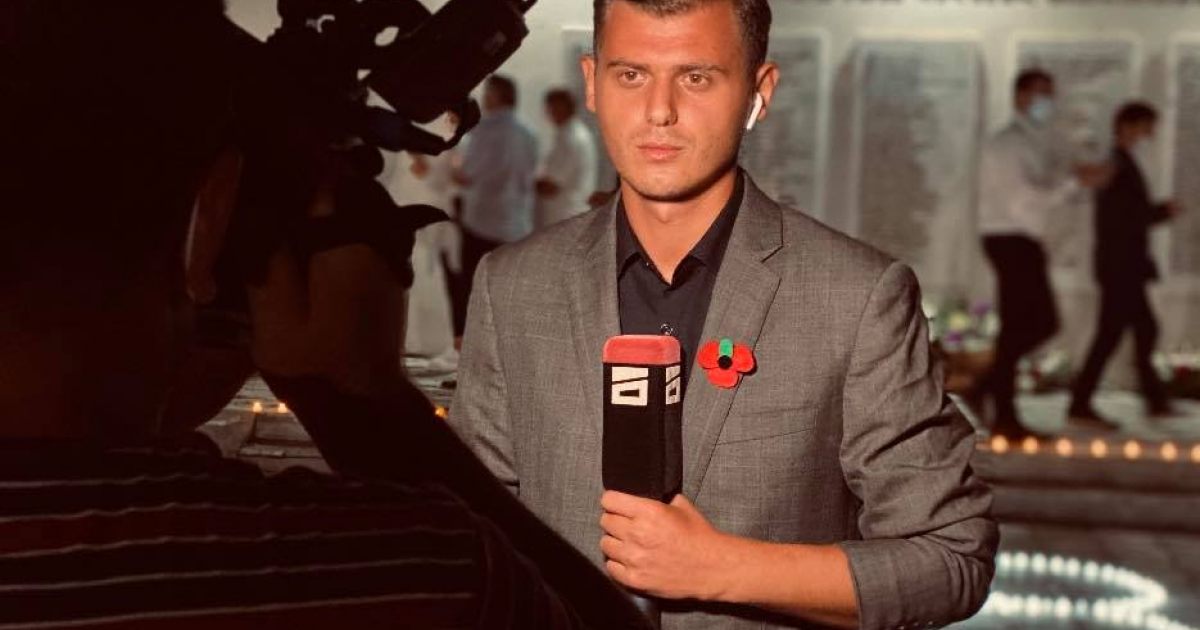
On July 29, 2025, Gori police officer Ioseb Gagnidze aggressively confronted journalist Giorgi Akhalkatsi, who was attempting to film ongoing investigative actions in Gori, and obstructed his work.
“Journalists, meet Gori police officer Ioseb Gagnidze, who told us: ‘If you don’t have your badge hanging around your neck, you are not journalists to me. I will interfere with your filming, call you liars, and if necessary, I won’t hesitate to use force,’” the journalist wrote on social media.
According to Giorgi Akhalkatsi, the officer became aggressive after noticing that the investigative actions were being conducted with procedural violations: the area was not cordoned off with protective tape, no lawyer was called, searches were conducted without the presence of outsiders, anyone could move freely in the area, and so on.
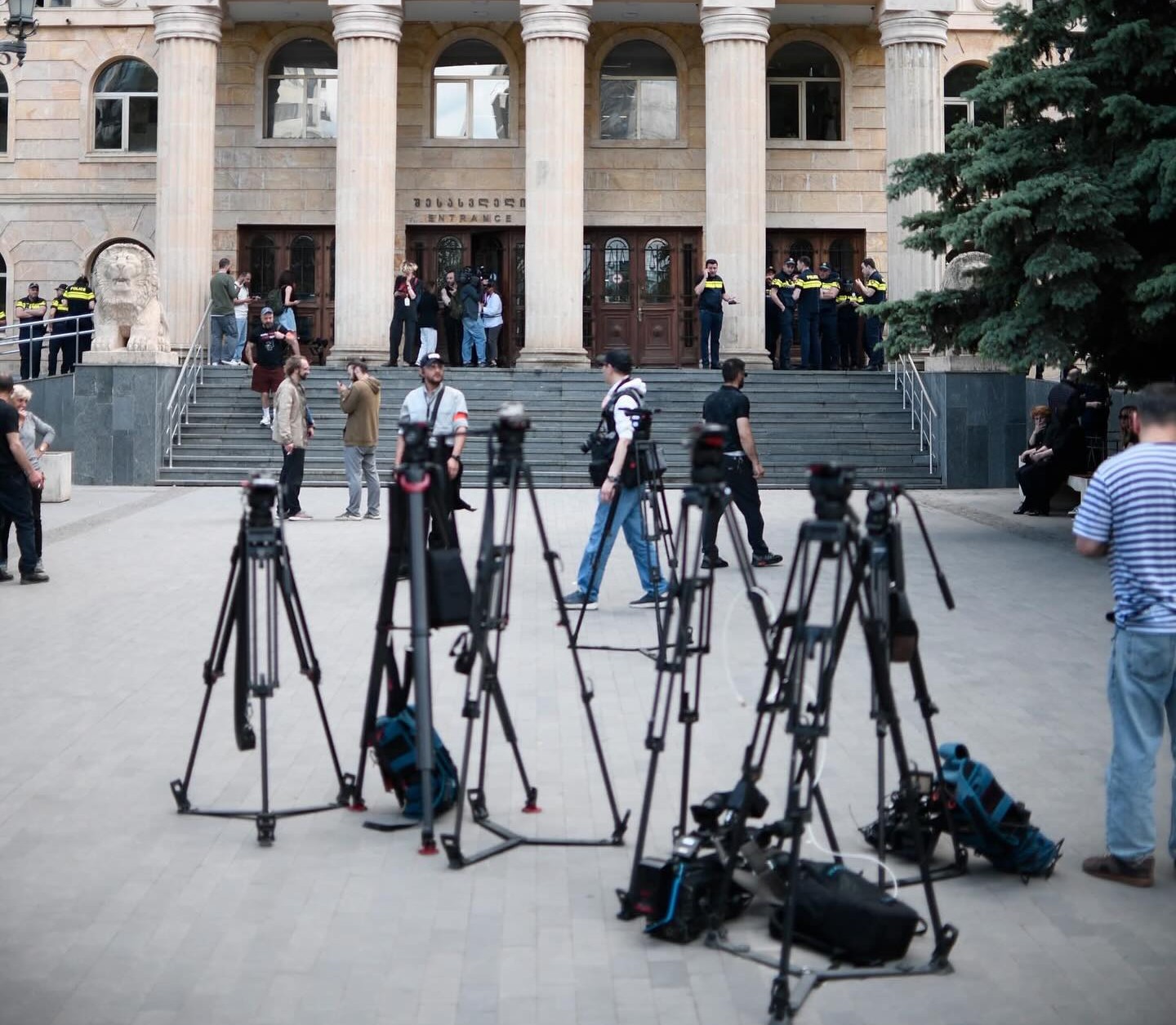
Television channels controlled by the Georgian Dream party, “Imedi” and the Public Broadcaster, were granted the right to film the court proceedings of businessman Giorgi Bachishvili, considered Bidzina Ivanishvili’s “personal prisoner.” This is the first case since amendments to the law banned the media from filming court hearings unless permission was granted by the High Council of Justice. Journalists from “Imedi” and the Public Broadcaster stated that they applied to the High Council of Justice on July 28 and received permission the following day.
On June 26, 2025, the Georgian Dream-controlled Parliament adopted amendments to the “Law on Common Courts,” which prohibited photo and video recording, audio recording, and broadcasting in court. Permission to film must be granted by the High Council of Justice. Since the law came into effect, media outlets with a critical editorial policy have submitted multiple requests to the High Council of Justice, but to date, none have received a response.
Moreover, organizations working on media issues have repeatedly called on the High Council of Justice to promptly develop procedures for granting permission to film court hearings, which would allow the media to receive timely responses to applications before the start of sessions, without unnecessary bureaucracy. However, so far, no feedback has been received from the High Council of Justice.
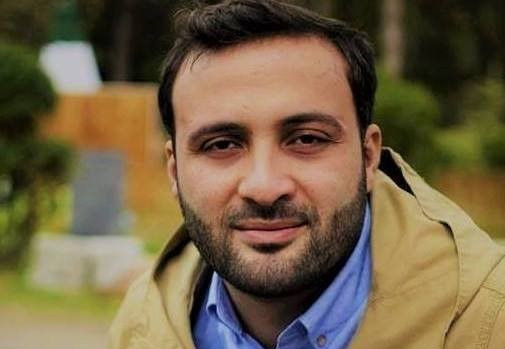
On July 22, 2025, the head of the Tbilisi City Court’s bailiff service, Davit Matiashvili, threatened Zurab Vardiashvili, editor of the publication Publika, with accountability before the law over video recording. Vardiashvili was attempting to document how the bailiff service forcibly removed a member of an opposition party from the court building.
The incident occurred during the trial of Giorgi Akhobadze, a prisoner of conscience. According to Vardiashvili, Matiashvili forcefully removed Nodar Chachanidze, a member of the opposition party “Akhalis”, who had come to attend the trial. As soon as they left the building, the journalist began filming: “I started recording at the stairs. When he saw this, he pushed me and dragged me inside. He took my ID, saying it was confiscated, and threatened me with legal accountability.” Vardiashvili was held in a room inside the court building for several minutes before his ID was returned and he was released.
According to amendments to the Law on Common Courts, effective June 30, photo and video recording, as well as audio recording, are prohibited in courtrooms, corridors, and courtyards. Following the implementation of the new rule, media outlets submitted applications to the Justice Council for permission to record, but none have received a response so far.
Before the adoption of this repressive legislation, representatives of independent media were unlawfully obstructed while performing their professional duties in court buildings. After the changes, the bailiff service has been using force disproportionately and without justification, including against media representatives, to enforce the repressive legislation.
On July 14, 2025, Judge Nino Sakhelashvili moved the court proceedings of journalist Mzia Amaghlobeli, who is in illegal imprisonment, to a smaller courtroom. According to information from online media “Batumelebi,” the judge made the decision after, according to her, shouts could be heard from the street in the courtroom – “Freedom for Mzia! Freedom for political prisoners!” According to the online media’s information, a large part of those wishing to attend the court session could not enter the proceedings, among them were members of Mzia Amaghlobeli’s family, colleagues, and representatives of the diplomatic corps.
The judge also did not satisfy the defense’s request that journalist Mzia Amaghlobeli be allowed to testify from the witness stand. In the end, the journalist testified from a glass-enclosed booth.
For more than 6 months, journalist and media manager Mzia Amaghlobeli, founder of “Batumelebi” and “Netgazeti,” has been in illegal imprisonment. On July 9, the European Parliament adopted a resolution on Georgia, demanding Mzia Amaghlobeli’s release. Her release is also demanded by local and international organizations.
On July 12, 2025, TV company “TV Pirveli” aired a journalistic investigation that concerned police officers whom “Georgian Dream” allegedly uses against prisoners of conscience and the benefits these police officers receive in return. The story covered police officer Bidzina Zhamerashvili, whose father, according to the investigation, had been arrested on theft charges.
To verify the facts, the journalist went to the Asureti division of the Tetritskaro district administration and asked for a comment from the division head, Koba Sutiashvili. The story shows that the division head expelled the camera operator from the office and locked journalist Tamta Dolenjashvili in the office, then tried to seize her mobile phone and microphone. According to Tamta Dolenjashvili’s statement: “He expelled my operator, Papuna Khachidze, from the office, locked me inside, took away my mobile phone and was trying to seize the microphone as well. Later he also expelled Papuna from the building.”
On July 10, 2025, due to the distribution of photos from the courtroom, Judge Nino Galustashvili closed the Lomidze-Zasokhashvili trial and had everyone present, including journalists, leave the courtroom.
On June 26, the “Georgian Dream” parliament adopted amendments to the Organic Law on Common Courts through an expedited procedure. Under the new norms, which came into force immediately upon publication of the law, photo-video recording for media at court sessions was prohibited. As a result of the changes, recording is restricted both inside the courtroom space, as well as in the yard and corridors.
On July 14, 2025, the court hearing of journalist Mazia Amaglobeli, who is being held in unlawful detention, was moved to a small courtroom by Judge Nino Sakhelashvili. According to the online media outlet Batumelebi, the judge made this decision after stating that shouts could be heard from the street in the courtroom “Freedom for Mazia! Freedom for political prisoners!”
According to the online media, a large number of people who wished to attend the hearing were unable to enter, including members of Mazia Amaglobeli’s family, colleagues, and representatives of the diplomatic corps.
The judge also denied the defense’s request for journalist Mazia Amaglobeli to give her testimony from the witness stand. Ultimately, she gave her testimony from a booth enclosed in glass.
For more than six months, Mazia Amaglobeli, founder of Batumelebi and Netgazeti, journalist, and media manager, has been held in unlawful detention. On July 9, the European Parliament adopted a resolution on Georgia, calling for Mazia Amaglobeli’s release. Her release is also being demanded by local and international organizations.
On July 12, 2025, a journalistic investigation aired on the television channel “TV Pirveli”, concerning police officers whom “Georgian Dream” allegedly uses against prisoners of conscience, and the benefits these police officers receive in return. The report covered police officer Bidzina Zhamerashvili, whose father, according to the investigation, had been detained for theft.
To verify the facts, the journalist went to the Asureti Division of the Tetri-Tskaro District Police Department and requested a comment from the head of the division, Koba Sutiashvili. The report shows that the division head expelled the cameraman from the office, while journalist Tamta Dolenjashvili was locked inside the office, after which an attempt was made to confiscate her mobile phone and microphone.
According to Tamta Dolenjashvili:
“My cameraman, Papuna Khachidze, was thrown out of the office, while I was locked inside. My mobile phone was taken from me, and there was an attempt to take the microphone as well. Later, Papuna was also expelled from the building.”