The Georgian Communications Commission found TV Company “Formula” in violation of the Law of Georgia “On Broadcasting” and imposed a fine of 2,500 GEL as a sanction.
The Commission initiated the proceedings based on its own media monitoring conducted during the month of April. The Communications Commission determined that “Formula” violated newly introduced articles of the broadcasting law that regulate content-related issues specifically, Paragraphs 1, 4, and 5 of Article 54. The Commission fined “Formula” for using phrases in its news programs such as “the head of the Georgian Dream government,” “Ivanishvili’s regime,” “the regime’s prosecutor’s office,” “the Dream’s prime minister,” and other similar terms. Additionally, it deemed the broadcast of a report about children with Duchenne muscular dystrophy without a comment from the Ministry of Health as problematic, ruling it a violation of the requirement to maintain balance.
“Given that TV Company ‘Formula’ had already received a written warning for a similar violation within the past year, the Communications Commission imposed the minimum fine of 2,500 GEL on the broadcaster in accordance with the Law of Georgia ‘On Broadcasting,'” reads the statement from the Communications Commission. “Formula,” alongside other television networks, received the initial written warning on April 8. In that instance as well, the Commission raised identical issues against the channel.
“The attempt to normalize censorship and interfere in editorial affairs is evident,” stated the Georgian Charter of Journalistic Ethics in its assessment of the incident, expressing deep concern over this growing trend.
The Director General of the Georgian Public Broadcaster has imposed another sanction on Givi Chimakadze, a studio cameraman for the Equipment and Technology Operators Group. By the director’s decree, 30% of Givi Chimakadze’s May salary will be deducted.
According to the order, the administration rejected the sick leave certificate submitted by the cameraman, which was issued by the Bochorishvili Clinic in Tbilisi on April 15, 2026. The reason cited for the rejection is that during the period specified in the certificate (April 15–20), Chimakadze was working for another employer.
“This was the job from which the Public Broadcaster was receiving a broadcast signal, again with the participation of the cameraman who was on sick leave,” writes Chimakadze’s colleague, Giga Kitia, who has also been sanctioned on multiple occasions.
This marks the second sanction for Givi Chimakadze. Earlier this year, on February 11, he was formally reprimanded for publishing a statement on social media.
The administration of the First Channel initiated a repressive policy a year ago targeting employees who are critical of the channel’s editorial stance. According to publicly circulated information, up to 30 employees have been subjected to these repressions during this period.
According to Mamuka Mdinaradze, State Minister for Coordination Among Law Enforcement Agencies, a new division will be established within the Ministry of Internal Affairs. Its function will be to monitor hate speech, offensive campaigns, and aggressive communication in the public sphere.
According to Mdinaradze, the division will observe any type of public communication, including statements that the government assesses as containing hate speech, inciting strife, violating personal dignity, or other communications of a similar nature.
He further stated that the division will operate proactively, and its response will not rely solely on citizen complaints. The agency itself will conduct monitoring and legal assessments, forwarding materials to the court when necessary.
Mdinaradze claimed that the goal of the new mechanism is not to restrict freedom of expression. According to him, “no one will be subjected to an administrative penalty for criticism.” However, in cases where communication takes on an offensive or strife-inciting character, the court may even impose administrative imprisonment.
The initiative to create this new division is particularly noteworthy against the backdrop of recent trends in Georgia, where there have been numerous instances of individuals facing administrative liability for public expression, including social media posts. In response to Mdinaradze’s announcement, Tamar Oniani, Chairperson of the Georgian Young Lawyers’ Association, stated that the proposed mechanism “appears to be a form of censorship and has nothing to do with the balance of interests in a democratic society.”
Tbilisi City Court Judge Ekaterine Eliadze dismissed the lawsuit filed by Nino Zautashvili, a dismissed journalist and host, against the Public Broadcaster.
According to Zautashvili’s lawyer, Giorgi Iasashvili, they were seeking the annulment of the dismissal order and her reinstatement to the corresponding position.
“I know that I will see this case through to the end, and I will spare neither time nor energy for it. I know for a fact that I am right, and the judge also knew that the truth was on my side. In these terribly difficult times, when so many unjust decisions have been made, the single most important task remains ensuring the institutional independence of the judiciary,” Nino Zautashvili told Media Checker.
The Tbilisi City Court also dismissed the lawsuit of former Moambe anchor Vasil Ivanov-Chikovani, who sought the annulment of his dismissal order from the Public Broadcaster. This decision was subsequently upheld by the Court of Appeals.
The Public Broadcaster dismissed Nino Zautashvili, the host of the program Real Space, along with Vasil Ivanov-Chikovani on April 11, 2025.
On April 20, Judge Liana Kazhashvili announced a decision in which the court denied the complaint filed by former employees of “Real Space.”
The program “Real Space” aired on the Public Broadcaster until May 5, 2025, when the channel’s management decided to cancel the show. The “Real Space” staff subsequently sued the Public Broadcaster’s management. The decision announced on April 20 concerned the dismissal of Ketevan Kapanadze, Ioseb Katsitadze, Tamar Mshvenieradze, Omar Tsotsoria, and Tukha Kvinikadze. They are seeking the annulment of their dismissal orders and reinstatement to their respective positions at “Real Space” under the terms of their permanent employment contracts dated December 30, 2022.
Since November 2024, following the start of pro-European protests, demonstrators have been demanding open access to the airwaves. Employees of the Public Broadcaster joined this demand, and the “Real Space” team also openly criticized the channel’s editorial policy.
On April 11, 2025, the Public Broadcaster dismissed “Real Space” host Nino Zautashvili and “Moambe” anchor Vasil Ivanov-Chikovani. On May 1, “Real Space” was officially closed, and the contracts of team members who declined new offers were terminated.
Tbilisi City Court Judge Ekaterine Eliadze has dismissed the lawsuit filed against the Public Broadcaster by Nino Zautashvili, a journalist and presenter who was fired from the channel.
According to Zautashvili’s lawyer, Giorgi Iasashvili, they were seeking to have the dismissal order annulled and for her to be reinstated to her position.
“I know I will see this case through to the end, and I won’t begrudge the time or energy it takes. I know for a fact that I am right, and the judge knew the truth was on my side as well. In these incredibly difficult times, when so many unjust decisions have been made, the primary and most vital task remains ensuring the institutional independence of the judiciary,” Nino Zautashvili told Mediachecker.
The Tbilisi City Court also dismissed a lawsuit filed by Vasil Ivanov-Chikovani, a former presenter for the news program Moambe, who was also seeking to overturn his dismissal from the Public Broadcaster. This decision was later upheld by the Court of Appeals.
The Public Broadcaster dismissed Nino Zautashvili, the host of the program Real Space, along with Vasil Ivanov-Chikovani, on April 11, 2025.
The Communications Commission has issued written warnings to four television stations, including two pro-government channels, for violating the Law of Georgia on Broadcasting. The channels involved are the government-critical outlets Formula and TV Pirveli, as well as pro-government broadcasters POSTV and Imedi. The Commission issued the warnings based on violations of articles concerning content regulation.
According to ComCom, the issue was placed on the agenda following its own media monitoring. The stations were accused of failing to meet standards regarding impartiality, balance, reporting based on personal attitudes/opinions, and factual accuracy. For instance, the Commission determined that by using phrases such as “Dream’s Prosecutor’s Office,” “Dream’s Parliament,” “Ivanishvili’s Prime Minister,” “Rajden Kuprashvili’s agency,” “with members of the Dream government,” and “judicial clan,” Formula covered issues based on the broadcaster’s personal attitude or opinion in its news programming, thereby violating the law.
During the monitoring process, ComCom’s Media Services Regulation Department “discovered” the highest number of potential violations at the independent channels—20 for Formula and 18 for TV Pirveli. The lowest number of violations were attributed to the pro-government outlets: Imedi (4 violations), which has been sanctioned for spreading Russian disinformation, and POSTV (7 violations).
On this occasion, the Communications Commission limited its response to written warnings on the grounds that none of these television stations had been sanctioned for similar violations within the past year.
It is worth noting that in early March, following the sanctioning of pro-government Imedi and POSTV, ComCom released a threatening statement announcing it would begin monitoring broadcaster content starting in March. Last year, Georgian Dream passed repressive amendments to the Law on Broadcasting, which are linked to the regulation of broadcaster content.
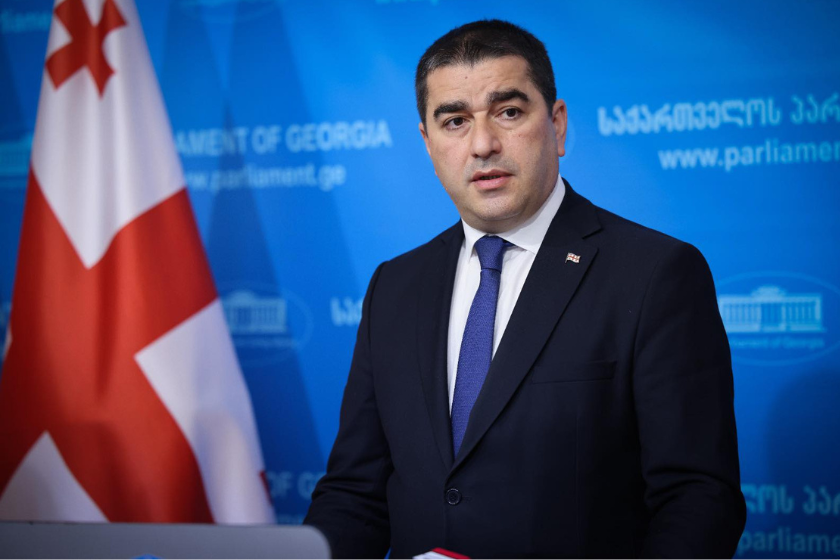
On April 2, 2026, during a briefing held in Parliament, the Speaker of the Parliament from “Georgian Dream,” Shalva Papuashvili, referred to online outlets Radio Free Europe/Radio Liberty (RFE/RL), Tabula, Publika, and Netgazeti as “foreign-funded party propaganda groups.” He accused them of interfering in the activities of the Holy Synod of the Georgian Patriarchate and threatened them with “consequences.”
“We see that, for example, foreign-funded party propaganda groups like Radio Liberty and Tabula are directly interfering in the activities of the Synod. They have launched direct campaigns against specific clerics; Radio Liberty, Tabula, and other online outlets such as Publika, Netgazeti, etc., are conducting direct election campaigns for or against various clergy members. We are monitoring all of this, and there will be an appropriate reaction,” Papuashvili stated.
His statement followed media coverage and public interest regarding the election of a new Patriarch after the passing of Ilia II, the Catholicos-Patriarch of All Georgia.
The Georgian Charter of Journalistic Ethics reminds Papuashvili that the role and duty of the media is to cover all significant issues unfolding in the country.
“The election of a new Patriarch is among such issues, and the Georgian media is currently doing exactly what it should be doing—investigating information and gathering comments on this matter to share with its audience,” the Charter’s statement reads. The Charter calls on high-ranking officials to stop the harassment and intimidation of media outlets and journalists aimed at suppressing critical voices, and to allow the media to contribute fully to the formation of public discourse.
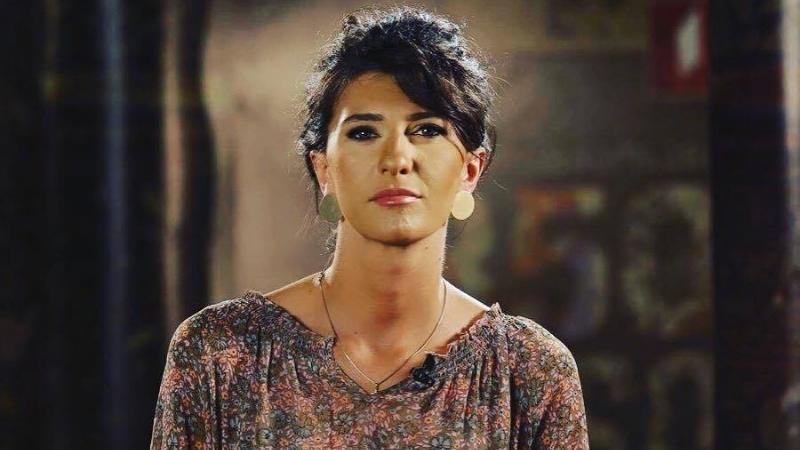
Shalva Ramishvili, the director and host of the pro-government outlet POSTV—which has been sanctioned by Britain for spreading Russian propaganda—is attempting to disparage TV Pirveli journalist Vika Bukia based on her geographical background.
Ramishvili refers to Vika Bukia as a “girl from the provinces” and an “aggressive provincial.” In the same context, he mentions her sister, Sopho Bukia—also a journalist and an editor at JAMnews—labeling her a provincial as well.
Vika Bukia is originally from the Samegrelo region. Ramishvili views this as a point of inferiority and uses it specifically to insult the journalist. Furthermore, he openly admits that he is doing this intentionally:
“You represent the class of jooooournalists (pronouncing the word with a specific derisive connotation) that I have fought since birth. I am fighting you not just as the provincial Vika Bukia, but as representatives of the joooournalist class—the collective Inga Grigolia and Nodar Meladze—so that your authority, if you even have any, is completely destroyed,” the propagandist Ramishvili stated openly.
This is not the first time that POSTV and its affiliates have attempted to insult and discredit independent and critical journalists. On March 4, Shalva Ramishvili also attempted to humiliate investigative journalist Keti Tutberidze by using sexist epithets against her.
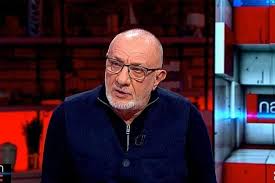
Director Goga Khaindrava, a supporter of “Georgian Dream,” is calling on the Prosecutor’s Office of Georgia, the State Security Service (SSG), and the Ministry of Internal Affairs of Georgia to investigate a report about him that aired on Formula TV.
The report in question was broadcast on Formula TV on January 17, 2026. It claimed that between 2016 and 2017, in coordination with the State Security Service and in exchange for payment, Goga Khaindrava facilitated the entry of Indian and Pakistani citizens into Georgia.
“The report suggested that, in agreement with the SSG, I intentionally committed a very serious crime. To me, this crime is equivalent to treason against the state. It is treason when you illegally bring potential criminals into the country’s territory in exchange for bribes. Therefore, in addition to filing a lawsuit in court, I am appealing to the Prosecutor’s Office and asking them to conduct an investigation into the matter to determine who is at fault: myself, the SSG, the Border Police, or ‘Falsehood Formula’ LLC,” Khaindrava stated during a press conference.
Following the airing of this report in January of this year, Goga Khaindrava announced that he would take legal action against Formula TV. It is worth noting that after the segment was broadcast, the program’s host, Davit Kashiashvili, received a threatening message from an unidentified individual. The author of the threat wrote to the journalist: “Tbilisi is a small city… take care of yourself, buddy.” Davit Kashiashvili announced this himself during a live broadcast, thereby notifying the Ministry of Internal Affairs of Georgia about the incident.