TV Pirveli journalist Giorgi Mamniashvili was detained while carrying out his professional duties

On November 22, during a protest in Tbilisi, near Ingorokva Street, “TV Pirveli” journalist Giorgi Mamniashvili was detained. According to the television company, the journalist was performing his professional duties at the time of his arrest and was covering the protest. For several hours, the “TV Pirveli” newsroom was unable to get in touch with him.

At the moment of his detention, Mamniashvili was filming the police arresting other protesters on his mobile phone and sending the footage to the newsroom, when officers attempted to seize his phone. Shortly after, they ordered his arrest. In the video recorded by Mamniashvili, he can be heard telling the police that he is a journalist and is carrying out his professional duties.

According to the journalist’s lawyer, after the arrest, Mamniashvili was treated in a degrading and humiliating manner at the Dighomi pre-trial detention facility. Specifically, for several hours, his hands were cuffed behind his back, he was fully stripped, and forced to perform so-called “squats.”

Deputy Minister of Internal Affairs Aleksandre Darakhvelidze described the practice of strip-searching detainees upon admission to the detention facility as “a required procedure to document any possible injuries.” Public Defender Levan Ioseliani, however, calls the strip-searching of detainees “degrading and humiliating treatment.”

“The case of Giorgi Mamniashvili is a clear example of the repressive policies of Georgian Dream, aimed at restricting independent media and silencing critical voices,” the Media Advocacy Coalition stated.

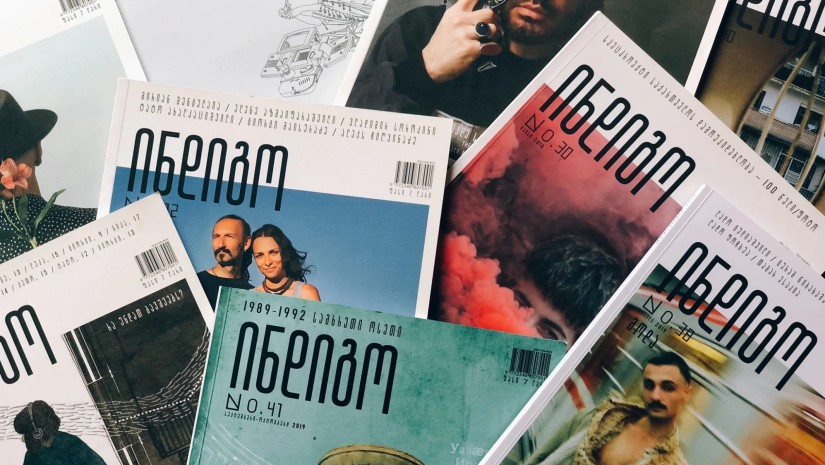
The Anti-Corruption Bureau is requesting information about grants from the publication “Indigo”

On November 11, 2025, the publication “Indigo” released a statement from which it became clear that the Anti-Corruption Bureau had initiated proceedings against them based on the so-called Law on Grants adopted by “Georgian Dream.” “Since our entire activity is based on open communication and only your trust, we want you to know this news as well. Obviously, we continue and serve the mission that created us—we continue working for free speech and expression, for free thoughts and ideas,” the publication writes.

The amendments to the “Law on Grants” are one of the repressive changes adopted by the “Georgian Dream” parliament in recent months to restrict the media. The law came into force in April. These amendments prohibited the issuance of foreign grants without the permission of the government. A grant received without consent leads to a fine equal to double the amount of the grant received.

The Anti-Corruption Bureau carries out the monitoring of the issuance and receipt of grants. This agency has already initiated proceedings against several media outlets based on this law, including: “Project 64,” the investigative media “iFact,” the publication “Mountain News,” GMC, which manages the publications “Realpolitika” and “Flangvis Detector” (Waste Detector), Georgian Media Group, and also the organization working on media rights, the “Georgian Charter of Journalistic Ethics.”

In addition to media outlets, the Anti-Corruption Bureau is requesting information about grants from civil and non-governmental organizations as well; in total, the agency’s letter has been received by more than 60 organizations, including member organizations of the “Media Advocacy Coalition.”

Communications Commission begins enforcing new media regulations

On October 9, 2025, the Communications Commission issued a written warning to the television broadcasters “Formula” and “Formula Multimedia”, as well as the radio broadcasters “Journalists’ Union Khalkis Khma”, “Radio-TV Nori” and “Systema Gama” and ordered them to cease receiving funding from foreign powers for violating the Law of Georgia “On Broadcasting”.

According to the Commission’s statement: “Based on the fact that the broadcasters have received the above-mentioned funding after the law was amended and funding from foreign powers was prohibited, and the funding cannot be used in exceptional cases specified by law (commercial advertising, teleshopping, sponsorship or product placement in the program)”, the Commission considered the broadcasters to be violators of the law.

This is the first precedent for the enforcement of the law, which concerns the new regulation included in the Law on Broadcasting, which prohibits direct or indirect funding of a broadcaster from a foreign power from April 1, 2025. Since the date of adoption, the amendments have caused public discussion and criticism, in particular, assessments that the new norm may become a tool for restricting the financial and editorial freedom of independent media. During the session, representatives of radio broadcasters noted that without the aforementioned funding, they may have to stop broadcasting.

The Revenue Service has imposed a lien on the bank accounts of Batumelebi

On July 21, 2025, it was announced that Georgia’s Revenue Service had frozen the bank accounts of the media outlet Batumelebi. According to the organization, while the official reason given was debt, they believe the true intention is to shut down the media outlet.

According to media reports, the Revenue Service gave Batumelebi a five-day deadline to pay off the debt, warning that if they failed to do so, their accounts would be frozen, followed by seizure of property. The National Enforcement Bureau would then step in to sell the organization’s assets — including their office and editorial equipment.

Batumelebi reports that their current debt to the state includes a principal amount of 47,000 GEL, a penalty interest of 126,000 GEL, and a fine of 109,000 GEL. The outlet had acknowledged the debt and had been making monthly payments toward it. After receiving the threat of asset seizure, Batumelebi officially requested a payment schedule from the Revenue Service — an option allowed under the Tax Code — but their request was denied. On July 17, their accounts were frozen.

Batumelebi considers this action to be yet another form of pressure against the outlet and a step toward its closure. For over six months now, the founder and media manager of the outlet, Mzia Amaghlobeli, has been in detention. She is facing 4 to 7 years in prison for allegedly assaulting a police officer — the charge stems from an incident where she reportedly slapped the head of Batumi’s police. Her trial is nearing its end, with the final hearing — during which Judge Nino Galustashvili will announce the verdict — scheduled for August 1.

“The account freeze and the other measures planned in the coming week are clearly aimed at breaking Mzia Amaghlobeli — and ultimately, at dismantling the independent media organization she founded,” Batumelebi said in a statement. “One clear example confirms this: according to official data from May 21, 2025, the TV company Imedi owes 17 million GEL to the state, while Rustavi 2 owes 25 million GEL. Yet neither has faced such enforcement actions.”

The Georgian Charter of Journalistic Ethics has also labeled this incident as pressure on the media. The Charter has urged the Revenue Service to lift the account freeze and offer Batumelebi a repayment plan. Another group, the Coalition for Media Advocacy, also condemned the move, calling it part of a broader campaign by the ruling party, Georgian Dream, against independent journalism and media.

International human rights organization Amnesty International also responded, stating:
“The independent Georgian outlet Batumelebi had its accounts frozen after allegations of police violence emerged against its founder, Mzia Amaghlobeli, who is currently unlawfully detained and facing a flawed trial. Amnesty calls for a full investigation into all allegations of police abuse.”

Update (July 22):
Following widespread public outcry — both locally and from international media organizations — the Revenue Service offered Batumelebi a payment plan and agreed to lift the account freeze. That same day, thanks to a major campaign by readers and supporters, Batumelebi managed to raise funds to cover the principal part of their debt.

The Revenue Service has placed a lien on the accounts of the publication ‘Batumelebi’

On July 21, 2025, it became known that the Revenue Service had placed a lien on the accounts of the publication Batumelebi. According to the organization, the official reason is debt, but the real reason is the intention to shut down the media organization.

According to media reports, the agency gave them a five-day deadline to pay the debt; otherwise, the accounts would be subjected to a lien, after which the property would be seized and the National Bureau of Enforcement would begin the enforcement process — selling the organization’s assets, including its office and editorial technical equipment.

According to the publication, at this stage their debt to the budget — the principal amount — is 47,000 GEL, with interest adding 126,000 GEL and a fine of 109,000 GEL. Batumelebi had acknowledged its debt to the state and had been making monthly payments to cover it. After the threat of a lien, Batumelebi officially contacted the Revenue Service and requested a payment schedule (the Tax Code allows debt to be paid in installments), but they were refused. On July 17, Batumelebi’s accounts were subjected to a lien.

The publication perceived this action as another attempt to pressure them and as an effort to shut down the media outlet. For more than six months, the founder and media manager, Mazia Amaglobeli, has been in detention. She is accused of assaulting a police officer for slapping the chief of Batumi police and faces 4 to 7 years in prison. Her trial is nearing its conclusion, with the final session — where Judge Nino Galustashvili will announce the verdict — scheduled for August 1.

“The lien and all other operations planned in the past week are aimed at breaking Mazia Amaglobeli and, in the long term, destroying the media organization she founded. A simple confirmation of this is one example: according to official information from the Revenue Service on May 21, 2025, TV company Imedi owes 17 million GEL to the budget. Rustavi 2 owes 25 million GEL to the budget,” the organization stated.

The “Georgian Charter of Journalistic Ethics” also assessed the incident as pressure on the media. The charter urges the Revenue Service to lift the lien on the publication’s accounts and to provide a schedule for debt repayment. Batumelebi’s case is part of a systemic campaign carried out by the Georgian Dream party against independent journalism and media, according to a statement by another organization, the “Media Advocacy Coalition.”

The international human rights organization Amnesty International also commented on the situation: “The accounts of the independent Georgian publication Batumelebi were frozen after alleged cases of police violence against its founder, Mazia Amaglobeli, who is currently unlawfully detained and facing a tainted trial. Amnesty calls for a full investigation of all allegations of police violence,” the statement read.

Update: On July 22, after the news received significant attention from both local and international media organizations, the Revenue Service offered Batumelebi a payment schedule and lifted the lien. On the same day, thanks to support from readers who launched a major campaign to help the publication, the principal amount of the debt was covered.

“Mtavari Arkhi” Broadcast Suspended

On February 15, 2025, Mtavari Arkhi’s broadcasting was suspended. According to a statement released by the TV station, all programming has been halted due to a financial crisis allegedly manufactured by Zaza Okuashvili, the channel’s co-founder.

Mtavari Arkhi had already issued a statement a few weeks earlier about an escalating internal conflict between the founders.

It is worth noting that the broadcasting sector is facing serious challenges. This year alone, two regional broadcasters have already ceased operations. In such a context, the suspension of independent media outlets significantly harms an already fragile pluralistic media environment.