The Tbilisi Court of Appeal upheld the 8.5-year sentence of Anton Chechin, convicted on drug-related charges. The decision was delivered on April 27 by an appellate panel composed of judges Nino Chakhnashvili, Giorgi Keratishvili, and Paata Silagadze.
Chechin did not exercise his right to a final statement and did not attend the pronouncement of the judgment. At first instance, the judgment against Chechin was delivered by Judge Jvebe Nachkebia.
Chechin was convicted of possession of a particularly large quantity of narcotic substances. He does not admit guilt and claims that the drugs were planted on him due to his participation in protests. He was arrested on December 3, 2024, during ongoing demonstrations.
Activist Mariam Mekantsishvili was imposed a fine of 4,000 GEL on the grounds of insulting municipal assembly member Beka Davituliani. The decision was taken by Judge Tornike Kochkiani.
The incident, in relation to which the Ministry of Internal Affairs initiated administrative proceedings, occurred on April 9. At the April 9 memorial, Meqanqishvili referred to the MP as a “traitor to the country,” a “Russian slave,” and a “betrayer.”
In response to the demonstrator’s protest chants, Davituliani repeatedly instructed her to move away, after which he became irritated, grabbed her, and forcibly removed her from the area.
The Tbilisi Court of Appeal upheld the judgment of the court of first instance, finding 19-year-old Saba Jikia guilty and maintaining the sentence of 4 years and 6 months of imprisonment. The decision was delivered by Judge Giorgi Keratishvili.
Jikia was charged under Article 353¹, paragraph 1 of the Criminal Code, which concerns an attack on a police officer and provides for a penalty of 4 to 7 years’ imprisonment. According to the prosecution, he delivered a kick to the torso of an employee of the Special Tasks Department.
The alleged victim in the case, Special Tasks Department officer Beka Gotiashvili, has stated that he did not sustain any injury. Saba Jikia was arrested on December 4, 2024.
An active protest participant, activist Ani Chrdileli, was imposed 2 days of administrative detention by Judge Zviad Tsekvava. The Ministry of Internal Affairs alleged that Chrdileli had artificially blocked a roadway in the vicinity of the Parliament on March 7.
On 16 October 2025, Georgian Dream adopted legislative amendments to the Criminal Code of Georgia and the Code of Administrative Offences of Georgia, which significantly restrict the forms through which demonstrators may express peaceful protest. Under these amendments, Article 174¹ of the Code of Administrative Offences was supplemented with paragraph 10, providing that participants in assemblies and demonstrations shall be subject to mandatory administrative detention for certain acts. These include, inter alia, covering one’s face with a mask or other means, possessing tear gas or similar substances, intentionally creating obstacles to pedestrian or vehicular movement, installing temporary structures, or partially or fully blocking a roadway.
A violation of this provision is punishable by administrative detention for up to 15 days, or up to 20 days in the case of an organizer. The amendments also introduced changes to the Criminal Code of Georgia, providing that the repeated commission of the above-mentioned acts within a one-year period may result in criminal liability.
The Tbilisi City Court found several activists liable for administrative offences on charges of blocking the road. The decisions were issued by Judge Koba Chagunava.
Protest participant Rezi Dumbadze was sentenced to 4 days of administrative detention. The Ministry of Internal Affairs charged him with artificially blocking a roadway on January 31.
The same judge imposed 3 days of administrative detention on Zviad Mariamidze. Ana Meburishvili and Natia Tsitsilashvili were issued verbal warnings by the court.
On 16 October 2025, Georgian Dream adopted legislative amendments to the Criminal Code of Georgia and the Code of Administrative Offences of Georgia, which significantly restrict the forms through which demonstrators may express peaceful protest. Under these amendments, Article 174¹ of the Code of Administrative Offences was supplemented with paragraph 10, providing that participants in assemblies and demonstrations shall be subject to mandatory administrative detention for certain acts. These include, inter alia, covering one’s face with a mask or other means, possessing tear gas or similar substances, intentionally creating obstacles to pedestrian or vehicular movement, installing temporary structures, or partially or fully blocking a roadway.
A violation of this provision is punishable by administrative detention for up to 15 days, or up to 20 days in the case of an organizer. The amendments also introduced changes to the Criminal Code of Georgia, providing that the repeated commission of the above-mentioned acts within a one-year period may result in criminal liability.
Civil activist Tamuna Giorgadze writes on social media that Judge Manuchar Tsatsua of the Tbilisi City Court found Taso Dolidze liable for an administrative offence in connection with a protest held on the sidewalk and imposed 2 days of administrative detention.
Administrative proceedings against citizens in relation to sidewalk protests commenced following legislative amendments adopted by Georgian Dream on 12 December 2025. The amendments were adopted following accelerated parliamentary consideration over a three-day period. As a result of these amendments, protest activity on sidewalks was, in effect, also prohibited. For a first violation, the legislation provides for administrative detention for a period of up to 15 days (up to 20 days in the case of an organizer), while a repeated violation may result in the imposition of criminal liability. According to the assessment of Transparency International Georgia, “the detention of an individual for standing on a sidewalk, even under administrative procedure, let alone the imposition of criminal punishment cannot withstand any criticism when assessed against the standards of freedom of assembly guaranteed by the Constitution of Georgia and by international human rights instruments.”
Judge Tea Leonidze of the Tbilisi Court of Appeal upheld the judgment of the court of first instance and found guilty 11 individuals detained during the December 2024 protests.
The convicted individuals are: Andro Chichinadze, Onise Tskhadadze, Guram Mirtkhulava, Jano Archaia, Luka Jabua, Ruslan Sivakov, Revaz Kiknadze, Giorgi Terishvili, Valeri Tetrashvili, Sergei Kukharchuk, and Irakli Kerashvili. Each was sentenced to 2 years of imprisonment. The court qualified them as participants in group action. In their appellate complaints, the convicted persons sought the quashing of the first instance judgment and the delivery of an acquittal.
At first instance, Judge Nino Galustashvili of the Tbilisi City Court reclassified the initial charge (Article 225 of the Criminal Code) to Article 226, which concerns the organization of, or participation in, group action entailing a gross violation of public order. The Prosecutor’s Office, in the appellate proceedings, contested the judgment insofar as it concerned the legal qualification and requested that the defendants be convicted under a more serious provision participation in group violence.
Tbilisi City Court Judge Ekaterine Eliadze dismissed the lawsuit filed by Nino Zautashvili, a dismissed journalist and host, against the Public Broadcaster.
According to Zautashvili’s lawyer, Giorgi Iasashvili, they were seeking the annulment of the dismissal order and her reinstatement to the corresponding position.
“I know that I will see this case through to the end, and I will spare neither time nor energy for it. I know for a fact that I am right, and the judge also knew that the truth was on my side. In these terribly difficult times, when so many unjust decisions have been made, the single most important task remains ensuring the institutional independence of the judiciary,” Nino Zautashvili told Media Checker.
The Tbilisi City Court also dismissed the lawsuit of former Moambe anchor Vasil Ivanov-Chikovani, who sought the annulment of his dismissal order from the Public Broadcaster. This decision was subsequently upheld by the Court of Appeals.
The Public Broadcaster dismissed Nino Zautashvili, the host of the program Real Space, along with Vasil Ivanov-Chikovani on April 11, 2025.
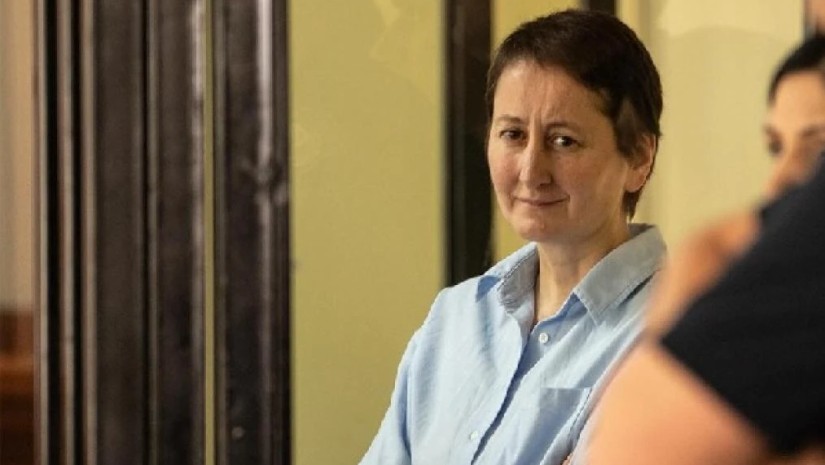
On April 24, Tbilisi City Court Judge Liana Kazhashvili dismissed the case filed by Mzia Amaghlobeli, founder of Batumelebi/Netgazeti, against Prime Minister Irakli Kobakhidze. Amaghlobeli, who is currently in custody, alleged that Kobakhidze’s televised statements constituted defamation, violated the presumption of innocence, and damaged her honor and dignity.
“This is a dangerous precedent, not only for Mzia Amaghlobeli as the plaintiff in this case but for the justice system in general,” the journalist’s lawyer, Ana Rekhviashvili, told the media.
Neither Irakli Kobakhidze nor his legal representative appeared in court.
This marks the second time the Tbilisi City Court has reached such a decision. On November 24, 2025, Judge Davit Akobidze also ruled to dismiss a case in which Mzia Amaghlobeli sought a retraction of false allegations from Irakli Kobakhidze.
On April 20, Judge Liana Kazhashvili announced a decision in which the court denied the complaint filed by former employees of “Real Space.”
The program “Real Space” aired on the Public Broadcaster until May 5, 2025, when the channel’s management decided to cancel the show. The “Real Space” staff subsequently sued the Public Broadcaster’s management. The decision announced on April 20 concerned the dismissal of Ketevan Kapanadze, Ioseb Katsitadze, Tamar Mshvenieradze, Omar Tsotsoria, and Tukha Kvinikadze. They are seeking the annulment of their dismissal orders and reinstatement to their respective positions at “Real Space” under the terms of their permanent employment contracts dated December 30, 2022.
Since November 2024, following the start of pro-European protests, demonstrators have been demanding open access to the airwaves. Employees of the Public Broadcaster joined this demand, and the “Real Space” team also openly criticized the channel’s editorial policy.
On April 11, 2025, the Public Broadcaster dismissed “Real Space” host Nino Zautashvili and “Moambe” anchor Vasil Ivanov-Chikovani. On May 1, “Real Space” was officially closed, and the contracts of team members who declined new offers were terminated.