Judge Nino Enukidze imposed 15 days of administrative detention on Shota Odishvili, who was detained over an inscription on his T-shirt. According to lawyer Giorgi Tabatadze, Odishvili has been transferred to the Gurjaani temporary detention isolator. Shota Odishvili is an active participant in protest rallies. He was detained on 23 August near the Government Administration, after leaving a rally held on Rustaveli Avenue in Tbilisi.
According to the lawyer, Odishvili was sitting in an elevated area in front of the Government Administration and playing Sudoku on his phone. Tabatadze says Odishvili did not communicate with police officers; however, law enforcement officers later accused him of insulting the police.
According to the lawyer, an administrative offence report was drawn up against Odishvili under Article 166 of the Code of Administrative Offences – petty hooliganism – over the inscription on his T-shirt, and under Article 173 – disobedience to a lawful order of the police – on the basis of alleged verbal insults against police officers. Tabatadze says there is no evidence in the case proving that Odishvili verbally insulted police officers.
According to Jano Chkadua, the lawyer of Zurab Menteshashvili, who had been found guilty over repeated blocking of a road, the Court of Appeals delivered its decision in Zurab Menteshashvili’s case without an oral hearing and dismissed the defence’s appeal. “Deciding the case without an oral hearing directly violates the right to a fair trial and the fundamental principle of publicity of proceedings,” the lawyer wrote.
Menteshashvili’s side was seeking his acquittal before the higher court. Menteshashvili is the first citizen to have been held criminally liable under the legislation tightened in the wake of protest rallies for repeated blocking of a roadway. He spent nine months in prison.
On 31 July, civil activist Tornike Toshkhua was detained near the Tbilisi City Assembly building. He was holding a sheet of paper reading: “Is Bidzina not a d***/is he?”
According to circulated video footage, during the detention Toshkhua asked police officers to explain the grounds for his detention. In the footage, police can be heard citing “hooliganism” as the basis for the detention. Later, the Ministry of Internal Affairs confirmed to Radio Liberty that Tornike Toshkhua had been detained under administrative procedure for an “insulting banner,” on the basis of Article 166 of the Code of Administrative Offences – petty hooliganism.
Tornike Toshkhua had also been detained by police on 26 July near the Tbilisi City Assembly building, also over an “insulting banner.” At that time, he was holding a sheet of paper reading: “Is Bidzina a d***? Yes or No.” Following his detention, nine more citizens were detained near the City Assembly in solidarity. In the cases of those detained on 26 July, the court imposed administrative detention on some of them and administrative fines on others. Toshkhua himself was fined GEL 3,000 by Judge Zviad Tsekvava.
Toshkhua had previously also been detained under criminal procedure and left prison several weeks ago.
On 2 August, Judge Tornike Kapanadze imposed 5 days of administrative detention on Tornike Toshkhua.
Human rights defender Marika Arevadze stated that an officer of the Court Bailiff Service used force against her at Tbilisi City Court. According to her, the bailiff pushed her and forced her to leave the court building.
“The footage does not show how this inhuman person pushes me and uses force against me!! However, it does show the situation,” Arevadze wrote on social media. According to Arevadze, she called patrol police to the scene.
According to reports, officers of the Court Bailiff Service forced citizens to leave the court premises. The citizens had come to support the protest participants detained near the Tbilisi City Assembly on 26 July and were waiting for the administrative proceedings to conclude.
According to the alleged victims, during the hearing of the final case, officers of the Court Bailiff Service also used force against activist Ruska Mchedlidze. According to Mchedlidze, the court bailiffs would not let go of her and tightened their grip, despite her asking them to release her because of severe pain. She said the pain was so intense that she was on the verge of losing consciousness. Throughout the day, reports circulated several times about confrontations between citizens and court bailiffs. Video footage was also circulated on social media showing bailiffs forcing citizens to leave the court building.
On 28 July, late at night, the court concluded the hearings in the cases of 10 persons detained near the Tbilisi City Assembly on 26 July. The cases were heard by Judges Zviad Tsekvava and Tornike Kapanadze.
By court decision, four persons were subjected to administrative detention. Ia Melitauri and Nato Bolkvadze were subjected to 5 days of administrative detention, while Shako Baghdoshvili and Lasha Dgebuadze were subjected to 10 days of administrative detention.
The remaining detainees were fined by the court: Tornike Toshkhua – GEL 3,000, Vaso Beridze – GEL 5,000, Mariam Mekantsishvili – GEL 6,000, Marine Nanava – GEL 5,000, and Sandro Sekhniashvili – GEL 5,000. Consideration of Tornike Tikaridze’s case was postponed until 31 July, and he was released from detention.
In Ia Melitauri’s case, the judge did not establish a violation of Article 173 and found her administratively liable only for petty hooliganism. According to persons present at the hearing, Melitauri spoke about ill-treatment in police custody and showed the judge injuries sustained during her detention.
In parallel with the hearings, reports circulated about confrontations between citizens and officers of the Court Bailiff Service. Circulated footage showed bailiffs forcing citizens to leave the court building.
The case concerns the events that took place near the Tbilisi City Assembly on 26 July. Police initially detained Tornike Toshkhua, who was standing near the City Assembly with a banner reading: “Is Bidzina a d***? Yes – No.” Following his detention, citizens displayed banners with the same wording in solidarity, after which police detained nine additional persons. The Ministry of Internal Affairs alleged that the detainees had used obscene language in a public space and disobeyed a lawful order of police.
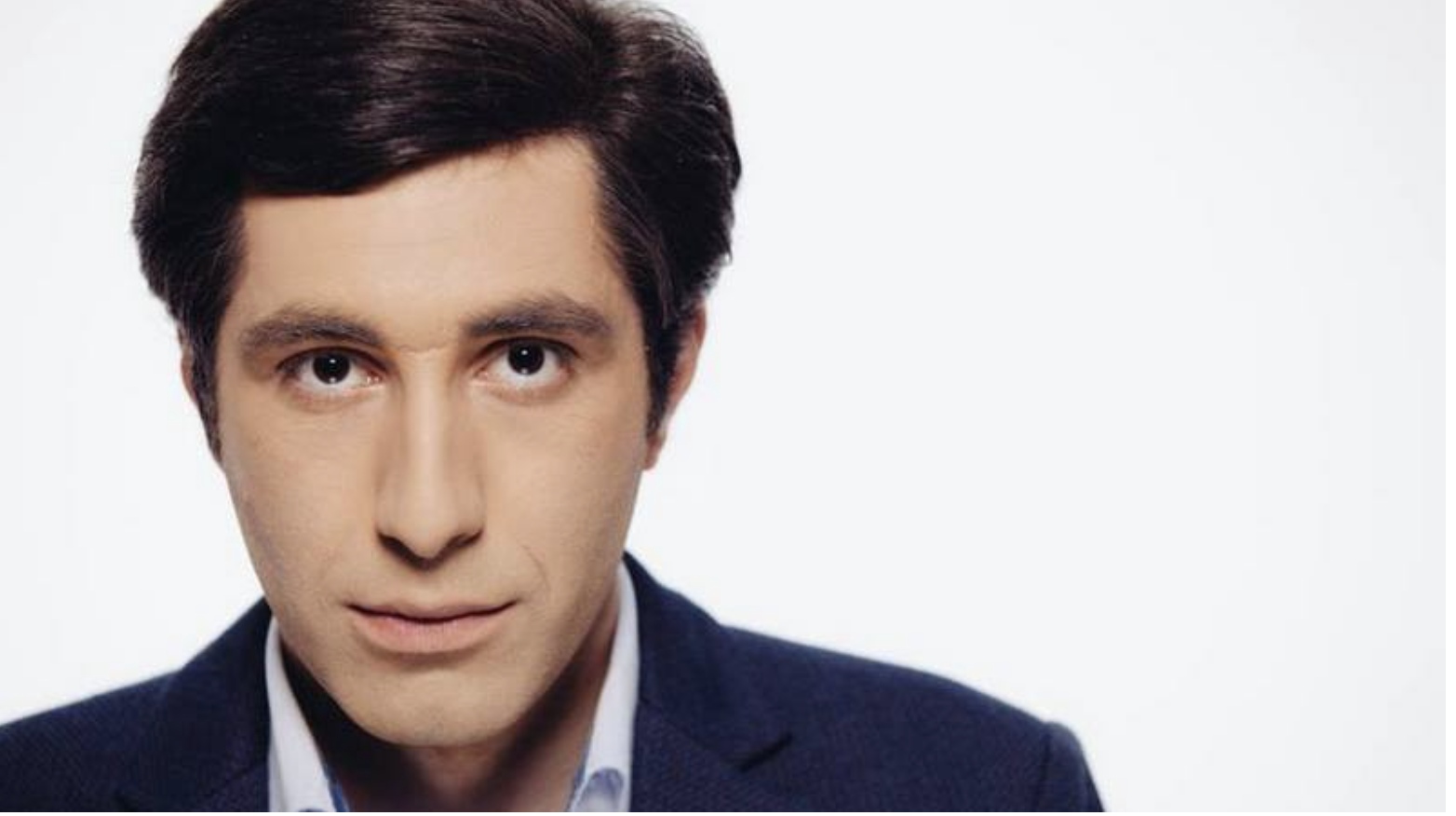
On July 22, Zviad Tsekvava of the Tbilisi City Court sentenced journalist Vakho Sanaia to 14 days in prison over a status posted on a social network. Previously, Vakho Sanaia had already been fined for a post written on Facebook.
The case concerned posts published on social media by Vakho Sanaia regarding the Speaker of Parliament, Shalva Papuashvili, and MP Lado Bojadze.
This is the first instance of a journalist being sentenced to imprisonment for a status written on a social network.
Administrative disputes against citizens over opinions expressed in public spaces are initiated based on reports from the newly created “Division for Combatting Hate Speech” within the Ministry of Internal Affairs (MIA). The new division has been operating within the MIA since June 1. The division’s task is to monitor and proactively detect statements disseminated in the public sphere that degrade human dignity, are insulting, or contain hate speech, if they exhibit signs of an administrative offense.
On July 14, the Tbilisi City Court upheld the civil lawsuit of Giorgi (Goga) Khaindrava, a director and supporter of “Georgian Dream,” against the television company “Formula.” The decision was made by Judge Liana Kazhashvili. The court ordered “Formula” to pay 10,000 GEL on the grounds of causing “moral damage” and instructed it to retract on its own air the “information defaming the name, honor, and dignity” of the plaintiff.
The dispute concerned reports aired on “Shabatis Formula” (Saturday’s Formula) on December 20, 2025, and January 17, 2026. In the January 17 report, “Formula,” citing a source, disseminated information that in 2016-2017, Goga Khaindrava, in possible agreement with the State Security Service, brought citizens of India and Pakistan into Georgia in exchange for a certain amount of money.
Khaindrava claimed that the report spread “fundamentally false” information intended to deliberately mislead the public. “Formula’s” lawyer, Eto Katamadze, assessed the decision as unsubstantiated and stated that the television company will fully utilize the legal mechanisms available within the country, after which it will likely continue the dispute in Strasbourg.
Because of this same report, the Prosecutor’s Office of Georgia launched an investigation involving the television company “Formula” under Part 1 of Article 373 of the Criminal Code, which implies false denunciation. According to the Prosecutor’s Office, the investigation concerns the fact of a possible crime committed by “Formula” against Goga Khaindrava. Within the framework of this investigation, “Formula” journalists Natuka Lomadze, Misho Martashvili, and Davit Kashiashvili were summoned to the Prosecutor’s Office for questioning.
On July 14, Tbilisi Court of Appeals Judge Shalva Kakauridze dismissed the appeal of the employees of “Real Space” (Realuri Sivrce)—a program closed by the Public Broadcaster—regarding their dismissal from the television station.
Ketevan Kapanadze, Ioseb Katsitadze, Tamar Mshvenieradze, Omar Tsotsoria, and Tukha Kvinikadze were demanding the annulment of their dismissal order. The Court of Appeals left the decision of Tbilisi City Court Judge Liana Kazhashvili unchanged.
On April 11, 2025, the Public Broadcaster dismissed the host of “Real Space,” Nino Zautashvili, and the host of “Moambe,” Vasil Ivanov-Chikovani. From May 1, the program “Real Space” was closed, and the contracts of those team members who refused new offers were terminated.
On 13 July 2026, it was reported that a plea agreement had been concluded with civil activist Isako Devidze in a case concerning contempt of court. Under the terms of the plea agreement, he was sentenced to one year of imprisonment. The agreement was approved by Judge Nino Nachkebia of Tbilisi City Court.
Isako Devidze was charged with contempt of court through insulting a judge, an offence under Article 366(2) of the Criminal Code. The charge relates to an incident that occurred during the court hearing in which his administrative detention case was being examined.
Isako Devidze was arrested on 20 December 2025 during a protest on Rustaveli Avenue on the grounds of allegedly insulting a police officer. On 22 December, Judge Zviad Tsekvava was hearing his case. During the court hearing, Devidze struck the judge’s work computer with his hand, causing the monitor to fall onto the desk. Devidze was removed from the courtroom and a recess was announced. After the hearing resumed, Judge Tsekvava imposed 30 days of administrative detention on the activist in the administrative case concerning the alleged insult of a police officer.
Devidze’s term of administrative detention was due to expire on 19 January. On 17 January, his family learned that a criminal investigation had been launched against him in connection with the incident that occurred during the court hearing. Devidze was remanded in pre-trial detention in the new case. Since his detention in the criminal case is counted from 17 January, the activist will remain in prison for another four months.
Tbilisi City Court Judge Tornike Kochkian has fined Vakho Sanaia, a journalist and TV host for the “Formula” television company, 6,000 GEL for opinions he expressed on a social network. The Ministry of Internal Affairs (MIA) accused the journalist of insulting state political officials. Social media posts published by Vakho Sanaia regarding the Speaker of the Parliament of Georgia, Shalva Papuashvili, and Member of Parliament, Lado Bozhadze, were ruled to be administrative offenses.
Sanaia had already been fined 4,000 GEL once before for an opinion expressed on a social network. Therefore, the judge made the decision in accordance with the article designated for a repeat offense.
Administrative disputes against citizens for opinions expressed in public spaces are initiated based on protocols from the newly established “Department for the Fight Against Hate Speech” within the MIA. This new department has been operational within the Ministry of Internal Affairs since June 1. The department’s task is to monitor and proactively detect statements in the public sphere that damage human dignity, are insulting, or contain hate speech, provided they show signs of an administrative offense.
According to Radio Free Europe/Radio Liberty, between its launch and July 2, this department identified 170 alleged offenses, 150 of which have already been submitted to the court. Out of these 150 cases, decisions have already been made on 33—resulting in 31 individuals being fined and two receiving verbal warnings. The majority of those fined are citizens and activists. Vakho Sanaia is the first journalist to be fined based on a protocol from this department.