“Georgian Dream” Denies OSCE Parliamentary Assembly Permission to Meet with Detained Journalist Mzia Amaghlobeli

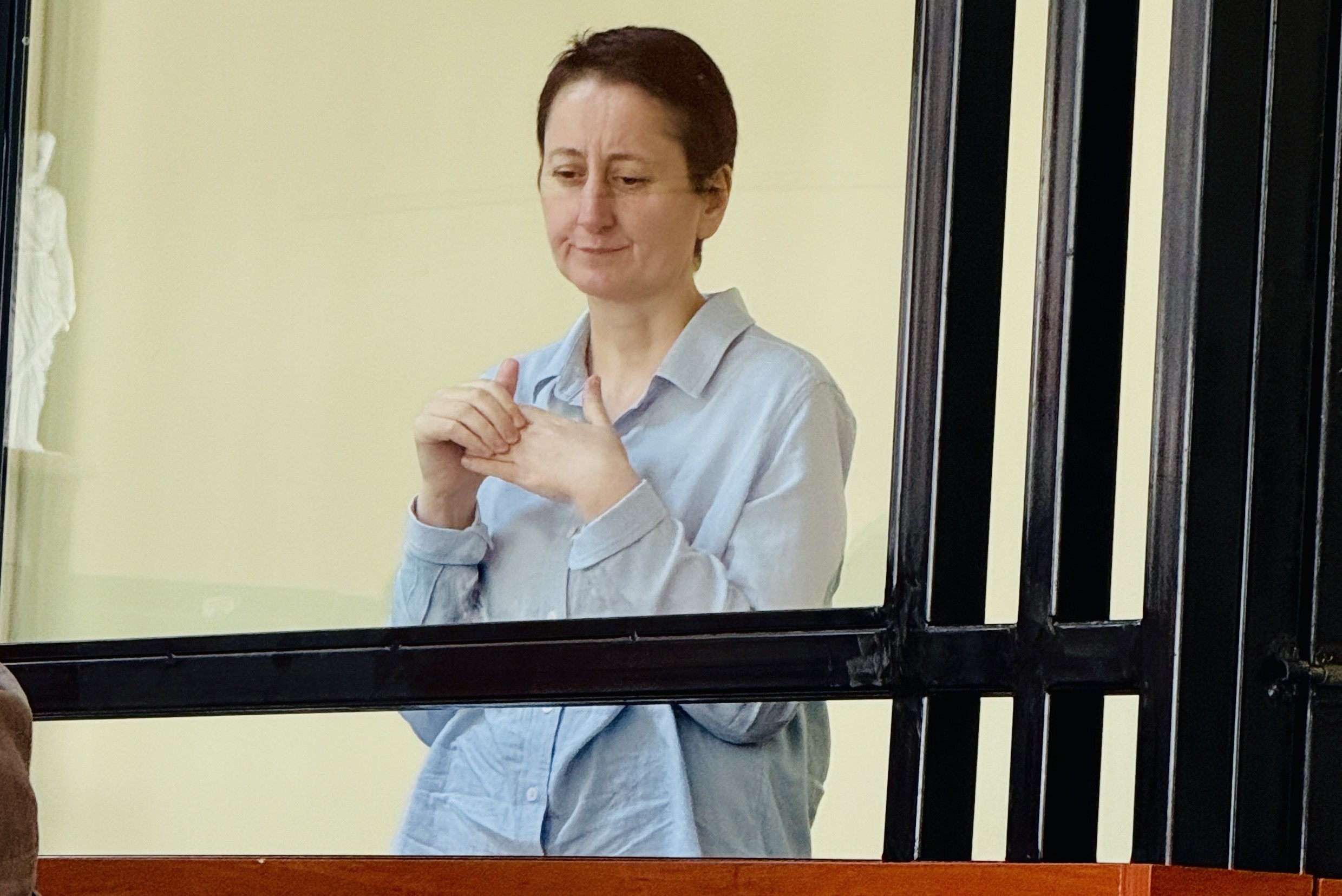
On March 10, 2026, it was revealed that the “Georgian Dream” government denied a visiting delegation from the OSCE Parliamentary Assembly permission to visit the founder of the publications Batumelebi and Netgazeti, journalist Mzia Amaghlobeli, in prison.

“We requested to visit the prisoners who are in jail, particularly the Sakharov Prize laureate [Mzia Amaghlobeli]. We expressed this to the Prime Minister, the President of the country, the Minister of Internal Affairs, and the Speaker of Parliament. And they replied to us: No,” stated Pere Joan Pons Sampietro, President of the OSCE Parliamentary Assembly, during his official visit to Georgia while speaking with journalists.

This fact is also confirmed by a statement released by the delegation regarding their visit to Georgia. This is not the first time “Georgian Dream” has prevented an international delegation from visiting journalist Mzia Amaghlobeli. In November 2025, members of the Parliamentary Assembly of the Council of Europe (PACE) who were in Tbilisi attempted to visit the detained journalist, but were refused entry to her prison cell. Similarly, in May 2025, a delegation of MEPs in Tbilisi was also unable to obtain permission to see Mzia Amaghlobeli.

Law Enforcement Accuses Netgazeti Journalist of “Blocking the Road” While Performing Professional Duties

The Georgian Ministry of Internal Affairs (MIA) is accusing Mariam Dzidziaria, a journalist for the online publication Netgazeti, of “blocking the road” on Rustaveli Avenue. The charges stem from the “Saturday March” rally held on January 31, 2026, where Dzidziaria was performing her professional duties. According to Netgazeti, while covering the protest, Mariam was wearing a press badge and a “PRESS” armband, and was carrying a camera.

On March 6, it was revealed that administrative proceedings on identical charges have been initiated against two other media representatives. The MIA is also accusing Tabula journalist Mariam Kuprava and photographer Giorgi Tarkhnishvili of “blocking the road” while fulfilling their professional duties.

The Georgian Charter of Journalistic Ethics stated that the MIA’s stance toward journalists covering protest rallies raises serious suspicions that the true objective of law enforcement is to intimidate them and force them to stop informing the public about protest sentiments. “Systemic pressure on journalists and the media violates the public’s right to be informed and damages the country’s interests,” the Charter’s statement reads.

Under the repressive legislative amendments passed by “Georgian Dream,” blocking a roadway has become a punishable offense. This is prohibited under Article 174-prime, Part 10 of the Administrative Offenses Code. Later, standing on the sidewalk was also integrated into this same article, leading to the prosecution of protesters as well.

Violating this article carries a penalty of up to 15 days of administrative detention (up to 20 days for organizers). Administrative detention does not apply to pregnant women, mothers with children under 12, minors, or persons with severe or significant disabilities. Instead, they face a fine of 5,000 GEL, or 15,000 GEL if they are an organizer. A repeat of the same “offense” leads to criminal liability.

Since October 26, 2024, more than 40 citations have been issued to journalists on charges of “blocking the road.”

Ministry of Internal Affairs Accuses Photographer Giorgi Tarkhnishvili of “Blocking the Road” While Performing Professional Duties

The Ministry of Internal Affairs (MIA) is accusing photographer Giorgi Tarkhnishvili of obstructing pedestrians by standing on the sidewalk while performing his professional duties. The case pertains to a protest on December 18, 2025, where the photographer was working on assignment.

The court hearing for this case was held on March 6, 2026. Judge Davit Makaradze of the Administrative Cases Panel of the Tbilisi City Court examined the evidence but deferred the announcement of the verdict.

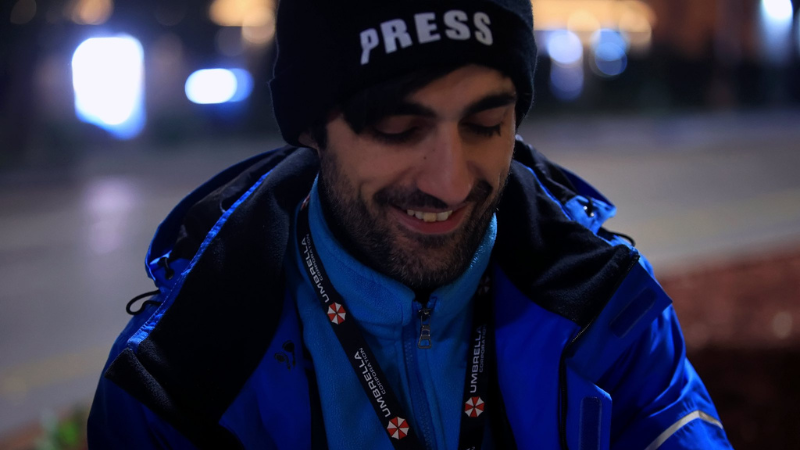
“We presented documents proving he is a journalist, as well as the badges he was wearing. Even his hat is marked ‘PRESS,’ and he is holding a large camera. All of this proves he was fulfilling his professional duties, and the video presented by the MIA clearly shows him taking photos or videos,” Tarkhnishvili’s lawyer, Giorgi Tabatadze, stated in an interview with MediaChecker.

On March 6, it also became known that administrative proceedings on the same charges had been initiated against another media representative. The MIA is similarly accusing Tabula journalist Mariam Kuprava of “blocking the road” while performing her professional duties.

According to a statement from the Georgian Charter of Journalistic Ethics, the MIA’s stance toward journalists covering protests raises a well-founded suspicion that the true goal of law enforcement is to intimidate them and force them to stop informing the public about protest activities. “Systemic pressure on journalists and the media violates the public’s right to be informed and harms the country’s interests,” the Charter’s statement reads.

Under the repressive legislative amendments passed by “Georgian Dream,” blocking a roadway has become a punishable offense. This is prohibited under Article 174-prime, Part 10 of the Administrative Offenses Code. Later, standing on the sidewalk was integrated into this same article, leading to the prosecution of protesters as well.

Violating this article carries a penalty of up to 15 days of administrative detention (up to 20 days for organizers). Administrative detention does not apply to pregnant women, mothers with children under 12, minors, or persons with severe or significant disabilities. Instead, they are subject to a fine of 5,000 GEL, or 15,000 GEL if they are identified as an organizer. A repeat of the same “offense” leads to criminal liability.

Since October 26, 2024, approximately 40 citations have been issued to journalists on charges of “blocking the road.”

Ministry of Internal Affairs Accuses Tabula Journalist of “Blocking the Road” While Performing Professional Duties

The Georgian Ministry of Internal Affairs (MIA) has accused Mariam Kuprava, a journalist for the online publication Tabula, of “blocking the road” on Rustaveli Avenue. The accusation stems from a protest on February 7, 2026, while Kuprava was performing her journalistic duties covering the “Saturday March.” In an official report filed on February 9, the MIA claims that “Mariam Kuprava artificially blocked the motorable part of the roadway.”

The Georgian Charter of Journalistic Ethics issued a statement arguing that the Ministry’s stance toward journalists covering protests raises serious suspicions. They suggest the true objective of law enforcement is to intimidate and force journalists to stop informing the public about protest sentiments: “Systemic pressure on journalists and the media violates the public’s right to be informed and damages the country’s interests,” the Charter stated.

Under repressive legislative amendments passed by “Georgian Dream,” blocking a roadway has become a punishable offense under Article 174-prime, Part 10 of the Administrative Offenses Code. Later, standing on the sidewalk was also integrated into this same article, leading to the prosecution of protesters as well. Violation of this article carries a penalty of up to 15 days of administrative detention (up to 20 days for organizers). Administrative detention is not applied to pregnant women, mothers with children under 12, minors, or persons with severe or significant disabilities; instead, they face a fine of 5,000 GEL, or 15,000 GEL if identified as an organizer. Repeatedly committing the same “offense” leads to criminal liability.

Since October 26, 2024, approximately 40 citations have been issued to journalists on charges of blocking the road.

Update:

On April 2, Judge Tornike Kapanadze of the Administrative Cases Panel of the Tbilisi City Court dismissed the “road blocking” case against Mariam Kuprava. According to her lawyer, Nika Simonishvili, even the footage submitted by the Ministry of Internal Affairs clearly showed the Tabula journalist wearing press identification and performing her professional duties on-site.

Supreme Court Refuses to Hear Appeal of Mzia Amaghlobeli, Founder of “Batumelebi” and “Netgazeti”

On March 4, 2026, it was revealed that the Supreme Court of Georgia refused to hear the appeal of the imprisoned journalist Mzia Amaghlobeli, the founder and director of the publications Batumelebi and Netgazeti. The court’s refusal to accept the appeal for consideration, or declaring it inadmissible, means that the court will not review the merits of the case at all and leaves the Court of Appeals’ decision in force. With this step, the judicial review of Mzia Amaghlobeli’s case in Georgia has concluded across all court instances.

Mzia Amaghlobeli was arrested twice during the protest rally in Batumi on the night of January 11-12, 2025. She was initially detained for placing a protest sticker on the wall of an auxiliary storage room at the Batumi Police Department, which read: “Georgia is Striking.” Police officers removed the sticker immediately after it was posted. A few hours after her arrest, Mzia Amaghlobeli was released on her own recognizance, but she was soon arrested again for slapping the head of the Batumi Police, Irakli Dgebuadze. An investigation was launched against the journalist under the first part of Article 353-prime of the Criminal Code. Mzia Amaghlobeli had been placed in pretrial detention as a preventative measure. On August 6, 2025, Judge Nino Sakhelashvili of the Batumi City Court reclassified the charges against Mzia Amaghlobeli under the first part of Article 353 and sentenced her to two years in prison.

The Communications Commission Initiated Administrative Proceedings Against TV Company “Caucasus” Over Donations Received from the USA

According to Nino Jangirashvili, head of TV company “Caucasus,” the Communications Commission has initiated administrative proceedings against the broadcaster on the basis of an individual donation received from the USA. At the Commission’s request, the broadcaster must provide detailed information about the received funds and the corresponding documentation within 3 working days.

With the amendments made to the “Broadcasting Law” in 2025, foreign funding of broadcasters was completely prohibited, and the regulator’s powers were significantly expanded, including mechanisms for access to financial information. In parallel, the “Law on Transparency of Foreign Influence” has been in effect since 2024. These regulations have had a substantial impact on media funding models, resulting in several broadcasters continuing to operate, including by relying on donations from citizens.

According to Nino Jangirashvili, TV company “Caucasus,” given the legislative environment in the country, uses citizen donations as one of its main sources of funding and ensures broadcasting continuity based precisely on this model. Such income is generally used to cover operational expenses necessary for the daily functioning of the channel, making it practically impossible to specify the exact purpose of any particular donation.

This case clearly reflects the environment in which media operates against the backdrop of legislative changes, while the regulator’s initiation of proceedings based on individual donations raises additional questions regarding the proportionality of regulatory practices.

Criminal prosecution may be initiated against Afgan Sadigov

On January 16, Tbilisi City Court Judge Nino Enukidze terminated the administrative proceedings initiated against journalist Afgan Sadigov and referred the case to the Tbilisi Police Department, as the court assessed that his actions may contain elements of a criminal offense. This means that the journalist faces the risk of a criminal investigation being launched.

The case concerns an incident that occurred on December 17–18, 2025. The Ministry of Internal Affairs accuses Afgan Sadigov of obstructing traffic and/or pedestrian movement. According to the court’s assessment, since the journalist had already been subjected to an administrative penalty on the same grounds in October 2025, the conduct contains signs of a criminal offense.

This decision was made against the backdrop of legislative amendments under which, in the event of a repeated violation, administrative liability is replaced by criminal liability.

The Anti-Corruption Bureau is requesting information about grants from the publication “Indigo”

On November 11, 2025, the publication “Indigo” released a statement from which it became clear that the Anti-Corruption Bureau had initiated proceedings against them based on the so-called Law on Grants adopted by “Georgian Dream.” “Since our entire activity is based on open communication and only your trust, we want you to know this news as well. Obviously, we continue and serve the mission that created us—we continue working for free speech and expression, for free thoughts and ideas,” the publication writes.

The amendments to the “Law on Grants” are one of the repressive changes adopted by the “Georgian Dream” parliament in recent months to restrict the media. The law came into force in April. These amendments prohibited the issuance of foreign grants without the permission of the government. A grant received without consent leads to a fine equal to double the amount of the grant received.

The Anti-Corruption Bureau carries out the monitoring of the issuance and receipt of grants. This agency has already initiated proceedings against several media outlets based on this law, including: “Project 64,” the investigative media “iFact,” the publication “Mountain News,” GMC, which manages the publications “Realpolitika” and “Flangvis Detector” (Waste Detector), Georgian Media Group, and also the organization working on media rights, the “Georgian Charter of Journalistic Ethics.”

In addition to media outlets, the Anti-Corruption Bureau is requesting information about grants from civil and non-governmental organizations as well; in total, the agency’s letter has been received by more than 60 organizations, including member organizations of the “Media Advocacy Coalition.”

Heads of non-governmental organizations summoned for questioning

Leaders of prominent Georgian non-governmental organizations, including members of the Media Advocacy Coalition, have been summoned for questioning by the prosecutor’s office. The questioning is related to the so-called “mask case,” which the prosecutor’s office began investigating in February 2025 on charges of “sabotage, attempted sabotage under aggravating circumstances, and other similar crimes.” According to the organizations, the investigation is unfounded and aims to persecute, intimidate, and dismantle the civil sector.

Based on publicly available information, those summoned for questioning include: Tamta Mikeladze, head of the Social Justice Center; former and current directors of the International Society for Fair Elections and Democracy (ISFED), Nino Dolidze and Levan Natroshvili; Giorgi Mshvenieradze, head of Guardians of Democracy; Baia Pataraia, director of the organization Safar; and Aleko Tskitishvili, head of the Human Rights Center. They have stated on social media that they will agree to questioning only before a magistrate judge. All of them have already been questioned in court.

It should be noted that, in connection with the same case, at the prosecutor’s request, on August 27, 2025, seven organizations’ accounts were frozen: members of the Media Advocacy Coalition – Civil Society Foundation, ISFED, IDFI, GDI – as well as organizations working on human rights and anti-corruption – Guardians of Democracy, Safar, and the Social Justice Center.

The accounts of the member organizations of the “Media Advocacy Coalition” were frozen

The Georgian Prosecutor’s Office launched an investigation against non-governmental organizations, including member organizations of the “Media Advocacy Coalition,” on charges of “sabotage, attempted sabotage under aggravating circumstances, assistance in hostile activities to a foreign organization and an organization under foreign control, and mobilization of funds for activities directed against the constitutional order and foundations of national security of Georgia.”

On August 27, 2025, Tbilisi City Court satisfied the Prosecutor’s Office’s request and froze the bank accounts of these organizations.

Minutes after the Prosecutor’s Office released its statement, the pro-government TV company “Imedi” broadcast a story supporting the investigation, specifically using comments from civil sector representatives from pro-European rallies. The Prosecutor’s Office’s accusation charges the organizations with mobilizing funds to purchase special equipment (such as special gas masks, helmets, face coverings, medical masks, protective goggles) for participants of the pro-European rallies.

More than 50 civil society and media organizations expressed solidarity with the seized organizations.

“Taking punitive steps against Georgian non-governmental organizations, similar to the Russian authorities, confirms that the Ivanishvili government’s interest is the complete destruction of dissenting opinion and pro-European groups in Georgia,” the statement said.

Based on the request of the Prosecutor’s Office, the accounts of seven organizations were seized on August 27. These are: “Civil Society Foundation,” “International Society for Fair Elections and Democracy” (ISFED), “Institute for Development of Freedom of Information” (IDFI), “Guardians of Democracy,” “Georgian Democratic Initiative” (GDI), “Sapari,” and “Social Justice Center.” Among these, “Civil Society Foundation,” ISFED, IDFI, and GDI are members of the “Media Advocacy Coalition.”