Parliament Suspends Accreditation of “TV Pirveli” Journalist Nata Kajaia for One Year

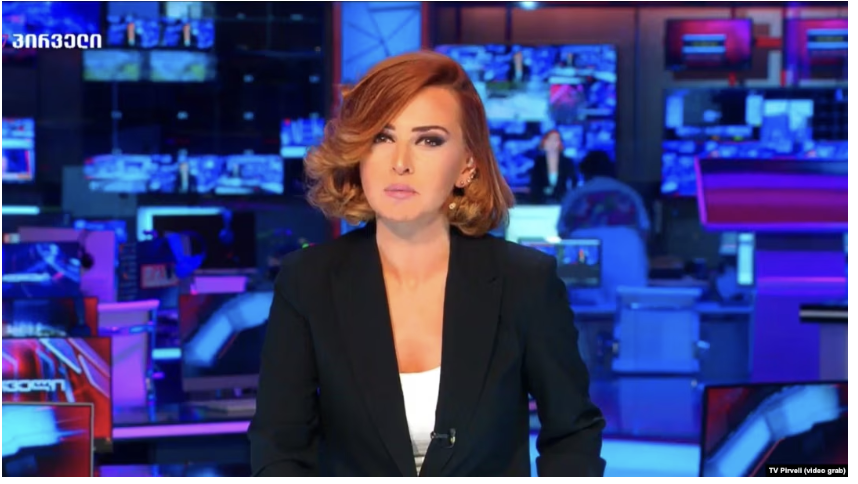
The Parliament has suspended the accreditation of “TV Pirveli” journalist Nata Kajaia for a period of one year. The Parliament’s decision regarding this was made public by journalist and TV presenter Nodar Meladze.

The reason for the one-year suspension of Nata Kajaia’s accreditation was recording an interview with a Member of Parliament despite their refusal.

The Parliament had previously made decisions against Nata Kajaia twice—first in 2024, and the next time in 2025, when the journalist’s accreditation was suspended for a period of six months.

The tightening of rules for the media in the legislative body began in February 2023. Several security measures were introduced in the Parliament, during which non-accredited journalists are banned from entering the Parliament. Also, it became possible to suspend a journalist’s accreditation based on a Member of Parliament’s request. Furthermore, from January 1, 2026, a new rule for issuing one-time special accreditation came into force, which also created additional barriers for journalists. All these measures have been repeatedly used against journalists.

Parliament Suspends Accreditation of “TV Pirveli” Journalist Maka Chikhladze

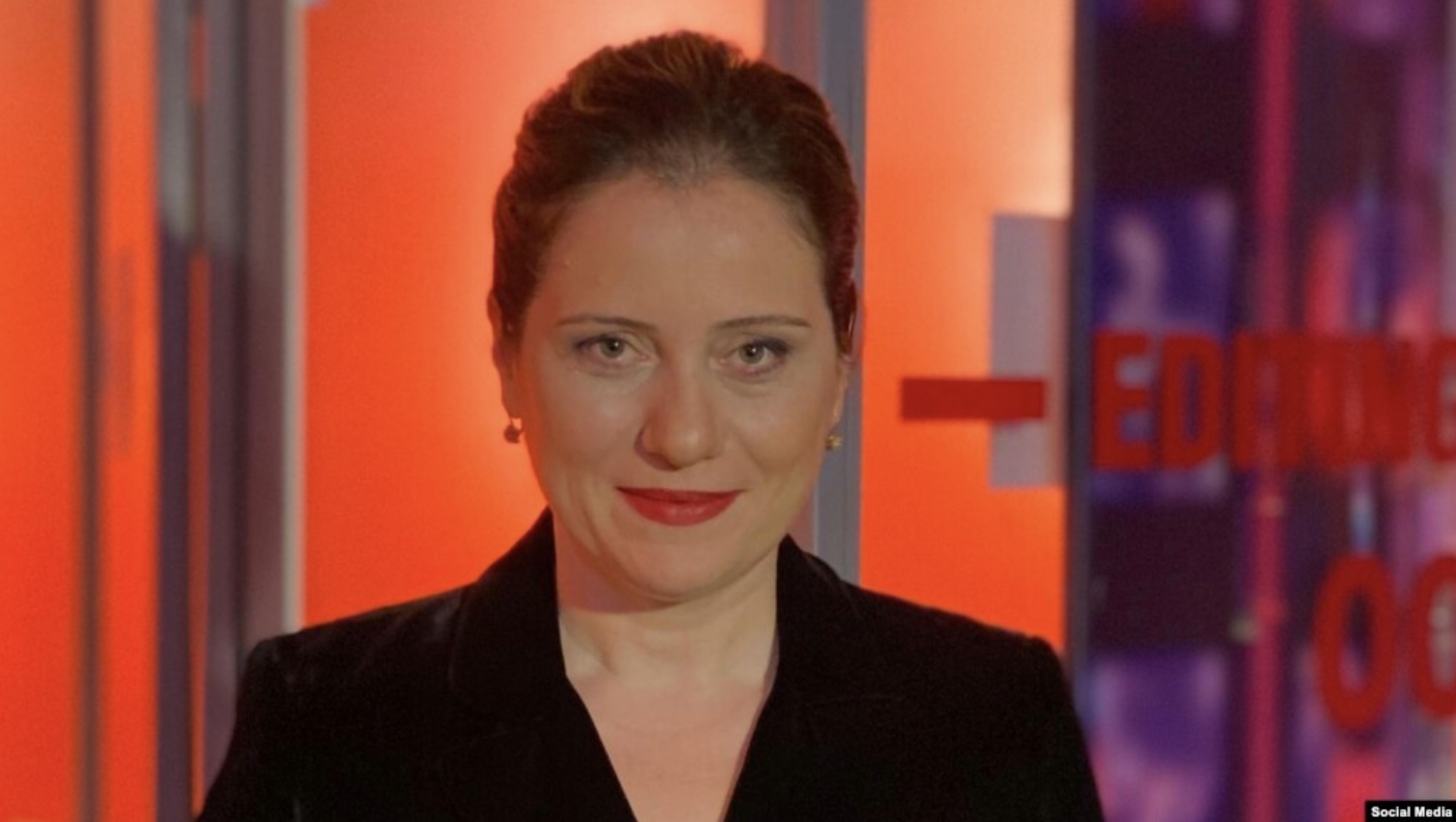
The Parliament has suspended the accreditation of “TV Pirveli” journalist Maka Chikhladze. Nodar Meladze, a journalist and TV presenter for TV Pirveli, published a post about this on social media. Chikhladze’s accreditation was suspended for a period of 6 months. The reason was continuing an interview despite a Member of Parliament’s refusal.

“In the last three weeks, three journalists from ‘Shabatis Eteri’ [Saturday Broadcast] Maka Chikhladze, Maka Andronikashvili, and Natalia Kajaia have had their Parliament of Georgia accreditation suspended for 1, 6, and 12 months, based on completely unsubstantiated grounds! When they don’t want to answer questions, the simple solution is to block the journalists,” Nodar Meladze wrote on Facebook.

The tightening of rules for the media in the legislative body began in February 2023. Several security measures were introduced in the Parliament, during which non-accredited journalists are banned from entering the Parliament. Also, it became possible to suspend a journalist’s accreditation based on a Member of Parliament’s request. Furthermore, from January 1, 2026, a new rule for issuing one-time special accreditation came into force, which also created additional barriers for journalists. All these measures have been repeatedly used against journalists.

Parliament Suspends Accreditation of “TV Pirveli” Journalist Maka Andronikashvili

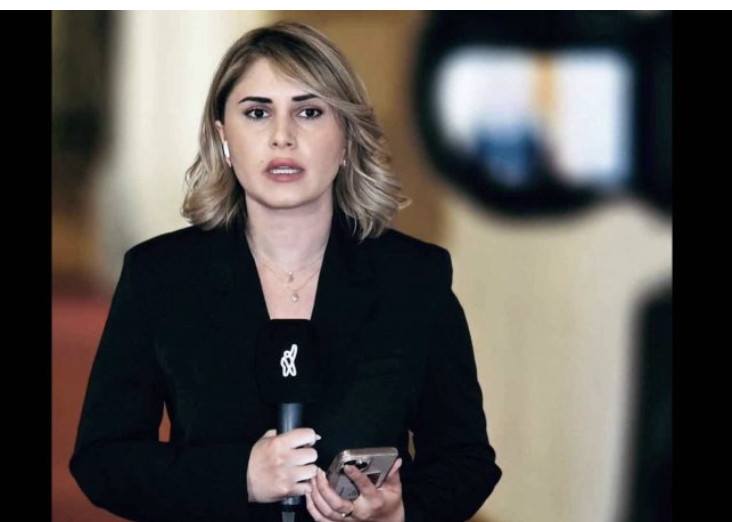
The Parliament has suspended the accreditation of “TV Pirveli” journalist Maka Andronikashvili for a period of one month. Nodar Meladze, a journalist and TV presenter for “TV Pirveli,” published a post about this on social media. The reason for the suspension of her accreditation was continuing an interview despite a Member of Parliament’s refusal.

“In the last three weeks, three journalists from ‘Shabatis Eteri’ [Saturday Broadcast] Maka Chikhladze, Maka Andronikashvili, and Natalia Kajaia have had their Parliament of Georgia accreditation suspended for 1, 6, and 12 months, based on completely unsubstantiated grounds! When they don’t want to answer questions, the simple solution is to block the journalists,” Nodar Meladze wrote on Facebook.

The tightening of rules for the media in the legislative body began in February 2023. Several security measures were introduced in the Parliament, during which non-accredited journalists are banned from entering the Parliament. Also, it became possible to suspend a journalist’s accreditation based on a Member of Parliament’s request. Furthermore, from January 1, 2026, a new rule for issuing one-time special accreditation came into force, which also created additional barriers for journalists. All these measures have been repeatedly used against journalists.

Parliament Suspends Accreditation of “Formula” Journalist Nini Balanchivadze for 6 Months

The TV company “Formula” journalist Nini Balanchivadze has had her Parliament of Georgia accreditation suspended for 6 months.

According to information released by the television company, the Parliament accuses the journalist of violating Article 15, Paragraph 2, Sub-paragraph of the rules for the accreditation of media representatives. This implies, “in case a member of the Parliament of Georgia, an employee of the Apparatus, or a visitor to the Parliament refuses to record an interview, to terminate the interview.”

The explanatory letter sent to the television company refers to a report that aired on “Akhali Formula” on June 23, 2026.

The tightening of rules for the media in the legislative body began in February 2023. Several security measures were introduced in the Parliament, during which non-accredited journalists are banned from entering the Parliament. Also, it became possible to suspend a journalist’s accreditation based on a Member of Parliament’s request. Furthermore, from January 1, 2026, a new rule for issuing one-time special accreditation came into force, which also created additional barriers for journalists. All these measures have been repeatedly used against journalists.

Parliament Amends Election Procedures for Public Broadcaster’s Board of trustees

The Parliament of Georgia is reviewing amendments to its Rules of Procedure under an accelerated procedure. One of the key issues concerns the article regulating the election of members to the Public Broadcaster’s Board of Trustees. According to Parliament Speaker Shalva Papuashvili, if a vacancy opens on the board, the entity

holding the quota for that vacant seat will directly select its preferred candidate and present them to the Parliament for consideration. According to the Georgian Law on Broadcasting, the Public Broadcaster’s Board of Trustees consists of 11 members. Parliament elects the trustees based on the following nominations: Two nominated by the Public Defender. Three nominated by the parliamentary majority. Three nominated by the parliamentary opposition. Three nominated by the Supreme Council of the Autonomous Republic of Adjara.

Under the current regulations, candidates for the Board of Trustees are selected through an open competition announced by the Speaker of Parliament. A 9-member commission is formed to shortlist candidates and present them to the authorized entities. From this shortlist, the entities then select nominees to present to the Parliament.

Papuashvili argues that this regulation is “absurd” because the legislative body cannot establish its own procedures without external interference. Therefore, he believes the election procedure must be brought closer to the core principle of parliamentary democracy: parliamentary sovereignty.

“The proposal is as follows: establish a procedure where, if there is a vacancy within an entity’s quota, that entity can select [a candidate] however it wishes. It can hold a competition or do whatever it wants—whether it’s the majority, the opposition, the Public Defender, or the Autonomous Republic of Adjara. But in its relationship with the Parliament, this entity must present a single candidate. It should say, ‘Here is a vacancy, I have the right to nominate a candidate, and I am nominating this specific person,’ rather than being handed three candidates pre-selected by others and being told to pick one of them,” stated Papuashvili.

According to Papuashvili, the nominated candidate will first be evaluated by the Sector Economy Committee before being put to a vote at a plenary session. Parliament plans to fast-track these amendments and adopt them during the current session week.

The Media Advocacy Coalition assesses these changes as creating additional risks for media freedom, transparency, and institutional independence. “This decision further reduces transparency and strengthens the risk of undue influence over the Public Broadcaster, which has been under the influence of ‘Georgian Dream’ for years, and whose management persecutes independent and professional journalists,” the coalition noted in its statement.

Georgia’s Parliament Tightens Media Accreditation Rules

By order eof the Speaker of the Georgian Parliament, Shalva Papuashvili, changes have been made to the parliament’s accreditation system. According to the amendments, individual journalists who repeatedly violate parliamentary accreditation rules will have their accreditation suspended for up to one year. Additionally, depending on the severity and frequency of the violations, an entire media outlet could have its accreditation revoked for up to a year.

Shalva Papuashvili justified these changes by citing a desire to adopt the practices of the European Parliament. The Speaker initially announced the potential tightening of media rules on May 14. His statement followed the European Parliament’s decision to suspend the accreditation of the pro-government broadcaster “Imedi,” a channel sanctioned by the UK for spreading Russian disinformation.

“Currently, violating accreditation rules in the Georgian Parliament results in a one-month suspension for the first offense, and a six-month suspension for a repeat offense. We have seen that a one-year suspension also exists in the European Parliament. Therefore, we will bring the Georgian Parliament’s accreditation system closer to that of the European Parliament,” stated Papuashvili.

Until now, sanctions for violating accreditation rules in the Georgian Parliament were only applied against individual journalists. Papuashvili noted that the European Parliament also imposes sanctions on entire media outlets; therefore, they will “adopt this experience as well,” making it possible to revoke a media organization’s accreditation for a full year.

The Media Advocacy Coalition views these amendments as a deliberate hindrance to journalistic work. “Under the guise of implementing European Parliament regulations, the Parliament continues to complicate the operations of independent media within the legislative body. Media accreditation mechanisms in the Parliament have already been used against independent media on numerous occasions. This creates a reasonable suspicion that the new regulations will further amplify the risk of selective and punitive approaches against the press,” the organization noted in its statement.

The tightening of rules for the media in the legislative body began in February 2023. Several security measures were introduced in Parliament, under which journalists who are not accredited by Parliament are prohibited from entering the building. It became possible to suspend a journalist’s accreditation simply based on an MP’s request. Furthermore, starting January 1, 2026, a new rule for issuing one-time special accreditations came into effect, creating even more barriers for the press. All of these measures have been repeatedly deployed against journalists.

Parliament Revokes Accreditations of “Studio Monitor” and “Publika” Ahead of Schedule

The Parliament of Georgia has prematurely revoked the accreditations of the online publications Publika and Monitori, which were initially issued for a one-year term.

In the May 21 decrees signed by the Head of the Parliamentary Staff, Kakha Okrojanashvili, and delivered to the media outlets, the stated reason for the revocation is the absence of their accredited journalists from the Parliament for ten consecutive weeks during the current parliamentary session (February 5, 2026 – April 17, 2026). Both Publika and Monitor each had four accredited journalists at the Parliament.

The Parliament’s Public Relations Department told Publika that this is the first instance of journalists having their accreditations prematurely revoked under this specific article. This regulation has been in effect since 2023. Monitor plans to appeal the Parliament’s decision in court.

It is worth noting that a non-accredited journalist from Studio Monitori previously faced difficulties obtaining even a one-time pass to enter the Parliament. On February 17 and 19, Monitor journalist Marika Dudunia applied twice for a special one-time pass, but the Parliament denied her requests.

The Georgian Charter of Journalistic Ethics has assessed the incident as a deliberate attempt to restrict journalists from independent media outlets from accessing public information and public spaces, thereby hindering the performance of their professional duties.

“All of this ultimately harms the population of Georgia, leaving them without reliable and verified information on issues of vital importance to them,” the Charter’s statement reads.

Shalva Papuashvili Discusses Potential Tightening of Rules for Media in Parliament

Parliament Speaker Shalva Papuashvili responded to reports concerning the one-year suspension of TV company “Imedi’s” accreditation at the European Parliament, stating that the ruling team will discuss whether to apply similar rules in Georgia.

Papuashvili’s statement points to a potential further tightening of rules for media access to the Parliament. This comes against the backdrop of recent and repeated restrictions on journalist accreditation in the Georgian Parliament, including those introduced in January 2026.

“We saw it in the European Parliament, we’ve seen other countries too; the most lenient rules are the ones introduced here. Now you see what the European Parliament’s rule actually entails. We will definitely consider whether or not to apply those same rules here,” Papuashvili stated.

He assessed the European Parliament’s decision as a step taken “against free media” and remarked that “Brussels is replacing the Soviet Union step by step.”

TV company “Imedi,” which was recently sanctioned by the UK for spreading Russian disinformation, claims that the European Parliament has banned its operations for a year. Meanwhile, Moldova denied accreditation to three pro-government channels—”Imedi,” “Rustavi 2,” and “POSTV”—to cover the 135th session of the Committee of Ministers of the Council of Europe.

The Parliament revoked the accreditation of a journalist from the TV “Formula”

On November 24, the Parliament suspended the accreditation of Dea Badzagua, a journalist for the investigative program “Shabatis Formula” of the TV “Formula,” for one month. The suspension of accreditation was requested by the “Georgian Dream” MP Maia Bitadze.

A report aired on “Shabatis Formula” [at 18:41 and 20:02], showing Dea Badzagua trying to ask questions to “Georgian Dream” MP Aluda Gghudushauri regarding the case initiated against the chairman of the party “For Georgia,” Giorgi Gakharia. The interview was recorded by phone by Parliament member Maia Bitadze from “Georgian Dream.” According to the journalist on “Formula,” she did not even have questions for Maia Bitadze, but the MP became irritated by listening to questions directed at her colleague.

“It is noteworthy that she [Maia Bitadze] immediately threatened us with sanctions and, apparently, carried them out… Representatives of ‘Georgian Dream’ in the parliamentary body do not answer any questions from critical media,” said journalist Dea Badzagua on “Formula.”

On November 13, another journalist from “Formula,” Tiko Eradze, had her accreditation suspended after she published a video shot in the parliamentary plenary hall, where she filmed “Georgian Dream” MP Eka Chichinadze from the journalists’ designated gallery, while the MP was watching the video recording on her phone.

The Parliament suspended the accreditation of a journalist from the TV “Formula” for a period of one month

On November 12, Tiko Eradze released a video filmed in the Parliament’s Plenary Hall, where she recorded “Georgian Dream” MP Eka Chichinadze listening to a video recording on her phone from the lodge designated for journalists. Shortly after the video was published, Tiko Eradze herself posted on Facebook, expressing her assumption that her accreditation would be suspended.

On November 13, the journalist was informed by a letter from the Head of the Parliament Apparatus that her accreditation had been suspended for a period of one month. The letter explained the grounds for the suspension: “You filmed the mobile phone screen of Member of Parliament Eka Chichinadze from the location designated for the media without permission.”

The restriction of journalists’ activities in the Parliament building by “Georgian Dream” is linked to the approval of the Rules of Accreditation for Media in the Parliament of Georgia on February 6, 2023. The new regulations included restrictions such as a ban on filming without prior permission, the journalist’s obligation to stop an interview if a Member of Parliament refuses, and the requirement that a journalist must not film a Member of Parliament’s phone or other electronic device screen without their consent in a way that allows the information or image on it to be perceived. These changes drew criticism from the Georgian Charter of Journalistic Ethics, which stated that such regulations made it impossible to obtain and deliver information to the public.

This is not the first time that the Parliament has used the media accreditation rules against representatives of independent media.