Zurab Menteshashvili and Denis Kulanin Report Inhuman or Degrading Conditions of Detention Following Placement in Solitary Confinement

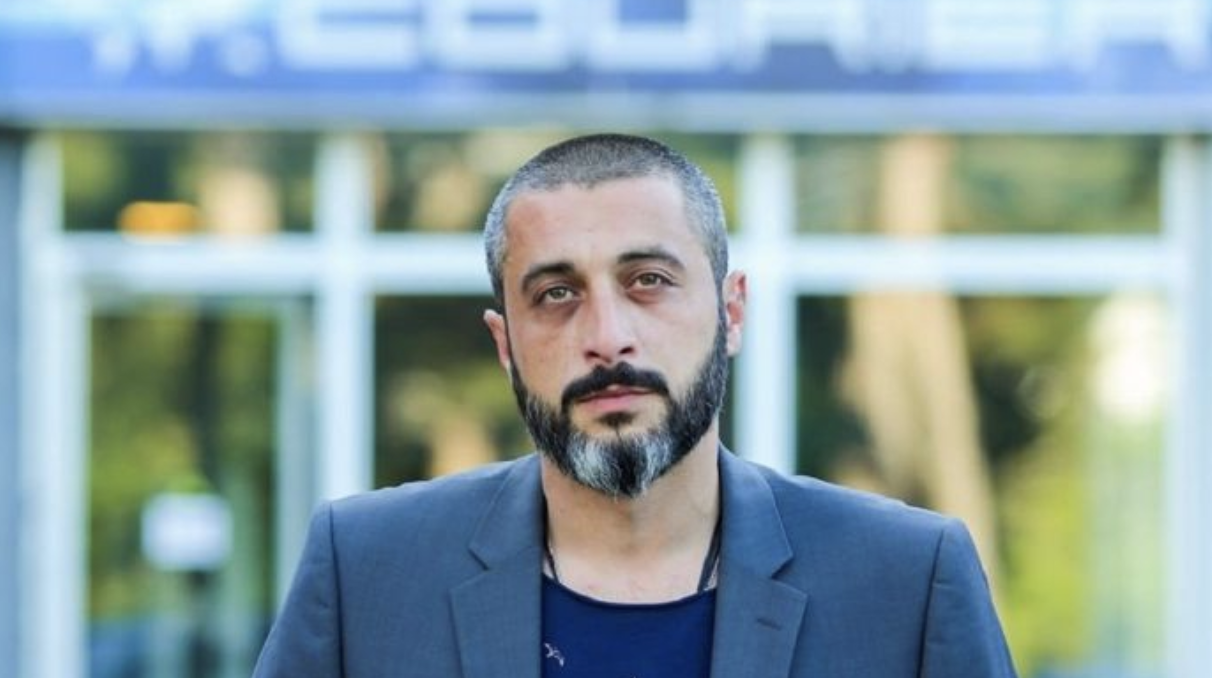
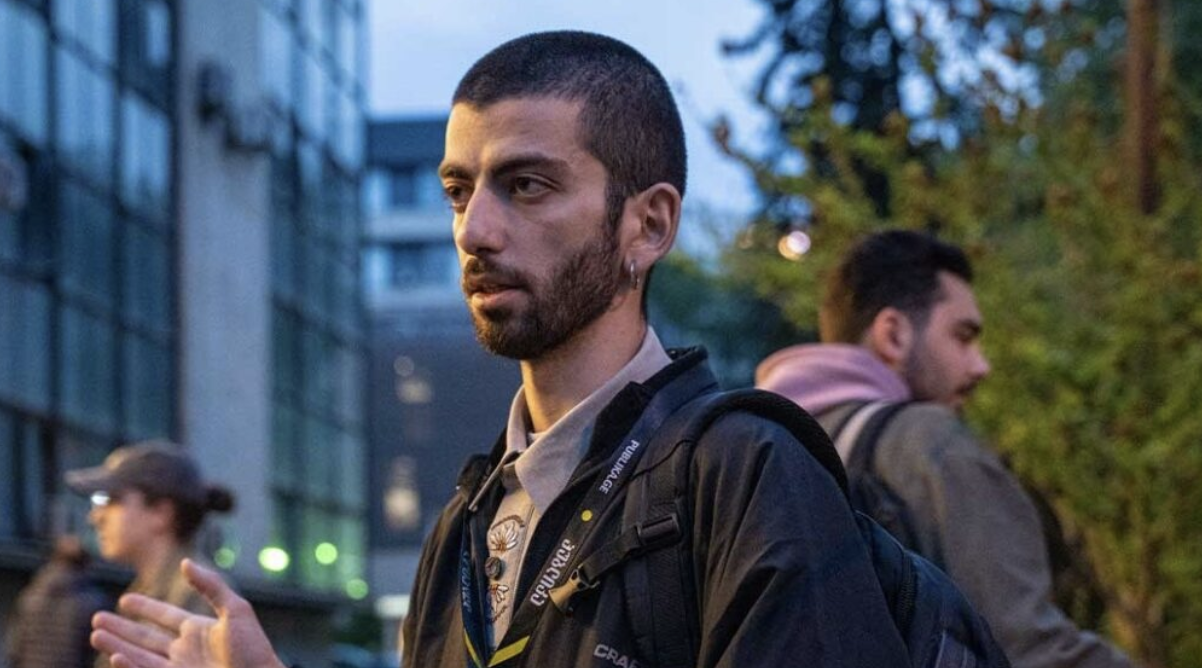
On 10 March, according to publicly available information, Zurab Menteshashvili and Denis Kulanin were placed in solitary confinement, where, according to their accounts, they are being held in conditions that may amount to inhuman or degrading treatment.

According to Menteshashvili’s legal counsel, Jano Chkadua, Menteshashvili is being held in materially inadequate conditions of detention. He is reportedly deprived of basic necessities, including a towel, toothbrush, and hygiene products, and is not provided with the means to maintain minimum sanitary conditions in his cell. Counsel further indicated that the cell is unsanitary and infested with cockroaches. According to the lawyer, Menteshashvili considers that his placement in solitary confinement may be linked to his hunger strike, as the prison administration had repeatedly requested that he discontinue it.

According to Denis Kulanin, on 3 March he and Menteshashvili were transferred to solitary confinement without being provided with any explanation. He stated that their personal belongings, including documents necessary for court proceedings and personal correspondence, were confiscated. He further indicated that they were denied access to telephone communication, outdoor exercise, and bathing facilities. Kulanin reported that the cell is infested with cockroaches, lacks functioning ventilation, and that they are not provided with essential items necessary to ensure basic hygiene. He also stated that they are not permitted to purchase hygiene products or other essential items. In a letter dated 6 March, Kulanin stated that he and Menteshashvili have been on hunger strike since their placement in solitary confinement and requested a visit from the Public Defender of Georgia. He further indicated that they are seeking clarification of the legal grounds for their placement and allege that they are being effectively isolated from both their legal representatives and the public.

The Penitentiary Service denied the reported allegations, stating that Menteshashvili and Kulanin are not held in solitary confinement but are instead placed in so-called quarantine (internal classification) cells. According to the authority, such placement was carried out in accordance with the Penitentiary Code of Georgia and the institution’s internal regulations. The Penitentiary Service also released video footage which, according to its statement, depicts the individuals consuming food and was made public for the purpose of informing the public.

Denis Kulanin has been convicted in connection with damage to a vehicle belonging to the Ministry of Internal Affairs of Georgia. He is a Russian-born activist residing in Georgia who was convicted in relation to an incident during a protest near the Parliament on 28 March 2025,  and was sentenced to two years’ imprisonment.Zurab Menteshashvili is held in custody under criminal law on charges of repeatedly blocking a roadway. The charges are based on legislative amendments adopted on 16 October 2025, pursuant to which the repeated blocking of a roadway or obstruction of movement during an assembly or demonstration constitutes a criminal offence.

Georgian Dream Proposes Assigning Enforcement of the “Russian Law” to the State Audit Office

On 9 March, the ruling party Georgian Dream introduced a legislative amendment in Parliament proposing that enforcement of the so-called “Russian law” (the Law on Transparency of Foreign Influence) be transferred to the State Audit Office. According to the explanatory memorandum, the State Audit Office already exercises oversight and enforcement functions in relation to the Foreign Agents Registration Act (FARA) and the Law on Grants; accordingly, it is deemed appropriate for the same authority to be entrusted with the implementation of this law. The draft amendments were introduced by Georgian Dream Members of Parliament Archil Gorduladze, Tornike Cheishvili, Rati Ionatamishvili, Aluda Ghudushauri, Davit Matikashvili, Guram Macharashvili, Akaki Aladashvili, Tengiz Sharmanashvili, and Aleksandre Tabatadze.

The so-called “Russian law,” first initiated in 2023, establishes a requirement for civil society organizations and independent media receiving foreign funding to register in a designated registry and is referred to by critics as the “Russian law” due to its similarity to the “foreign agents” legislation in force in Russia. The draft law prompted large-scale public protests and international criticism in Georgia, following which its adoption was suspended in 2023. In April 2024, however, the ruling party reintroduced the draft law in Parliament and, on 28 May 2024, following the override of the presidential veto, the law was adopted.

The law obliges organizations receiving foreign funding to submit annual financial disclosures and provides for sanctions in the event of non-compliance. It has subsequently served as the basis for a series of further restrictive legislative amendments, which critics contend are aimed at suppressing dissent and constraining the activities of civil society and independent media.

Tbilisi Court of Appeals Upholds Five-Year Sentence Imposed on Giorgi Mindadze

On 9 March, the Tbilisi Court of Appeals upheld the five-year term of imprisonment imposed on Giorgi Mindadze. The decision was issued by Judge Tea Leonidze.

According to the investigation, Mindadze was charged with discharging pyrotechnic devices in the direction of an officer of the Special Tasks Department during a pro-European protest held on 29 November, allegedly resulting in a burn injury to the officer’s leg. The case was brought under Article 353¹ of the Criminal Code of Georgia, which concerns an attack on a law enforcement officer.

Mindadze was sentenced to five years’ imprisonment on 3 July 2025 by Judge Nino Galustashvili of the Tbilisi City Court.According to the defence, one of the key pieces of evidence in the case is a seven-second video recording obtained from social media, which shows an individual discharging fireworks; however, the footage is not continuous and does not allow for reliable identification of the person. The defence also points to inconsistencies in the testimony of the alleged victim, who stated that the injury was sustained on 29 November but sought emergency medical assistance only on 1 December, raising questions, in the defence’s view, as to whether the injury is in fact related to the events of 29 November.

Saba Gelashvili Subjected to Four Days of Administrative Detention in Sidewalk Case

On 9 March, Judge Tornike Kapanadze of the Tbilisi City Court found Saba Gelashvili liable for an administrative offence related to standing on a sidewalk and subjected him to four days of administrative detention. The Ministry of Internal Affairs of Georgia alleged that on 18 December he obstructed pedestrian movement on the sidewalk.

Saba Gelashvili is a former champion of the television program “Book Shelf” (წიგნების თარო). The program responded to the decision with a public statement criticizing Gelashvili’s detention. The statement described the detention of individuals for standing on a sidewalk as “a continuation of a farce” and expressed solidarity with Gelashvili and other detained young people.

Administrative proceedings against citizens in relation to sidewalk protests commenced following legislative amendments adopted by Georgian Dream on 12 December 2025.  The amendments were adopted following accelerated parliamentary consideration over a three-day period. As a result of these amendments, protest activity on sidewalks was, in effect, also prohibited. For a first violation, the legislation provides for administrative detention for a period of up to 15 days (up to 20 days in the case of an organizer), while a repeated violation may result in the imposition of criminal liability. According to the assessment of Transparency International Georgia, “the detention of an individual for standing on a sidewalk, even under administrative procedure, let alone the imposition of criminal punishment cannot withstand any criticism when assessed against the standards of freedom of assembly guaranteed by the Constitution of Georgia and by international human rights instruments.” The administrative provisions related to the so-called “sidewalk cases” are currently being challenged before the Constitutional Court of Georgia. The constitutional complaint seeks a declaration of unconstitutionality of the relevant regulations, which provide for the imposition of fines or administrative detention on individuals for standing on a sidewalk or roadway.

“TV Pirveli” Exposes Pro-Government “Imedi” for Spreading Disinformation

“TV Pirveli” states that on April 16, during the news program “Qronika,” the TV company “Imedi” disseminated false information regarding TV Pirveli.

According to the broadcaster, the report claiming that an individual named Blažević instructed “TV Pirveli” to spread information about expected personnel changes within the “Georgian Dream” government is untrue. “TV Pirveli” notes that this information is “a lie and disinformation” and is not based on factual circumstances.

The TV station further states that while preparing the material, the “Imedi” journalist did not contact the channel for a retaliatory comment, which they believe constitutes a violation of the Law of Georgia on Broadcasting. “TV Pirveli” demands an end to the spread of disinformation and the full coverage of its position during the same news broadcast. Additionally, the broadcaster calls on the National Communications Commission to respond to the incident immediately. In the channel’s assessment, the dissemination of such fake news serves as an attempt to discredit independent media.

Political activist Shalva Javakhia found liable for an administrative offence in connection with a sidewalk protest

Shalva Javakhia, a history teacher, political activist, and member of the political party “Federalists,” was found liable for an administrative offence in connection with a protest conducted on a sidewalk. The court imposed a verbal warning. The decision was issued by Judge Manuchar Tsatsua.

The Ministry of Internal Affairs alleged that on 18 December 2025, Shalva Javakhia obstructed the movement of the public while standing on the sidewalk outside the Parliament building.

Shalva Javakhia is the tenth individual to have been found liable in proceedings related to sidewalk protests. Of the ten cases to date, five individuals were sentenced to administrative detention for periods of four and five days, while in five cases the courts imposed verbal warnings.

On 12 December 2025, the “Georgian Dream” party adopted another repressive legislative amendment restricting the right to freedom of assembly. The amendments were adopted following accelerated parliamentary consideration over a three-day period. As a result of these amendments, protest activity on sidewalks was, in effect, also prohibited. For a first violation, the legislation provides for administrative detention for a period of up to 15 days (up to 20 days in the case of an organizer), while a repeated violation may result in the imposition of criminal liability. According to the assessment of Transparency International Georgia, “the detention of an individual for standing on a sidewalk, even under administrative procedure, let alone the imposition of criminal punishment cannot withstand any criticism when assessed against the standards of freedom of assembly guaranteed by the Constitution of Georgia and by international human rights instruments.”

A precedent has been established –  civil activist Rezi Dumbadze found liable for standing on a sidewalk

On 22 January 2026, a precedent was established at the Tbilisi City Court, where the first ruling was delivered in the so-called “sidewalk case.” Judge Tornike Kapanadze found Rezi Dumbadze, a participant in pro-European demonstrations, liable for an administrative offence for standing on a sidewalk adjacent to the Parliament building and thereby “obstructing the movement of the public,” and issued a verbal warning as a sanction.

The Ministry of Internal Affairs alleged that Rezi Dumbadze committed the administrative offence on 17 December 2025. On 14 January, the protest participant was notified by the Tbilisi City Court that he was required to appear in connection with the alleged “blocking” of the sidewalk.

On 12 December 2025, the “Georgian Dream” party adopted another repressive legislative amendment restricting the right to freedom of assembly. The amendments were adopted following accelerated parliamentary consideration over a three-day period. As a result of these amendments, protest activity on sidewalks was, in effect, also prohibited. For a first violation, the legislation provides for administrative detention for a period of up to 15 days (up to 20 days in the case of an organizer), while a repeated violation may result in the imposition of criminal liability. According to the assessment of Transparency International Georgia, “the detention of an individual for standing on a sidewalk, even under administrative procedure, let alone the imposition of criminal punishment cannot withstand any criticism when assessed against the standards of freedom of assembly guaranteed by the Constitution of Georgia and by international human rights instruments.”

Rezi Dumbadze is the first civil activist to have been found liable under the so-called “sidewalk” cases.

Enforcement Seizure Imposed on Bank Accounts of Freedom Fund Founder and Civic Activist Davit Jincharadze

The bank accounts of Davit Jincharadze, founder of the Freedom Fund, political technologies researcher, and civic activist, have been subject to seizure. He received notification of the enforcement measure on 20 January from the Bank of Georgia. In an interview with the outlet Batumelebi, Davit Jincharadze stated that the administrative offense report imposing the fine was not served on him, and that he became aware of the existence of the fine only while crossing the state border. According to him, information regarding the fine cannot be found on either protocol.ge or police.ge. As he was informed at the border, a fine was issued in his name on 5 September 2025. “There was a protest on Melikishvili Avenue, where I was using a megaphone,” he stated.

Davit Jincharadze founded the Freedom Fund to support participants of pro-European protests and political prisoners. The Fund operates a foreign bank account. He stated that he had also used bank accounts in Georgia to assist protest participants; however, due to the risk of enforcement seizure, he refrained from holding significant sums in those accounts.

Criminal Prosecution Initiated Against Administratively Detained Activist Isako Devidze

Criminal prosecution has been initiated against civic activist Isako Devidze, who was administratively detained pursuant to administrative proceedings. The information was made public by his sister, Mari Devidze. She reported that on the evening of 17 January, she contacted the temporary detention isolator for a routine family inquiry and was informed that the activist was no longer being held there. It later became known that Isako Devidze had been transferred to Gldani Penitentiary Establishment No. 8 without prior notification to his family.

According to the family, criminal proceedings against the activist have been initiated under Article 366 of the Criminal Code of Georgia, which criminalizes contempt of court and provides for a penalty of up to one year of imprisonment.

Isako Devidze was administratively detained on 20 December 2025 during a protest on Rustaveli Avenue on the grounds of the alleged verbal insult of a police officer. On 22 December, Judge Zviad Tsekvava imposed 30 days of administrative detention. The term of administrative detention was set to expire on 19 January. Neither the family nor the defense counsel were informed that the court was considering the application of a preventive (custodial) measure in relation to Isako Devidze.

Translator and Civic Activist Nino Bardzimashvili Detained Three Weeks Later in Road-Blocking Case

On 16 January 2026, translator and civic activist Nino Bardzimashvili was detained in connection with an earlier road-blocking case. As established, at the end of December 2025, the court imposed a sentence of five days of administrative detention on her on the grounds of allegedly blocking a roadway during protests on Rustaveli Avenue in October.

The reasons why the activist was detained three weeks later for the execution of the custodial sanction remain unknown. She was detained near her residence and transferred to the Rustavi temporary detention isolator.