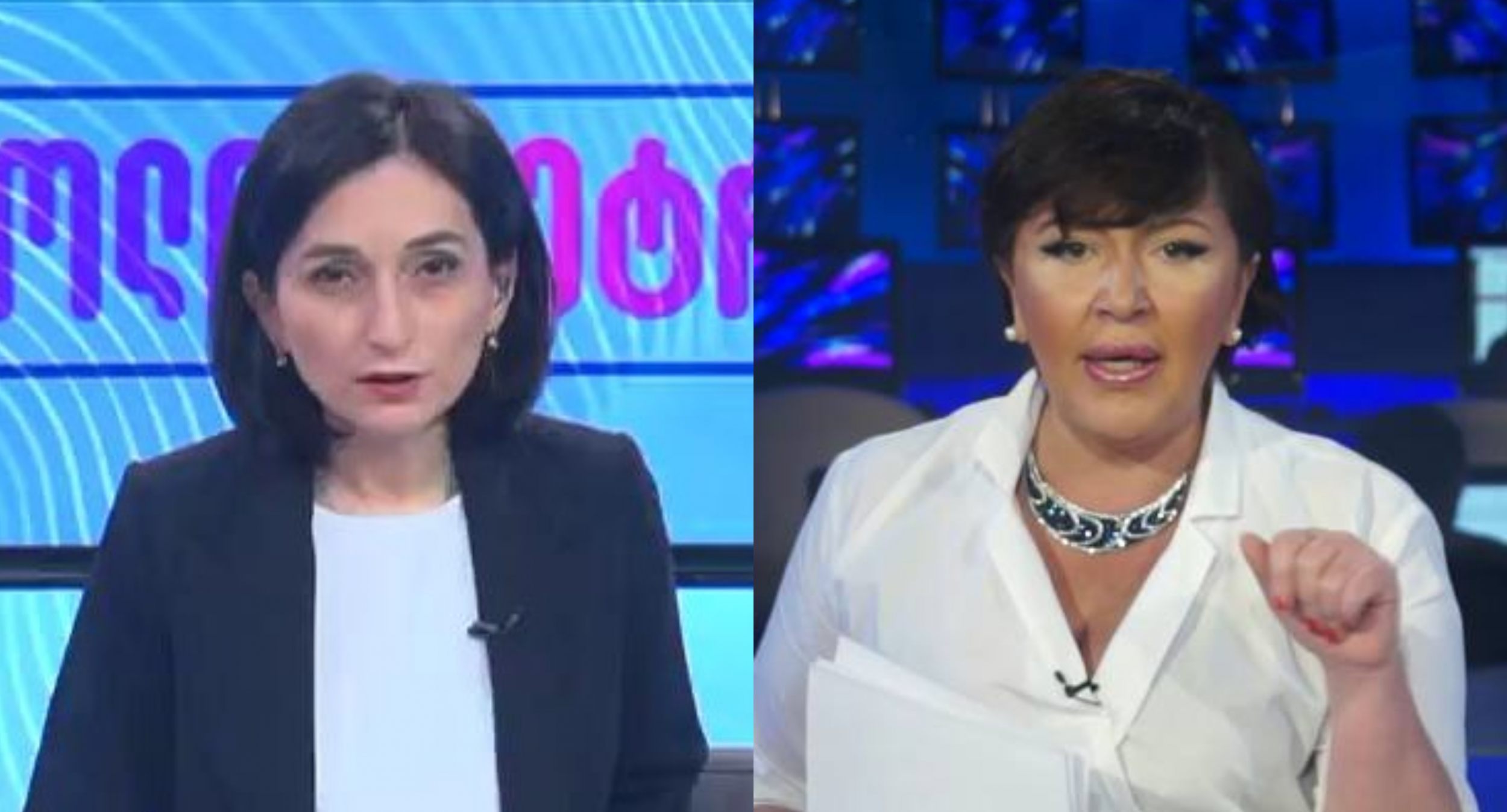
“POSTV,” a television channel known for its pro-government and anti-Western rhetoric, is conducting a smear campaign on social media against Nino Zhizhilashvili and Inga Grigolia, leading journalists of the independent broadcasters “TV Formula” and “TV Pirveli.”
As part of the campaign, specially prepared graphic quote cards were published on “POSTV”‘s Facebook page, aiming to professionally discredit the journalists and incite public aggression against them.
The attack was triggered by statements of support made by Nino Zhizhilashvili and Inga Grigolia following the detention of their colleague, “Formula” TV anchor Vakho Sanaia. The pro-government media outlet manipulatively used their comments made in solidarity and their criticism of the government’s repressive policies to launch a targeted smear campaign against the journalists on social media.
According to a statement from the investigative media outlet “Studio Monitori,” a bot attack took place on their Instagram page on the night of October 19.
“Over the past night, ‘Studio Monitori’ was attacked by more than 1,000 fake accounts. The fake followers left dozens of comments on Instagram posts. Such attacks aim to disrupt social platforms,” reads Studio Monitori’s statement.
Notably, the investigative media outlet has repeatedly fallen victim to digital attacks in recent months. In August, Studio Monitori’s Facebook page was blocked based on fake complaints. Prior to that, Monitori’s YouTube channel was targeted, resulting in the deletion of the “Studio Monitori” YouTube channel overnight due to fraudulent reports. Later, “Monitori” conducted its own investigation into the grounds for the channel’s removal and discovered that the YouTube account was terminated based on so-called copyright strikes. The media outlet found out that up to $5,000 had been paid for the complaints. Furthermore, the person directly involved in taking down the channel was an individual named Aditya Singh, who admitted himself that he received a substantial sum of money in exchange for filing the complaint, though he did not name the client who commissioned it.
The head of the service, Archpriest Andria Jagmaidze, published a lengthy letter on his Facebook page in which he criticizes the “Georgian Charter of Journalistic Ethics” and accuses it of bias.
Jagmaidze’s dissatisfaction followed the Charter’s October 15 statement, which concerned the Patriarchate’s imposition of restrictions on independent television channels—”Formula” and “TV Pirveli.” Specifically, the Patriarchate did not grant special accreditation to the aforementioned broadcasters, thereby restricting their right to cover the Svetitskhovloba holiday on October 14. It was precisely this decision that the Charter assessed as discrimination and an unjustified interference in journalistic activity.
In response, Andria Jagmaidze states that the Charter “has turned into a bureau defending radical media directed against the Church.”
“One wonders, has the Charter really not noticed any ethical misconduct on the part of journalists since 2021? Has it really not seen the video footage depicting the questionable behavior of journalists toward clergy, including instances of disturbing them during religious services and disregarding established rules?” writes Andria Jagmaidze.
The head of the Patriarchate’s press service attached a video collage to the text, featuring edited excerpts compiled over the years showing journalists’ attempts to ask critical questions to various members of the clergy.
At the end of the statement, Andria Jagmaidze calls into question the professional responsibility of the self-regulatory body and asks: “Has the time not come to create an ethics commission for the Charter of Journalistic Ethics?!”
Tea Tsulukiani also won the defamation lawsuit against TV host Nanuka Zhorzholiani in the Supreme Court.
The dispute concerned a Facebook post published by Zhorzholiani on April 12, 2025, in which she wrote that Tea Tsulukiani’s father, Judge Avtandil Tsulukiani, had sentenced specific individuals to death by firing squad. A corresponding list was attached to the post.
In court, Tea Tsulukiani demanded that the phrase used in the post—”Tsulukiani’s father executed the following people”—be deemed defamatory. Tsulukiani also requested that another statement in the same post be recognized as defamation, according to which, during the transitional period when capital punishment was being abolished, Judge Tsulukiani could have applied an alternative maximum sentence.
Nanuka Zhorzholiani’s defense argued that the information had been obtained from public sources and that the post fell within the scope protected by freedom of expression.
According to Zhorzholiani, she intends to appeal the Supreme Court’s decision to the European Court of Human Rights.
The Minister of Infrastructure visited the construction site of the Kvesheti-Kobi road in the Khadi Gorge together with representatives of pro-government television stations. The visit followed a journalistic investigation by Mtis Ambebi, which reported serious violations identified during the implementation of the project. According to Mtis Ambebi, the Ministry informed the media about the visit only on the previous evening, leaving the outlet unable to attend the site visit. Nevertheless, the Minister’s subsequent statements created the impression that critical media were not interested in the project and were criticizing it without sufficient grounds.
At the same time, the pro-government radio station Ai Utsnobi released an AI-generated video depicting journalists from critical media outlets attempting to ask the Prime Minister questions while he plays the piano. The video was accompanied by the text: “The Prime Minister and the journalists – the dog barks, the caravan moves on.”
Both episodes can be viewed as part of the continuing campaign to discredit critical media. Such messaging undermines the legitimacy of journalists’ professional activities, portrays questions concerning matters of public interest as unfounded criticism or obstruction, and contributes to an increasingly hostile environment for critical media. In Georgia, the discrediting of independent and critical media by government representatives and affiliated actors has become a persistent pattern.
The Communications Commission (ComCom) has fined TV Pirveli for the second time for violating provisions of the Law on Broadcasting related to content regulation. The broadcaster was fined GEL 5,000.
The case was considered under amendments to the Law on Broadcasting adopted by Georgian Dream, which significantly tightened content-regulation requirements for broadcasters. Among other provisions, the amendments introduced restrictions on the expression of editorial positions in news and socio-political programs, new rules governing the right of reply, and standards related to covert recording.
The Commission’s monitoring covered news broadcasts aired on July 27–28. According to ComCom, the broadcasts contained instances in which news was presented through personal attitudes or opinions and factual information was not reported with sufficient accuracy. The Commission identified expressions such as “organized a big hunt,” “scroll-screen agency,” “Chechen-type squad,” “hunting activists,” and “the police were fooled by their nerves” as problematic.
ComCom specifically found a violation in the report “People Have Begun to Be Detained,” aired during TV Pirveli’s 20:00 news broadcast on July 27. According to the Commission, the journalist’s interpretation of a conversation between police officers failed to meet the required standard of factual accuracy.
Currently, TV Pirveli and Formula have each received two fines under the content-regulation provisions. If ComCom finds another violation by TV Pirveli, it will have the authority to consider suspending the broadcaster’s authorization or imposing a higher fine of no less than GEL 10,000 and no more than 3% of the company’s annual revenue.
According to the Georgian Charter of Journalistic Ethics, ComCom continues to exert pressure on television broadcasters over the use of terminology deemed unacceptable by Georgian Dream. The Charter argues that, following the amendments to the Law on Broadcasting adopted in March 2025, the Commission has increasingly used proactive media monitoring as an instrument of pressure on editorial policy, undermining broadcasters’ ability to maintain independent editorial decision-making.
Imedi TV has published a post on its Facebook page that seeks to discredit Radio Tavisupleba/RFERL. The post refers to the outlet as “foreign-funded Radio Liberty” and claims that it is attempting to criticize the proposed reform of school uniforms.
The post also mentions Radio Liberty respondent and sexologist Eka Kvirkvelia in a disparaging context, identifying her as the wife of a person connected to the “Kamiti” case.
The framing used in Imedi’s post reflects a broader narrative promoted by pro-government media, in which critical and independent outlets are portrayed primarily through their sources of foreign funding. Such messaging serves to delegitimize their editorial work and undermine their credibility.
On August 10, 2026, Adjara Public Broadcaster’s journalist Koba Partenadze posted a video on his Facebook page documenting threats of physical violence against him.
“Every evening I encounter people who insult me, threaten me, and physically touch me. There have been several attacks on me in recent days… How many times do I have to be attacked for this to no longer be considered just an ‘incident’? How many times do I have to go to the police before someone recognizes that this is a systemic problem?” Partenadze wrote, calling on law enforcement agencies to respond.
Partenadze told Adjara Times that he believed the attacks may have been linked to his professional activities, noting that one of the attackers had also referred to Adjara Television using obscene and insulting language.
The Georgian Charter of Journalistic Ethics called on the Ministry of Internal Affairs to urgently investigate the repeated threats against Partenadze and take appropriate measures to ensure his safety.
On August 11, the Ministry of Internal Affairs announced that two individuals had been detained in Batumi in connection with violence and threats against Partenadze. According to the Ministry, the investigation is being conducted under Articles 126 (violence) and 151 (threat) of the Criminal Code.

“Postv”, sanctioned for disinformation, shared a comment by Prime Minister Irakli Kobakhidze on Facebook, which serves to discredit the investigative media outlet “Monitor”.
In the description of the shared video, “Postv” writes: “The Prime Minister on the disinformation spread by Studio Monitor”.
A day before Prime Minister Kobakhidze’s statement, “Monitor” published a new journalistic investigation concerning the sale of the former “Sakartvelo” hotel building in the center of Tbilisi by Bidzina Ivanishvili’s family bank, “Cartu Bank”.
Irakli Kobakhidze called “Monitor’s” investigation “another manipulation”.
Prior to this, due to the same journalistic investigation, the Mayor of Tbilisi, Kakha Kaladze, attempted to discredit “Monitor”.
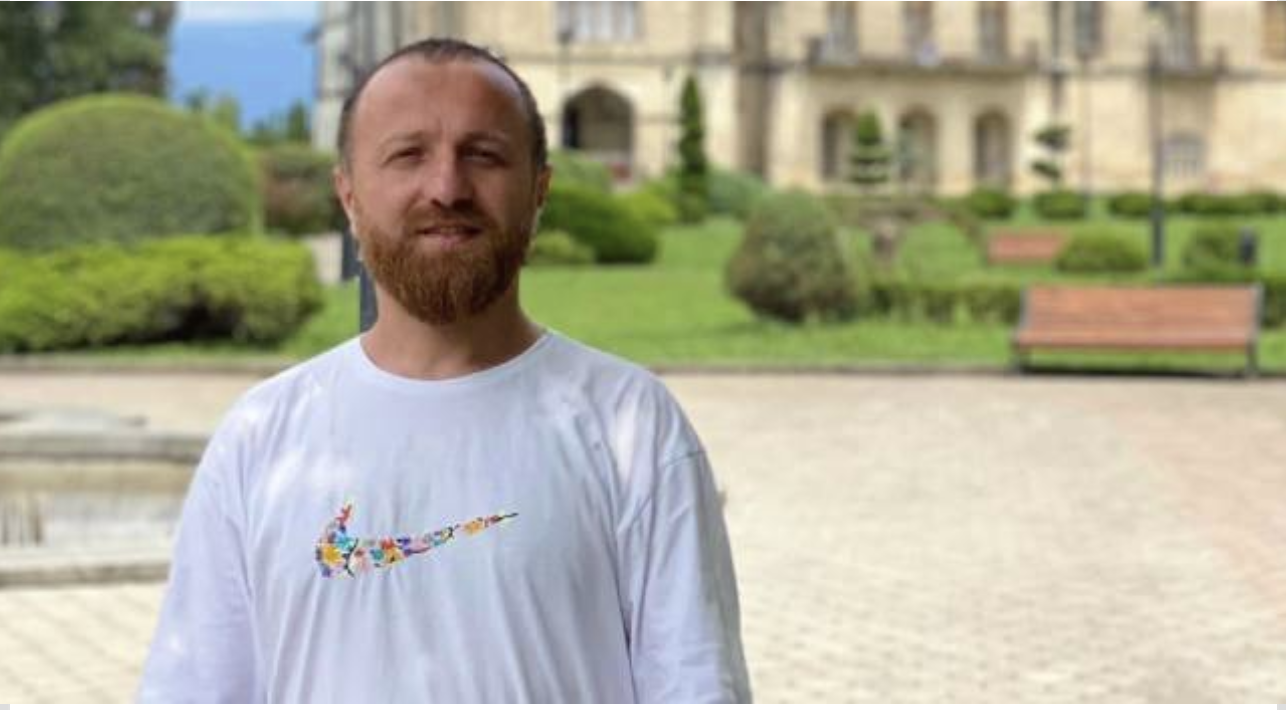
On July 18, “Adjara Times” published an article titled: “The road near the Batumi Cathedral has been blocked for more than an hour, allegedly due to Bera Ivanishvili.” The publication of the article was followed by a disinformation campaign against the founder of the publication, Sulkhan Meskhidze.
Supporters of “Georgian Dream” actively circulated posts on the social network Facebook aiming to discredit the journalist.
“The liar founder of ‘Adjara Times,’ Sulkhan Meskhidze, is not invited to crowded weddings when traffic gets disrupted; it is a cheap lie that the road was blocked for a wedding ceremony in Batumi because of the attendee Bera Ivanishvili,” wrote “Georgian Dream” supporter Gia Abashidze, among others, on Facebook.
Posts against Sulkhan Meskhidze were also published by “Dream” supporter Nino Pochkhua. These statements were later disseminated unchanged by, among others, “POSTV Analytics.“
POSTV also published on the social network disinformation directed against Sulkhan Meskhidze that was shared on the personal pages of “Georgian Dream” supporters Nikoloz Metreveli and David Chikheladze.