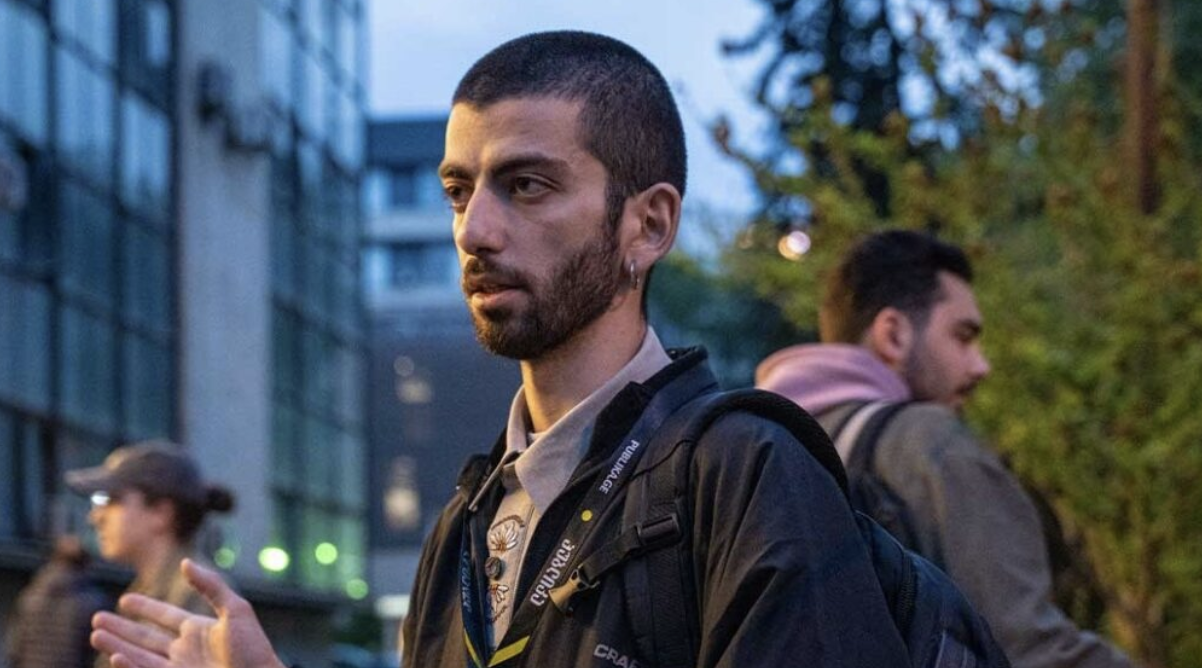
Communications Commission begins enforcing new media regulations

On October 9, 2025, the Communications Commission issued a written warning to the television broadcasters “Formula” and “Formula Multimedia”, as well as the radio broadcasters “Journalists’ Union Khalkis Khma”, “Radio-TV Nori” and “Systema Gama” and ordered them to cease receiving funding from foreign powers for violating the Law of Georgia “On Broadcasting”.

According to the Commission’s statement: “Based on the fact that the broadcasters have received the above-mentioned funding after the law was amended and funding from foreign powers was prohibited, and the funding cannot be used in exceptional cases specified by law (commercial advertising, teleshopping, sponsorship or product placement in the program)”, the Commission considered the broadcasters to be violators of the law.

This is the first precedent for the enforcement of the law, which concerns the new regulation included in the Law on Broadcasting, which prohibits direct or indirect funding of a broadcaster from a foreign power from April 1, 2025. Since the date of adoption, the amendments have caused public discussion and criticism, in particular, assessments that the new norm may become a tool for restricting the financial and editorial freedom of independent media. During the session, representatives of radio broadcasters noted that without the aforementioned funding, they may have to stop broadcasting.

MIA statement threatens freedom of assembly and expression

On October 5, the Ministry of Internal Affairs stated that the October 4 gathering “aimed at overthrowing the government” and “soon acquired an unlawful character,” after which the ministry took “proportionate measures.” According to the agency, “based on yesterday’s events,” any gathering from October 5 will be considered a “continuation of an attempted overthrow” and the ministry will take appropriate measures “to protect public order and security.” In effect, this means that peaceful protesters may face legal prosecution simply for participating in the gathering. The statement came after the arrest of five organizers of the October 4 rally and a few hours before the announcement of a new rally by citizens and the Federalist Party.

Such rhetoric threatens both freedom of assembly and expression and freedom of the media. The wording used by the Ministry creates a vague legal framework, under which journalists’ coverage of protests or voicing critical positions may be perceived as support for an “attempted coup.” Such a statement creates a chilling effect and violates the activities of the media and the right of the public to freely receive and disseminate information, which contradicts fundamental rights guaranteed by both the Constitution of Georgia and international conventions.

Journalist from Samkhretis Karibche banned from filming at Akhaltsikhe polling station No. 6

On October 4, 2025, on the day of local elections (which were boycotted by a large part of the pro-Western opposition), the chairman of the polling station commission at Akhaltsikhe polling station No. 6 restricted journalist Nuka Stepnadze from filming at the polling station.

He told the journalist that he could only film for 10 minutes. According to the publication, the chairman of the commission only allowed the journalist to continue working after the district commission contacted him and explained the rules.

Multiple cases of obstruction, threats, and physical confrontations against journalists during the October 4 elections

On October 4, 2025, during the local government elections (which the opposition and a large part of society consider illegitimate), numerous cases of obstruction of work, threats, and verbal and physical abuse against media representatives were recorded.

Publicly reported incidents:

  • Verbal attack on journalists
  1. Kakha Kaladze, the candidate for mayor of Tbilisi from the Georgian Dream, called journalists “impudent”. The incident took place at the 64th polling station in Tbilisi. After voting, Kakha Kaladze was talking about the protection of freedom of speech and expression in the country. A “Formula” journalist asked him what this meant, to which he replied – “There is some politeness, there is ethics, I understand that you have neither one nor the other.”
  2. The president of the Georgian Dream, Mikheil Kavelashvili, called TV Pirveli journalist Ina Tsartsidze a “liar” and a representative of a “liar television.” “You, your bosses, are deceiving the youth, the society, that we are illegitimate,” Kavelashvili replied to the journalist, who was trying to get an answer from him whether US President Donald Trump had contacted him.
  3. Former Prime Minister of the Georgian Dream, Irakli Gharibashvili, called journalists from TV Pirveli and Formula “scoundrels” and “main fakers” at the 11th polling station in Tbilisi. His response followed questions from journalists about whether he himself was expecting to be arrested, since everyone around him is being detained.
  • Cases of interference with work of journalists were reported

4. At Akhaltsikhe polling station No. 6, the chairman of the precinct commission restricted journalist Nuka Stepnadze of the publication “Samkhretis Karibche” from filming at the polling station. He told the journalist that he could only film for 10 minutes. According to the publication, the chairman of the commission only allowed the journalist to continue working after the district commission contacted him and explained the rules.

5. In Batumi, at one of the polling stations, a journalist from “TV Pirveli” journalist, Nato Gogelia, was verbally confronted by agitators from the “Georgian Dream”. They first tried to prevent him from filming by covering his camera with their hands, and then cursed at the journalist. Their irritation followed the journalist’s attempt to find out why they were standing at the polling station with lists and why they were registering voters.

Anti-Corruption Bureau requests information from media to enforce repressive laws

Since May 2025, after the repressive laws came into force, the Anti-Corruption Bureau has requested large amounts of information from more than 60 non-governmental organizations, including several media outlets. The basis for this request is the Law on Grants. The Georgian Dream adopted an amendment to the Law on Grants on April 16, 2025. According to the amendments, the grantor (donor) must apply to the Government of Georgia for consent to issue a grant; the grantee, if receiving a grant without consent, will be fined double the amount of the grant.

On September 29, Razhden Kuprashvili’s bureau applied to the independent investigative journalism association iFact and GMC and requested information about grants, donors, financial transactions and contracts.

Previously, on September 26, Kuprashvili’s bureau sent a letter to the publication “Mountain News”.

“You are in a hurry to put us down. The answer is urgent! We will continue our work! “To create investigative films about government violations of laws, corruption, environmental destruction, and violations of fundamental human rights,” wrote Gela Mtivlishvili, founder and editor-in-chief of “Mountain News.”

On September 28, “Mountain Community” received a letter from the Anti-Corruption Bureau with the same demands. Nugzar Suaridze, the organization’s director, wrote about this on Facebook.

Project 64 also received a letter from the Anti-Corruption Bureau. “We have never faced a crisis of this magnitude, and this is not just a financial crisis,” said Giorgi Gogua, editor-in-chief of Project 64.

The Anti-Corruption Bureau also sent a letter to the Georgian Charter of Journalistic Ethics.

“The proceeding initiated by the Anti-Corruption Bureau is the first practical step under the new legislation to destroy a highly reputable organization, created through the great efforts of many good journalists,” — reads the statement of the Charter of Journalistic Ethics.

Heads of non-governmental organizations summoned for questioning

Leaders of prominent Georgian non-governmental organizations, including members of the Media Advocacy Coalition, have been summoned for questioning by the prosecutor’s office. The questioning is related to the so-called “mask case,” which the prosecutor’s office began investigating in February 2025 on charges of “sabotage, attempted sabotage under aggravating circumstances, and other similar crimes.” According to the organizations, the investigation is unfounded and aims to persecute, intimidate, and dismantle the civil sector.

Based on publicly available information, those summoned for questioning include: Tamta Mikeladze, head of the Social Justice Center; former and current directors of the International Society for Fair Elections and Democracy (ISFED), Nino Dolidze and Levan Natroshvili; Giorgi Mshvenieradze, head of Guardians of Democracy; Baia Pataraia, director of the organization Safar; and Aleko Tskitishvili, head of the Human Rights Center. They have stated on social media that they will agree to questioning only before a magistrate judge. All of them have already been questioned in court.

It should be noted that, in connection with the same case, at the prosecutor’s request, on August 27, 2025, seven organizations’ accounts were frozen: members of the Media Advocacy Coalition – Civil Society Foundation, ISFED, IDFI, GDI – as well as organizations working on human rights and anti-corruption – Guardians of Democracy, Safar, and the Social Justice Center.

The accounts of the member organizations of the “Media Advocacy Coalition” were frozen

The Georgian Prosecutor’s Office launched an investigation against non-governmental organizations, including member organizations of the “Media Advocacy Coalition,” on charges of “sabotage, attempted sabotage under aggravating circumstances, assistance in hostile activities to a foreign organization and an organization under foreign control, and mobilization of funds for activities directed against the constitutional order and foundations of national security of Georgia.”

On August 27, 2025, Tbilisi City Court satisfied the Prosecutor’s Office’s request and froze the bank accounts of these organizations.

Minutes after the Prosecutor’s Office released its statement, the pro-government TV company “Imedi” broadcast a story supporting the investigation, specifically using comments from civil sector representatives from pro-European rallies. The Prosecutor’s Office’s accusation charges the organizations with mobilizing funds to purchase special equipment (such as special gas masks, helmets, face coverings, medical masks, protective goggles) for participants of the pro-European rallies.

More than 50 civil society and media organizations expressed solidarity with the seized organizations.

“Taking punitive steps against Georgian non-governmental organizations, similar to the Russian authorities, confirms that the Ivanishvili government’s interest is the complete destruction of dissenting opinion and pro-European groups in Georgia,” the statement said.

Based on the request of the Prosecutor’s Office, the accounts of seven organizations were seized on August 27. These are: “Civil Society Foundation,” “International Society for Fair Elections and Democracy” (ISFED), “Institute for Development of Freedom of Information” (IDFI), “Guardians of Democracy,” “Georgian Democratic Initiative” (GDI), “Sapari,” and “Social Justice Center.” Among these, “Civil Society Foundation,” ISFED, IDFI, and GDI are members of the “Media Advocacy Coalition.”

The Anti-Corruption Bureau is requesting information about grants from member organizations of the “Media Advocacy Coalition”

On August 11, 2025, several non-governmental organizations four of which are members of the Media Advocacy Coalition received another letter from the Anti-Corruption Bureau accusing them of violating the “Foreign Agents Registration Act” (FARA). The organizations concerned are the Civil Society Foundation, Transparency International Georgia, the Media Development Foundation, and the International Society for Fair Elections and Democracy (ISFED).

“They are threatening us with criminal liability and demanding explanations as to why we did not register as agents,” the organizations said in a joint statement.

According to members of the coalition, FARA does not apply to them, and they do not intend to comply with what they call “Russian laws.”

“Our mission is election observation, exposing corruption and disinformation, defending democracy, and assisting the Georgian people,” the organizations stated.

The NGOs first received a letter from the Anti-Corruption Bureau in June 2025.

The International Fact-Checking Network (IFCN), of which the Media Development Foundation is a member, condemned the harassment of fact-checkers and civil society in Georgia.
“The investigations launched by the Anti-Corruption Bureau, as well as the threat of criminal liability under the so-called foreign agents law, represent an alarming escalation against organizations that provide the public with reliable information,” the IFCN said in a statement.

The Georgian Parliament has been placed on a yellow security alert and the work of media has been restricted again

On June 27, 2025, the Georgian Parliament held a hearing on the annual report of the Prime Minister of the Georgian Dream, Irakli Kobakhidze, and in connection with this, the administrative body has been placed on a yellow security alert.

“In accordance with the Order of the Chairman of the Parliament of Georgia dated September 4, 2023 N1/259/23 “On Approval of the Rules for Security Protection in the Palace of the Parliament of Georgia”, on June 27 of this year, the yellow security level will be in effect in the Palace of the Parliament – visitors are restricted from entering the Palace of the Parliament” – the statement released by the Parliament reads.

The announcement of the yellow security level restricts and imposes an artificial barrier to the work of the media, especially online media, and this is not the first time that such a restriction has been imposed in the Parliament of Georgia or other administrative bodies.

The Revenue Service has imposed a lien on the bank accounts of Batumelebi

On July 21, 2025, it was announced that Georgia’s Revenue Service had frozen the bank accounts of the media outlet Batumelebi. According to the organization, while the official reason given was debt, they believe the true intention is to shut down the media outlet.

According to media reports, the Revenue Service gave Batumelebi a five-day deadline to pay off the debt, warning that if they failed to do so, their accounts would be frozen, followed by seizure of property. The National Enforcement Bureau would then step in to sell the organization’s assets — including their office and editorial equipment.

Batumelebi reports that their current debt to the state includes a principal amount of 47,000 GEL, a penalty interest of 126,000 GEL, and a fine of 109,000 GEL. The outlet had acknowledged the debt and had been making monthly payments toward it. After receiving the threat of asset seizure, Batumelebi officially requested a payment schedule from the Revenue Service — an option allowed under the Tax Code — but their request was denied. On July 17, their accounts were frozen.

Batumelebi considers this action to be yet another form of pressure against the outlet and a step toward its closure. For over six months now, the founder and media manager of the outlet, Mzia Amaghlobeli, has been in detention. She is facing 4 to 7 years in prison for allegedly assaulting a police officer — the charge stems from an incident where she reportedly slapped the head of Batumi’s police. Her trial is nearing its end, with the final hearing — during which Judge Nino Galustashvili will announce the verdict — scheduled for August 1.

“The account freeze and the other measures planned in the coming week are clearly aimed at breaking Mzia Amaghlobeli — and ultimately, at dismantling the independent media organization she founded,” Batumelebi said in a statement. “One clear example confirms this: according to official data from May 21, 2025, the TV company Imedi owes 17 million GEL to the state, while Rustavi 2 owes 25 million GEL. Yet neither has faced such enforcement actions.”

The Georgian Charter of Journalistic Ethics has also labeled this incident as pressure on the media. The Charter has urged the Revenue Service to lift the account freeze and offer Batumelebi a repayment plan. Another group, the Coalition for Media Advocacy, also condemned the move, calling it part of a broader campaign by the ruling party, Georgian Dream, against independent journalism and media.

International human rights organization Amnesty International also responded, stating:
“The independent Georgian outlet Batumelebi had its accounts frozen after allegations of police violence emerged against its founder, Mzia Amaghlobeli, who is currently unlawfully detained and facing a flawed trial. Amnesty calls for a full investigation into all allegations of police abuse.”

Update (July 22):
Following widespread public outcry — both locally and from international media organizations — the Revenue Service offered Batumelebi a payment plan and agreed to lift the account freeze. That same day, thanks to a major campaign by readers and supporters, Batumelebi managed to raise funds to cover the principal part of their debt.