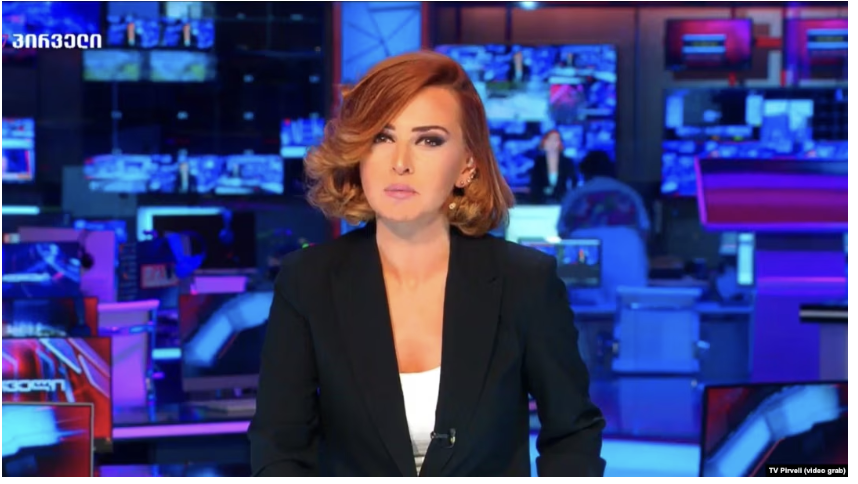
The Communications Commission Initiated Administrative Proceedings Against TV Company “Caucasus” Over Donations Received from the USA

According to Nino Jangirashvili, head of TV company “Caucasus,” the Communications Commission has initiated administrative proceedings against the broadcaster on the basis of an individual donation received from the USA. At the Commission’s request, the broadcaster must provide detailed information about the received funds and the corresponding documentation within 3 working days.

With the amendments made to the “Broadcasting Law” in 2025, foreign funding of broadcasters was completely prohibited, and the regulator’s powers were significantly expanded, including mechanisms for access to financial information. In parallel, the “Law on Transparency of Foreign Influence” has been in effect since 2024. These regulations have had a substantial impact on media funding models, resulting in several broadcasters continuing to operate, including by relying on donations from citizens.

According to Nino Jangirashvili, TV company “Caucasus,” given the legislative environment in the country, uses citizen donations as one of its main sources of funding and ensures broadcasting continuity based precisely on this model. Such income is generally used to cover operational expenses necessary for the daily functioning of the channel, making it practically impossible to specify the exact purpose of any particular donation.

This case clearly reflects the environment in which media operates against the backdrop of legislative changes, while the regulator’s initiation of proceedings based on individual donations raises additional questions regarding the proportionality of regulatory practices.

“Georgian Dream” Announces New Repressive Legislative Amendments

On 28 January, following a meeting of the parliamentary majority of Georgian Dream, it was announced that the party intends to initiate a new legislative package during the spring session. The package will include amendments to the Law on Grants, the Criminal Code, the Code of Administrative Offences, and the Law on Political Associations of Citizens.

Based on information presented at a public briefing, the proposed amendments aim to strengthen state control over foreign funding and would significantly restrict the activities of civil society, political actors, media organizations, and the business sector.

Amendments to the Law on Grants

The proposed amendments substantially broaden the definition of a grant. Nearly any monetary or in-kind resource that is used, or may be used, to influence Georgia’s domestic politics, state institutions, or public processes would fall under this definition, including activities linked to foreign political interests or relationships. Receiving such grants would require prior approval from the Government of Georgia.

The draft law also introduces a category of foreign legal entities whose activities are deemed to involve issues related to Georgia. These entities, including branches and representative offices of non-resident organizations, would be permitted to receive funding only with prior government consent. Receiving grants without approval would trigger criminal liability for legal entities and administrative fines for branches and representative offices amounting to twice the value of the grant.

The amendments also cover technical assistance: the provision of knowledge, expertise, consulting, or technology – whether paid or unpaid – financed from foreign sources would be treated as a grant and subject to government approval. This regulation would also apply to the engagement of foreign experts.

In addition, the changes would apply retroactively to grants already received but not yet used. Grant recipients would be required to seek government approval within one month; until approval is granted, the use of such grants would be prohibited, and failure to comply would result in criminal liability.

Amendments to the Criminal Code

The scope of criminal liability is significantly expanded. A new criminal offence is introduced for violations of the Law on Grants, including unlawful cooperation with foreign organizations or foreign individuals. Violations would be punishable by a fine, community service, or imprisonment of up to six years.

The offence of money laundering is further aggravated where the conduct is linked to influencing political issues related to Georgia, carrying a penalty of nine to twelve years’ imprisonment.

Criminal liability is also introduced for political party leaders in cases involving the receipt of foreign funding, as well as for so-called external lobbying, punishable by imprisonment of up to six years or community service.

Amendments to the Law on Political Associations of Citizens

Political party membership would be prohibited for eight years for individuals employed by organizations whose annual income includes more than 20% foreign funding. The draft law defines both “foreign power” and “organizations carrying foreign interests,” including non-profit organizations and media outlets whose non-commercial income exceeds 20% from foreign sources. As a result, a large number of individuals employed in civil society and the media would effectively be excluded from political party membership.

The State Audit Office would be granted authority to monitor the financial activities of political party members, including access to the accounts of ordinary members. The amendments would also apply to individuals deemed by the authorities to have declared political objectives, regardless of formal party affiliation, potentially bringing a wide range of civil activists under these regulations.

Amendments to the Code of Administrative Offences

A new administrative offence is introduced for business entities engaging in public political activities unrelated to their core commercial activities. Violations would result in fines of GEL 20,000, increasing to GEL 40,000 in cases of repeated offences. The definition of political activity under the draft law is broad and may encompass virtually any form of civic action or criticism of public authorities, creating a risk that lawful civic engagement could be subject to legal restrictions.

Overall, the broad and vague expansion of the concept of a grant, the requirement for prior government approval, the tightening of criminal and administrative sanctions, and the application of these rules to broadly defined groups create a legal framework that grants the state wide discretion. These changes would significantly restrict civic space and undermine freedom of expression, association, political participation, and civic engagement, in tension with constitutional guarantees and international human rights standards.

The proposed legislation continues a broader pattern of restrictive laws introduced by Georgian Dream over the past two years, which have been widely criticized by local and international experts as measures targeting media freedom, civil society, and activism.

The Communications Commission issued a verbal warning to ‘Radio Marneuli’

On January 22, the Communications Commission issued a written warning to “Radio Marneuli” over receiving a grant. The Commission’s decision was based on the repressive amendments to the Law on Broadcasting, which prohibit media outlets from receiving grants from donor organizations.

The Commission’s statement noted that the media outlet had received a grant of 32,542 GEL from the National Endowment for Democracy (NED).

“The funds were received as part of a grant project and did not fall under the exceptions defined by the Law on Broadcasting, such as commercial advertising, teleshopping, sponsorship, or product placement in programming,” the statement said.

This is the second warning issued to “Radio Marneuli.”

In the first case, the Commission had warned the media outlet over a grant received from Deutsche Welle.

A series of repressive laws were passed by the Parliament under the ruling party, Georgian Dream, including a provision effective from April 1, 2025, banning direct or indirect funding of broadcasters from “foreign forces.”

The amendments were immediately criticized by civil society and independent media, as the provision could be used as a tool to restrict the financial and editorial independence of independent media.

Fines and seizures for a journalist’s professional activities

On August 30, 2025, Tozu Gulmamedli, a journalist for the independent online media outlet “Mautskebeli,” was fined 5,000 GEL for a second time on the grounds of “blocking the road” near the Parliament building. Although the journalist was performing her professional duties – as evidenced by materials published on “Mautskebeli’s” platforms investigative authorities failed to take this circumstance into account.

According to information released by “Mautskebeli,” the National Bureau of Enforcement has frozen the journalist’s bank accounts and threatened to seize property registered in her name, granting her a seven-day deadline to comply with the aforementioned demand.

Such practices constitute the criminalization of journalistic activity and an interference with professional duties. Furthermore, the use of seizures acts as a mechanism for additional financial pressure and substantially restricts the freedom of a journalist to carry out their professional activities.

Repressive legislative amendments restricting the freedom of assembly

On December 12, 2025, “Georgian Dream” adopted another repressive legislative amendment restricting the freedom of assembly, which was considered under an expedited procedure within three days. Since December 2024, “Georgian Dream” has amended the legislation regulating assemblies and demonstrations five times. Each time, the amendments have become increasingly repressive, aiming both to punish demonstrators and to intimidate them preventively.

The legislative changes were introduced into the Law of Georgia “On Assemblies and Demonstrations” and the Code of Administrative Offenses. The amendments significantly strengthen the Ministry of Internal Affairs’ control over assemblies and demonstrations. Under the new rules, organizers are obliged to notify the Ministry of Internal Affairs in advance not only when the action will block transport routes but also when the assembly will take place on pedestrian areas. This obligation applies even to spontaneous gatherings, and the notification must be addressed to the Ministry of Internal Affairs rather than the municipality. In addition, the Ministry is authorized to issue binding instructions regarding changes to the location, time, or route of the demonstration.

When a pedestrian area is blocked en masse, the Ministry of Internal Affairs is authorized to give participants a 15-minute deadline to vacate the area, after which the assembly may be declared unlawful and dispersed. Compliance with this requirement within the given timeframe does not exempt participants from legal liability. Violations are punishable by administrative detention of up to 15 days (up to 20 days for organizers), and repeated violations may result in criminal liability.

The Social Justice Center assesses these legislative amendments as a new stage in the criminalization of the freedom of assembly. According to the organization, restricting gatherings on sidewalks and pedestrian areas constitutes an unconstitutional and unjustified limitation on the right to peaceful assembly. They also state that the goal of the adopted amendments is the effective prohibition of all assemblies.

The legislative changes adopted by “Georgian Dream” have significantly restricted the freedom of assembly and expression for both citizens and journalists. On multiple occasions, journalists have been detained under repressive legislation, including in cases where they were performing their professional duties.

GYLA: Mzia Amaghlobeli’s eyesight problem is reaching an alarming level

According to the Young Lawyers’ Association of Georgia (GYLA), the eyesight condition of Mzia Amaghlobeli, founder of “Batumelebi” and “Netgazeti,” is at an alarming level. The organization notes that Mzia Amaghlobeli has not undergone the necessary examinations and, to date, has not received proper consultation from a doctor, which is essential for maintaining eyesight and planning treatment.

“In 2025, before being placed in the penitentiary institution, her eyesight in the right eye was approximately 30% (0.3), which could have increased up to 90% with corrective glasses. After being placed in prison, her eyesight deteriorated alarmingly. According to examinations conducted on February 4, 2025, her right eye’s eyesight could be corrected with glasses to approximately 60%, but a repeated examination two days later showed that Mzia Amaghlobeli’s eyesight in the right eye had dropped to 0.1 (a 20% decrease in two days), and correction with glasses was now possible only up to 40%, instead of the 90% before imprisonment,” the statement released by GYLA reads.

According to the Young Lawyers’ Association of Georgia, in July 2025, lawyers requested that the prison administration provide Mzia Amaghlobeli with the necessary examinations at the medical institutions she had visited prior to her arrest, where her patient history was kept. This request was denied by the penitentiary service, after which the journalist’s eyesight was examined at a clinic chosen by the prison administration.

“Despite medical assessments that clearly show the alarming deterioration of Mzia Amaghlobeli’s eyesight during her time in prison, the penitentiary institution has not taken any effective measures to arrange adequate examinations and appropriate treatment, nor has the cause of such dramatic deterioration in eyesight been determined,” the statement said.

On August 6, Mzia Amaghlobeli was sentenced by the Batumi City Court to two years in prison. The decision was upheld by the Kutaisi Court of Appeals.

The Penitentiary Service discredits “TV Pirveli” and “Formula”

On November 16, the Penitentiary Service released a public statement accusing the media outlets TV Pirveli and Formula of disseminating false information. The agency responded to stories circulated in the media, where prisoners spoke about the unbearable conditions in the prison, and their family members asked the Public Defender (Ombudsman) to start an urgent monitoring of the penitentiary system. They also demanded that the Ombudsman establish how many medical personnel serve the Gldani Prison and who is responsible for the spoiled food brought into the facility.

The Penitentiary Service responded to the prisoners’ accusations with a statement, noting that such problems do not exist in the system.

On November 15, the agency also dismissed as false a story aired on TV Pirveli’s Saturday program, in which a prisoner of conscience, Rezo Kiknadze, described the situation in the system in a letter.

This is not the first time that “Georgian Dream” and the institutions under its influence have attempted to discredit critical and independent media outlets.

The Anti-Corruption Bureau is requesting information about grants from the publication “Indigo”

On November 11, 2025, the publication “Indigo” released a statement from which it became clear that the Anti-Corruption Bureau had initiated proceedings against them based on the so-called Law on Grants adopted by “Georgian Dream.” “Since our entire activity is based on open communication and only your trust, we want you to know this news as well. Obviously, we continue and serve the mission that created us—we continue working for free speech and expression, for free thoughts and ideas,” the publication writes.

The amendments to the “Law on Grants” are one of the repressive changes adopted by the “Georgian Dream” parliament in recent months to restrict the media. The law came into force in April. These amendments prohibited the issuance of foreign grants without the permission of the government. A grant received without consent leads to a fine equal to double the amount of the grant received.

The Anti-Corruption Bureau carries out the monitoring of the issuance and receipt of grants. This agency has already initiated proceedings against several media outlets based on this law, including: “Project 64,” the investigative media “iFact,” the publication “Mountain News,” GMC, which manages the publications “Realpolitika” and “Flangvis Detector” (Waste Detector), Georgian Media Group, and also the organization working on media rights, the “Georgian Charter of Journalistic Ethics.”

In addition to media outlets, the Anti-Corruption Bureau is requesting information about grants from civil and non-governmental organizations as well; in total, the agency’s letter has been received by more than 60 organizations, including member organizations of the “Media Advocacy Coalition.”

“Georgian Dream” adopted laws restricting independent media

The “Georgian Dream” parliament adopted new, restrictive laws against independent and critical media through an accelerated procedure. These are the “Foreign Agents Registration Act” [FARA] and amendments to the “Law on Broadcasting” and the “Law on Grants.” These laws were adopted against a background of repression and violence taking place against activists and the media.

What the Restrictive Laws Entail:

Amendment to the Law “On Grants”

On April 16, 2025, “Georgian Dream” adopted the amendment to the “Law on Grants” in the third reading. According to the amendments:

  • The grant provider (donor) must apply to the Government of Georgia to receive consent for the issuance of a grant;
  • The grant recipient, if receiving a grant without consent, will be fined double the amount of the grant;
  • The Anti-Corruption Bureau is granted additional powers, such as—the right to request a financial report from a person, as well as the right to question a physical person;
  • The Anti-Corruption Bureau will be able to request “special category personal data” from public institutions, physical persons, and legal entities.

Non-governmental organizations responded to the amendment to the “Law on Grants” with a joint statement. “This law, by its essence and expected result, is an act of persecution against the people and aims to leave citizens face-to-face with the ruling party’s punitive system and prohibit international society’s support for them,” states the NGO declaration.

“Foreign Agents Registration Act” [FARA]

On April 1, 2025, the “Georgian Dream” parliament approved the “Foreign Agents Registration Act” [FARA]. The new law introduces the term “agent of a foreign principal.” According to the law’s definition, this may include an employee of an information service who “acts in Georgia for the benefit or interest of a foreign principal.” According to the law’s requirement, the registration application must be submitted to the Anti-Corruption Bureau, which the law grants broad authority, including the right to request any information “based on national security and public interests.” Unlike other laws restricting media adopted by the “Georgian Dream” parliament, violation of FARA’s requirements will lead to both financial sanctions and up to five years of imprisonment. The adoption of FARA was assessed as a law restricting independent civil organizations and the media. “The ‘Georgian Dream,’ at first glance, appears to want to adopt the seemingly inappropriate FARA for controlling public and media organizations due to the strict criminal legal mechanisms provided for in the law and the selective and politically motivated application of the law at the individual level. Representatives of the ruling team openly point this out, including Irakli Kobakhidze, Shalva Papuashvili, and Mamuka Mdinaradze. In contrast to the American reality, the ruling team envisions and imagines that it will use the instrumentalization of the American-named law to damage civil society, without the firmly established guarantees of protecting independent courts and freedom of expression and association in Georgia,” states the declaration of the Social Justice Center.

Amendments to the Law “On Broadcasting”

On the very day FARA was adopted, April 1, 2025, “Georgian Dream” adopted amendments to the “Law on Broadcasting.” According to the amendment, foreign funding of broadcasters was completely prohibited, and the authority of the regulatory body, the National Communications Commission, was significantly increased, specifically bringing journalists’ professional activities into the sphere of regulation. According to the amendments introduced to the law, a broadcaster is prohibited from receiving direct or indirect funding and a foreign force is prohibited from purchasing services from a broadcaster, except for advertising or product placement. According to the amendment, broadcasters are prohibited from receiving direct or indirect funding in exchange for placing social advertising. According to the law, a foreign force is considered: a) a subject constituting a system of authority of a foreign state; b) a physical person who is not a citizen of Georgia; c) a legal entity that is not founded under the legislation of Georgia; d) an organizational unit or other type of association of persons that is founded under the law of a foreign state and/or international law. The amendment also introduces detailed regulations regarding television and radio broadcasting standards, including due accuracy of fact and the right of reply. Additionally, regulations are added concerning the fairness and impartiality of fact, the inviolability of private life, the obtaining and transmission of information using covert methods, the coverage of armed conflict, accidents and other emergency situations, and specific issues regarding the protection of minors.

“Transparency International Georgia” declares that these laws threaten the existence of critically-minded independent media.

Along with these laws, since 2024, the Law “On Transparency of Foreign Influence,” also known as the “Russian Law,” has been in effect in Georgia, which “Georgian Dream” adopted last year despite widespread public opposition and international criticism, and which aims to register non-governmental and media organizations whose income exceeds 20% from foreign organizations as organizations carrying out the interests of a “foreign force.”

New legislative changes further restrict the freedom of assembly and expression

On October 16, “Georgian Dream” passed another set of legislative changes in an accelerated procedure, within two days, which further tighten sanctions against citizens participating in protest demonstrations and significantly restrict the freedom of assembly and expression. Amendments have been introduced to both the Criminal Code of Georgia and the Code of Administrative Offenses.

According to the amendments, administrative detention of up to 15 days is now imposed without a fine for wearing masks at protests, possessing tear gas, or blocking roads. Furthermore, judges will no longer have the authority to impose fines as an administrative penalty in cases of administrative offenses, and demonstrators may face administrative detention of up to 60 days if:

  • Firearms, flammable substances, cold weapons, or pyrotechnics are found at the protest;
  • The police decide to disperse the assembly and the demonstrator does not comply.

Additionally, the changes also affected the Criminal Code, according to which the repeated commission of such actions will result in criminal liability and imprisonment of up to one year, and in each subsequent instance, up to two years.

Moreover, the amendments introduced criminal liability for repeated offenses against law enforcement officers. Specifically, if a citizen verbally insults a police officer multiple times or refuses to comply with their lawful order, this action will be punishable by imprisonment of up to one year. In cases of repetition, the punishment is stricter and may result in imprisonment of up to two years.

Non-governmental organizations have sharply criticized these changes, stating that they pose a threat to the fundamental principles of democracy. According to them, the new regulations not only restrict the right to peaceful protest but also create an atmosphere of fear and self-censorship in society, where citizens may be punished merely for expressing their opinions.

These changes are a continuation of the recent trend of repressive legislation adopted by “Georgian Dream.”