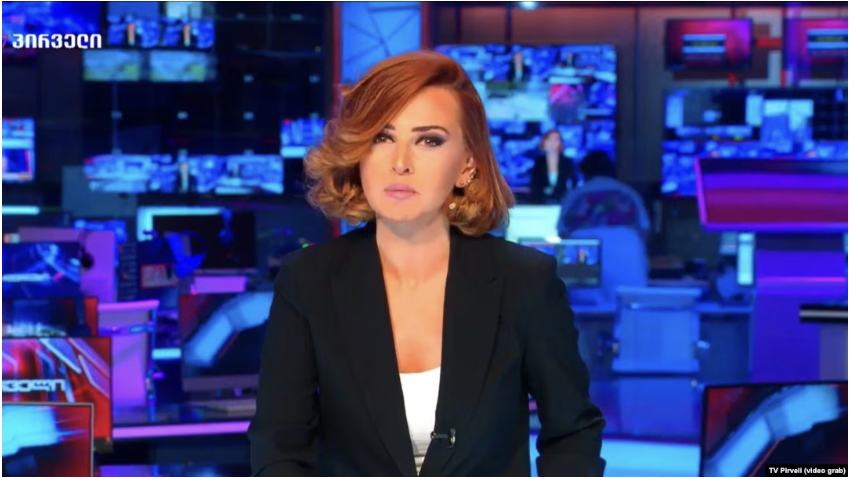
Parliament Suspends Accreditation of “TV Pirveli” Journalist Nata Kajaia for One Year

The Parliament has suspended the accreditation of “TV Pirveli” journalist Nata Kajaia for a period of one year. The Parliament’s decision regarding this was made public by journalist and TV presenter Nodar Meladze.

The reason for the one-year suspension of Nata Kajaia’s accreditation was recording an interview with a Member of Parliament despite their refusal.

The Parliament had previously made decisions against Nata Kajaia twice—first in 2024, and the next time in 2025, when the journalist’s accreditation was suspended for a period of six months.

The tightening of rules for the media in the legislative body began in February 2023. Several security measures were introduced in the Parliament, during which non-accredited journalists are banned from entering the Parliament. Also, it became possible to suspend a journalist’s accreditation based on a Member of Parliament’s request. Furthermore, from January 1, 2026, a new rule for issuing one-time special accreditation came into force, which also created additional barriers for journalists. All these measures have been repeatedly used against journalists.

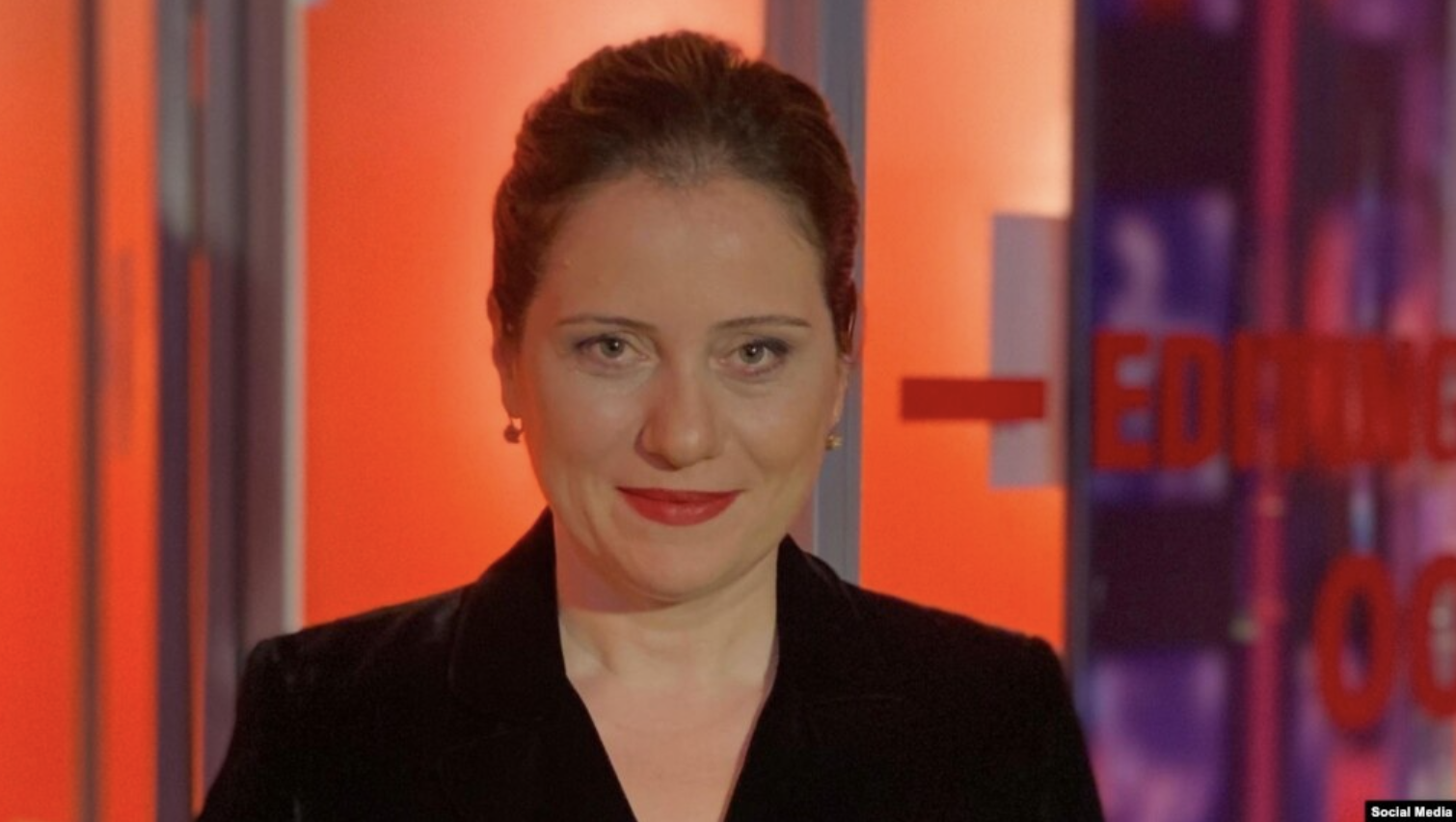
Parliament Suspends Accreditation of “TV Pirveli” Journalist Maka Chikhladze

The Parliament has suspended the accreditation of “TV Pirveli” journalist Maka Chikhladze. Nodar Meladze, a journalist and TV presenter for TV Pirveli, published a post about this on social media. Chikhladze’s accreditation was suspended for a period of 6 months. The reason was continuing an interview despite a Member of Parliament’s refusal.

“In the last three weeks, three journalists from ‘Shabatis Eteri’ [Saturday Broadcast] Maka Chikhladze, Maka Andronikashvili, and Natalia Kajaia have had their Parliament of Georgia accreditation suspended for 1, 6, and 12 months, based on completely unsubstantiated grounds! When they don’t want to answer questions, the simple solution is to block the journalists,” Nodar Meladze wrote on Facebook.

The tightening of rules for the media in the legislative body began in February 2023. Several security measures were introduced in the Parliament, during which non-accredited journalists are banned from entering the Parliament. Also, it became possible to suspend a journalist’s accreditation based on a Member of Parliament’s request. Furthermore, from January 1, 2026, a new rule for issuing one-time special accreditation came into force, which also created additional barriers for journalists. All these measures have been repeatedly used against journalists.

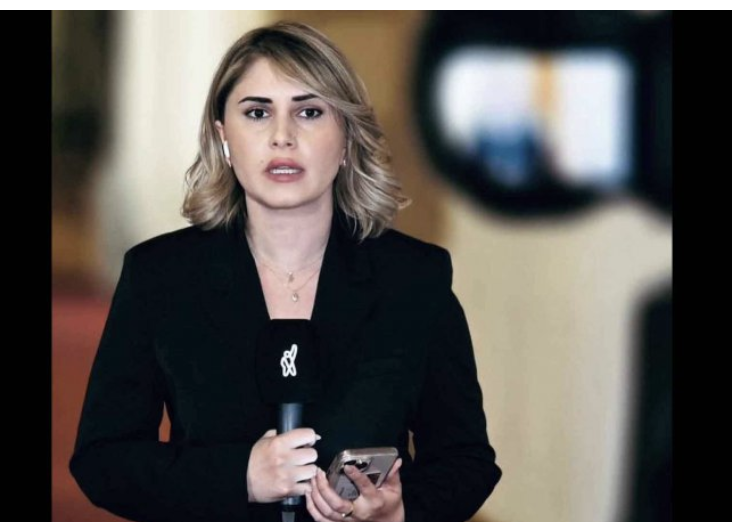
Parliament Suspends Accreditation of “TV Pirveli” Journalist Maka Andronikashvili

The Parliament has suspended the accreditation of “TV Pirveli” journalist Maka Andronikashvili for a period of one month. Nodar Meladze, a journalist and TV presenter for “TV Pirveli,” published a post about this on social media. The reason for the suspension of her accreditation was continuing an interview despite a Member of Parliament’s refusal.

“In the last three weeks, three journalists from ‘Shabatis Eteri’ [Saturday Broadcast] Maka Chikhladze, Maka Andronikashvili, and Natalia Kajaia have had their Parliament of Georgia accreditation suspended for 1, 6, and 12 months, based on completely unsubstantiated grounds! When they don’t want to answer questions, the simple solution is to block the journalists,” Nodar Meladze wrote on Facebook.

The tightening of rules for the media in the legislative body began in February 2023. Several security measures were introduced in the Parliament, during which non-accredited journalists are banned from entering the Parliament. Also, it became possible to suspend a journalist’s accreditation based on a Member of Parliament’s request. Furthermore, from January 1, 2026, a new rule for issuing one-time special accreditation came into force, which also created additional barriers for journalists. All these measures have been repeatedly used against journalists.

Parliament Suspends Accreditation of “Formula” Journalist Nini Balanchivadze for 6 Months

The TV company “Formula” journalist Nini Balanchivadze has had her Parliament of Georgia accreditation suspended for 6 months.

According to information released by the television company, the Parliament accuses the journalist of violating Article 15, Paragraph 2, Sub-paragraph of the rules for the accreditation of media representatives. This implies, “in case a member of the Parliament of Georgia, an employee of the Apparatus, or a visitor to the Parliament refuses to record an interview, to terminate the interview.”

The explanatory letter sent to the television company refers to a report that aired on “Akhali Formula” on June 23, 2026.

The tightening of rules for the media in the legislative body began in February 2023. Several security measures were introduced in the Parliament, during which non-accredited journalists are banned from entering the Parliament. Also, it became possible to suspend a journalist’s accreditation based on a Member of Parliament’s request. Furthermore, from January 1, 2026, a new rule for issuing one-time special accreditation came into force, which also created additional barriers for journalists. All these measures have been repeatedly used against journalists.

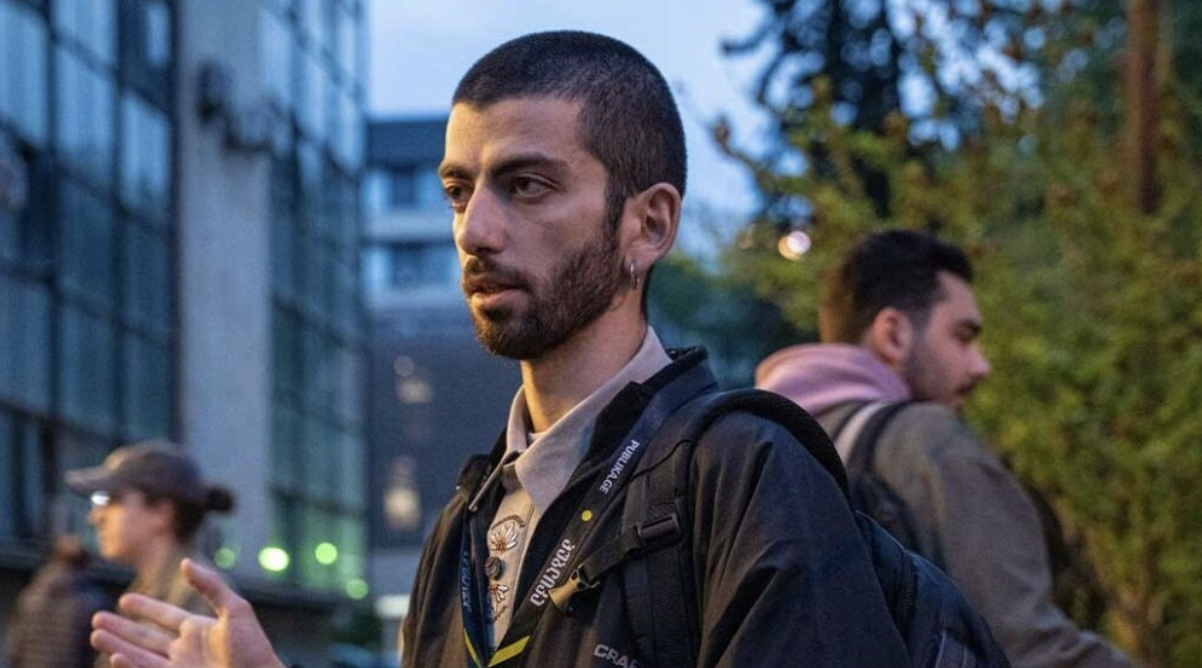
Parliament Denies “Publika” Photojournalist One-Time Special Accreditation

The Parliament has denied one-time special accreditation to Mindia Gabadze, a photojournalist for the online media outlet “Publika.”

In a corresponding application sent to the Chairman of the Parliament on June 16, 2026, “Publika” requested the issuance of a one-time special accreditation for photojournalist Mindia Gabadze for the period of June 22–26, so that he could cover Irakli Kobakhidze presenting his report in Parliament.

A month earlier, on May 21, the Parliament also revoked the one-year accreditation of four “Publika” reporters, including Mindia Gabadze. At the time, the reason given was that the accredited journalists from “Publika” had not visited the legislative body for ten consecutive weeks.

For the same reason, the accreditation of four journalists from “Monitor” was also revoked.

The tightening of rules for the media in the legislative body began in February 2023. Several security measures were introduced in the Parliament, during which non-accredited journalists are banned from entering the Parliament. Also, it became possible to suspend a journalist’s accreditation based on a Member of Parliament’s request. Furthermore, from January 1, 2026, a new rule for issuing one-time special accreditation came into force, which also created additional barriers for journalists. All these measures have been repeatedly used against journalists.

Parliament Amends Election Procedures for Public Broadcaster’s Board of trustees

The Parliament of Georgia is reviewing amendments to its Rules of Procedure under an accelerated procedure. One of the key issues concerns the article regulating the election of members to the Public Broadcaster’s Board of Trustees. According to Parliament Speaker Shalva Papuashvili, if a vacancy opens on the board, the entity

holding the quota for that vacant seat will directly select its preferred candidate and present them to the Parliament for consideration. According to the Georgian Law on Broadcasting, the Public Broadcaster’s Board of Trustees consists of 11 members. Parliament elects the trustees based on the following nominations: Two nominated by the Public Defender. Three nominated by the parliamentary majority. Three nominated by the parliamentary opposition. Three nominated by the Supreme Council of the Autonomous Republic of Adjara.

Under the current regulations, candidates for the Board of Trustees are selected through an open competition announced by the Speaker of Parliament. A 9-member commission is formed to shortlist candidates and present them to the authorized entities. From this shortlist, the entities then select nominees to present to the Parliament.

Papuashvili argues that this regulation is “absurd” because the legislative body cannot establish its own procedures without external interference. Therefore, he believes the election procedure must be brought closer to the core principle of parliamentary democracy: parliamentary sovereignty.

“The proposal is as follows: establish a procedure where, if there is a vacancy within an entity’s quota, that entity can select [a candidate] however it wishes. It can hold a competition or do whatever it wants—whether it’s the majority, the opposition, the Public Defender, or the Autonomous Republic of Adjara. But in its relationship with the Parliament, this entity must present a single candidate. It should say, ‘Here is a vacancy, I have the right to nominate a candidate, and I am nominating this specific person,’ rather than being handed three candidates pre-selected by others and being told to pick one of them,” stated Papuashvili.

According to Papuashvili, the nominated candidate will first be evaluated by the Sector Economy Committee before being put to a vote at a plenary session. Parliament plans to fast-track these amendments and adopt them during the current session week.

The Media Advocacy Coalition assesses these changes as creating additional risks for media freedom, transparency, and institutional independence. “This decision further reduces transparency and strengthens the risk of undue influence over the Public Broadcaster, which has been under the influence of ‘Georgian Dream’ for years, and whose management persecutes independent and professional journalists,” the coalition noted in its statement.

Georgia’s Parliament Tightens Media Accreditation Rules

By order eof the Speaker of the Georgian Parliament, Shalva Papuashvili, changes have been made to the parliament’s accreditation system. According to the amendments, individual journalists who repeatedly violate parliamentary accreditation rules will have their accreditation suspended for up to one year. Additionally, depending on the severity and frequency of the violations, an entire media outlet could have its accreditation revoked for up to a year.

Shalva Papuashvili justified these changes by citing a desire to adopt the practices of the European Parliament. The Speaker initially announced the potential tightening of media rules on May 14. His statement followed the European Parliament’s decision to suspend the accreditation of the pro-government broadcaster “Imedi,” a channel sanctioned by the UK for spreading Russian disinformation.

“Currently, violating accreditation rules in the Georgian Parliament results in a one-month suspension for the first offense, and a six-month suspension for a repeat offense. We have seen that a one-year suspension also exists in the European Parliament. Therefore, we will bring the Georgian Parliament’s accreditation system closer to that of the European Parliament,” stated Papuashvili.

Until now, sanctions for violating accreditation rules in the Georgian Parliament were only applied against individual journalists. Papuashvili noted that the European Parliament also imposes sanctions on entire media outlets; therefore, they will “adopt this experience as well,” making it possible to revoke a media organization’s accreditation for a full year.

The Media Advocacy Coalition views these amendments as a deliberate hindrance to journalistic work. “Under the guise of implementing European Parliament regulations, the Parliament continues to complicate the operations of independent media within the legislative body. Media accreditation mechanisms in the Parliament have already been used against independent media on numerous occasions. This creates a reasonable suspicion that the new regulations will further amplify the risk of selective and punitive approaches against the press,” the organization noted in its statement.

The tightening of rules for the media in the legislative body began in February 2023. Several security measures were introduced in Parliament, under which journalists who are not accredited by Parliament are prohibited from entering the building. It became possible to suspend a journalist’s accreditation simply based on an MP’s request. Furthermore, starting January 1, 2026, a new rule for issuing one-time special accreditations came into effect, creating even more barriers for the press. All of these measures have been repeatedly deployed against journalists.

Parliament Revokes Accreditations of “Studio Monitor” and “Publika” Ahead of Schedule

The Parliament of Georgia has prematurely revoked the accreditations of the online publications Publika and Monitori, which were initially issued for a one-year term.

In the May 21 decrees signed by the Head of the Parliamentary Staff, Kakha Okrojanashvili, and delivered to the media outlets, the stated reason for the revocation is the absence of their accredited journalists from the Parliament for ten consecutive weeks during the current parliamentary session (February 5, 2026 – April 17, 2026). Both Publika and Monitor each had four accredited journalists at the Parliament.

The Parliament’s Public Relations Department told Publika that this is the first instance of journalists having their accreditations prematurely revoked under this specific article. This regulation has been in effect since 2023. Monitor plans to appeal the Parliament’s decision in court.

It is worth noting that a non-accredited journalist from Studio Monitori previously faced difficulties obtaining even a one-time pass to enter the Parliament. On February 17 and 19, Monitor journalist Marika Dudunia applied twice for a special one-time pass, but the Parliament denied her requests.

The Georgian Charter of Journalistic Ethics has assessed the incident as a deliberate attempt to restrict journalists from independent media outlets from accessing public information and public spaces, thereby hindering the performance of their professional duties.

“All of this ultimately harms the population of Georgia, leaving them without reliable and verified information on issues of vital importance to them,” the Charter’s statement reads.

Georgian Parliament Denies Special One-Day Accreditation to Monitor Journalist

On March 25, 2026, Monitor published an investigative report stating that they were unable to interview Member of the Georgian Parliament Zaal Dugladze because the Parliament refused to issue a special entry pass for their journalist.

“We were unable to go to the Parliament of Georgia and pose questions to a Member of Parliament. According to the new rules, before entering the Parliament, it is necessary to specify a concrete reason to obtain a special pass. When they learned that we wanted to record an interview with Zaal Dugladze, the Parliament refused to issue the pass,” the Monitor investigation states.

Monitor first applied to the Parliament for a special pass on February 17, and again on February 19. In both instances, the pass was denied. No explanation for the refusal was provided to the outlet.

A new rule for issuing one-day special accreditations came into effect on January 1, 2026. Under this rule, the Head of the Staff makes a decision regarding the issuance of special accreditation no later than five working days after receiving the application. This one-day special accreditation is a mechanism that allows journalists who do not hold permanent parliamentary accreditation to enter the Parliament building and carry out professional activities for a specific purpose. According to these special rules, an application must be submitted to the Speaker of the Parliament, specifying the exact reason for the request. Previously, no such requirement existed in the law.

The imposition of restrictions on journalists within the Parliament building by “Georgian Dream” began on February 6, 2023, when the initial media accreditation rules for the Parliament of Georgia were first approved.

“Georgian Dream” Passes Legislative Amendments Regarding Foreign Funding and “Non-Recognition of Government” in Final Reading

On January 28 and February 16, 2026, “Georgian Dream” initiated a package of legislative amendments concerning the Law on Grants, the Criminal Code, the Code of Administrative Offenses, and the Law on Political Associations of Citizens. On March 4, during a plenary session, “Georgian Dream” passed these changes in the third and final reading.

The adopted amendments significantly tighten regulations regarding foreign funding and expand the definition of a “grant” to include financial as well as in-kind resources and technical assistance that could be used to influence Georgia’s political processes. The bill also imposes additional restrictions on political activity, including prohibiting employees of organizations receiving foreign funding from holding membership in political parties and increasing accountability for so-called “external lobbying.”

The legislative package also included changes to the Criminal Code, according to which the systemic non-recognition of the government and public, systematic calls for mass violation of legislation, disobedience toward government bodies, or the creation of alternative government bodies become punishable offenses. The law will enter into force immediately upon its official publication.