TV Pirveli cameraman Niko Kokaia was injured twice during the October 4 rally

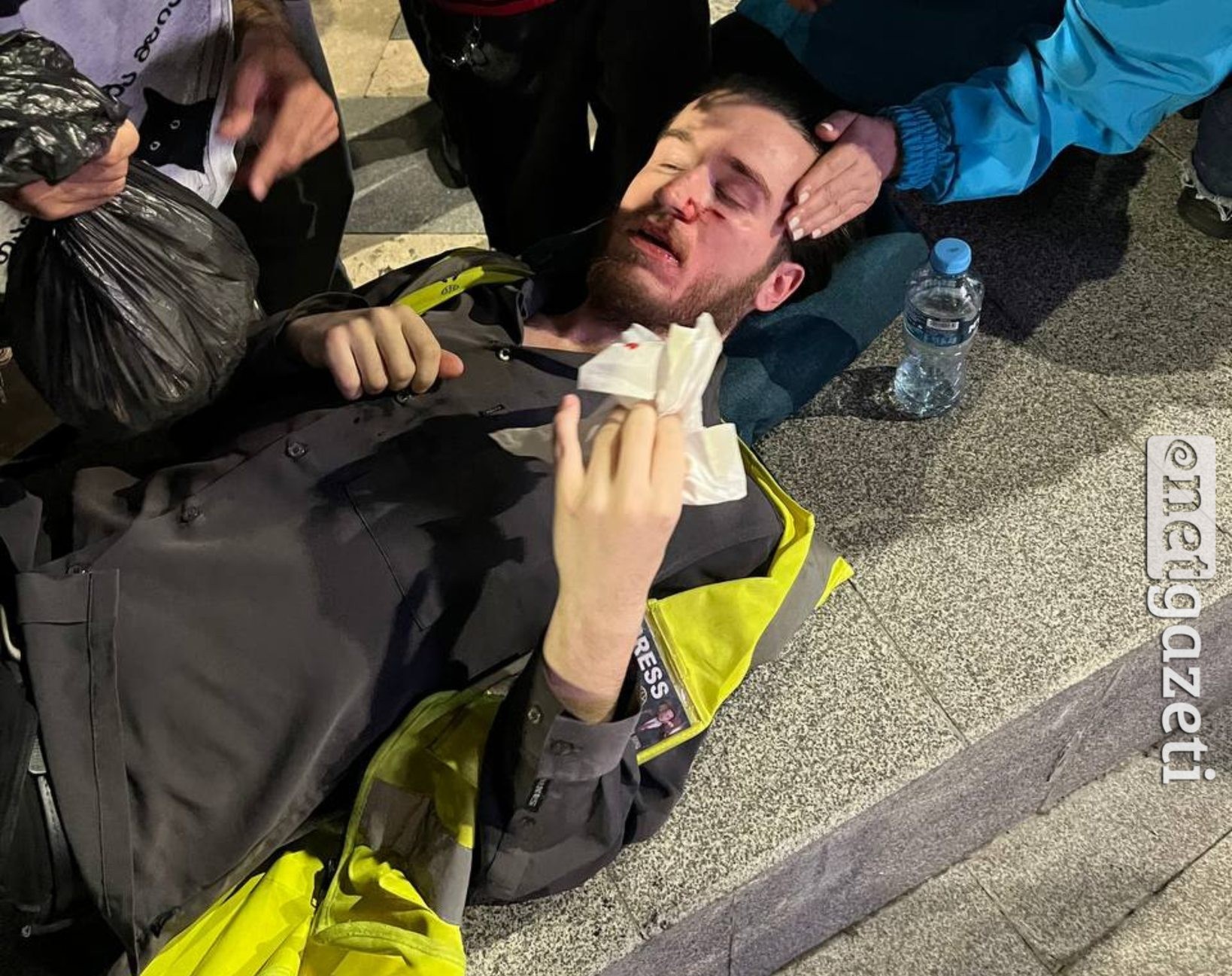
TV Pirveli cameraman Niko Kokaia was injured twice while covering the October 4, 2025 rally. The first incident, as the TV company reports, occurred on Atoneli Street, near the President’s Residence. Kokaia became incapacitated after the Special Tasks Department fired gas canisters. He required emergency medical assistance.

The second incident occurred on Orbeliani Square. According to the TV company, the cameraman was allegedly hit in the leg by a gas canister.

Police Physically and Verbally Assault Radio Liberty Journalist Giorgi Diasamidze

On October 4, 2025, while covering a protest rally in Tbilisi, Radio Liberty journalist Giorgi Diasamidze was physically and verbally assaulted by police.

In a video released by the outlet, Diasamidze can be heard telling a law enforcement officer that he is a journalist and asking why his work is being obstructed. Despite showing his press credentials, he was still targeted and attacked by the officer.

A gas capsule was reportedly fired at a TV Pirveli film crew

A tear gas capsule was allegedly fired at the TV Pirveli camera crew, journalist Irakli Bakhtadze, and his cameraman. The incident occurred while they were broadcasting live from the Presidential Palace on Orbeliani Square.

In the video footage released by the TV company, the sound of tear gas being fired and capsule exploding capsule can be heard in the area where the TV Pirveli camera crew was working. According to the Charter of Journalistic Ethics, the capsule hit the journalist’s helmet. At that time, the protesters had already left the surrounding area. There was no prior warning before the shots were fired. The journalist and cameraman were not injured.

Police Prevented Studio Monitor Journalist from Filming

On October 4, 2025, during a large-scale protest in Tbilisi, two criminal police officers attempted to interfere with Studio Monitor journalist Keti Tutberidze’s work and seize her phone.

The incident occurred when the journalist was trying to film the arrest of citizens. “Squad units rushed to Orbeliani Square to arrest two citizens, one of whom was Irakli Tsulaia. “I was filming and two criminal police officers rushed at me, screaming, grabbing my hand and trying to take my phone,” Tutberidze wrote in a post.

Incidents of Interference, Violence, and Damage to Media Equipment During the October 4 Rally

On October 4, 2025, a large-scale protest rally in Tbilisi witnessed numerous cases of verbal and physical attacks on media representatives, obstruction of their work, and damage to equipment. For the first time during this rally, some online media outlets were unable to operate their Drone cameras, likely due to an artificial disruption.

Publicly reported incidents:

  1. For Studio Monitor journalist Keti Tutberidze, two employees of the criminal police tried to interfere with her work and take away her phone. The incident occurred when the journalist was trying to film the arrest of citizens. “Special forces rushed to Orbeliani Square to arrest two citizens, one of whom is Irakli Tsulaia. “I was filming and two employees of the criminal police rushed at me with a roar, grabbed my hand and tried to take away my phone,” Tutberidze wrote in a post.
  2. A tear gas canister was allegedly fired at the camera crew of TV Pirveli – journalist Irakli Bakhtadze and his cameraman, reportedly hitting the helmet Bakhtadze was wearing. The incident occurred while they were broadcasting live from the Presidential Palace on Orbeliani Square. In the video footage released by the TV company, the sound of tear gas being fired and canisters falling and exploding can be heard. At that time, the protesters had already left the surrounding area. There was no prior warning before the shooting. The journalist and cameraman were not injured.
  3. Radio Liberty journalist Giorgi Diasamidze was physically and verbally assaulted by police. In a video released by the publication, the journalist can be heard explaining to the law enforcement officer that he is a journalist and asking why he is interfering with his work.
  4. Niko Kokaia, a cameraman for TV Pirveli, was injured twice while covering the events at the rally. The first incident, as the TV company reports, occurred on Atoneli Street, near the presidential residence. Kokaia became incapacitated after the Special Tasks Department fired tear gas canisters. He required emergency medical assistance.
  5. The second incident occurred at Orbeliani Square. According to information released by the TV company, the cameraman was allegedly hit in the leg by a gas capsule.
  6. According to information released by the Public Broadcaster, a protester allegedly threw an “unknown liquid” at the news program “Moambe,” injuring journalist Shalva Sumbadze and cameraman Nika Tsirekidze.
  7. According to Mediacheker, documentary photographer, Mariam Giunashvili, suffered burns after allegedly being pepper-sprayed. “They sprayed me [with pepper spray] from three different directions, from the front right in the face and from the sides all over my body. I got particularly bad burns on my hands and arms,” Giunashvili told Mediachecker.
  8. The publications “Project 64”, “Netgazeti” and “Mautskebeli” have lost their aerial cameras. The founder and journalist of “Project 64”, Giorgi Gogua, writes on social networks that the camera was filming near the parliament, when suddenly the camera started flying strangely, and he lost control. “I was only controlling the direction of the camera, but I could not control the trajectory of the drone. The last shot, before the signal was lost, is somewhere from Rustaveli to Mtatsminda. The flight history on the map shows that the drone flew towards the airport.”

According to information disseminated by “Netgazeti”, they lost their drone on Rustaveli Avenue. “Netgazeti’s” drones, as well as those of other media outlets, were allegedly specially shot down on Rustaveli Avenue, where we were trying to film a demonstration,” the publication said in the information.

According to information, the publication “Mautskebeli” also lost its drone. During filming, the drone suddenly malfunctioned, like other media outlets,” a journalist from “Maudereli” told MediaChecker.

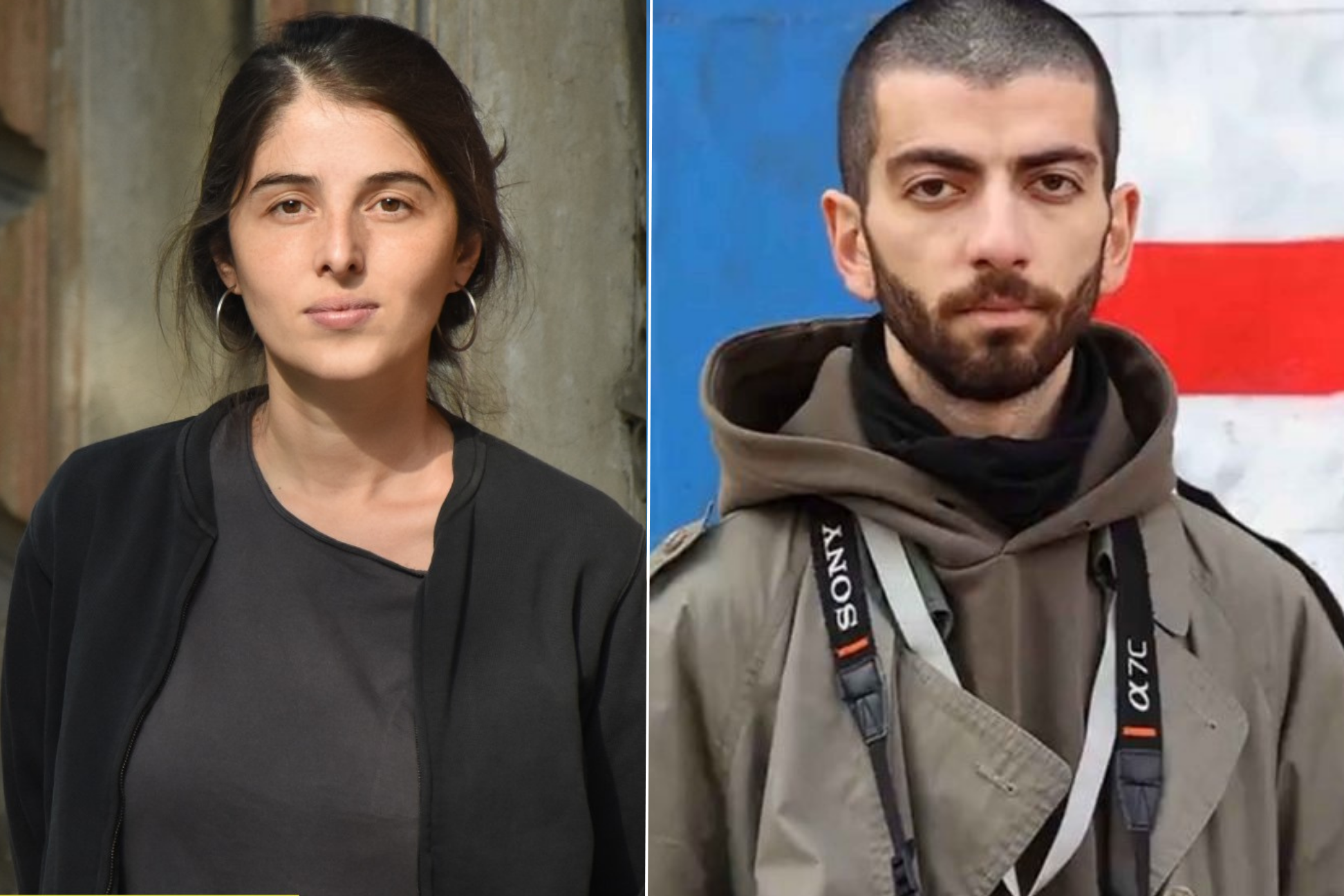
Photographer Mariam Giunashvili injured while covering protest on October 4

According to the Charter of Journalistic Ethics, documentary photographer, Mariam Giunashvili, suffered burns after allegedly being pepper-sprayed. “They sprayed me [with pepper spray] from three different directions, from the front right in the face and from the sides all over my body. I got particularly bad burns on my hands and arms,” Giunashvili told Mediachecker.

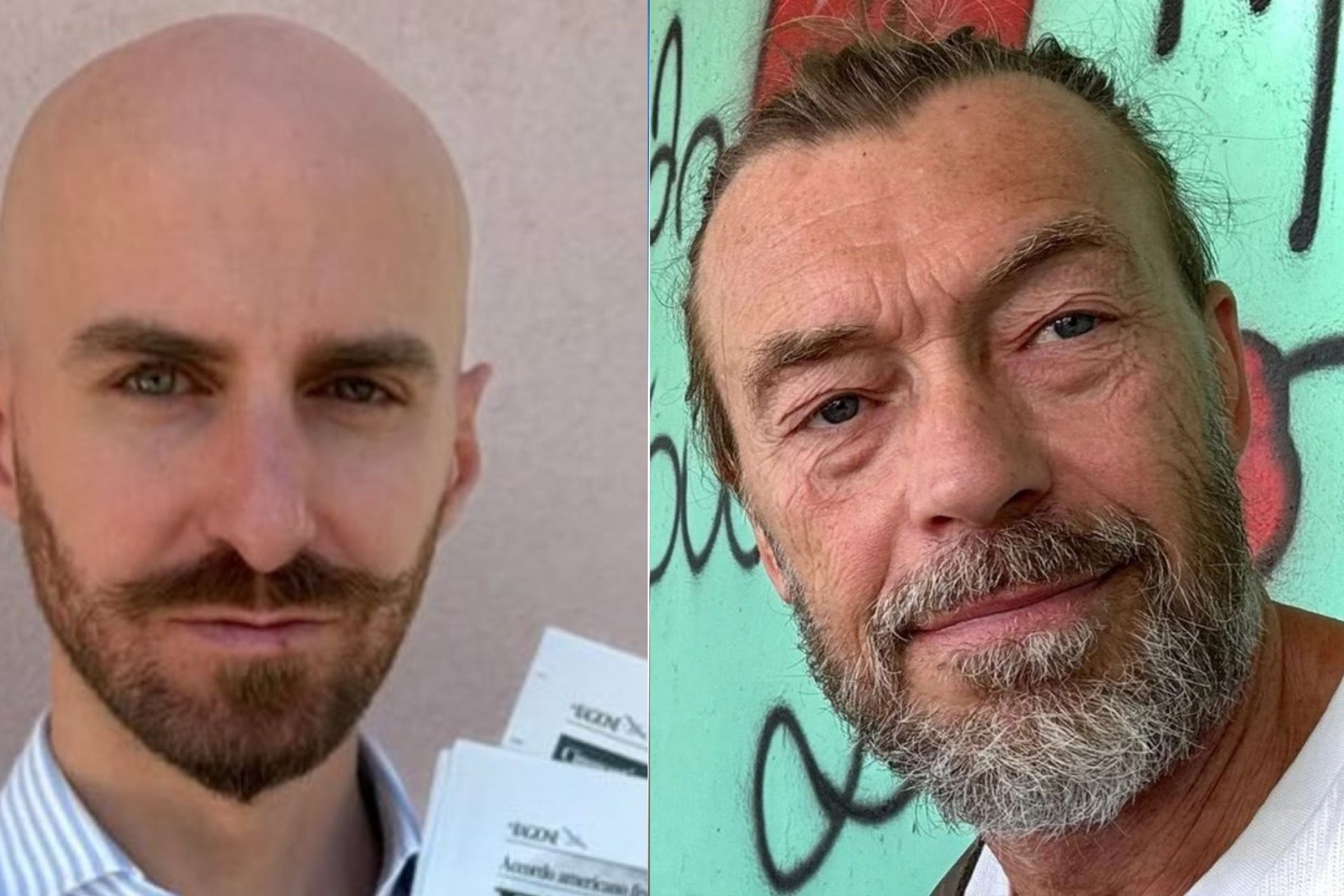
Three foreign reporters faced problems entering Georgia, and two of them were turned away

In the last week of September 2025, three foreign photographers were denied entry into Georgia. Two of them were scheduled to cover the planned local self-government elections in the country. All three photojournalists had been to Georgia before, and they had covered the pro-European protests.

Specifically, on September 28, 2025, Swiss photojournalist Gregor Ziemer was not allowed into Georgia. At the border, he was informed that two fines totaling 10,000 GEL (approx. $3,700) were registered in his name “on the grounds of artificially blocking the road” and that he would not be allowed into the country until he paid this amount. The photojournalist refused to pay the fine and was turned back from the country. Speaking to OC Media, the photojournalist recounts that after the refusal, he was taken to “some room” and detained there for eight hours: “I had to book a return flight. After that, they took my phone away. I tried to get the phone back, but they did not return it. I tried to ask to make a call, but they told me it was impossible and took my phone away.”

On September 29, Italian journalist Giacomo Ferrara was denied entry into Georgia. He was entering Georgia from Armenia. At the border, the police told him that he was subject to a 5,000 GEL (approx. $1,900) fine and would not be allowed into the country without payment. Ferrara said this information was unexpected for him. According to his account, he was fined for being at a protest rally in Tbilisi on March 31, but the argument that he was not participating in the demonstration and was only covering it did not work. The journalist refused to pay the fine and requested his passport, which was returned to him after 2 hours. The journalist says he informed the Italian Embassy in Georgia and the International Federation of Journalists about the incident.

According to Mari Nikuradze, founder of OC Media, on October 1, a German journalist was also detained at the border in Georgia for 6 hours. The reason given was also a fine registered in their name—5,000 GEL ($1,900), for “artificially blocking the road.” The German journalist was only able to enter the country after paying the amount.

This is not the first time foreign reporters have faced problems entering Georgia. Based on publicly available sources, the “Center for Media, Information and Social Studies” has registered more than 10 such cases in the last two years.

Six journalists injured near Tbilisi mayoral candidate, Kakha Kaladze’s, campaign headquarters

On September 8, 2025, while covering a rally outside the election headquarters of Georgian Dream’s Tbilisi mayoral candidate, Kakha Kaladze, party supporters and law enforcement officers assaulted journalists, verbally abused them, and confiscated mobile phones. One journalist required medical treatment.

According to the online outlet Publika  two reporters, Aleksandre Keshelashvili and Keto Mikadze, were physically assaulted by Georgian Dream supporters while on assignment, and their mobile phones were seized. With the help of a Netgazeti journalist, they recovered only one device Keshelashvili’s phone [timecode: 1:14–1:20]. The outlet reports that it has video evidence showing who took the other phone and has called on that individual to return it, and on the Ministry of Internal Affairs to respond to the theft of editorial equipment and interference in journalistic work.

According to online Netgazeti, a police officer swore at its reporter Ketevan Khutsishvili, physically grabbed and dragged her, and interfered with her work while she was broadcasting live and filming the confrontation outside the headquarters, including the attack on the colleague – Aleksandre Keshelashvili. “They used rude and vulgar gestures to swear. Then a policeman came up to me, saying, ‘Don’t provoke me,’ grabbed me by the arms and dragged me. Then a second and a third came, and one of the policemen cursed me. After that, a man in a blue shirt came and also cursed me. Finally, they dragged me and threw me among the policemen, and one of them even grabbed my hand,” Khutsishvili says. [Video material, timecode: 0:30–2:32]

A Georgian Dream supporter poured a bottle of water over Mariam Nikuradze, OC Media’s founder and photojournalist, as she filmed police clearing protesters. “At that moment, one of the Georgian Dream supporters approached me and poured a whole bottle of water on my head in the presence of the police. The police didn’t say anything to him, I pushed him aside,” Nikuradze told MediaChecker.

An investigative journalist with Studio Monitor, Keti Tutberidze was also poured a bottle of water while she was performing her professional duties.

Hungarian journalist László Róbert Mézes suffered serious physical injuries after being assaulted by Georgian Dream supporters, who also attempted to seize his phone. He required medical attention.

The Media Advocacy Coalition condemned the incidents, stating that “attacks on independent media and impunity for perpetrators are part of Georgian Dream’s consistent policy,” and expressed solidarity with journalists “forced to perform their professional duties under a violent regime.”

The Georgian Charter of Journalistic Ethics “strongly condemns” the violence against journalists “against the backdrop of the criminal inaction and indifference of the police,” calling on the Ministry of Internal Affairs for an immediate response and on the Prosecutor’s Office to conduct an effective investigation.

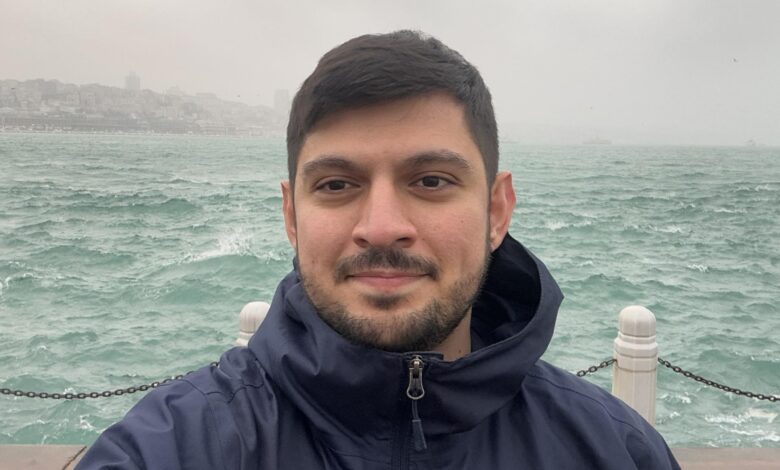
Azerbaijani student studying journalism at GIPA, living in Tbilisi, was denied entry to Georgia

On September 6, 2025, Azerbaijani student Javid Ahmedov, who lives and studies in Tbilisi, was denied entry into Georgia. The 26-year-old Ahmedov told Radio Free Europe/Radio Liberty that authorities initially cited fines under “grounds for road closure” in his name, totaling 10,000 GEL (two fines), as the reason for the refusal. He was then informed that even if he paid this amount, he would still not be allowed into the country. Ultimately, the document he received at the border justifying the denial listed the reason as “other reasons.”

Ahmedov links the incident to his professional activities. He said he had been on Rustaveli Avenue several times, not as an activist, but as a journalist, carrying a camera. He first learned about the fines on August 24, when leaving Georgia, but was told he could pay them upon return and that they would not prevent him from leaving the country. Upon returning, he discovered he had not one but two fines and was unable to enter Georgia. He was sent back to Turkey.

Ahmedov has been living in Georgia since September 2024 and is studying journalism at the Georgian Institute of Public Affairs (GIPA). On September 8, he was scheduled to fly from Kutaisi to Germany, where he is going to study on a scholarship.

Members of “Georgian Dream” and the police verbally and physically harassed journalists from “Publika”

On September 3, 2025, Beka Odisharia, a member of “Georgian Dream,” former MP, and candidate for Tbilisi City Council, verbally insulted “Publika” journalist Mindia Gabazde. Other members and supporters of “Georgian Dream” verbally and physically harassed and spat on the publication’s editor, Lika Zakashvili. The police, instead of protecting Zakashvili, interfered with her work by forcing her to stop filming through physical restraint.

The incidents occurred during the opening of the election campaign headquarters of “Georgian Dream” Tbilisi mayoral candidate Kakha Kaladze. The event took place against the backdrop of a protest, and journalists were attempting to cover the events.

Video footage recorded by “Publika” shows Beka Odisharia speaking insultingly to Mindia Gabazde after the journalist asked him a question. In the same episode, Odisharia also verbally abuses protest participants and other journalists present.

Lika Zakashvili became a target of “Georgian Dream” supporters when she tried to film their insulting actions toward activists. One person struck her and tried to take her mobile phone, then another approached from behind and spat on her. The footage shows that law enforcement did not intervene. On the contrary, in a subsequent clip, a police officer physically tried to stop Zakashvili from filming.

According to the Georgian Charter of Journalistic Ethics, “Impunity for crimes against journalists encourages perpetrators and drives them to commit more offenses.” The Charter calls on “Georgian Dream” to put an end to such practices, take responsibility, and ensure a safe working environment for journalists.

The Media Advocacy Coalition emphasized that this is not the first instance of violence against journalists by “Georgian Dream” supporters. “Under Bidzina Ivanishvili’s governance, we see systemic violence against independent media. Repressive legislation has been enacted against independent media. All of these incidents are part of a coordinated strategy aimed at suppressing independent media and critical voices in the country,” the coalition said.

UPDATE: Based on a complaint filed with the prosecutor’s office, on September 11, 2025, “Publika” editor-in-chief Lika Zakashvili was questioned. The prosecutor’s office opened a case based on Zakashvili’s statement.