On August 6, 2026, Hungarian journalist Laszlo Robert Mezősz, who had been living in Tbilisi, was forced to leave Georgia following his detention by the Migration Department. Mezősz was detained on August 5. The Ministry of Internal Affairs said that he had no legal grounds to remain in Georgia and had violated the terms of his stay in the country.
Mezősz’s lawyer, Tornike Janelidze, explained that after the journalist’s legal period of stay in Georgia expired, the authorities refused to extend the deadline by which he was required to leave the country. The decision was appealed in court. The court accepted the case for consideration in February and was expected to rule on whether the deadline for Mezősz to leave Georgia should be extended.
Speaking to Mediachecker, Janelidze said he had expected the journalist to be questioned and released following his detention because the court proceedings were still pending.
“Accordingly, I did not expect them to begin the process of expelling him. On the contrary, we were pursuing the case through legal channels. I also spoke to the police officer and explained that we have a case pending before the court and that Laszlo has the right to remain legally in Georgia until the case is considered. However, the police officer told me that he had been instructed to transfer Laszlo to the Migration Department,” Janelidze told Mediachecker.
Had Mezősz left Georgia voluntarily, he would have faced a relatively small fine and a ban on re-entering the country. Deportation, however, would have entailed more severe consequences. He therefore ultimately decided to leave Georgia voluntarily. Members of the public raised money for his plane ticket, and law enforcement officers escorted him to the airport.
Mezősz had faced persecution in Hungary under Viktor Orbán’s government and had been living in Georgia in recent years. He was actively involved in Georgia’s ongoing pro-European protests and also covered them as a journalist. His activism also made him a target of violence. In September 2025, during a confrontation on Melikishvili Avenue near Kakha Kaladze’s election headquarters, Mezősz was physically assaulted.
According to Radio Liberty, Marina Klimchuk, an 8-month pregnant journalist and German citizen, was denied entry to Georgia. On May 11, she was stopped at Tbilisi International Airport and informed that she had an outstanding fine of 5,000 GEL for an administrative offense. Klimchuk spent almost 24 hours in the airport’s temporary holding room. According to her, the room lacked both a blanket and a pillow. She was escorted by a law enforcement officer to purchase food but was not allowed to eat it there and was sent back to the holding room. After a nearly 24-hour wait, Klimchuk was sent back to Germany.
Klimchuk states that she had no prior knowledge of the fine and was not shown the penalty protocol at the airport. She suspects that the reason for her denial of entry may be linked to her journalistic work. During her time in Georgia last year, the journalist worked on several articles, including reports on the developments surrounding the Anaklia deep-sea port.
According to Klimchuk, she was willing to pay the so-called fine and even transferred 3,000 GEL to an account provided by the border guards. However, she was later told that paying the fee was pointless because she would not be allowed into the country anyway. The transferred funds were subsequently returned to her.
The journalist’s lawyer, Mariam Jikia, states that Klimchuk was not provided with the necessary documentation, including the penalty protocol, and that the official decision denying her entry cited the non-payment of the fine as the reason. The lawyer announced plans to appeal to the Public Defender to investigate the possible mistreatment of the 8-month pregnant woman.
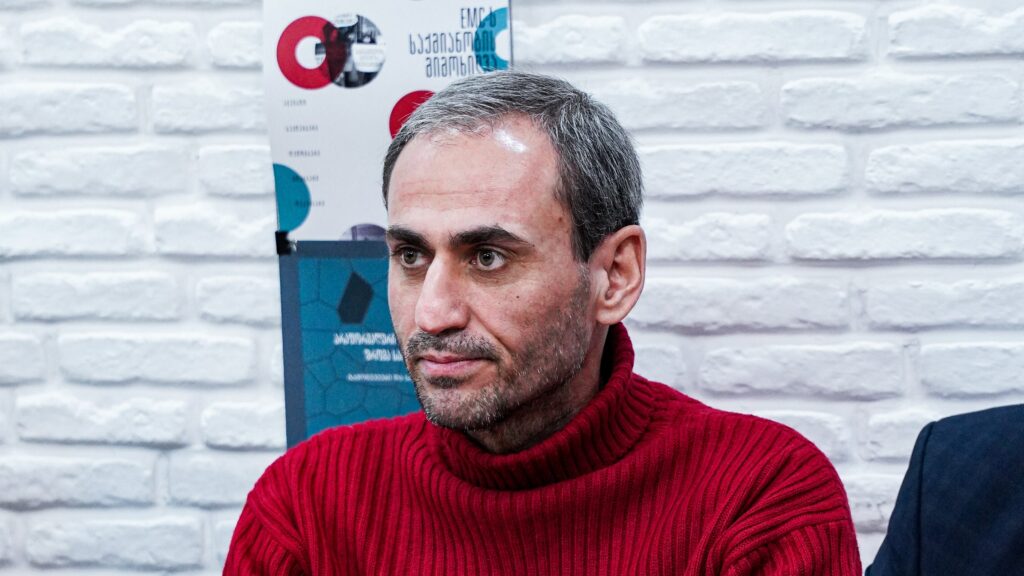
On the night of April 4, 2026, Azerbaijani journalist Afghan Sadygov was detained in Georgia. Information regarding his arrest was initially released by his wife, who published surveillance footage showing law enforcement officers attempting to cut through the door of Sadygov’s home.
Following the news of the arrest, the Ministry of Internal Affairs of Georgia issued a statement noting that the journalist was detained for an offense under Article 173 of the Administrative Offenses Code—insulting a police officer on social media.
Afghan Sadygov’s trial took place late that same night. Tbilisi City Court Judge Tornike Kochkiani found Sadygov guilty and fined him 2,000 GEL. Additionally, he was ordered to be expelled from Georgia and banned from re-entering the country for a period of three years. The decision was announced at dawn, around 4:00 AM.
Afghan Sadygov was a critic of Azerbaijani President Ilham Aliyev’s regime, for which he faced persecution in Azerbaijan. He arrived in Georgia with his wife and two minor children on December 24, 2023. Azerbaijan had been demanding Sadygov’s handover for nearly two years. His lawyers considered such a move dangerous and appealed the Georgian courts’ decisions regarding his extradition to the European Court of Human Rights (ECHR). There was an interim measure in place from the ECHR issued in 2025, which prohibited Georgia from extraditing Sadygov to Azerbaijan due to the threat of torture and political persecution. According to the Georgian Young Lawyers’ Association, Sadygov’s expulsion is a grave violation of the European Convention on Human Rights and Georgian legislation, used as a tool for political retribution.
The Charter of Journalistic Ethics of Georgia expresses solidarity with Afghan Sadygov and condemns his expulsion from the country. The Charter calls on international organizations working on journalists’ rights to pay close attention to Sadygov’s case, ensure his safety, and do everything in their power to protect the journalist in Azerbaijan, where he is currently located. In the assessment of the Media Advocacy Coalition, the expulsion of Afghan Sadygov is “a gross violation of international law and part of a policy directed against freedom of speech and independent journalists, which ‘Georgian Dream’ has been implementing for several years.”
On January 26, 2026, Formula TV journalist Nano Chakvetadze had her phone confiscated, the footage recorded on site was deleted, and she was threatened with arrest.
According to information reported by the media, a Formula journalist was covering the death of an employee of the Anti-Corruption Agency near the building of the State Security Service (SSS), when the media representative was obstructed while performing her professional duties.
“We tried to film footage and ask questions to investigators, but first they forcibly took our phone, and then, again using force, made us leave the area,” says Formula TV journalist Nano Chakvetadze.
The incident was addressed by the Media Advocacy Coalition. “Pressure on journalists and the unlawful restriction of their work constitute a gross violation of media freedom. We stand in solidarity with Nano Chakvetadze and all representatives of independent media who are forced to work and inform the public in an extremely challenging environment,” the coalition’s statement reads.
JamNews Copywriter Irakli Datunashvili Fined Twice for “Artificially Blocking the Road” at February 28 and March 6, 2025 Protests.
JamNews copywriter Irakli Datunashvili was fined twice for “artificially blocking the road” during protests held on February 28 and March 6, 2025. He appealed the fines at the Ministry of Internal Affairs, which together total 10,000 GEL.
In the context of pro-European protests, the Georgian Dream party increased the fines, which have been applied since November 28. Under amendments to Georgia’s Administrative Offenses Code, fines for illegally blocking roads were raised tenfold—from 500 GEL to 5,000 GEL.
On January 16, Tbilisi City Court Judge Nino Enukidze terminated the administrative proceedings initiated against journalist Afgan Sadigov and referred the case to the Tbilisi Police Department, as the court assessed that his actions may contain elements of a criminal offense. This means that the journalist faces the risk of a criminal investigation being launched.
The case concerns an incident that occurred on December 17–18, 2025. The Ministry of Internal Affairs accuses Afgan Sadigov of obstructing traffic and/or pedestrian movement. According to the court’s assessment, since the journalist had already been subjected to an administrative penalty on the same grounds in October 2025, the conduct contains signs of a criminal offense.
This decision was made against the backdrop of legislative amendments under which, in the event of a repeated violation, administrative liability is replaced by criminal liability.
On November 22, during a protest in Tbilisi, near Ingorokva Street, “TV Pirveli” journalist Giorgi Mamniashvili was detained. According to the television company, the journalist was performing his professional duties at the time of his arrest and was covering the protest. For several hours, the “TV Pirveli” newsroom was unable to get in touch with him.
At the moment of his detention, Mamniashvili was filming the police arresting other protesters on his mobile phone and sending the footage to the newsroom, when officers attempted to seize his phone. Shortly after, they ordered his arrest. In the video recorded by Mamniashvili, he can be heard telling the police that he is a journalist and is carrying out his professional duties.
According to the journalist’s lawyer, after the arrest, Mamniashvili was treated in a degrading and humiliating manner at the Dighomi pre-trial detention facility. Specifically, for several hours, his hands were cuffed behind his back, he was fully stripped, and forced to perform so-called “squats.”
Deputy Minister of Internal Affairs Aleksandre Darakhvelidze described the practice of strip-searching detainees upon admission to the detention facility as “a required procedure to document any possible injuries.” Public Defender Levan Ioseliani, however, calls the strip-searching of detainees “degrading and humiliating treatment.”
“The case of Giorgi Mamniashvili is a clear example of the repressive policies of Georgian Dream, aimed at restricting independent media and silencing critical voices,” the Media Advocacy Coalition stated.
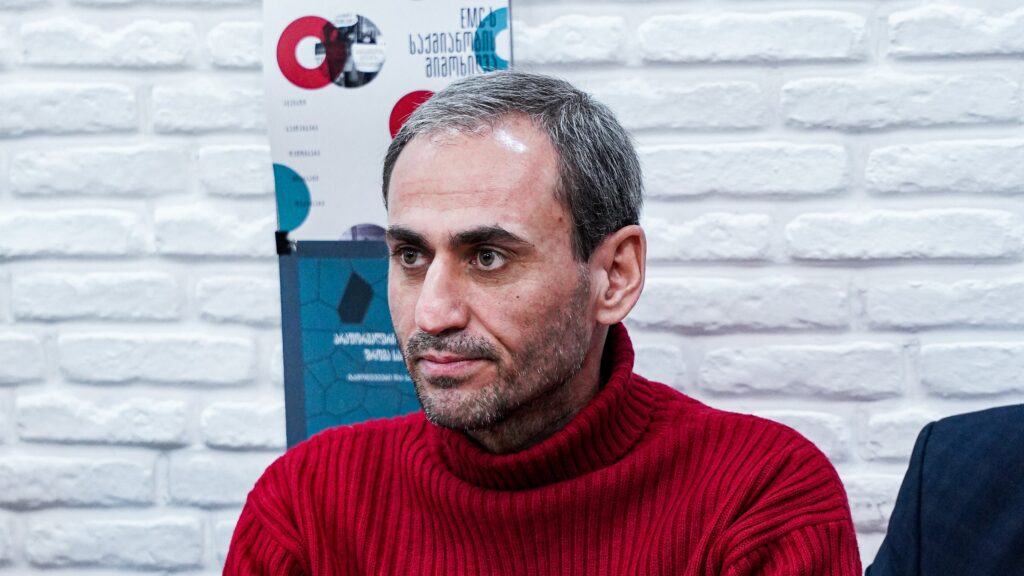
On November 12, 2025, Afghan Sadygov, an Azerbaijani journalist residing in Georgia, was sentenced to administrative imprisonment for the second time under the pretext of blocking a road—he will spend 7 days in prison. He is accused of blocking the road on October 19-21, 2025. Afghan Sadygov had already been imprisoned once on the same charge, having been sentenced to 14 days of administrative imprisonment. At that time, the exiled journalist was accused of blocking the road on October 18.
According to the “Social Justice Center,” the organization defending Sadygov’s interests, at the time of Afghan Sadygov’s first detention, the Ministry of Internal Affairs (MIA) already knew that the journalist would stand on the roadway during the protest on subsequent days, but did not merge the cases: “This circumstance once again indicates that the MIA intentionally did not appeal to the court regarding the remaining days, so that the court would have the opportunity to apply administrative imprisonment against Afghan Sadygov twice. It is obvious that the MIA is trying to make an example of an activist actively involved in the protests by punishing him through the court.”
Since October 19, 2025, after the “Georgian Dream” parliament adopted another set of repressive changes under an accelerated procedure, 13 media representatives have been detained for participating in, and in some cases covering, the ongoing protest on Rustaveli Avenue in Tbilisi. Administrative imprisonment was applied to most of them.
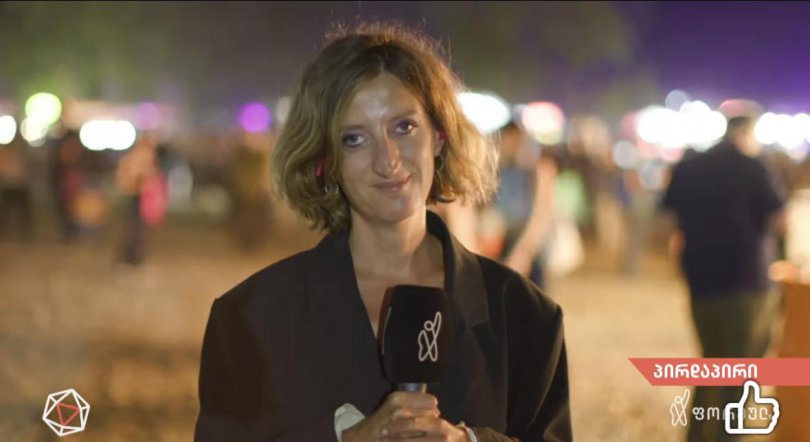
On November 5, 2025, during a protest rally in Tbilisi, the police arrested “Formula” TV company journalist Liza Tsitsishvili. At the time of the arrest, the journalist was performing her professional duties—interviewing rally participants. Video footage recorded by journalists present at the scene shows the police forcibly putting Liza Tsitsishvili into a car. The voices of other journalists can be heard in the video—they tell the police that Liza Tsitsishvili is their colleague; the police reply, “We’ll figure it out.” Liza Tsitsishvili was released ten minutes after her arrest. She says they apologized to her.
This is the second instance in a short period where a journalist is first detained and then released with an apology. On October 24, “Publika” online publication journalist Basti Mgaloblishvili was arrested near her home and released only a few hours later. She was told they had mistaken her for someone else. This is also the second instance where a journalist was detained while performing her professional duties at a rally. Two days before this incident, on November 3, “Media Checker” journalist Ninia Kakabadze was arrested on her way home, despite having a press badge, covering the rally, and having photo and video evidence confirming this.
Since October 19, 2025, after the “Georgian Dream” parliament adopted another set of repressive changes through an accelerated procedure, a total of 12 media representatives have been arrested for participating in, and in some cases covering, the ongoing protest on Rustaveli Avenue in Tbilisi. Administrative imprisonment was applied to most of them.
The Georgian Charter of Journalistic Ethics calls the frequent detentions of journalists “show detentions aimed at intimidating journalists” and urges the Ministry of Internal Affairs (MIA) to stop the persecution and harassment of journalists, and to properly inform its employees of journalists’ rights and instruct them to protect and respect those rights before sending them on assignment.
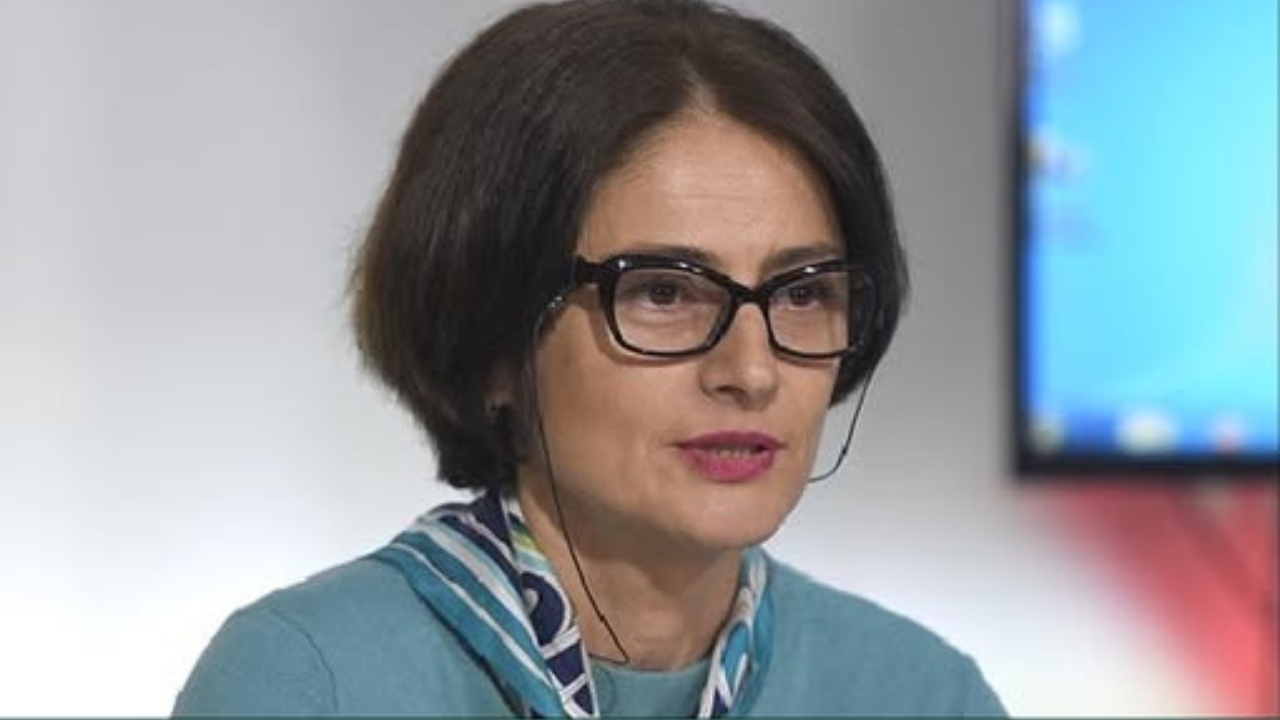
On November 3, 2025, the police arrested Ninia Kakabadze, a journalist for the Media Platform “Media Checker” of the Georgian Charter of Journalistic Ethics. That day, the journalist was at the rally with a press identification badge; she was performing her professional duties. Ninia Kakabadze was arrested while returning home. She was taken to the building of the Ministry of Internal Affairs in Tbilisi. The journalist recounts that for a long time, she was not allowed to call her minor child. The journalist was released a few hours after the arrest. Ninia Kakabadze is accused of artificially blocking the road. The Tbilisi City Court started deliberation on her case on November 4, but postponed the hearing until November 12.
Since October 19, 2025, after the “Georgian Dream” parliament adopted another set of repressive changes through an accelerated procedure, 11 media representatives have been arrested for participating in, and in some cases covering, the ongoing protest on Rustaveli Avenue in Tbilisi. Administrative imprisonment was applied to most of them.
The Georgian Charter of Journalistic Ethics considers the arrest of Ninia Kakabadze and other journalists while performing their professional duties as an attempt to pressure independent media and suppress critical voices. The Charter demands the immediate cessation of administrative proceedings against its media platform “Media Checker’s” journalist, Ninia Kakabadze, and the annulment of the drawn-up administrative offense protocol.

