The Special Penitentiary Service refused to deliver Lasha Bughadze’s novel, The Observer (Damkvirvebeli), to inmate Nana Sander. The agency explained the refusal by citing the “ambiguity” of the book’s title and the “unclear nature” of its content.
In a letter sent to the organization Sapari, the Penitentiary Service states that the novel’s title “does not allow for an unambiguous interpretation, especially in relation to a penitentiary institution.” According to the agency’s explanation, “literature of unclear content” that may pose a threat to the prisoner’s safety or the normal functioning of the facility cannot be allowed into the prison. Baia Pataraia, the head of Sapari, states that Nana Sander’s right to receive information has been restricted. Lasha Bughadze, meanwhile, evaluates the Penitentiary Service’s explanation as discriminatory and an attempt at censorship.
According to the Georgian Young Lawyers’ Association (GYLA), the refusal to allow the book into the penitentiary facility grossly violates the rights of incarcerated individuals and represents an alarming example of censorship. GYLA points out that an abstract reference to the book’s title cannot justify restricting the right to receive information.
It is worth noting that The Observer is a dystopian novel concerning the nearly half-century rule of a despot in Georgia. In August, the book, along with other publications, was also the target of vandalism at one of the Biblusi bookstore branches.
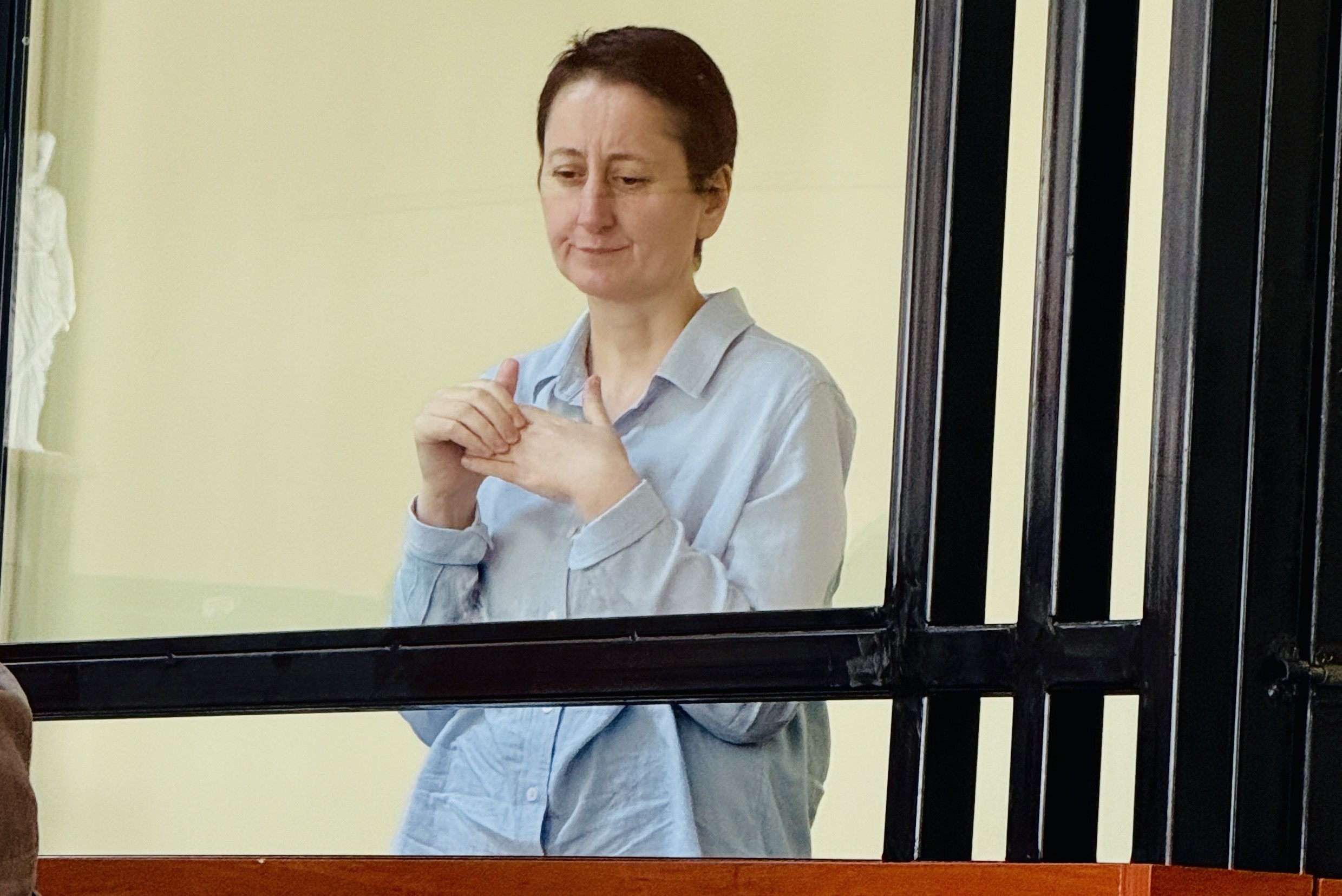
The “Parole Board” (the Local Council of the Special Penitentiary Service for the Review of Convicts’ Cases) has denied the early release of prisoner Mzia Amaghlobeli, the founder of the publications Batumelebi and Netgazeti.
According to Batumelebi, the decision states that the prisoner cannot be released early because she “still does not repent for her actions.” The same outlet reports that the commission reached this decision despite a positive recommendation from Women’s Penitentiary Facility No. 5.
Mzia Amaghlobeli has been wrongfully imprisoned for one year and three months. She was sentenced to two years for slapping Irakli Dgebuadze, the head of the Batumi Police. Under current legislation, individuals convicted of less serious crimes are eligible for early release once they have served half of their sentence. A special commission reviews these cases, with the prison administration formally submitting the motion for a prisoner’s early release. According to Batumelebi, Penitentiary Facility No. 5 submitted the motion for Mzia Amaghlobeli’s parole to the board on January 12 of this year.
According to the Young Lawyers’ Association of Georgia (GYLA), the eyesight condition of Mzia Amaghlobeli, founder of “Batumelebi” and “Netgazeti,” is at an alarming level. The organization notes that Mzia Amaghlobeli has not undergone the necessary examinations and, to date, has not received proper consultation from a doctor, which is essential for maintaining eyesight and planning treatment.
“In 2025, before being placed in the penitentiary institution, her eyesight in the right eye was approximately 30% (0.3), which could have increased up to 90% with corrective glasses. After being placed in prison, her eyesight deteriorated alarmingly. According to examinations conducted on February 4, 2025, her right eye’s eyesight could be corrected with glasses to approximately 60%, but a repeated examination two days later showed that Mzia Amaghlobeli’s eyesight in the right eye had dropped to 0.1 (a 20% decrease in two days), and correction with glasses was now possible only up to 40%, instead of the 90% before imprisonment,” the statement released by GYLA reads.
According to the Young Lawyers’ Association of Georgia, in July 2025, lawyers requested that the prison administration provide Mzia Amaghlobeli with the necessary examinations at the medical institutions she had visited prior to her arrest, where her patient history was kept. This request was denied by the penitentiary service, after which the journalist’s eyesight was examined at a clinic chosen by the prison administration.
“Despite medical assessments that clearly show the alarming deterioration of Mzia Amaghlobeli’s eyesight during her time in prison, the penitentiary institution has not taken any effective measures to arrange adequate examinations and appropriate treatment, nor has the cause of such dramatic deterioration in eyesight been determined,” the statement said.
On August 6, Mzia Amaghlobeli was sentenced by the Batumi City Court to two years in prison. The decision was upheld by the Kutaisi Court of Appeals.
On November 16, the Penitentiary Service released a public statement accusing the media outlets TV Pirveli and Formula of disseminating false information. The agency responded to stories circulated in the media, where prisoners spoke about the unbearable conditions in the prison, and their family members asked the Public Defender (Ombudsman) to start an urgent monitoring of the penitentiary system. They also demanded that the Ombudsman establish how many medical personnel serve the Gldani Prison and who is responsible for the spoiled food brought into the facility.
The Penitentiary Service responded to the prisoners’ accusations with a statement, noting that such problems do not exist in the system.
On November 15, the agency also dismissed as false a story aired on TV Pirveli’s Saturday program, in which a prisoner of conscience, Rezo Kiknadze, described the situation in the system in a letter.
This is not the first time that “Georgian Dream” and the institutions under its influence have attempted to discredit critical and independent media outlets.

