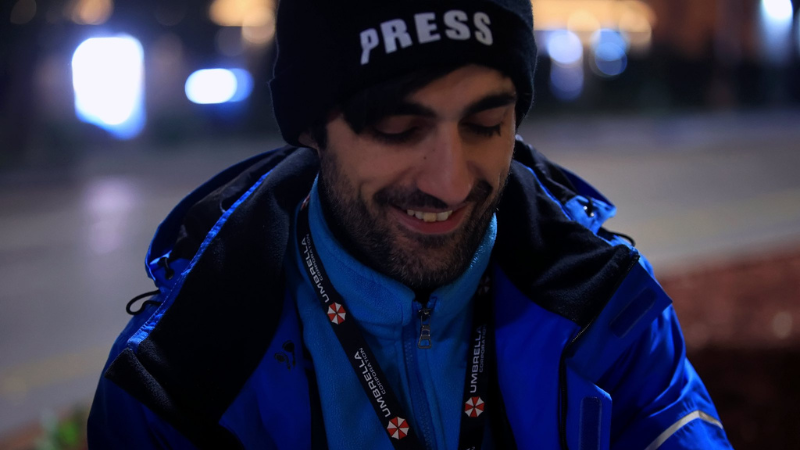
Azerbaijani Journalist Afghan Sadygov Detained, Fined, and Expelled from Georgia

On the night of April 4, 2026, Azerbaijani journalist Afghan Sadygov was detained in Georgia. Information regarding his arrest was initially released by his wife, who published surveillance footage showing law enforcement officers attempting to cut through the door of Sadygov’s home.

Following the news of the arrest, the Ministry of Internal Affairs of Georgia issued a statement noting that the journalist was detained for an offense under Article 173 of the Administrative Offenses Code—insulting a police officer on social media.

Afghan Sadygov’s trial took place late that same night. Tbilisi City Court Judge Tornike Kochkiani found Sadygov guilty and fined him 2,000 GEL. Additionally, he was ordered to be expelled from Georgia and banned from re-entering the country for a period of three years. The decision was announced at dawn, around 4:00 AM.

Afghan Sadygov was a critic of Azerbaijani President Ilham Aliyev’s regime, for which he faced persecution in Azerbaijan. He arrived in Georgia with his wife and two minor children on December 24, 2023. Azerbaijan had been demanding Sadygov’s handover for nearly two years. His lawyers considered such a move dangerous and appealed the Georgian courts’ decisions regarding his extradition to the European Court of Human Rights (ECHR). There was an interim measure in place from the ECHR issued in 2025, which prohibited Georgia from extraditing Sadygov to Azerbaijan due to the threat of torture and political persecution. According to the Georgian Young Lawyers’ Association, Sadygov’s expulsion is a grave violation of the European Convention on Human Rights and Georgian legislation, used as a tool for political retribution.

The Charter of Journalistic Ethics of Georgia expresses solidarity with Afghan Sadygov and condemns his expulsion from the country. The Charter calls on international organizations working on journalists’ rights to pay close attention to Sadygov’s case, ensure his safety, and do everything in their power to protect the journalist in Azerbaijan, where he is currently located. In the assessment of the Media Advocacy Coalition, the expulsion of Afghan Sadygov is “a gross violation of international law and part of a policy directed against freedom of speech and independent journalists, which ‘Georgian Dream’ has been implementing for several years.”

Tbilisi City Court Dismisses TV Pirveli Journalists’ Lawsuit Against Pro-Government POSTV

Tbilisi City Court has dismissed a lawsuit filed by TV Pirveli journalists Nanuka Kajaia, Natalia Kajaia, and Mariam Gaprindashvili against the pro-government outlet POSTV. The journalists sued POSTV for defamation following reports alleging they received $30,000 salaries from Temur Chkonia, the businessman and founder of Coca-Cola.

According to TV Pirveli lawyer Tornike Migineishvili, although the burden of proof rested with the defendant under the law, the plaintiffs submitted numerous documents to the court. These included: a recording of a phone conversation with Temur Chkonia; salary and employment records from TV Pirveli; bank statements from every commercial bank covering several years of transactions for each journalist; and rulings confirming that POSTV had violated journalistic standards in preparing the segment. They also presented all stories and statements demonstrating the “TV company’s” sole intent: an attempt to discredit the plaintiff journalists. Nevertheless, the dispute ended in a victory for the sanctioned media outlet.

At the same time, the lawyer emphasized that the opposing side failed to present a single piece of documentation.

Attempt to Restrict Artist’s Work During Proceedings at Tbilisi City Court

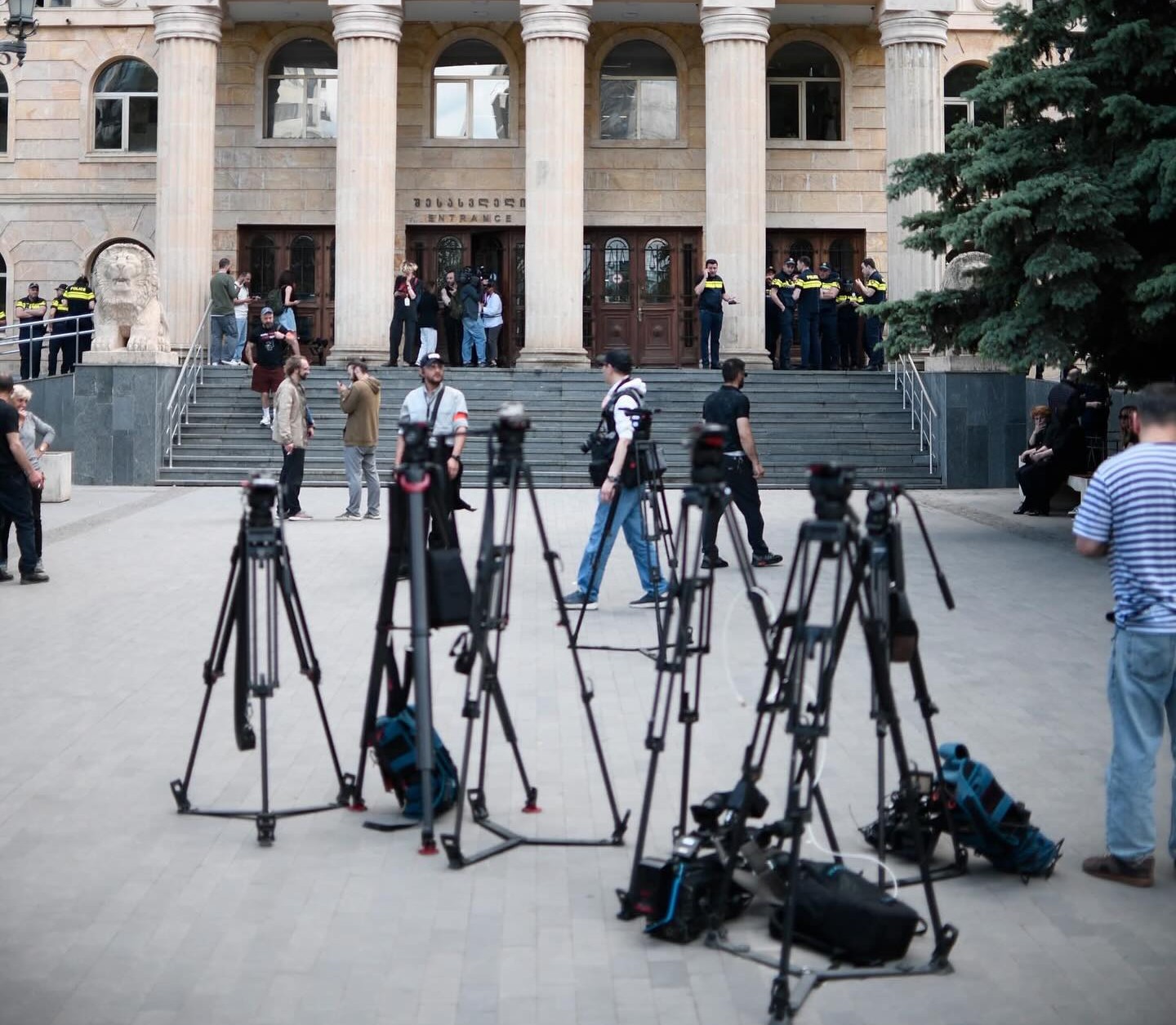
Given the ban on photography, video, and audio recording in courtrooms, sketches produced by artists remain one of the few ways to visually document legal proceedings. Despite this, during the March 18 hearing for Anton Chechin, Sergei Kukharchuk, and Artyom Gribul, Judge Nato Khujadze attempted to restrict an artist’s work, directing that “faces should not be flaunted.” After defense lawyers clarified that sketching is not prohibited—a point the prosecutor also conceded—the artist was allowed to continue working, though with the restriction that faces not be depicted.

This situation unfolds against the backdrop of legislative amendments passed in June 2025, which effectively banned recording in courtrooms. These changes have significantly complicated media coverage of trials and diminished the public’s access to information.

The court is currently holding a pretrial hearing for a new case involving Anton Chechin, Sergei Kukharchuk, and Artyom Gribul. The Russian and Ukrainian nationals, who have already been convicted in cases related to protest rallies, are now being accused of “group playing of handmade cards” while in the penitentiary facility. This charge carries a sentence of 3 to 5 years in prison. Chechin and Gribul are already serving 8.5-year sentences, while Kukharchuk is serving a 2-year sentence. Following the new charges, the prisoners were transferred to separate cells.

Law Enforcement Accuses Netgazeti Journalist of “Blocking the Road” While Performing Professional Duties

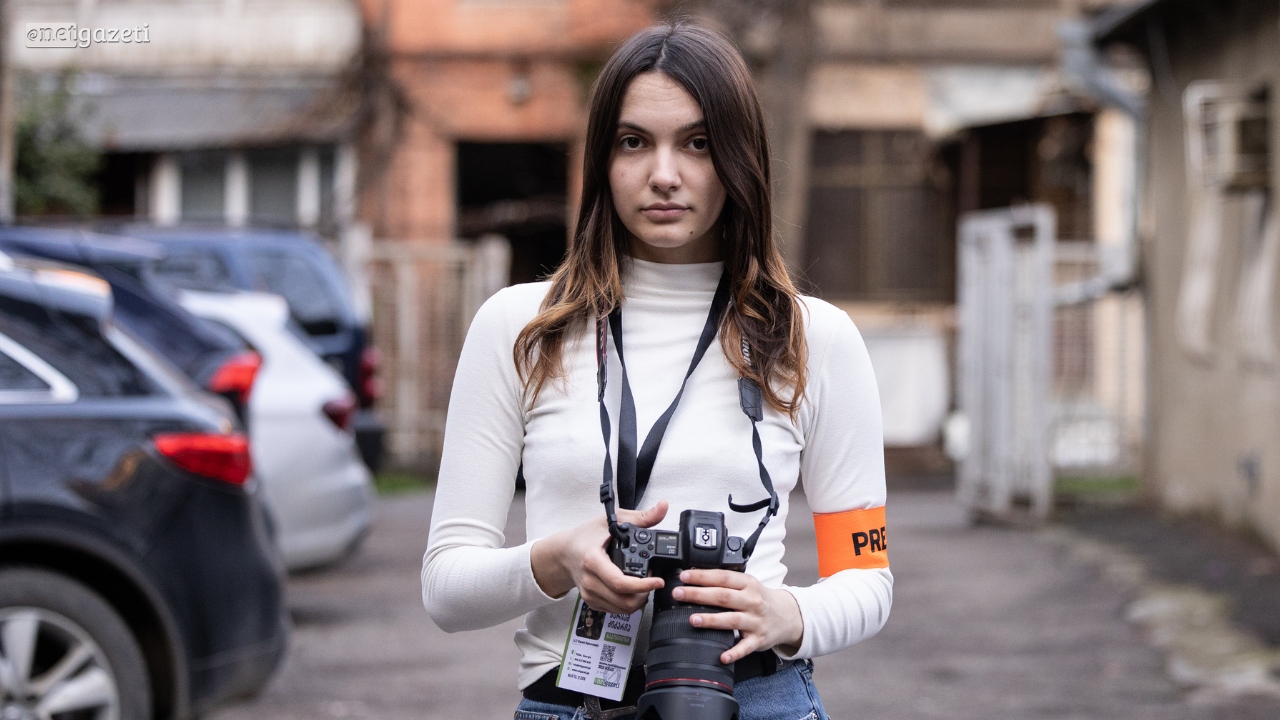
The Georgian Ministry of Internal Affairs (MIA) is accusing Mariam Dzidziaria, a journalist for the online publication Netgazeti, of “blocking the road” on Rustaveli Avenue. The charges stem from the “Saturday March” rally held on January 31, 2026, where Dzidziaria was performing her professional duties. According to Netgazeti, while covering the protest, Mariam was wearing a press badge and a “PRESS” armband, and was carrying a camera.

On March 6, it was revealed that administrative proceedings on identical charges have been initiated against two other media representatives. The MIA is also accusing Tabula journalist Mariam Kuprava and photographer Giorgi Tarkhnishvili of “blocking the road” while fulfilling their professional duties.

The Georgian Charter of Journalistic Ethics stated that the MIA’s stance toward journalists covering protest rallies raises serious suspicions that the true objective of law enforcement is to intimidate them and force them to stop informing the public about protest sentiments. “Systemic pressure on journalists and the media violates the public’s right to be informed and damages the country’s interests,” the Charter’s statement reads.

Under the repressive legislative amendments passed by “Georgian Dream,” blocking a roadway has become a punishable offense. This is prohibited under Article 174-prime, Part 10 of the Administrative Offenses Code. Later, standing on the sidewalk was also integrated into this same article, leading to the prosecution of protesters as well.

Violating this article carries a penalty of up to 15 days of administrative detention (up to 20 days for organizers). Administrative detention does not apply to pregnant women, mothers with children under 12, minors, or persons with severe or significant disabilities. Instead, they face a fine of 5,000 GEL, or 15,000 GEL if they are an organizer. A repeat of the same “offense” leads to criminal liability.

Since October 26, 2024, more than 40 citations have been issued to journalists on charges of “blocking the road.”

Ministry of Internal Affairs Accuses Photographer Giorgi Tarkhnishvili of “Blocking the Road” While Performing Professional Duties

The Ministry of Internal Affairs (MIA) is accusing photographer Giorgi Tarkhnishvili of obstructing pedestrians by standing on the sidewalk while performing his professional duties. The case pertains to a protest on December 18, 2025, where the photographer was working on assignment.

The court hearing for this case was held on March 6, 2026. Judge Davit Makaradze of the Administrative Cases Panel of the Tbilisi City Court examined the evidence but deferred the announcement of the verdict.

“We presented documents proving he is a journalist, as well as the badges he was wearing. Even his hat is marked ‘PRESS,’ and he is holding a large camera. All of this proves he was fulfilling his professional duties, and the video presented by the MIA clearly shows him taking photos or videos,” Tarkhnishvili’s lawyer, Giorgi Tabatadze, stated in an interview with MediaChecker.

On March 6, it also became known that administrative proceedings on the same charges had been initiated against another media representative. The MIA is similarly accusing Tabula journalist Mariam Kuprava of “blocking the road” while performing her professional duties.

According to a statement from the Georgian Charter of Journalistic Ethics, the MIA’s stance toward journalists covering protests raises a well-founded suspicion that the true goal of law enforcement is to intimidate them and force them to stop informing the public about protest activities. “Systemic pressure on journalists and the media violates the public’s right to be informed and harms the country’s interests,” the Charter’s statement reads.

Under the repressive legislative amendments passed by “Georgian Dream,” blocking a roadway has become a punishable offense. This is prohibited under Article 174-prime, Part 10 of the Administrative Offenses Code. Later, standing on the sidewalk was integrated into this same article, leading to the prosecution of protesters as well.

Violating this article carries a penalty of up to 15 days of administrative detention (up to 20 days for organizers). Administrative detention does not apply to pregnant women, mothers with children under 12, minors, or persons with severe or significant disabilities. Instead, they are subject to a fine of 5,000 GEL, or 15,000 GEL if they are identified as an organizer. A repeat of the same “offense” leads to criminal liability.

Since October 26, 2024, approximately 40 citations have been issued to journalists on charges of “blocking the road.”

Ministry of Internal Affairs Accuses Tabula Journalist of “Blocking the Road” While Performing Professional Duties

The Georgian Ministry of Internal Affairs (MIA) has accused Mariam Kuprava, a journalist for the online publication Tabula, of “blocking the road” on Rustaveli Avenue. The accusation stems from a protest on February 7, 2026, while Kuprava was performing her journalistic duties covering the “Saturday March.” In an official report filed on February 9, the MIA claims that “Mariam Kuprava artificially blocked the motorable part of the roadway.”

The Georgian Charter of Journalistic Ethics issued a statement arguing that the Ministry’s stance toward journalists covering protests raises serious suspicions. They suggest the true objective of law enforcement is to intimidate and force journalists to stop informing the public about protest sentiments: “Systemic pressure on journalists and the media violates the public’s right to be informed and damages the country’s interests,” the Charter stated.

Under repressive legislative amendments passed by “Georgian Dream,” blocking a roadway has become a punishable offense under Article 174-prime, Part 10 of the Administrative Offenses Code. Later, standing on the sidewalk was also integrated into this same article, leading to the prosecution of protesters as well. Violation of this article carries a penalty of up to 15 days of administrative detention (up to 20 days for organizers). Administrative detention is not applied to pregnant women, mothers with children under 12, minors, or persons with severe or significant disabilities; instead, they face a fine of 5,000 GEL, or 15,000 GEL if identified as an organizer. Repeatedly committing the same “offense” leads to criminal liability.

Since October 26, 2024, approximately 40 citations have been issued to journalists on charges of blocking the road.

Update:

On April 2, Judge Tornike Kapanadze of the Administrative Cases Panel of the Tbilisi City Court dismissed the “road blocking” case against Mariam Kuprava. According to her lawyer, Nika Simonishvili, even the footage submitted by the Ministry of Internal Affairs clearly showed the Tabula journalist wearing press identification and performing her professional duties on-site.

Criminal Prosecution Initiated Against Civic Activist Giorgi Tsulaia for Standing on a Sidewalk

Tbilisi City Court Judge Davit Makaradze remitted to the Ministry of Internal Affairs the case of civic activist and United National Movement member Giorgi Tsulaia, who had been accused of obstructing movement due to protesting on a sidewalk. The judge identified indicia of a criminal offense in Giorgi Tsulaia’s case, as the activist had previously been subjected to detention for blocking a roadway (on 22 October 2025, he was sentenced to eight days of detention).

The Ministry of Internal Affairs initiated new proceedings against Giorgi Tsulaia on 17 December 2025 in connection with his participation in a protest held on that date. On the same day, the Ministry initiated proceedings against more than 20 individuals, including doctor Vazha Gaprindashvili, whose case was likewise remitted to the Ministry of Internal Affairs.

Since Georgian Dream adopted another repressive legislative amendment restricting freedom of assembly on 12 December 2025, the Ministry of Internal Affairs has been initiating proceedings against protest participants with “obstructing citizens’ movement” for protests carried out on sidewalks, which the amended legislation in fact banned. Under the amended legal framework, a first offense is punishable by administrative detention of up to 15 days (up to 20 days for organizers), while a repeated offense may entail criminal liability.

Criminal Prosecution Initiated Against Civic Activist Vazha Gaprindashvili for Standing on a Sidewalk

Civic activist and doctor Vazha Gaprindashvili is facing the threat of criminal prosecution for standing on a sidewalk. The Ministry of Internal Affairs accuses him of “obstructing citizens’ movement” in connection with the protest held on 22 December 2025.

On 8 January, an administrative hearing was held in this case, after which Judge Tornike Kapanadze referred the case to the Ministry of Internal Affairs, citing the presence of elements of a criminal offense. Vazha Gaprindashvili has previously been identified as an administrative offender on the grounds of allegedly “blocking a roadway.”The Ministry of Internal Affairs has been bringing charges of “obstructing citizens’ movement” against protest participants for expressions of protest carried out on sidewalks since Georgian Dream adopted another repressive legislative amendment restricting freedom of assembly on 12 December 2025, which effectively banned protests even on sidewalks. Under the legislation, a first offense is punishable by administrative detention of up to 15 days (up to 20 days for organizers), while a repeated offense may result in criminal liability.

Supreme Court Refuses to Hear Appeal of Mzia Amaghlobeli, Founder of “Batumelebi” and “Netgazeti”

On March 4, 2026, it was revealed that the Supreme Court of Georgia refused to hear the appeal of the imprisoned journalist Mzia Amaghlobeli, the founder and director of the publications Batumelebi and Netgazeti. The court’s refusal to accept the appeal for consideration, or declaring it inadmissible, means that the court will not review the merits of the case at all and leaves the Court of Appeals’ decision in force. With this step, the judicial review of Mzia Amaghlobeli’s case in Georgia has concluded across all court instances.

Mzia Amaghlobeli was arrested twice during the protest rally in Batumi on the night of January 11-12, 2025. She was initially detained for placing a protest sticker on the wall of an auxiliary storage room at the Batumi Police Department, which read: “Georgia is Striking.” Police officers removed the sticker immediately after it was posted. A few hours after her arrest, Mzia Amaghlobeli was released on her own recognizance, but she was soon arrested again for slapping the head of the Batumi Police, Irakli Dgebuadze. An investigation was launched against the journalist under the first part of Article 353-prime of the Criminal Code. Mzia Amaghlobeli had been placed in pretrial detention as a preventative measure. On August 6, 2025, Judge Nino Sakhelashvili of the Batumi City Court reclassified the charges against Mzia Amaghlobeli under the first part of Article 353 and sentenced her to two years in prison.

High Council of Justice Leaves Requests for Courtroom Filming Without Response

Following the amendments passed in June 2025, which prohibited the media from taking photos, filming videos, or making audio recordings inside court buildings and courtyards, journalists have repeatedly applied to the High Council of Justice for filming permits, but to no avail. According to the law, the High Council of Justice is the body authorized to grant such permissions.

For instance, on March 2, Publika journalist Natia Amiranashvili wrote that since the ban took effect, the outlet’s journalists have submitted approximately 20 applications to the High Council of Justice. However, they have received no response, not even regarding whether their applications contained any formal errors. According to Amiranashvili, they received a reply only once—an notification stating that applications should not be sent via email but must be physically delivered to the High Council of Justice. She noted that they complied with this requirement, yet still received no further response. Such restrictions mean that the media is unable to photograph, film, or record court proceedings, including those of high public interest.

Since “Georgian Dream” passed this restrictive media law last year, the High Council of Justice has granted permission to film a court hearing in only one instance. The “Georgian Dream”-controlled television stations Imedi and the Public Broadcaster received the right to film the trial of businessman Giorgi Bachiashvili, who is considered a “personal prisoner” of Bidzina Ivanishvili.