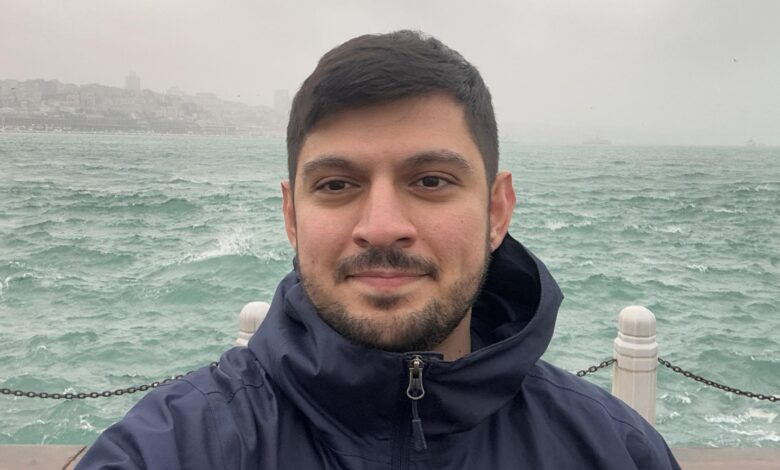
On August 6, 2026, Hungarian journalist Laszlo Robert Mezősz, who had been living in Tbilisi, was forced to leave Georgia following his detention by the Migration Department. Mezősz was detained on August 5. The Ministry of Internal Affairs said that he had no legal grounds to remain in Georgia and had violated the terms of his stay in the country.
Mezősz’s lawyer, Tornike Janelidze, explained that after the journalist’s legal period of stay in Georgia expired, the authorities refused to extend the deadline by which he was required to leave the country. The decision was appealed in court. The court accepted the case for consideration in February and was expected to rule on whether the deadline for Mezősz to leave Georgia should be extended.
Speaking to Mediachecker, Janelidze said he had expected the journalist to be questioned and released following his detention because the court proceedings were still pending.
“Accordingly, I did not expect them to begin the process of expelling him. On the contrary, we were pursuing the case through legal channels. I also spoke to the police officer and explained that we have a case pending before the court and that Laszlo has the right to remain legally in Georgia until the case is considered. However, the police officer told me that he had been instructed to transfer Laszlo to the Migration Department,” Janelidze told Mediachecker.
Had Mezősz left Georgia voluntarily, he would have faced a relatively small fine and a ban on re-entering the country. Deportation, however, would have entailed more severe consequences. He therefore ultimately decided to leave Georgia voluntarily. Members of the public raised money for his plane ticket, and law enforcement officers escorted him to the airport.
Mezősz had faced persecution in Hungary under Viktor Orbán’s government and had been living in Georgia in recent years. He was actively involved in Georgia’s ongoing pro-European protests and also covered them as a journalist. His activism also made him a target of violence. In September 2025, during a confrontation on Melikishvili Avenue near Kakha Kaladze’s election headquarters, Mezősz was physically assaulted.
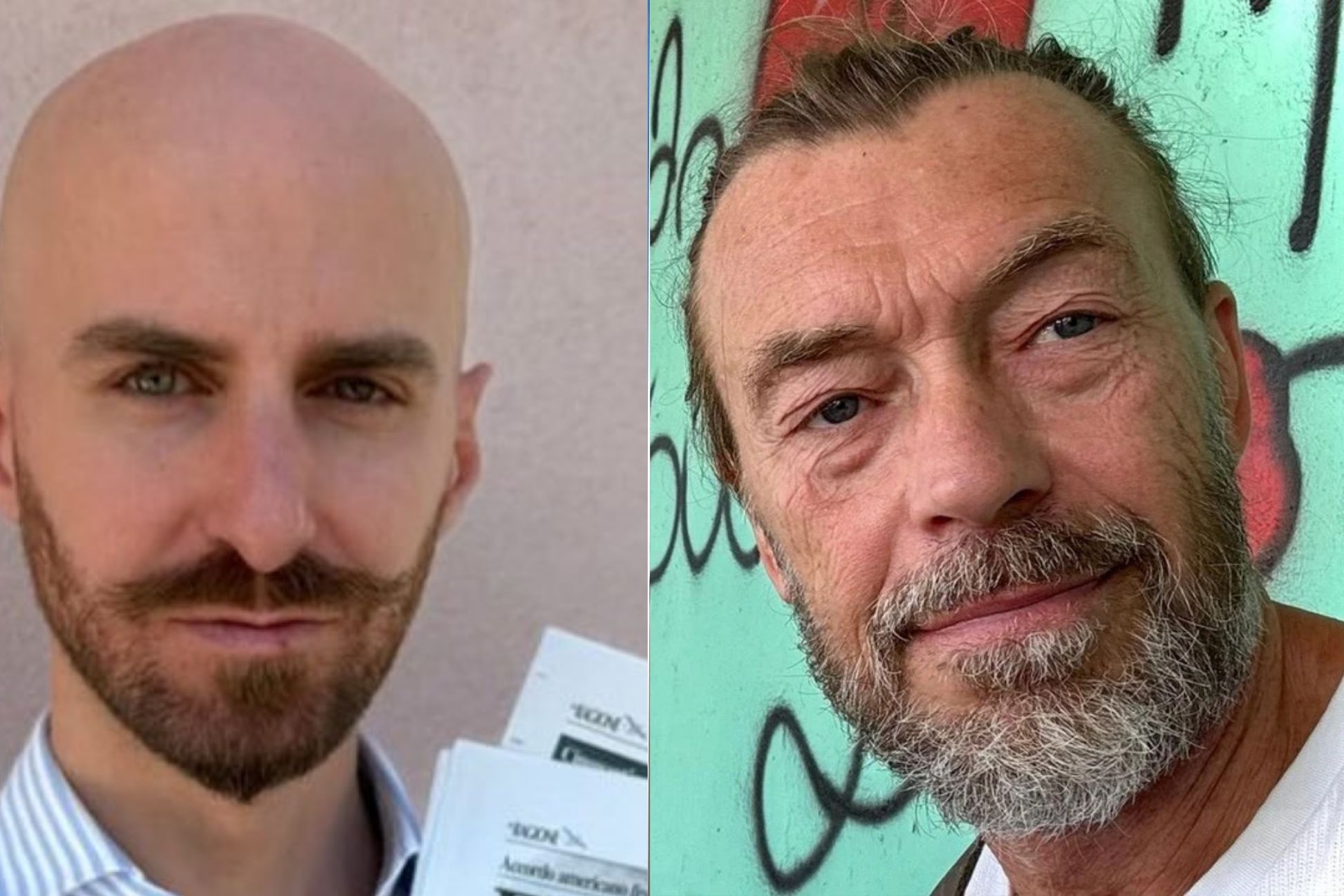
According to Radio Liberty, Marina Klimchuk, an 8-month pregnant journalist and German citizen, was denied entry to Georgia. On May 11, she was stopped at Tbilisi International Airport and informed that she had an outstanding fine of 5,000 GEL for an administrative offense. Klimchuk spent almost 24 hours in the airport’s temporary holding room. According to her, the room lacked both a blanket and a pillow. She was escorted by a law enforcement officer to purchase food but was not allowed to eat it there and was sent back to the holding room. After a nearly 24-hour wait, Klimchuk was sent back to Germany.
Klimchuk states that she had no prior knowledge of the fine and was not shown the penalty protocol at the airport. She suspects that the reason for her denial of entry may be linked to her journalistic work. During her time in Georgia last year, the journalist worked on several articles, including reports on the developments surrounding the Anaklia deep-sea port.
According to Klimchuk, she was willing to pay the so-called fine and even transferred 3,000 GEL to an account provided by the border guards. However, she was later told that paying the fee was pointless because she would not be allowed into the country anyway. The transferred funds were subsequently returned to her.
The journalist’s lawyer, Mariam Jikia, states that Klimchuk was not provided with the necessary documentation, including the penalty protocol, and that the official decision denying her entry cited the non-payment of the fine as the reason. The lawyer announced plans to appeal to the Public Defender to investigate the possible mistreatment of the 8-month pregnant woman.
French photographer Hicham El Bouhmid, who was covering ongoing protest actions in the country, was denied entry to Georgia. On August 3, 2025, he wrote on Instagram that after six hours of waiting and questioning at the Armenia–Georgia border, he was refused entry, with the official reason cited as “other cases provided for by Georgian legislation.”
Based on publicly available information from 2024–2025, the “Media, Information, and Social Research Center” recorded nine cases of foreign journalists and photographers being denied entry to Georgia, and one case of being denied exit from the country. In none of these cases did law enforcement specify the exact motive for the refusal of entry.
On March 30, 2025, Italian media outlet NurPhoto’s photojournalist Jérôme Chobeau was denied entry into Georgia.
This is not the first time journalists have been refused entry into Georgia:
- On February 12, 2025, journalist Clément Girardeau was denied entry at the Georgian border.
- On December 30, 2024, Belgian journalist Witse De Geest was not allowed to enter Georgia.
- On October 26, 2024, IFJGlobal journalist Stefan Goss was denied entry.
- On September 16, 2024, Belarusian journalist and activist Andrei Mialeshka was refused entry into Georgia.
The international press freedom organization Reporters Without Borders responded to these incidents, criticizing the decisions and stating that journalists are being punished for covering protest rallies.