Patrol Police Called to Train Carrying Parents of Protest Detainees to Batumi over Banners

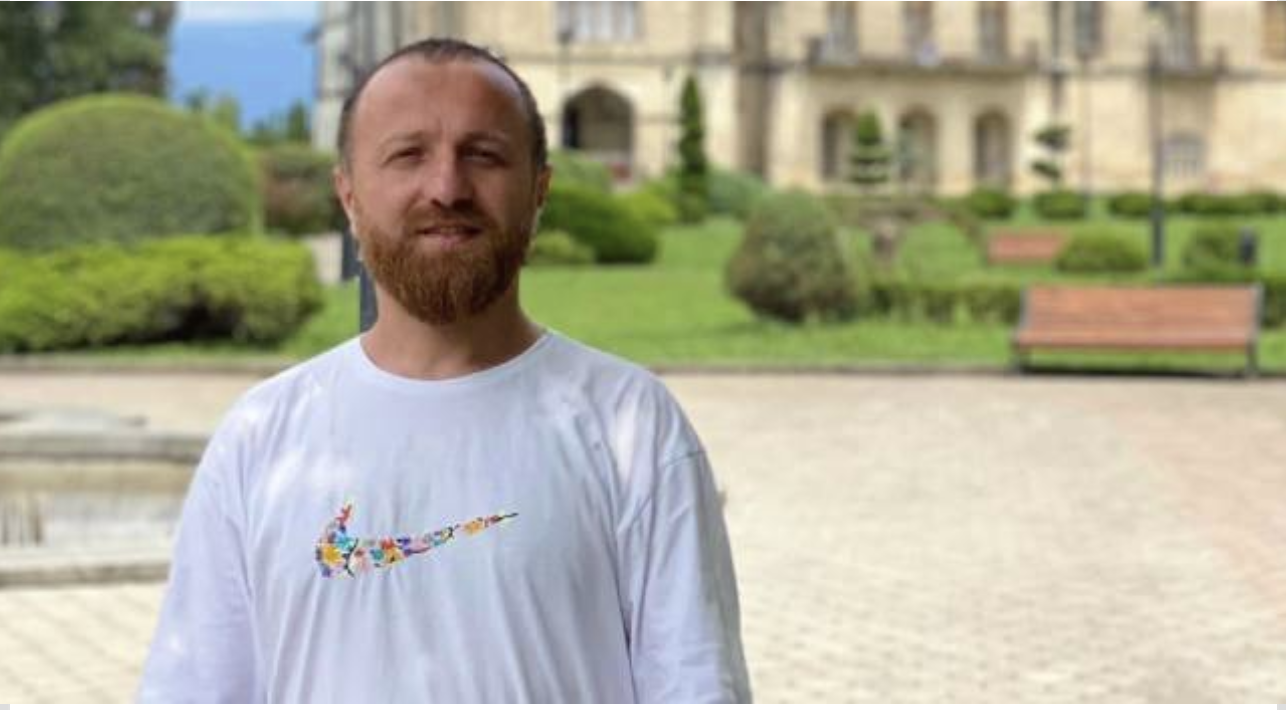
On 19 July, parents of persons detained during protest rallies travelled by train to Batumi to distribute newspapers. Before departure, they reported that the parents travelling to Batumi had been stopped because they were carrying banners and photos of their detained children.

Patrol police were called to the scene. According to reports, the railway administration cited the presence of banners as the reason for calling the police. As a result, the Tbilisi-Batumi train departed approximately 20 minutes late.

“We are heading to Adjara. The train left 20 minutes late because the railway called the patrol police, saying they should make us remove the banners. Unbelievable nonsense! We continue the fight. They may stop the train, but they cannot stop the parents and family members of prisoners of conscience!” Teona Chalidze wrote on social media.

According to Chalidze, no one has the right to prohibit parents from carrying photos of their detained children. “A train is public transport, and everyone has the right to freedom of movement,” stated Chalidze, who was on the train together with the parents.

Later, according to The Ajara Times, in Batumi, on the territory of the so-called “Khopa” market, where parents of persons detained during various protest rallies were holding an information meeting, several individuals verbally confronted them. At the time, the parents were distributing informational newspapers to citizens and speaking with them about the detainees’ cases.

Disinformation campaign against Sulkhan Meskhidze

On July 18, “Adjara Times” published an article titled: “The road near the Batumi Cathedral has been blocked for more than an hour, allegedly due to Bera Ivanishvili.” The publication of the article was followed by a disinformation campaign against the founder of the publication, Sulkhan Meskhidze.

Supporters of “Georgian Dream” actively circulated posts on the social network Facebook aiming to discredit the journalist.

“The liar founder of ‘Adjara Times,’ Sulkhan Meskhidze, is not invited to crowded weddings when traffic gets disrupted; it is a cheap lie that the road was blocked for a wedding ceremony in Batumi because of the attendee Bera Ivanishvili,” wrote “Georgian Dream” supporter Gia Abashidze, among others, on Facebook.

Posts against Sulkhan Meskhidze were also published by “Dream” supporter Nino Pochkhua. These statements were later disseminated unchanged by, among others, “POSTV Analytics.

POSTV also published on the social network disinformation directed against Sulkhan Meskhidze that was shared on the personal pages of “Georgian Dream” supporters Nikoloz Metreveli and David Chikheladze.

Documented Incidents Against Civil Activists – November 2025

Context

The incidents documented in November 2025 demonstrate the systematic practice of detentions and administrative imprisonment of individuals participating in protest demonstrations, particularly in relation to allegations of the “artificial blocking of the roadway” on Rustaveli Avenue. During the reporting period, numerous citizens were subjected to both short-term and multi-day administrative detention.

In addition, a case of criminal detention was documented, in which the Prosecutor’s Office accused a civil activist of repeatedly and artificially blocking the roadway, and the court imposed pre-trial detention as a preventive measure. During the same period, appellate proceedings in the cases of the so-called “prisoners of conscience” continued, with the Court of Appeal, in most instances, upholding the judgments delivered by the Tbilisi City Court.

November also saw incidents involving restrictions on the rights to freedom of peaceful assembly and freedom of expression, when police prevented participants from continuing a protest march. At the same time, an incident of physical violence was documented, involving an attack against a participant in the pro-European protests.

Overall, the incidents documented in November confirm the continued active use of legal and administrative mechanisms against individuals involved in protest activities, as well as incidents of physical retaliation against civil activists.

Incidents

On 1 November 2025, Zurab Menteshashvili was detained under Article 347(1) of the Criminal Code. The Prosecutor’s Office accused him of repeatedly and artificially blocking the roadway during an ongoing protest on Rustaveli Avenue. On 3 November, Judge Lali Garshaulishvili of the Tbilisi City Court ordered his pre-trial detention as a preventive measure.

On 1 November 2025, former representative of the Euro-Atlantic Integration Department of the Ministry of Foreign Affairs, diplomat Giorgi Tsikariashvili, who had been detained on charges of blocking the roadway, was sentenced by Judge Tornike Kochqiani to 10 days of administrative detention.

On 1 November 2025, police began detaining participants in the protest taking place on Rustaveli Avenue. According to participants, Levan Butikashvili was detained opposite the Marriott Hotel.

On 4 November 2025, police detained participants in the Rustaveli protest near the Parliament building. Those detained included poet Paata Shamugia, Beka Agulashvili, Vazha Berishvili, Anuka Gamsakhurdia and Nikoloz Darsania. The Ministry of Internal Affairs accused them of “artificially blocking” Rustaveli Avenue. Hearings concerning the activists detained on the grounds of “artificially blocking the roadway” on Rustaveli Avenue were held at the Tbilisi City Court on 5 November.

Poet Paata Shamugia was sentenced to five days of administrative detention.

Anuka Gamsakhurdia was sentenced to two days of administrative detention.

Nikoloz Darsania was sentenced to three days of administrative detention.

Seventy-year-old Vazha Berishvili was sentenced to one day of administrative detention. He was released from the temporary detention facility several hours later.

Beka Agulashvili was sentenced to five days of administrative detention.

On 5 November 2025, Rusiko Kobakhidze, a researcher of the Soviet past, educator and historian, was detained by police on charges of artificially blocking the roadway. Later that night, Judge Koba Chagunava of the Tbilisi City Court sentenced her to one day of administrative detention.

On 6 November 2025, during the protest held in front of the Parliament building on Rustaveli Avenue, police detained 15-year-old Andria Khamashuridze. Video footage circulated publicly shows police officers using force to place the minor into a police vehicle. He was subsequently released.

On 6 November 2025, Nugzar Kirtadze, a participant in the pro-European protests, stated that so-called “Titushky” ambushed him near his home and severely beat him. According to Kirtadze, at least two masked individuals were waiting for him in the entrance of his apartment building and struck him from behind. As a result of the injuries sustained, he reportedly lost consciousness for several minutes.

On 7 November 2025, civil activist Baia Margishvili, who had been sentenced by Judge Zviad Tsekvava to 14 days of administrative detention, was detained in the courtyard of the courthouse. The Ministry of Internal Affairs accused Margishvili of artificially blocking the roadway.

On 7 November 2025, Konstantine Mikaia was sentenced to one day of administrative detention. The decision was delivered by Judge Koba Chagunava. The Ministry of Internal Affairs accused him of artificially blocking the roadway on 19 and 20 October.

On 12 November 2025, the Tbilisi Court of Appeal, in a decision delivered by Judge Giorgi Keratishvili, upheld the two-year prison sentence imposed on activist Saba Skhvitaridze, who had been detained during the pro-European protest movement.

Saba Skhvitaridze had been detained on the night of 5 December 2024 following a physical confrontation that took place at Freedom Square. The incident had been preceded by clashes between members of the public and unidentified individuals dressed in black, who had gathered near the Courtyard Marriott Hotel during a parallel opposition meeting.

The investigation was initially conducted under Article 353¹(2) of the Criminal Code, which concerns causing injury to the health of a police officer in the course of the performance of official duties. During the court proceedings, however, the Prosecutor’s Office reclassified the charges and accused Skhvitaridze under Article 120 of the Criminal Code. Ultimately, Judge Jvebe Nachkebia found the activist guilty under Article 120(1) (intentional infliction of minor bodily injury) and sentenced him to two years’ imprisonment. This judgment was subsequently upheld by Judge Giorgi Keratishvili of the Tbilisi Court of Appeal.

On 13 November 2025, Judge Koba Chagunava sentenced Rusiko Kobakhidze, researcher of the Soviet past, educator and historian, to three days of administrative detention for a second time on the grounds of blocking the roadway under Article 174 of the Code of Administrative Offences.

On 15 November 2025, in Tbilisi, near Zandukeli Street, police blocked the route of protest participants and prevented them from continuing along the pedestrian walkway. Police officers had established a cordon at the scene. The participants intended to march to the Merab Kostava House Museum.

On 19 November 2025, during a solidarity march in support of prisoner of conscience Mate Devidze, police detained Ketevan Khuskivadze, a lecturer at Tbilisi State University and a translator. According to Goga Memanishvili, Head of the Tbilisi Patrol Police, Khuskivadze was administratively detained on charges of verbally insulting a police officer.

On 22 November 2025, police began detaining participants during a protest demonstration. Film director Giorgi Savaneli was detained on the grounds of alleged petty hooliganism. Also detained were Luka Chokhonelidze, Oto Iremadze, Davit Gunashvili, Mariam Meqantsvili, Tsotne Mirtskhulava and Sopho Markozia.

On 24 November, film director Giorgi Savaneli, who had been detained during the protest, was sentenced to five days of administrative detention. The decision was delivered by Judge Nino Enukidze.

Documented Incidents Against Civil Activists – March 2025

Context

The incidents documented in March 2025 demonstrate that the practice of exerting pressure on civil activists continues to maintain a systemic character and manifests itself in various forms. The incidents recorded during the reporting period reflect administrative detentions, incidents of physical violence, the active use of financial sanctions, as well as the use of criminal law mechanisms, including restrictions imposed on the financial activities of organisations associated with activists.

A significant portion of the documented cases is linked to citizens’ participation in protest demonstrations and the expression of public opinions. Particularly notable are the scale and intensity of financial sanctions. In many cases, fines were imposed on allegations of blocking roadways and, in a number of instances, were based on disputed or insufficient evidence. At the same time, cases were documented in which the actions of law enforcement authorities and judicial decisions failed to take into account the circumstances presented by the defence.

Particular attention should be paid to the freezing of the accounts of charitable foundations supporting activists and the protest movement during the reporting period. This indicates that the practice of pressure extends not only to individual activists but also to organisations providing support to individuals whose rights have allegedly been violated. Taken together, these trends significantly restrict civic space and seriously undermine the rights to freedom of expression and freedom of peaceful assembly.

Incidents

On 3 March 2025, musician and civil activist Davit (Tornado) Gabunia was physically assaulted and verbally abused in the street. According to information circulated on social media, Gabunia was attacked by Mikha Meskhi, the husband of singer Sopho Bedia. Mikha Meskhi subsequently confirmed this information in a comment posted under a Facebook post published by another user.

On 5 March 2025, Barbara Rokita and Kristine Pirveli, founders of “Crab Coffee” and civil activists, were verbally abused and then physically assaulted by a young man near their residence late at night. As a result of the attack, Barbara sustained a broken nose and required surgery. Since the protests of 28 November 2024, the founders of Crab Coffee had been providing coffee and tea free of charge to participants in pro-European demonstrations. The activists believe that the attack was motivated by their active involvement in the pro-European protest movement.

On 7 March 2025, the Patrol Police Department of the Ministry of Internal Affairs detained members of “Strong Georgia” – Beka Beridzishvili, Juba Loladze and Oto Parulava. One of the party’s leaders, Irakli Kupradze, was also present with them. Video footage of the incident shows that members of Strong Georgia were returning home from a protest on Rustaveli Avenue when they were stopped by patrol police officers. Irakli Kupradze asked the officers to explain the reason for the stop, at which point he was forcibly placed into a police vehicle and detained.

On 11 March 2025, Judge Mariana Pomaeva of the Batumi City Court imposed fines of GEL 5,000 each on 18 participants in pro-European demonstrations. The Ministry of Internal Affairs accused the activists, under Article 174(4) of the Code of Administrative Offences, of “artificially creating a barrier through intensive movement” on a pedestrian crossing. Those fined included Diana Bolkvadze, Tamar Surmanidze, Badri Kochalidze, Archil Beridze, Natia Letodiani, Davit Robakidze, Manuchar Khozrevanidze, Keti Paksadze, Mariam Saginadze, Nugzar Tapladze, Tatia Abuladze, Linda Tsintsadze, Archil Shotadze, Giorgi Chkhaidze, Elizbar Chkhikvadze, Gocha Surguladze and Ana Vacheishvili.

On 12 March 2025, Judge Aleksandre Goguadze of the Batumi City Court fined participants in pro-European demonstrations – actor Malkhaz Iremadze, Mariam Gogolishvili, Mari Tsetskhladze and Niko Mirtskhulava – GEL 5,000 each for an act provided for under Article 174(4) of the Code of Administrative Offences. The activists were accused of “artificially creating a barrier through intensive movement” on a pedestrian crossing in Batumi during the night of 31 January.

On 12 March 2025, Judge Jumber Bejanidze of the Batumi City Court fined civil activist Gubaz Lamparadze GEL 5,000 in the so-called “zebra crossing movement case”. The Ministry of Internal Affairs accused the activist, under Article 174(4) of the Code of Administrative Offences, of “artificially creating a barrier through intensive movement” on a pedestrian crossing.

On 17 March 2025, at the request of the Prosecutor’s Office of Georgia, the Tbilisi City Court ordered the freezing of the bank accounts of charitable foundations that had assisted citizens who had been allegedly unlawfully fined for participating in pro-European demonstrations by helping them pay fines and by providing financial assistance to so-called “prisoners of conscience” and their families.

The following organisations were affected by the freezing order:

  • Charitable Foundation “Nanuka’s Fund”;
  • Charitable Foundation “Prosperity”;
  • Charitable Foundation “Fund for Each Other 24/7”;
  • Non-Governmental Organisation “Tbilisi Human Rights House”;
  • Non-Governmental Organisation “Shame”.

According to a statement issued by the Prosecutor’s Office, the foundations were frozen within the framework of an investigation initiated on the basis of an application submitted by “United Neutral Georgia”, a satellite organisation affiliated with Georgian Dream. The freezing order was authorised by Judge Mzia Garshaulishvili, who was appointed to the Criminal Chamber of the Tbilisi City Court in December 2024.

On 18 March 2025, the Tbilisi City Court rejected the request of Temur Katamadze, the flag-bearer of the Batumi protests, to be granted refugee status, as well as humanitarian or subsidiary protection status, during a hearing held on 18 March.

On 19 March 2025, the family of prisoner of conscience Zviad Tsetskhladze was fined for the ninth time. Tsetskhladze’s mother, Nargizi Davitadze, stated on TV Pirveli that the Ministry of Internal Affairs accused her of “artificially blocking the roadway” under Article 174¹ of the Code of Administrative Offences. According to Davitadze, there had been several occasions when they had not even been present on Rustaveli Avenue, yet financial sanctions had nevertheless been imposed on them by the Ministry.

On 19 March 2025, Marizi Kobakhidze, the mother of prisoner of conscience Tornike Goshadze, was fined GEL 5,000 by Judge Manuchar Tsatsua. The Ministry of Internal Affairs accused her of artificially blocking the roadway on Rustaveli Avenue on 23 January under Article 174¹ of the Code of Administrative Offences. It is noteworthy, however, that Rustaveli Avenue had become blocked naturally due to the large number of people present.

On 19 March 2025, Judge Koba Chagunava fined tour guide Aleksandre Giorgadze GEL 5,000. The Ministry of Internal Affairs accused the active protest participant of blocking a roadway on 3 January under Article 174¹ of the Code of Administrative Offences. However, during the hearing, the Ministry failed to present any evidence substantiating the allegation.

On 19 March 2025, Judge Koba Chagunava found actor Sandro Samkharadze liable for an administrative offence and issued him an oral warning. The Ministry of Internal Affairs accused him of carrying a prohibited item during a protest held on 25 November 2024.

On 21 March 2025, during a protest on Rustaveli Avenue, police detained three activists – Tako Gvilia, Tatia Apriamashvili and Luka Gogia. Police began detaining activists outside Parliament after citizens had brought plastic chairs for young demonstrators standing in heavy rain, but representatives of the Ministry of Internal Affairs confiscated the chairs. Tako Gvilia told TV Pirveli that she was initially discussing the issue of the chairs with police officers when she was suddenly seized and forcibly placed in a detention vehicle together with Tatia Apriamashvili. Notably, Luka Gogia, a student at Ilia State University, was detained after applauding the police following the detention of the two women. Tatia Apriamashvili and Tako Gvilia were later released on the basis of a written undertaking, while Luka Gogia was released from a temporary detention facility on 22 March.

On 21 March 2025, the court fined Tsotne Koberidze, a member of the Coalition for Change, GEL 2,000. According to the political party Girchi – More Freedom, Georgian Dream accused Tsotne Koberidze of obstructing the detention of another individual and insulting a police officer.

Documented Incidents Against Civil Activists – May 2025

Context

The incidents documented in May 2025 reflect the use of legal, administrative, and indirect mechanisms to exert pressure on civil activists. The documented cases involve administrative detention, the imposition of financial sanctions, and decisions targeting individual activists that affect their legal status and civil rights.

The reporting period is particularly notable for the use of financial sanctions, indicating the systematic nature of sanctioning practices. In addition, an incident of indirect pressure (chilling effect) against an activist was documented.

Furthermore, legislative developments affecting the functioning of civil society are of particular concern. During the reporting period, a law entered into force that further tightened the legal framework governing the activities of non-governmental organisations and the media, thereby contributing to the creation of an environment in which civic activism and freedom of expression are placed under severe pressure.

Incidents

On 1 May 2025, the Tbilisi City Court heard the case of Miranda Baghaturia and Ana Qurashvili, press officers of the opposition political parties Akhali and Girchi – More Freedom. A representative of the Ministry of Internal Affairs (MIA), Tamta Kimbarishvili, requested that the activists be subjected to administrative detention. However, the court instead imposed GEL 4,000 fines on both Qurashvili and Baghaturia. They had been accused under Article 173(2) of the Code of Administrative Offences of insulting police officer Mirian Kavtaradze. It is noteworthy that on 1 June 2025, Tamta Kimbarishvili was appointed Head of the Hate Speech Monitoring Division of the Ministry of Internal Affairs.

On 5 May 2025, three activist women – Nutsa Makharadze, Keti Jananashvili, and their friend were reportedly attacked near a residential building. According to Makharadze, the attackers ambushed them as they exited an elevator and sprayed pepper spray and green dye into their faces before fleeing the scene. Makharadze later stated that, despite the existence of potential evidence, including the bottle allegedly used in the attack, she had not been informed of meaningful investigative progress.

On 19 May 2025, Lasha Gabitashvili, a participant in the pro-European protests who became publicly known following an incident involving members of the ruling Georgian Dream party in Abu Dhabi, was deprived of Georgian citizenship. The stated reason was his acquisition of dual citizenship. Gabitashvili obtained an Israeli passport following his marriage and applied to the Ministry of Justice in February 2025 to retain his Georgian citizenship. According to legal experts, there were no legal grounds for revoking Gabitashvili’s citizenship, and he could have retained Georgian citizenship while simultaneously holding the citizenship of another state.

On 26 May 2025, political activist Luka Natsvlishvili was detained by police following the conclusion of a protest held in Batumi on 26 May. The Batumi City Court sentenced the activist to 12 days of administrative detention. The Ministry of Internal Affairs accused Natsvlishvili of petty hooliganism and failure to comply with a lawful order of a police officer.

On 30 May 2025, Judge Nino Enukidze of the Tbilisi City Court sentenced Tornike Skhvitaridze to five days of administrative detention and imposed a GEL 5,000 fine on Ani Kavtaradze. The Ministry of Internal Affairs accused Ani Kavtaradze, a member of the Akhali party, and Tornike Skhvitaridze, the brother of imprisoned activist Saba Skhvitaridze, of insulting police officer Mirian Kavtaradze in a courthouse corridor on 17 April. On that day, Mirian Kavtaradze testified as a witness in the criminal proceedings against detained activist and Akhali party member Saba Skhvitaridze. During the testimony, Tornike Skhvitaridze was inside the courtroom, while Ani Kavtaradze remained outside. After the police officer’s testimony concluded, supporters of Saba Skhvitaridze formed a so-called “corridor of shame” for Mirian Kavtaradze.

Also on 30 May 2025, Judge Manuchar Tsatsua of the Tbilisi City Court sentenced activists Tatia Apriamashvili and Lika Lortkipanidze to 12 days of administrative detention each, while Magda Mamukashvili was fined GEL 4,000. The decision related to an incident that occurred on 17 May at a café, where the activists protested against Georgian Dream Member of Parliament Mariam Lashkhi by chanting: “Freedom for the regime’s prisoners,” “No to the Russian regime,” and “Down with Russia’s slaves.”

As of 31 May 2025, the Foreign Agents Registration Act, adopted by Georgian Dream on 1 April and commonly referred to as the “Georgian FARA,” entered into force. The Anti-Corruption Bureau is responsible for enforcing the law. Unlike the United States Foreign Agents Registration Act (FARA), the Georgian law specifically targets Georgian non-governmental organisations and media outlets. The law requires registration, disclosure of relevant documentation, and the submission of annual financial declarations. Failure to comply, or improper compliance, with these obligations is punishable by up to five years’ imprisonment or a fine for natural persons, and by a fine for legal entities.

It is noteworthy that the Georgian Young Lawyers’ Association (GYLA) has already lodged a constitutional complaint with the Constitutional Court of Georgia seeking the suspension of the Georgian FARA law. The co-applicants are the media organisations Studio Monitor and Georgia’s Ambebi. The constitutional complaint was filed on 15 May 2025.

Documented Incidents Against Civil Activists – January 2025

The incidents documented in January 2025 indicate the use of diverse and intensive forms of pressure against civil activists. These incidents include administrative and criminal prosecution, physical violence, restrictions on freedom of expression, financial sanctions, and alleged politically motivated discrimination in professional activities. 

During the reporting period, particularly notable were the mass detentions related to protest demonstrations in Tbilisi and Batumi, as well as judicial decisions concerning activists and the so-called “prisoners of conscience.” At the same time, multiple cases were documented in which individuals linked their dismissal from public employment to their civic position and participation in protests, creating a chilling effect on the exercise of freedom of expression. Cases of physical violence and ill-treatment against activists were also documented, both within Georgia and abroad. Overall, the events of January reflect an environment in which legal, administrative and coercive mechanisms are employed in parallel against civil society. 

Incidents

5 January 2025

Several public employees were dismissed from their positions. The Chairperson of the Central Election Commission (CEC), Giorgi Kalandarishvili, dismissed CEC employee Vako Maisuradze on the grounds of institutional reorganization. Maisuradze links his dismissal to his public condemnation of violence committed by the ruling Georgian Dream party.

Pavle Gakharia, an employee of the Ministry of Internal Affairs’ Public Safety Management Centre 112, also stated that he was dismissed because of his participation in protest demonstrations. According to Gakharia, his employment contract was terminated without any justification. 

8 January 2025

Gela Megrelidze, a German citizen who participated in protests against the so-called “Russian Law”, was denied the right of residence in Georgia and was found administratively liable for an offence committed during a protest.

Megrelidze, who returned to Georgia after 20 years abroad, applied for a residence permit. His application was rejected on the grounds that he allegedly posed a threat to the country. An official document issued to photographer Gela Megrelidze stated that his presence in Georgia was “incompatible with the interests of the State.” 

10 January 2025

Judge Ketevan Jachvadze examined the cases of 11 prisoners of conscience—Andro Chichinadze, Jano Archaia, Guram Mirtskhulava, Onise Tskhadadze, Ruslan Sivakov, Luka Jabuia, Sergei Kukharchuk, Giorgi Terishvili, Irakli Kherashvili, Revaz Kiknadze and Valeri Tetriashvili—and ordered that they remain in pre-trial detention. The Prosecutor’s Office charged the eleven participants in the pro-European protest demonstrations with participation in group violence. 

11 January 2025

Judge Irakli Khuskivadze examined the cases of eight prisoners of conscience—Vephkhia Kasradze, Zviad Tsetskhladze, Vasil Kadelashvili, Giorgi Giorgadze, Irakli Miminoshvili, Insaf Aliyev, Tornike Goshadze and Nikoloz Javakhishvili—and ordered that they remain in pre-trial detention.

The Prosecutor’s Office charged three defendants—Zviad Tsetskhladze, Vephkhia Kasradze and Vasil Kadelashvili—with organising and leading group violence, an offence punishable by six to nine years’ imprisonment. The remaining five defendants—Irakli Miminoshvili, Insaf Aliyev, Tornike Goshadze, Nikoloz Javakhishvili and Giorgi Giorgadze—were charged with participation in group violence, which carries a sentence of four to six years’ imprisonment. 

11 January 2025

During a pro-European protest near Rustaveli Avenue in Tbilisi, protest participant and disability rights advocate Gia Jvarsheishvili was detained.

According to a briefing by Eka Gigauri, Executive Director of Transparency International Georgia, and Nino Lomjaria, head of the organisation Georgia’s European Orbit, multiple rights were allegedly violated during Jvarsheishvili’s detention. He was reportedly subjected to both verbal and physical abuse.

12 January 2025

A large-scale protest entitled “Unfair Court” was held outside the Babilo restaurant on Beliashvili Street in Tbilisi. The demonstration was prompted by information circulated on social media and protest groups indicating that representatives of the judiciary, including leading judges associated with the so-called “judicial clan”, were holding a New Year’s corporate gathering at the restaurant.

The protest was fuelled by public outrage over the fact that, amid the country’s ongoing political crisis, mass demonstrations and the detention of protesters, judges were attending a festive dinner. The demonstration began in the afternoon, after which a large number of police officers and special forces units, including water cannon vehicles, were deployed to the scene. Law enforcement officers completely cordoned off the perimeter of the restaurant to prevent protesters from approaching those inside. 

Police officers on the scene prevented members of the media from filming individuals leaving the restaurant. While the judges’ gathering was taking place, the protest continued throughout the day.

Police administratively detained nine individuals. They were charged under Articles 166 and 173 of the Code of Administrative Offences, namely petty hooliganism and failure to comply with a lawful order of a police officer. Notably, all detainees alleged that disproportionate force had been used against them during their detention. 

The hearings concerning the detainees took place at Tbilisi City Court on 14 January. Eight activists were sentenced to terms of administrative detention by different judges. 

Specifically:

  • Judge Lela Mildenberger sentenced Tite Gedenidze and Zviad Robakidze to 10 days of administrative detention, while Shako Maghradze was sentenced to 12 days of administrative detention.
  • Judge Zviad Tsekvava sentenced Daniel Bulkashvili to 14 days of administrative detention.
  • Judge Manuchar Tsatsua sentenced Zurab Manchkhashvili to 13 days of administrative detention, while Giorgi Chachanidze received 10 days of administrative detention.
  • Judge Koba Chagunava sentenced Beka Papashvili to 15 days of administrative detention.
  • Judge Nino Enukidze sentenced Kakha Japaridze to 10 days of administrative detention. 

11–12 January 2025

During protest demonstrations held outside the Constitutional Court of Georgia and the Adjara Police Department in Batumi, police detained 13 activists. 

On 11 January, detentions began outside Batumi City Court, where activist Tatia Abuladze was detained after attaching a protest poster. Later the same day, activist Tsiala Katamidze was detained outside the Adjara Police Department after displaying a poster of similar content.

Police subsequently detained Mate Tsenteradze, Goderdzi Prangishvili, Temur Katamadze, Lali Dgebuadze, Teo Beridze, Malkhaz Iremadze, and Nini Shavadze, who is a minor.

According to the Georgian Young Lawyers’ Association (GYLA), some of the detainees were charged with failure to comply with a lawful order of a police officer. 

On 12 January, police detained several additional activists during the protest outside the Constitutional Court in Batumi, including Elizbar Chkhikvadze, Luka Natsvlishvili, Shushana Matsaberidze, and Levan Khorava.

According to GYLA, the detainees were transferred to Poti following their detention. 

13 January 2025

Members of the ruling Georgian Dream party, Viktor Sanikidze and Irakli Zarkua, physically assaulted civil activist Lasha Gabitashvili in Dubai.

The incident followed Gabitashvili shouting “slave” and “traitor” at Georgian Dream Members of Parliament the previous day. 

13 January 2025

Tbilisi City Hall employee Kristina Chubinidze was dismissed from her position.

The former public employee stated that she was dismissed because of her commitment to the Constitution and Georgia’s European values. According to her, although her employment relationship had been terminated on 31 December, she was informed of the dismissal only on 13 January.

Chubinidze was among the signatories of a public statement expressing support for Georgia’s European course

18 January 2025

During a protest held outside the Gldani-Nadzaladevi Police Department No. VII in Tbilisi, law enforcement officers detained several activists by use of force. Those detained included film director Guram Matskhonashvili, Sona Kalandadze, Mariam Paichadze, manager of the Haraki movement, Tamar Chumashvili, Roman Akopov, and Mariam Gilashvili. They were charged with wearing face coverings during a protest and with failure to comply with a lawful order of a police officer

Several of the activists administratively detained outside the Temka police station alleged that they had been subjected to physical and verbal abuse by police officers. According to their lawyer, police officers pulled Sona Kalandadze’s hair and verbally abused her while taking her into the police station. The lawyer further stated that Mariam Paichadze was also dragged by her hair during her detention. According to the same source, one alleged law enforcement officer dressed in civilian clothing mocked the detainees and humiliated them because of their participation in the protest.

According to Tamta Mikeladze, Executive Director of the Social Justice Center, Guram Matskhonashvili was struck on the back of the head while at the police station. 

20 January 2025

Judge Nino Gudadze delivered the judgment in the case of prisoners of conscience Omar Okribelashvili and Saba Meparishvili.

The court sentenced both defendants to three years’ imprisonment, which was reduced to two and a half years under the amnesty law. Of this sentence, one year was suspended, while the remaining one year and six months is to be served in a penitentiary institution.

As Okribelashvili and Meparishvili have already spent eight months in detention, they are expected to remain in prison for approximately another ten months.

During the hearing held on 20 January, both defendants pleaded guilty to the charges against them. The Prosecutor’s Office accused them of acting jointly to damage a police barricade, causing damage assessed at GEL 400. According to prosecutor Nugzar Chitadze, the defendants had also compensated for the damage. 

Omar Okribelashvili and Saba Meparishvili were originally detained by police during protests against the so-called “Foreign Agents Law.”

20 January 2025

Fridon Bubuteishvili, aged 20, who had been detained during protests against the so-called “Russian Law,” was sentenced to five years’ imprisonment. The judgment was delivered by Judge Zviad Sharadze. The Prosecutor’s Office accused Bubuteishvili of damaging the gate of the Parliament building, causing damage estimated at GEL 500. He was also charged with throwing stones at a firefighter-rescuer. 

26 January 2025

Civil activist Vakho Pitskhelauri was abducted and physically assaulted in the Tsmindatskali settlement of Gori. According to the activist, he was attacked by at least three masked individuals while walking to a local shop. Pitskhelauri links the attack to his civic activities

29 January 2025

Citizens held another protest outside the Government House of Adjara in Batumi against the policies of the ruling Georgian Dream party and brought tents to the site of the demonstration. During the protest, police restricted the participants’ freedom of expression by preventing the use of protest tents and confiscating the tents brought by demonstrators. 

20 January 2025

Film director Guram Matskhonashvili was fined GEL 2,000 by the court.

The Ministry of Internal Affairs charged him under Articles 173 and 174 of the Code of Administrative Offences, relating to failure to comply with a lawful order of a police officer and wearing a face covering during a protest.

Matskhonashvili had previously been detained by law enforcement officers during the protest outside the Glldani-Nadzaladevi Police Department No. VII together with several other activists. 

27 January 2025

The Zugdidi District Court imposed a GEL 2,000 fine on Mariam Sichinava, a political activist of the Droa party, for wearing a face covering during a protest, under Article 174 of the Code of Administrative Offences

30 January 2025

Nino Khazalashvili, an employee of the Samtskhe-Javakheti Destination Management Organisation, stated that she was dismissed from her position after reacting (“haha” reaction) to a social media post.

According to Khazalashvili, for several weeks she had expressed reactions to social media posts related to civic activism, and believes that these reactions were the reason for her dismissal.

Incidents documented against civil activists – April 2025

Context

The incidents documented in April 2025 show that the practice of pressure against civil activists continues to retain a systemic character and manifests in various forms. The incidents recorded during the reporting period relate to administrative detentions, physical violence, investigative actions, restrictions on the freedoms of assembly and expression, as well as alleged discriminatory decisions connected to professional activity.

A significant part of the cases remains linked to protest activity and the public expression of a pro-European position. At the same time, in a number of cases, there are indications of disproportionate interference by law enforcement bodies, including in the context of detentions, the use of force and the dispersal of protest assemblies.

During the reporting period, particular attention should be paid to investigative actions carried out in the homes of activists and representatives of foundations and human rights organizations, as well as cases of dismissal of persons employed in the public sector, which, according to the victims themselves, were linked to their civic activism.

Incidents:

On 1 April 2025, Luka Kintsurashvili, an active participant in pro-European protests, was detained by police under administrative procedure late at night. According to Tamta Mikeladze, Director of the Social Justice Center, the activist was stopped at 20:00 on Vazha-Pshavela Avenue and was asked to show the contents of Telegram on his phone. Kintsurashvili refused to do so. After that, police took Kintsurashvili’s phone and detained him.

On 8 April 2025, late at night, during a protest on Rustaveli Avenue, police detained three activists — Vato Samkharadze, Rezi Dumbadze and Tazo Kveselava — under administrative procedure. The Ministry of Internal Affairs charged them under Articles 166 and 173 of the Code of Administrative Offences, concerning petty hooliganism and failure to comply with a lawful order of a police officer. According to lawyer Giorgi Tabatadze, detained activist Vato Samkharadze had a split lip and redness on his face. According to the lawyer, the activist sustained the physical injuries during his detention by police. As for the second detainee, Rezi Dumbadze, a police officer allegedly threatened and verbally insulted him.

On 9 April 2025, according to local activists, police did not allow citizens gathered near the 9 April Memorial in Zugdidi to express their protest and dispersed the assembly by force. Droa activist Mariam Sichinava wrote that one citizen was injured during the dispersal and had to be transferred to hospital. It appears that after the activists were removed from the area, representatives of the local authorities arrived at the 9 April Memorial.

On 12 April 2025, according to Batumi-based activist Tsiala Katamidze, the Ministry of Defence dismissed her from the position of reservist of the National Guard, a position she had held since 2022. According to the former reservist of the Defence Battalion of the National Guard of the Defence Forces, the reason for her dismissal was political and was linked to ongoing developments in the country.

On 14 April 2025, activist Lekso Samkharadze wrote on social media that unknown individuals attacked and physically assaulted him and his friend in Freedom Square. According to the activist, the attackers struck him with a sharp object in the area of the back and crown of his head, as a result of which he sustained multiple head injuries. As for Levan Kanchaveli, Samkharadze wrote that unknown individuals fractured his skull, requiring Kanchaveli to undergo surgery. In an interview with TV Pirveli, Levan Kanchaveli stated that the group attack was allegedly linked to his participation in pro-European protests.

On 14 April 2025, Transparency International Georgia issued a statement saying that Georgian Dream had dismissed up to 700 employees from dozens of public institutions with the aim of suppressing the protest wave in the country.

TI wrote that, under the pretext of reorganization, expiry of employment contracts or other formal grounds, employees were dismissed after signing protest statements concerning the suspension of European integration or after openly expressing critical views regarding the government’s policies.

Transparency International Georgia considers that, through four amendments made to the Law on Public Service since December 2024, Georgian Dream has significantly weakened the legal protection of civil servants and, in effect, dismantled the public service reform. The organization notes that the public service reform had been implemented for years with the support of international organizations and was one of the essential preconditions for the country’s integration into European structures.

On 16 April 2025, Gela Khasaia, a member of Girchi — More Freedom and a political activist, was sentenced by a judge of Tbilisi City Court to 12 days of administrative detention. Khasaia was accused of resisting police officers on 31 March; however, according to TV Pirveli, uninterrupted footage disseminated publicly shows that the activist followed the police voluntarily, without resistance.

On 21 April 2025, on Rustaveli Avenue, where participants in the pro-European protest were marking Easter together, police detained two persons. According to publicly available information, the detainees were Giorgi Ortoidze and Giorgi Samkharadze. One of the protest participants also published a video of the incident on Facebook. According to that participant, law enforcement officers detained the activists only because they were congratulating people on Easter.

On 29 April 2025, Tbilisi Court of Appeal refused to grant refugee status to Batumi flag-bearer Temur Katamadze. Temur Katamadze had requested that he be granted refugee status, as well as humanitarian or subsidiary protection status.

On 29 April 2025, employees of the Prosecutor’s Office conducted searches in the residential apartments of Nanuka Zhorzholiani, founder of the Nanuka Fund; her daughter, activist Mariam Geguchadze; activist Mariam Bajelidze; Aleko Tskitishvili, Head of the Human Rights Center; and Guga Kheladze, founder of the fund “For Each Other 24/7”. According to information disseminated by the Prosecutor’s Office, the searches were conducted within the framework of an investigation launched under Article 318 of the Criminal Code of Georgia, concerning sabotage. According to information disseminated by GYLA, lawyers were not given a full opportunity to attend the search procedures, and the court orders were general in nature: they did not specify the list of items, objects or materials to be discovered or seized during the searches.

The investigation in this case is being conducted on the basis of a complaint filed by Vato Shakarishvili’s organization, United Neutral Georgia.

The Georgian Young Lawyers’ Association responded by statement to the search-and-seizure operations carried out on 29 April in the homes of representatives of foundations. According to the organization, the morning search-and-seizure operations constituted another manifestation of Georgian Dream’s terror and, even under the presumption of an objectively conducted investigation, could not be assessed as an appropriate investigative measure.

Incidents documented against civil activists – August 2025

Context

The incidents documented in August 2025 indicate a continued intensification of criminal justice measures and institutional pressure against individuals and organizations associated with the protest movement. During the reporting period, criminal cases against detained protest participants before Tbilisi City Court entered their final stage. Courts convicted several individuals referred to by civil society actors as “prisoners of conscience” and imposed custodial sentences. In some cases, the courts reclassified the initial charges to less severe offences. Most defendants pleaded not guilty and maintained that the proceedings against them were politically motivated, while defence lawyers argued that the evidence presented by the prosecution lacked credibility.

During the same period, pressure on civil society organizations also intensified. By court order, the bank accounts of several Georgian non-governmental organizations were frozen. Civil society representatives assessed this measure as an attempt to restrict the activities of critical and human rights organizations.

Overall, the cases documented in August indicate that legal and institutional pressure linked to the protest movement continued at an intensive level, affecting both individual activists and civil society organizations.

Incidents

On 12 August 2025, Tbilisi City Court Judge Jvebe Nachkebia sentenced Anatoli Gigauri, who had been detained in connection with the pro-European protests, to two years’ imprisonment. The court reclassified the charge initially brought against Gigauri, which concerned an alleged attack on a police officer, to Article 353(1) of the Criminal Code, concerning resistance to a police officer committed with violence or threat of violence. Gigauri had been arrested in connection with an incident that took place on Rustaveli Avenue on 24 November 2024, allegedly involving a strike against police officer Vakhtang Gabunia. The defence argued that the incident had been preceded by violence by the same police officer, namely a blow to Gigauri’s face. According to Gigauri, the officer struck him first, before he moved his hand, and therefore he acted in necessary self-defence.

On 12 August 2025, Batumi City Court delivered its judgment in the case concerning the incident that took place at Batumi Arts University on 9 December 2024. The case concerned the attempt by protest participants to place a banner on the university building. According to the Ministry of Internal Affairs, university lecturer Tea Tsaguria prevented them from doing so, which was later followed by a physical confrontation involving her husband and another accompanying person. Several individuals were subsequently arrested on charges of group violence.

By the court’s decision, Batumi Arts University student Anri Kakabadze was sentenced to nine months’ imprisonment. At the time the judgment was delivered, Kakabadze had already spent approximately seven months in pre-trial detention and was expected to remain in custody for a further two months to serve the sentence.

In the same case, Mamuka Jorbenadze, Dean of Batumi Arts University, was fined GEL 20,000; however, taking into account the period he had spent in pre-trial detention, the payable amount was reduced to GEL 18,000.

The court also imposed financial penalties on university students Guram Mikeladze, Davit Gvianidze and Giorgi Davitadze. Each was fined GEL 17,000; however, taking into account the period spent in pre-trial detention, the payable amount for each was reduced to GEL 15,000.

On 15 August 2025, Tbilisi City Court Judge Nino Galustashvili sentenced Davit Khomeriki, who had been detained in connection with the pro-European protests, to four years and six months’ imprisonment. The prosecution charged Khomeriki with preparation of an explosion under Articles 18 and 229 of the Criminal Code, an offence punishable by four to seven years’ imprisonment. Khomeriki pleaded not guilty and stated that the items and substances referred to in the case file did not belong to him.

On 22 August 2025, Tbilisi City Court Judge Giorgi Arevadze sentenced Archil Museliants, who had been detained in connection with the pro-European protests, to four years’ imprisonment. Museliants was accused of damaging the cables of surveillance cameras installed near Parliament during the protests, allegedly causing damage amounting to GEL 534. He had been charged under Article 187(2) of the Criminal Code, which concerns damage to property by arson and carries a penalty of three to six years’ imprisonment.

On 27 August 2025, upon a motion by the Prosecutor’s Office, Tbilisi City Court ordered the freezing of the bank accounts of seven Georgian civil society organizations. The measure affected the accounts of the Civil Society Foundation, ISFED, IDFI, GDI, Democracy Defenders, Sapari and the Social Justice Center.

According to the Prosecutor’s Office, the freezing of the organizations’ accounts was linked to criminal investigations initiated on the basis of a complaint filed by Vato Shakarishvili’s organization. The Prosecutor’s Office alleged that the organizations had financed the purchase of various protective items, including gas masks, protective goggles, medical masks, face coverings and pepper spray, which, according to the authorities, were allegedly used by protest participants during confrontations with police.

14 Employees Dismissed from Public Broadcaster’s Adjara TV

On June 2, it was revealed that 14 employees had been dismissed from the Public Broadcaster’s Adjara TV and Radio under the pretext of a so-called “reorganization.”

Among those fired are five journalists: Irina Kurua, host of the program “Satkmeli”; Maia Merkviladze, head of radio news; and journalists Teona Kharabadze, Levan Uridia, and Salome Gegeshidze. They all received their termination emails simultaneously on June 2. The emails stated that their employment contracts were being severed as part of the reorganization announced at the television station.

In an interview with the publication “Batumelebi”, Irina Kurua linked her dismissal to an attempt to suppress critical voices at the channel: “I haven’t heard a single argument explaining why my show was canceled. The email simply stated that there was no place for the program “Satkmeli” in the new broadcasting grid developed as a result of optimization. I believe they just don’t want critical opinions to be broadcast on television, as viewers regularly heard diverse and critical perspectives on this show.”

Maia Merkviladze also connects her dismissal to her critical stance toward the government:”I am interested in hearing the director’s arguments; otherwise, I have my own and I know exactly why they might have terminated our cooperation. Even though my recent health condition has prevented me from being fully active, I still believe all of this is tied to my critical attitude toward the government.”

Media advocacy organizations assess the dismissal of these journalists as a deliberate attempt to stifle critical opinion. “This is not the first instance of independent voices being marginalized at ‘Adjara TV and Radio’ and within the Public Broadcaster as a whole. Over recent years, a number of similar incidents have occurred, pointing to a consistent erosion of editorial independence by the broadcaster’s management and its subordination to political influence,” the Media Advocacy Coalition noted in its statement.

The Georgian Charter of Journalistic Ethics echoed these concerns: “These dismissals are nothing more than an attempt to drain the Adjara Public Broadcaster of critical thought. This selective, biased approach toward journalists serves the ultimate goal of clearing the information field in Adjara.”

Much like the situation at Adjara TV, firing critical journalists has also become a recurring practice at the Public Broadcaster’s First Channel. Over the past year and a half, management has dismissed numerous journalists who expressed criticism of the First Channel’s editorial policy, or has employed various other punitive measures against them

An “Achara Times” journalist became the target of aggression while performing their professional duties

According to Achara Times, Sulkhan Meskhidze, the founder and journalist of the online publication, became the target of aggression while covering the election for the head of the Adjara branch of the Union of the Blind.

The publication reports that the incident occurred in the courtyard during the coverage of the election process. While he was performing his journalistic duties, an attempt was made to snatch and smash Meskhidze’s phone. According to the outlet, police officers present at the scene witnessed the aggression and the attempt to confiscate the journalist’s phone, but they failed to react.

Achara Times stated that they were unable to capture complete video footage of the incident, as the recording stopped during the struggle to prevent the mobile phone from being damaged. The publication further noted that representatives of the Union of the Blind also refused to allow journalists to enter the voting area to film the proceedings.