

Ia Melitauri, an activist participating in the ongoing protest, was fined 2,500 GEL by the court. The decision was delivered by Judge Tornike Kapanadze of Tbilisi City Court. The administrative offence case against Melitauri concerns a social media post that contained obscene language and mentioned the surname “Salukvadze”. According to the position of the Ministry of Internal Affairs, the post was directed at police officer Lasha Salukvadze.
The case was examined under Article 173(2) of the Code of Administrative Offences, which concerns verbal insult of a police officer and provides for a fine ranging from 2,000 to 5,000 GEL or administrative detention of up to 60 days.
According to the defence, the case did not establish that the disputed post was published by Ia Melitauri. In addition, the defence lawyer argued that the post referred only to the surname “Salukvadze”, without a first name, status, or other identifying details, and therefore it was not proven that the text was specifically directed at police officer Lasha Salukvadze.
location: Tbilisi
Actors dismissed from Marjanishvili Theatre
According to publicly available information, nine members of the troupe of Kote Marjanishvili State Academic Theatre were dismissed, including Eka Nizharadze, Natia Gubenko, Maia Katsitadze, Irakli Cholokashvili, Ninaka Gelashvili, Guram Jashi, and Zaza Iakashvili.
The theatre has not issued a public statement regarding any reorganization and has not provided reasons for the dismissals. According to the actors, in January, instead of the usual one-year contracts, they were offered three-month contracts, which expired on 30 April.
“I did not receive any official notification. They simply offered a three-month contract for the first time, and this was a sign for me that they intended to terminate the contract,” – stated Irakli Cholokashvili in an interview with TV Pirveli.
The dismissals took place against the backdrop of the active participation of part of the theatre community in anti-government and pro-European demonstrations. According to the dismissed actors and media reports, their civic engagement may have been the reason for the dismissals.
Beka Lokhishvili sentenced to 15 days of administrative detention over social media posts concerning police officers
Judge Zviad Tsekvava of the Administrative Chamber of Tbilisi City Court sentenced Beka Lokhishvili to 15 days of administrative detention in relation to posts published on social media concerning police officers.
According to available information, in his social media post, Lokhishvili criticized the conduct of the Patrol Police in relation to issues concerning motorcycles and referred to police officers using obscene and insulting language.
Verbal insult of a police officer constitutes an administrative offence under Article 173(2) of the Code of Administrative Offences, which provides for sanctions in the form of either a fine or administrative detention of up to 60 days. Repeated commission of the same act may constitute grounds for criminal liability.
Administrative detention imposed on civil activists Ia Mghibrishvili, Inga Buadze, and Gio Chachanidze
Judge Tornike Kapanadze of the Tbilisi City Court imposed 2 days of administrative detention each on active participants in protest rallies, Ia Mghibrishvili and Inga Buadze.
Inga Buadze told TV Pirveli that the Ministry of Internal Affairs alleged that she had blocked a roadway on February 7. “After the march, I remained on the road; I felt the need to protest because amendments had been introduced to the law and my friends were being fined and detained for standing on the sidewalk,” she stated.
As for Ia Mghibrishvili, the Ministry of Internal Affairs alleged that, on December 18, she had created an obstruction for pedestrians on the sidewalk. Her lawyer told the media that the hearing had been adjourned at the stage of replies and the substantive examination of the case had not been completed; however, the judge announced the decision before the lawyer was even able to enter the courtroom.
On the same day, in connection with the April 9 protest, Judge Zviad Tsekvava of the Tbilisi City Court imposed 3 days of administrative detention on Gio Chachanidze. The case concerns allegedly creating an obstruction for pedestrians by standing on the sidewalk in front of Parliament.
“TV Pirveli” views statements from the Prosecutor’s Office and “Georgian Dream” MPs as an attempt to pressure the investigative journalists of “Shabatis Eteri”
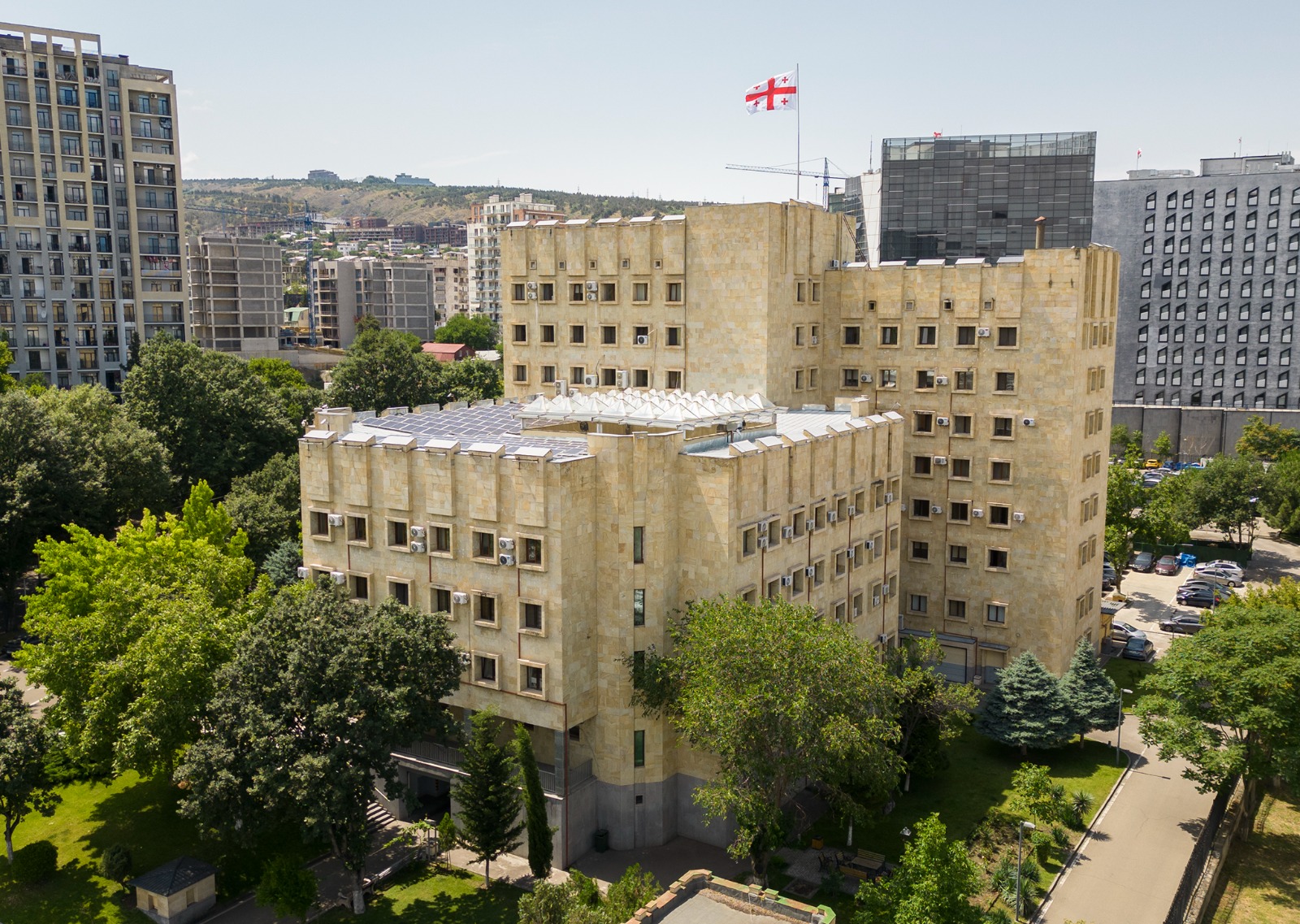
A report aired on April 25 by “TV Pirveli’s” investigative program, “Shabatis Eteri” (Saturday Broadcast), was followed by a series of statements directed against the television company. The Prosecutor’s Office of Georgia accuses the station of spreading disinformation.
Specifically, the program “Nodar Meladze’s Saturday” prepared an investigative report regarding Bezhan Bezhuashvili, the father of Tamar Bezhuashvili, a prosecutor involved in high-profile cases. Tamar Bezhuashvili is leading the cases of Paata Burchuladze, Irakli Nadiradze, Murtaz Zodelava, Paata Manjgaladze, and Lasha Beridze. According to the journalistic investigation, the prosecutor’s father defrauded business partners, thereby seizing their shares, funds, and real estate. The report also discusses the prosecutor’s alleged influence, which may be the reason for the delay in the legal proceedings initiated against Bezhan Bezhuashvili.
The Prosecutor’s Office of Georgia released a statement regarding this matter, calling the “TV Pirveli” material “yet another disinformation report.” According to the agency, the television company “is deliberately preparing a report for the second time regarding the business activities of the prosecutor’s father and is completely unjustifiably linking them to Tamar Bezhuashvili’s professional activities.”
“The Prosecutor’s Office of Georgia will not allow such attacks on the prosecutors of high-profile criminal cases, which aim to discredit the prosecutor and the agency, and will respond accordingly,” the statement reads.
Journalist Nodar Meladze also responded to the incident, noting that the attack on the “Shabatis Eteri” team is intended to pressure journalists:
“We, the investigative project ‘Shabatis Eteri’ of ‘TV Pirveli,’ consider the orchestrated attacks on our team as pressure on journalists. The goal of these actions is to force media representatives to cease their professional activities and refuse to prepare investigative reports. For the second day now, a series of attacks by the Prosecutor’s Office of Georgia and ‘Georgian Dream’ MPs has been underway against the investigative journalists of the ‘Shabatis Eteri’ program.””TV Pirveli” views statements from the Prosecutor’s Office and “Georgian Dream” MPs as an attempt to pressure the investigative journalists of “Shabatis Eteri”
Court of Appeal upholds 8.5-year sentence of Anton Chechin in drug-related case
The Tbilisi Court of Appeal upheld the 8.5-year sentence of Anton Chechin, convicted on drug-related charges. The decision was delivered on April 27 by an appellate panel composed of judges Nino Chakhnashvili, Giorgi Keratishvili, and Paata Silagadze.
Chechin did not exercise his right to a final statement and did not attend the pronouncement of the judgment. At first instance, the judgment against Chechin was delivered by Judge Jvebe Nachkebia.
Chechin was convicted of possession of a particularly large quantity of narcotic substances. He does not admit guilt and claims that the drugs were planted on him due to his participation in protests. He was arrested on December 3, 2024, during ongoing demonstrations.
Activist Mariam Mekantsishvili fined 4,000 GEL for insulting a municipal assembly member
Activist Mariam Mekantsishvili was imposed a fine of 4,000 GEL on the grounds of insulting municipal assembly member Beka Davituliani. The decision was taken by Judge Tornike Kochkiani.
The incident, in relation to which the Ministry of Internal Affairs initiated administrative proceedings, occurred on April 9. At the April 9 memorial, Meqanqishvili referred to the MP as a “traitor to the country,” a “Russian slave,” and a “betrayer.”
In response to the demonstrator’s protest chants, Davituliani repeatedly instructed her to move away, after which he became irritated, grabbed her, and forcibly removed her from the area.
Court of Appeal upholds guilty verdict against Saba Jikia
The Tbilisi Court of Appeal upheld the judgment of the court of first instance, finding 19-year-old Saba Jikia guilty and maintaining the sentence of 4 years and 6 months of imprisonment. The decision was delivered by Judge Giorgi Keratishvili.
Jikia was charged under Article 353¹, paragraph 1 of the Criminal Code, which concerns an attack on a police officer and provides for a penalty of 4 to 7 years’ imprisonment. According to the prosecution, he delivered a kick to the torso of an employee of the Special Tasks Department.
The alleged victim in the case, Special Tasks Department officer Beka Gotiashvili, has stated that he did not sustain any injury. Saba Jikia was arrested on December 4, 2024.
Tbilisi City Court imposed 2 days of administrative detention on activist Ani Chrdileli
An active protest participant, activist Ani Chrdileli, was imposed 2 days of administrative detention by Judge Zviad Tsekvava. The Ministry of Internal Affairs alleged that Chrdileli had artificially blocked a roadway in the vicinity of the Parliament on March 7.
On 16 October 2025, Georgian Dream adopted legislative amendments to the Criminal Code of Georgia and the Code of Administrative Offences of Georgia, which significantly restrict the forms through which demonstrators may express peaceful protest. Under these amendments, Article 174¹ of the Code of Administrative Offences was supplemented with paragraph 10, providing that participants in assemblies and demonstrations shall be subject to mandatory administrative detention for certain acts. These include, inter alia, covering one’s face with a mask or other means, possessing tear gas or similar substances, intentionally creating obstacles to pedestrian or vehicular movement, installing temporary structures, or partially or fully blocking a roadway.
A violation of this provision is punishable by administrative detention for up to 15 days, or up to 20 days in the case of an organizer. The amendments also introduced changes to the Criminal Code of Georgia, providing that the repeated commission of the above-mentioned acts within a one-year period may result in criminal liability.
The practice of using seizures against activists continues
Civil activist Giorgi Akhobadze shared information on social media and published a photo, according to which the National Bureau of Enforcement notified him that his bank accounts had been placed under seizure. According to the document, the amount subject to seizure is 5,350 GEL.
The activist has not provided any further explanation; however, in light of existing practice, it is likely that the case concerns fines related to allegations of blocking a road. Recently, a number of similar cases have been documented, where activists had not been informed in advance about the fines and learned of them only after seizure measures were imposed on their bank accounts.In the same context, writer Beka Kurkhuli also wrote on social media: “Our ‘honourable government’ placed my bank account under seizure while I am in the combat zone in the Donetsk region, in the war in Ukraine. First, they fined me 35,000 GEL for standing in my own city, on my own Rustaveli Avenue, and for defending the children they mercilessly targeted and beat; then, as soon as they found out that I was at war, they imposed the seizure,” Kurkhuli wrote.