Tbilisi City Court imposed one day of administrative detention on Giorgi Savaneli for standing on the sidewalk. The decision was delivered by Judge Tornike Kapanadze.
On 8 May, following the court hearing, Savaneli’s lawyer, Ayhan Hasanli, wrote that the only “evidence” in the Ministry of Internal Affairs’ case had been obtained unlawfully. According to the lawyer, the case does not concern an administrative offence, but rather the constitutionally protected freedom of assembly and manifestation. He stated that the court hearing mainly concerned a one-page “inspection report” and an “official report.” According to the lawyer, when a citizen is held administratively liable for standing on the sidewalk, participating in an assembly, and publicly expressing their opinion, the case is no longer merely about an administrative offence report, but about freedom itself.
On the same day, Judge Tornike Kapanadze imposed two days of administrative detention on Tata Peradze, a member of the party “Droa,” in a case concerning the obstruction of pedestrians on the sidewalk and the artificial blocking of the roadway. Tata Peradze did not attend the court hearing. She was waiting for the enforcement of the decision at the party office, where she was later detained.
Judge Koba Chagunava of Tbilisi City Court imposed five days of administrative detention on Giga Makarashvili. The case concerns a post published on social media which, according to the Ministry of Internal Affairs, contained a verbal insult against the Chairperson of the Parliament of Georgia, Shalva Papuashvili.
The case file includes an administrative offence report drawn up by Korneli Kirtskhalia, Senior Officer of Public Order. According to the report, “on 3 April 2026, citizen Giorgi Makarashvili verbally insulted the Chairperson of the Parliament of Georgia, Shalva Papuashvili, through the social network Facebook.”
The court found Makarashvili liable for an administrative offence and imposed five days of administrative detention as a sanction.
Tbilisi City Court imposed four days of administrative detention on Bachana Apkhazava, a participant in the ongoing protest rallies. The decision was delivered by Judge Tornike Kapanadze. The Ministry of Internal Affairs alleged that Apkhazava had obstructed pedestrian movement while standing on the sidewalk in front of Parliament.
The provision under which the administrative offence reports were drawn up provides for administrative detention of up to 15 days as a sanction, and up to 20 days in the case of an organizer. Repeated commission of an offence by a person previously subjected to an administrative sanction under the same provision constitutes a criminal offence and is punishable by imprisonment for up to one year.

On May 1, Ekho Kavkaza, the Russian-language service of Radio Free Europe/Radio Liberty (RFE/RL) which actively covered issues related to the Russian-occupied regions of Abkhazia and Tskhinvali, suspended its operations. The media outlet released a statement regarding the decision on May 3.
Restructuring was cited as the reason for the closure.
“These measures are being taken to maintain RFE/RL’s position as an impactful, relevant, and fiscally responsible organization. We are strengthening our commitment to in-depth journalism—particularly in the areas of investigative and analytical reporting. In this restructuring process, we are saying goodbye to some truly talented colleagues who have dedicated years to RFE/RL’s mission,” said RFE/RL President and CEO Stephen Capus.
Ekho Kavkaza had been operating since 2009, covering developments and issues in occupied Abkhazia and the Tskhinvali region.

On May 10, 2026, the television network Imedi, which has been sanctioned by the United Kingdom for spreading disinformation, published a discrediting post against journalist Guram Rogava. TV Imedi refers to Guram Rogava as a “propagandist for the National Movement.”
On November 29, 2024, while performing his professional duties and covering pro-European protests, a riot police officer assaulted Guram Rogava, striking him forcefully on the back of the head.
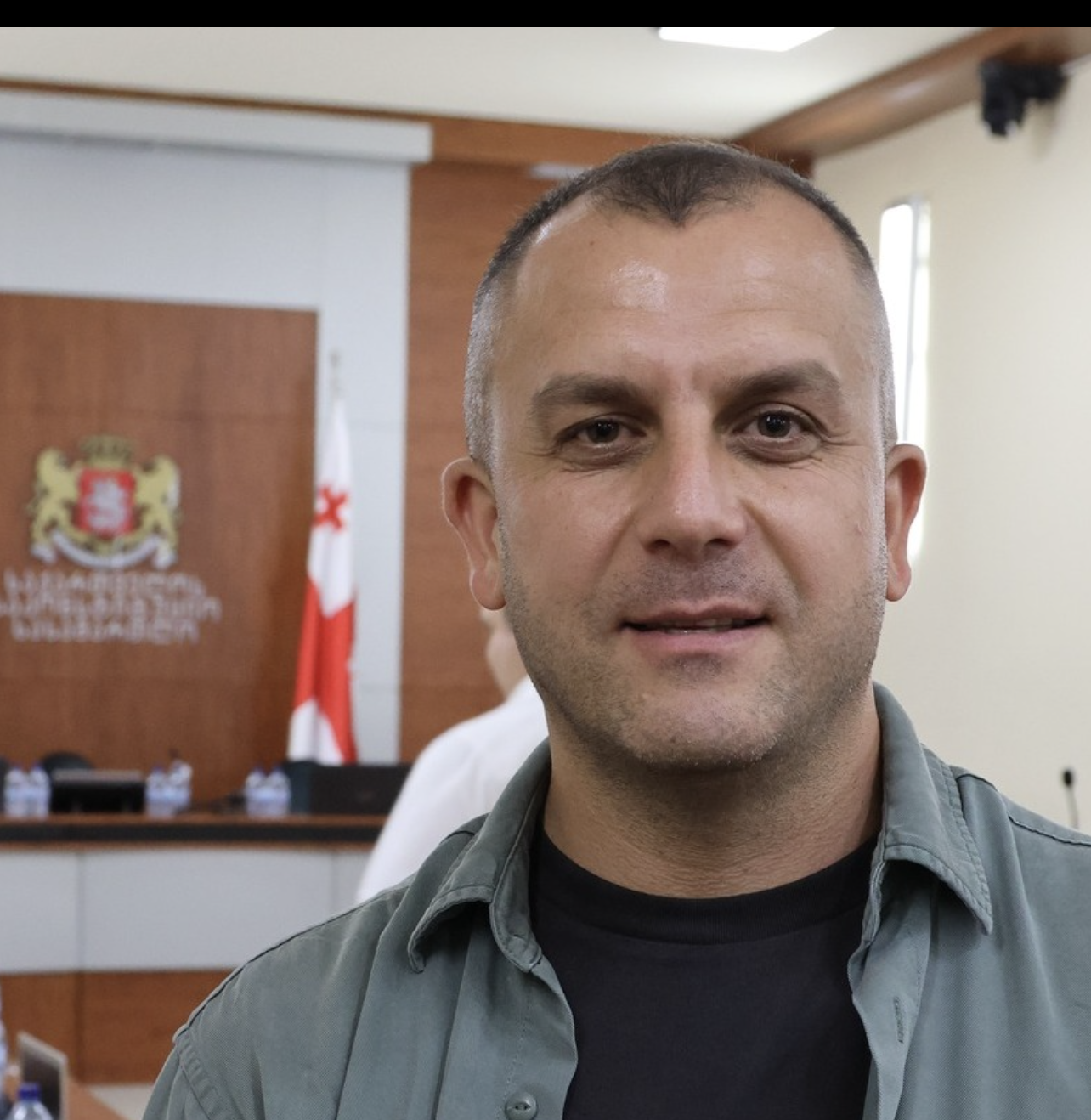
Gela Mtivlishvili, journalist and editor of Mtis Ambebi, states that on May 9, he was assaulted by Giorgi Margebadze, the head of the Small and Medium Hydro Power Plants Association.
“Right after coming off the air, I was assaulted by Margebadze, a hydro-power lobbyist and a thug-like element of ‘Georgian Dream.’ My face is injured. I have gone to the police. He will be held accountable,” Gela Mtivlishvili wrote on social media.
The incident occurred immediately after the conclusion of the show Open Space, where Giorgi Margebadze had been invited as a guest to discuss issues related to hydro power plants. The show is hosted by Nino Zautashvili. Nato Chipashvili, a representative of Green Alternative, was also a guest on the program.
Following Mtivlishvili’s report, the Ministry of Internal Affairs launched an investigation under Article 126 of the Criminal Code, which pertains to violence.
The Media Advocacy Coalition has expressed solidarity with the journalist.
“This is not the first time Gela Mtivlishvili has been targeted by threats, pressure, and violence. Over the years, numerous aggressive campaigns have been waged against him, including by high-ranking officials from ‘Georgian Dream.’ Impunity and a merely formal justice system not only fail to protect journalists and effectively investigate violence, but on the contrary, they encourage such crimes and create an even more dangerous environment for media representatives,” the statement reads.
Tbilisi City Court issued several decisions in administrative offence cases involving participants in protest rallies. The cases concern the alleged blocking of a sidewalk or the roadway.
Judge Zviad Tsekvava heard the case of Ani Pridonashvili. The Ministry of Internal Affairs alleged that she had blocked the sidewalk on 17 December. The court imposed two days of administrative detention on Pridonashvili.
Nodar Chachanidze, a member of the party “Akhali,” was subjected to three days of administrative detention. The decision was delivered by Judge Tornike Kapanadze. The Ministry of Internal Affairs alleged that Chachanidze had blocked the sidewalk on 18 December.
Tamuna Giorgadze, a participant in the ongoing protest, was subjected to two days of administrative detention. The decision was delivered by Judge Zviad Tsekvava. The Ministry of Internal Affairs alleged that Giorgadze had stood on the sidewalk during the 17 December rally and had blocked the roadway during the Saturday march of 7 February. Both cases were heard jointly.
Judge Tornike Kapanadze delivered a decision in the case of two demonstrators, Nestan Mamatsashvili and Natia Gopodze. The case concerned the alleged “artificial blocking” of a roadway on 31 January, during one of the Saturday marches.
The proceedings against Mamatsashvili and Gopodze were consolidated and heard jointly. The court found both demonstrators liable for an administrative offenceThe court found both demonstrators liable for an administrative offence. Since Mamatsashvili is the mother of minor children, administrative detention could not be imposed on her; instead, the court imposed a fine of GEL 5,000. Natia Gopodze was sentenced to two days of administrative detention.
New cases of administrative detention and the imposition of administrative liability against participants in protest assemblies have been reported in Tbilisi. On 5 May, Tbilisi City Court imposed administrative detention on several civil activists in cases reportedly related to standing on the roadway or near the sidewalk, and to the alleged obstruction of movement.
Judge Koba Chagunava of Tbilisi City Court found activist Data Kashiashvili liable for an administrative offence and imposed four days of administrative detention. Following the hearing, Kashiashvili was taken directly from the courtroom to a temporary detention facility. According to available information, the case file did not include any alleged victim who could confirm that Kashiashvili’s actions had obstructed their movement. Nor was any video evidence presented to substantiate the alleged administrative offence. Nevertheless, the court decided to impose detention.
Civil activist Nino Petriashvili, the mother of a 13-year-old child, was also subjected to two days of administrative detention. The Ministry of Internal Affairs alleged that she had blocked the roadway. According to the Ministry, on 7 February, during one of the Saturday marches, after the march had ended, Petriashvili did not move to the sidewalk in front of Parliament and remained on the roadway for several minutes after 21:00.
During the court hearing, Petriashvili stated that she attends almost every march and, as a rule, moves to the sidewalk when instructed to do so by police. According to her, on 7 February, no clear police instruction was given, which led participants to believe that they were allowed to remain in place. Petriashvili argued that this circumstance explains why a number of people have been held administratively liable in relation to the 7 February episode.
Administrative detention was also imposed on Tamar Tevzadze, an actor and member of the movement “Era.” Tevzadze did not attend the court hearing as a form of protest. Following the announcement of the decision, police detained her on the street and placed her in handcuffs. According to available information, she was subjected to two days of administrative detention in a case also related to standing on or near the sidewalk/roadway.
Tbilisi City Court fined civil activist Tamuna Kirtava 5,000 GEL in relation to the alleged blocking of a road on 31 January, during the “Saturday March”. The decision was delivered by Judge Davit Makaradze.
The case was examined under administrative proceedings. After the representative of the Ministry of Internal Affairs learned that Kirtava has an 11-year-old child and that the law did not allow the use of administrative detention against her, the Ministry requested the court to impose a fine.
“[…] The fact that I am sitting here is already an injustice. You may even send me to detention. Your decision does not have decisive importance. I am sitting here because I stood at a protest,” Kirtava told the judge.