On 14 January 2026, civic activist Nutsa Mkharadze was detained during a solidarity protest in support of the Iranian people held outside the Iranian Embassy in Tbilisi. The Ministry of Internal Affairs accuses Nutsa Mkharadze of disobedience to a lawful order of the police and verbal insult.
According to Radio Tavisupleba prior to Nutsa Mkharadze’s detention, demonstrators expressed their protest by crossing from one side of the road to the other at the traffic light located near the Iranian Embassy when the green signal was illuminated. Subsequently, as the police explained, the “traffic light malfunctioned,” and Mkharadze began crossing the roadway precisely at that moment.
A court hearing in Nutsa Mkharadze’s case was held on 16 January, during the hearing, her health condition deteriorated. Nutsa Mkharadze alleges ill-treatment while held in a temporary detention isolator, stating: “I lost consciousness twice and experienced convulsions. I am experiencing panic attacks due to my emotional condition, although I had not experienced such symptoms previously. I was held in the isolator for two days without being permitted to wash and was unlawfully detained, which likely affected my condition.” The next court hearing is scheduled for 27 January.
Pursuant to the amendments introduced to the Administrative Offences Code of Georgia, disobedience to a lawful order of a police officer (Article 173, Part 1) is punishable by a fine in the amount of GEL 2,000 to GEL 5,000 or administrative detention for a period of up to 60 days. Verbal insult of a law enforcement officer, including the use of abusive language (Article 173, Part 2), is punishable by a fine in the amount of GEL 2,000 to GEL 5,000 or administrative detention for a period of up to 60 days.
Tbilisi City Court Judge Ekaterine Eliadze has dismissed the lawsuit filed against the Public Broadcaster by Nino Zautashvili, a journalist and presenter who was fired from the channel.
According to Zautashvili’s lawyer, Giorgi Iasashvili, they were seeking to have the dismissal order annulled and for her to be reinstated to her position.
“I know I will see this case through to the end, and I won’t begrudge the time or energy it takes. I know for a fact that I am right, and the judge knew the truth was on my side as well. In these incredibly difficult times, when so many unjust decisions have been made, the primary and most vital task remains ensuring the institutional independence of the judiciary,” Nino Zautashvili told Mediachecker.
The Tbilisi City Court also dismissed a lawsuit filed by Vasil Ivanov-Chikovani, a former presenter for the news program Moambe, who was also seeking to overturn his dismissal from the Public Broadcaster. This decision was later upheld by the Court of Appeals.
The Public Broadcaster dismissed Nino Zautashvili, the host of the program Real Space, along with Vasil Ivanov-Chikovani, on April 11, 2025.
On April 15, according to TV Pirveli, the bank accounts of Maka Chikhladze, a journalist for the channel’s Saturday broadcast, were frozen. On social media, Irakli Datunashvili (known online as Leo Nafta), the Georgia editor for the online publication JamNews, also wrote that his bank accounts had been frozen. According to his information, the basis for the freeze is cited as a fine from October 15, the existence of which he had not been informed of until now.
According to Nodar Meladze, head of the news service, Maka Chikhladze was covering ongoing events on Rustaveli Avenue in the line of professional duty on October 15, 2025, which led to her being fined 5,000 GEL on charges of “artificially blocking the road.” He stated that the journalist was not notified of this fine and subsequently had her accounts frozen.
Maka Chikhladze herself states that she only learned about the existence of the fine after her accounts were frozen.
“In such a large agency as the Ministry of Internal Affairs, they couldn’t find the resources to send me a single SMS… if they had simply notified me that I had been fined, I would have looked into it and proven that I was performing my professional duties. I didn’t know about it until my accounts were frozen,” Chikhladze said.
In her assessment, the case may be related to her journalistic activities. “I believe this is an act of revenge and has nothing to do with the law on assembly and manifestation or any actual violation,” she noted. Chikhladze also points out that representatives of other media outlets were also working at the scene, yet she was the only one targeted with a fine.
On December 7, 2024, on Besiki Street in Tbilisi, TV Pirveli journalist Maka Chikhladze and cameraman Giorgi Shetsiruli were attacked and physically assaulted by unidentified masked individuals while working on a live broadcast. The investigation launched into that incident has not yet been concluded.
According to TV Formula, journalist Davit Chabashvili is being threatened with death. Media reports indicate that the journalist has been receiving threatening messages from an individual identified as Gia Kikolashvili-Chanturia. Reportedly, the person behind the threats is also aware of the journalist’s home address.
“For what you say, for your work, and for what you write, you will be beheaded,” reads one of the threatening messages.
Davit Chabashvili links the incident to his professional activities. He stated that the threatening messages and phone calls have been ongoing for about a week. According to Formula, an investigation has been launched under Article 151 of the Criminal Code of Georgia (Threat), and the journalist has already been questioned.
The Charter of Journalistic Ethics responded to the incident, calling on the Ministry of Internal Affairs of Georgia to ensure the journalist’s safety and to investigate the matter promptly. The Charter stated that such attacks on journalists are fueled by aggressive rhetoric from high-ranking officials toward independent media. It called on officials to realize the consequences of using hate speech and to change their approach accordingly.
The Communications Commission has issued written warnings to four television stations, including two pro-government channels, for violating the Law of Georgia on Broadcasting. The channels involved are the government-critical outlets Formula and TV Pirveli, as well as pro-government broadcasters POSTV and Imedi. The Commission issued the warnings based on violations of articles concerning content regulation.
According to ComCom, the issue was placed on the agenda following its own media monitoring. The stations were accused of failing to meet standards regarding impartiality, balance, reporting based on personal attitudes/opinions, and factual accuracy. For instance, the Commission determined that by using phrases such as “Dream’s Prosecutor’s Office,” “Dream’s Parliament,” “Ivanishvili’s Prime Minister,” “Rajden Kuprashvili’s agency,” “with members of the Dream government,” and “judicial clan,” Formula covered issues based on the broadcaster’s personal attitude or opinion in its news programming, thereby violating the law.
During the monitoring process, ComCom’s Media Services Regulation Department “discovered” the highest number of potential violations at the independent channels—20 for Formula and 18 for TV Pirveli. The lowest number of violations were attributed to the pro-government outlets: Imedi (4 violations), which has been sanctioned for spreading Russian disinformation, and POSTV (7 violations).
On this occasion, the Communications Commission limited its response to written warnings on the grounds that none of these television stations had been sanctioned for similar violations within the past year.
It is worth noting that in early March, following the sanctioning of pro-government Imedi and POSTV, ComCom released a threatening statement announcing it would begin monitoring broadcaster content starting in March. Last year, Georgian Dream passed repressive amendments to the Law on Broadcasting, which are linked to the regulation of broadcaster content.
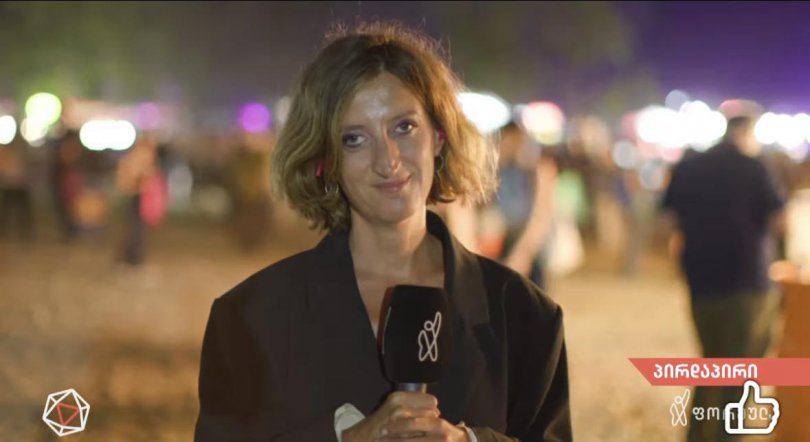
The bank accounts of TV Formula journalist Liza Tsitsishvili have been frozen. According to the journalist, it was discovered that she had been fined 5,000 GEL on the grounds of “artificially blocking the road” while performing her professional duties on Rustaveli Avenue on September 10, 2025.
The journalist had not received any notice regarding the fine. Furthermore, she states that since September, she has been detained once and has even crossed the national border, yet in neither instance was she informed that she had been fined.
According to publicly available information, more than 40 fines have been issued against journalists for “artificially blocking the road” between October 26, 2024, and the present day.
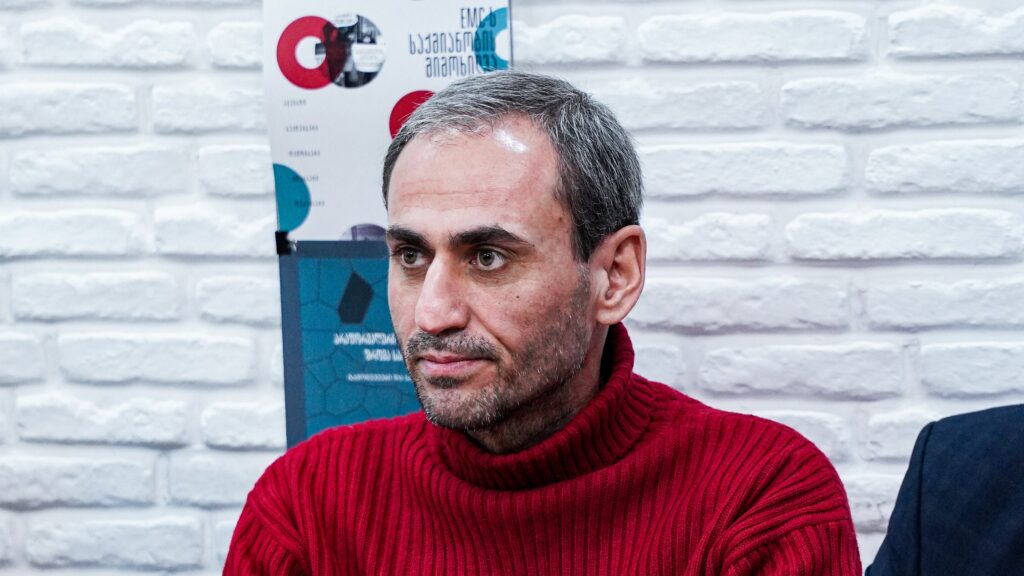
On the night of April 4, 2026, Azerbaijani journalist Afghan Sadygov was detained in Georgia. Information regarding his arrest was initially released by his wife, who published surveillance footage showing law enforcement officers attempting to cut through the door of Sadygov’s home.
Following the news of the arrest, the Ministry of Internal Affairs of Georgia issued a statement noting that the journalist was detained for an offense under Article 173 of the Administrative Offenses Code—insulting a police officer on social media.
Afghan Sadygov’s trial took place late that same night. Tbilisi City Court Judge Tornike Kochkiani found Sadygov guilty and fined him 2,000 GEL. Additionally, he was ordered to be expelled from Georgia and banned from re-entering the country for a period of three years. The decision was announced at dawn, around 4:00 AM.
Afghan Sadygov was a critic of Azerbaijani President Ilham Aliyev’s regime, for which he faced persecution in Azerbaijan. He arrived in Georgia with his wife and two minor children on December 24, 2023. Azerbaijan had been demanding Sadygov’s handover for nearly two years. His lawyers considered such a move dangerous and appealed the Georgian courts’ decisions regarding his extradition to the European Court of Human Rights (ECHR). There was an interim measure in place from the ECHR issued in 2025, which prohibited Georgia from extraditing Sadygov to Azerbaijan due to the threat of torture and political persecution. According to the Georgian Young Lawyers’ Association, Sadygov’s expulsion is a grave violation of the European Convention on Human Rights and Georgian legislation, used as a tool for political retribution.
The Charter of Journalistic Ethics of Georgia expresses solidarity with Afghan Sadygov and condemns his expulsion from the country. The Charter calls on international organizations working on journalists’ rights to pay close attention to Sadygov’s case, ensure his safety, and do everything in their power to protect the journalist in Azerbaijan, where he is currently located. In the assessment of the Media Advocacy Coalition, the expulsion of Afghan Sadygov is “a gross violation of international law and part of a policy directed against freedom of speech and independent journalists, which ‘Georgian Dream’ has been implementing for several years.”
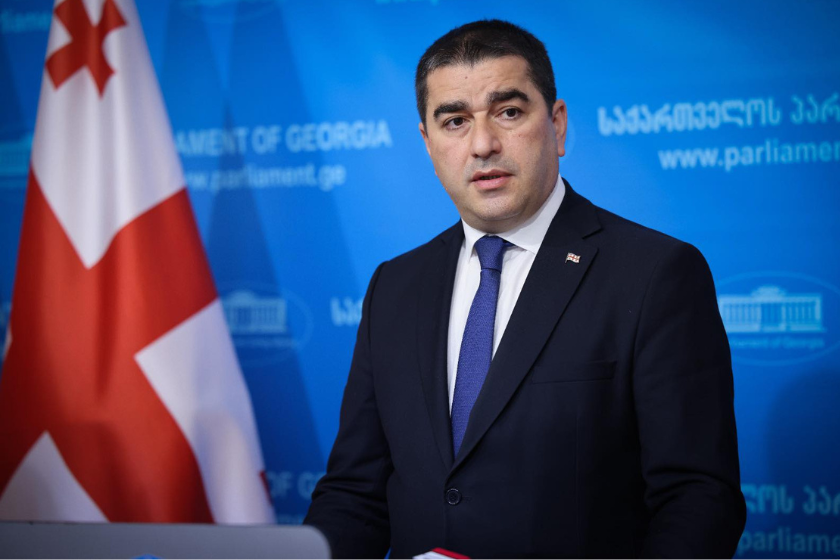
On April 2, 2026, during a briefing held in Parliament, the Speaker of the Parliament from “Georgian Dream,” Shalva Papuashvili, referred to online outlets Radio Free Europe/Radio Liberty (RFE/RL), Tabula, Publika, and Netgazeti as “foreign-funded party propaganda groups.” He accused them of interfering in the activities of the Holy Synod of the Georgian Patriarchate and threatened them with “consequences.”
“We see that, for example, foreign-funded party propaganda groups like Radio Liberty and Tabula are directly interfering in the activities of the Synod. They have launched direct campaigns against specific clerics; Radio Liberty, Tabula, and other online outlets such as Publika, Netgazeti, etc., are conducting direct election campaigns for or against various clergy members. We are monitoring all of this, and there will be an appropriate reaction,” Papuashvili stated.
His statement followed media coverage and public interest regarding the election of a new Patriarch after the passing of Ilia II, the Catholicos-Patriarch of All Georgia.
The Georgian Charter of Journalistic Ethics reminds Papuashvili that the role and duty of the media is to cover all significant issues unfolding in the country.
“The election of a new Patriarch is among such issues, and the Georgian media is currently doing exactly what it should be doing—investigating information and gathering comments on this matter to share with its audience,” the Charter’s statement reads. The Charter calls on high-ranking officials to stop the harassment and intimidation of media outlets and journalists aimed at suppressing critical voices, and to allow the media to contribute fully to the formation of public discourse.
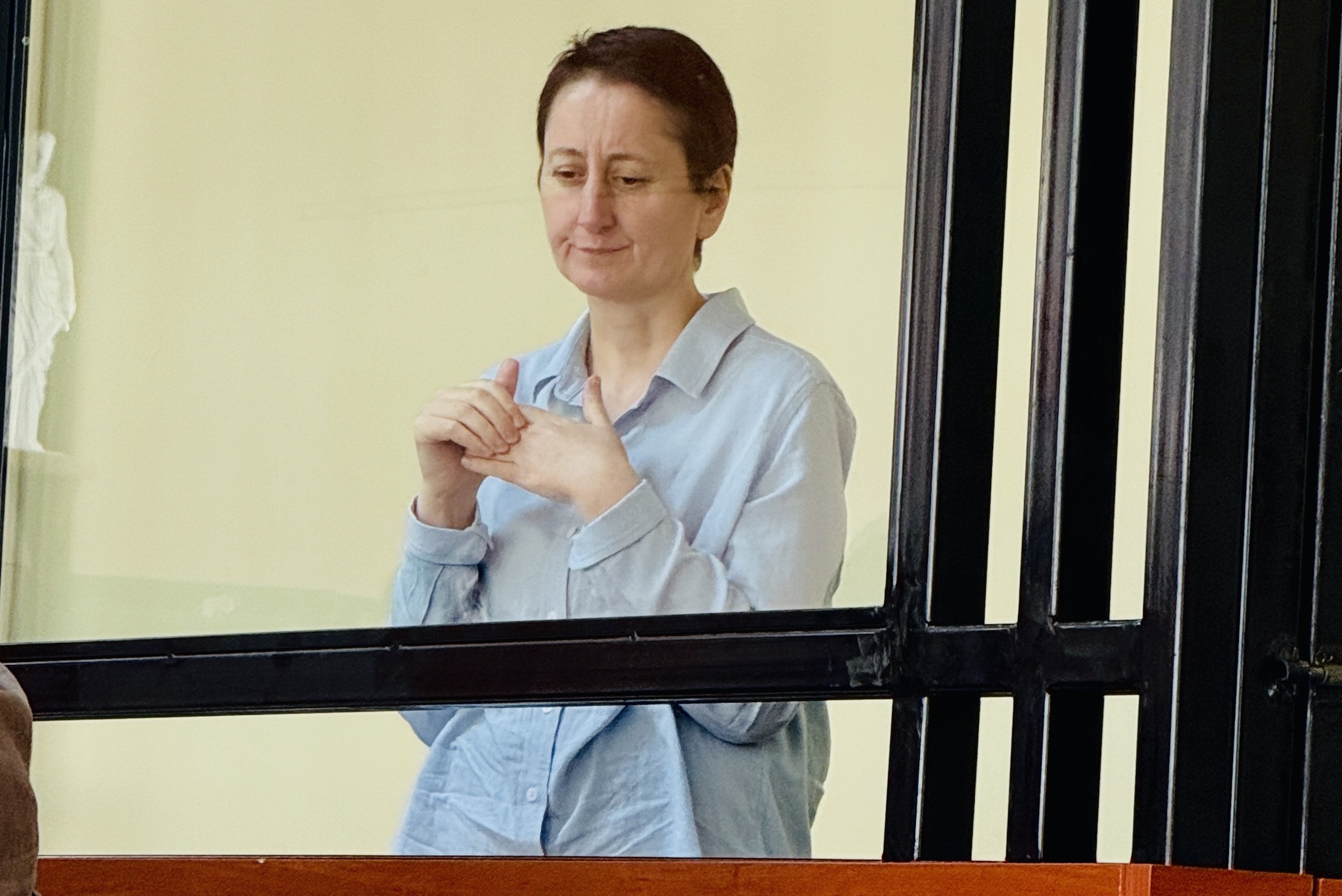
The “Parole Board” (the Local Council of the Special Penitentiary Service for the Review of Convicts’ Cases) has denied the early release of prisoner Mzia Amaghlobeli, the founder of the publications Batumelebi and Netgazeti.
According to Batumelebi, the decision states that the prisoner cannot be released early because she “still does not repent for her actions.” The same outlet reports that the commission reached this decision despite a positive recommendation from Women’s Penitentiary Facility No. 5.
Mzia Amaghlobeli has been wrongfully imprisoned for one year and three months. She was sentenced to two years for slapping Irakli Dgebuadze, the head of the Batumi Police. Under current legislation, individuals convicted of less serious crimes are eligible for early release once they have served half of their sentence. A special commission reviews these cases, with the prison administration formally submitting the motion for a prisoner’s early release. According to Batumelebi, Penitentiary Facility No. 5 submitted the motion for Mzia Amaghlobeli’s parole to the board on January 12 of this year.
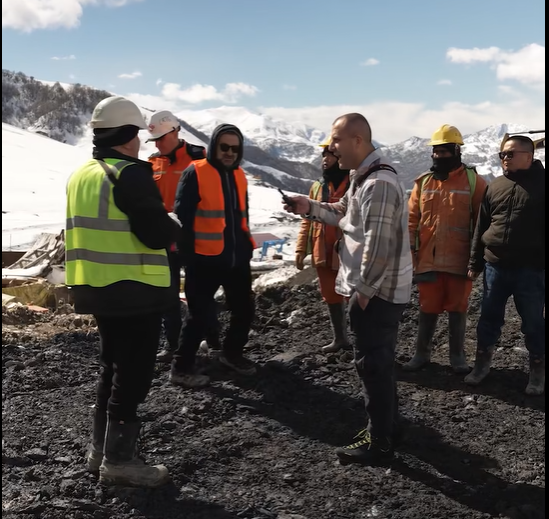
The film crew of the online publication Mtis Ambebi was unlawfully obstructed while working in the village of Tskere, in the Khada Gorge. Under threats of violence and death, the journalists were forced to stop filming and leave the village.
The incident occurred on April 1. The crew traveled to the gorge after reports emerged that a landslide, caused by the construction of the Kvesheti-Kobi road, had swept away several local graves.
The crew was on-site to document the unfolding events in the village. The journalists arrived just as the relocation of a young man’s body from the collapsed cemetery was about to begin. However, they were prevented from moving freely. According to the publication, representatives of a Chinese company, along with supervisors and employees of the Roads Department, insistently demanded that they stop filming. On the orders of their manager, the company’s hired workers physically obstructed the crew, prevented them from operating a drone, and threatened to smash their equipment.
According to Mtis Ambebi, the Shida Kartli Regional Prosecutor’s Office has launched an investigation into the attack and the unlawful interference with the journalists’ professional activities under Article 154, Part 2 of the Criminal Code of Georgia. This article pertains to the unlawful interference with a journalist’s professional duties through threats of violence or abuse of official position. The crime is punishable by a fine or imprisonment for up to two years.
The Georgian Charter of Journalistic Ethics expressed deep concern over the incident. In a statement, they noted that the attack bears clear signs of a criminal offense. The Charter calls on the Prosecutor’s Office to investigate the case quickly and effectively, and urges the Ministry of Internal Affairs to ensure a safe working environment for journalists.