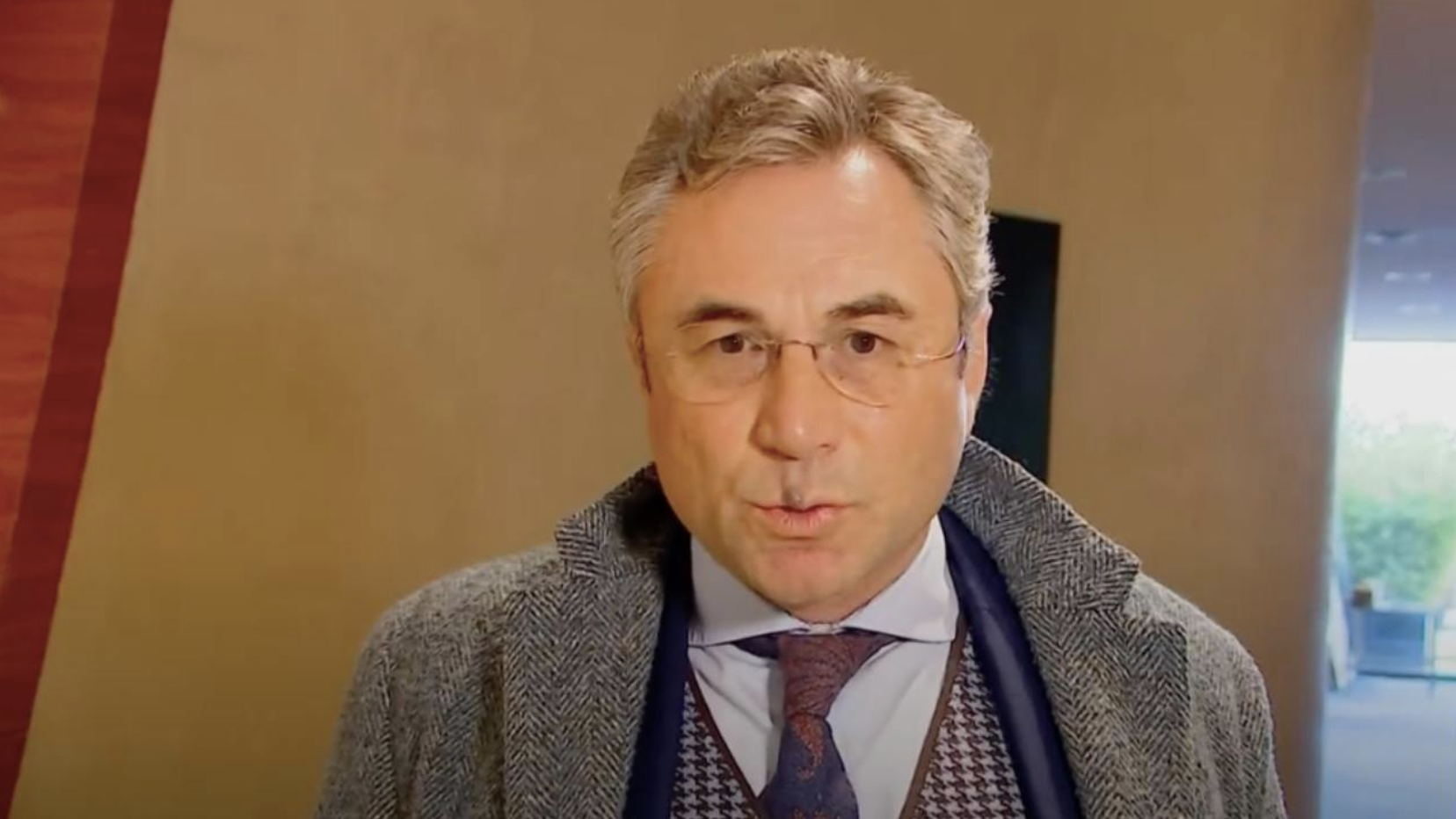
On March 20, after leaving the courtyard of the Holy Trinity Cathedral, Irakli Rukhadze verbally insulted a journalist from the TV company “Formula.”
The journalist was asking Rukhadze about the sale of shares in the TV company “Imedi.” Irakli Rukhadze asked the journalist which television company they represented. After learning that the journalist was a representative of “Formula,” he verbally insulted them and ran away.
“Come on, get out of here,” Irakli Rukhadze told the “Formula” journalist, which can be clearly heard in a video released by the television company.
On February 24, 2026, four years after Russia’s full-scale invasion of Ukraine, the United Kingdom imposed sanctions on pro-government TV companies “Imedi” and “POSTV” for spreading disinformation against Ukraine.
It is noteworthy that a few weeks before the sanctions, on January 30, the full share of the TV company “Imedi” was sold for a symbolic price of 1,000 GEL by a company linked to businessman Irakli Rukhadze. The day after the sanctions were imposed, he also stepped down from the position of chairman of the supervisory board of “Imedi.”
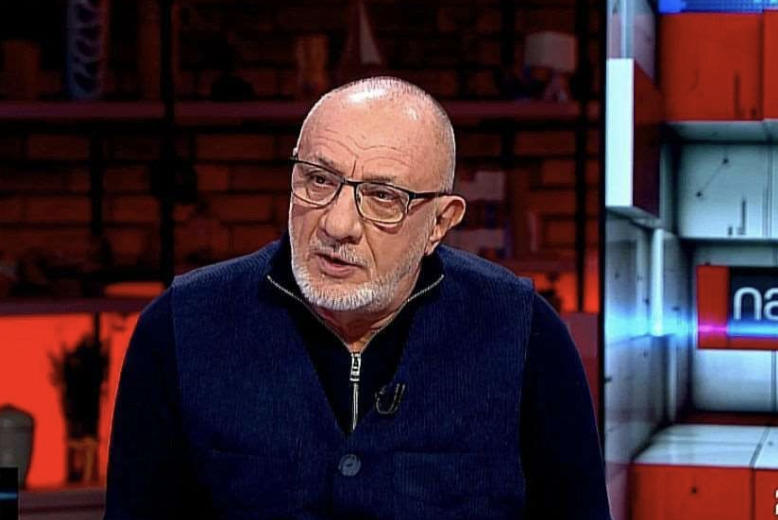
On March 19, filmmaker and “Georgian Dream” supporter Goga Khaindrava filed a lawsuit against Formula TV, seeking 10,000 GEL in compensation for moral damages. The lawsuit also demands a retraction of information aired on “Shabatis Formula” (Saturday Formula), which he claims contained “essentially false facts that defame the plaintiff’s name, honor, and dignity.”
According to MediaChecker, the lawsuit concerns two segments aired on Formula TV on December 20, 2025, and January 17, 2026. The December 20 report, titled “From Apology to Forgiveness: The Dream’s Chief Ideologist’s Film – Why is Goga Khaindrava Being Paid a Million,” focuses on fraudulent call centers. According to Formula TV, Khaindrava is behind the fraudulent scheme. The January 17 segment, “The Director Turned Dream Propagandist – Did Goga Khaindrava Bring Foreign Citizens into Georgia in Exchange for Money,” concerns the alleged entry of Indian and Pakistani citizens into Georgia facilitated by Khaindrava for payment.
Goga Khaindrava has labeled both reports as false and defamatory.
Notably, after the segments about Khaindrava were aired, the program’s host, Davit Kashiashvili, received a threatening message from an unidentified individual.
“Georgian Dream” propagandist Shalva Ramishvili, the director of the pro-government and British-sanctioned channel POSTV, addressed Formula TV journalist Keti Tutberidze with a sexist epithet in an attempt to humiliate her.
The incident occurred when the journalist approached him to ask questions regarding the British sanctions. In response to Tutberidze’s remark that she was not satisfied with his answer to a specific question, the propagandist mockingly addressed her and repeatedly called her “unsatisfied” (daukmaqobilebeli), despite the journalist ethically pointing out the lewd connotations of the word.
On February 24, 2026, four years after Russia’s full-scale invasion of Ukraine, Great Britain imposed sanctions on the pro-government television stations Imedi and POSTV for spreading disinformation against Ukraine. The sanctions were announced as part of a broad package released by the United Kingdom’s Foreign Office.
Pro-government television stations—Imedi, Rustavi 2, and POSTV—are labeling independent online publications Netgazeti, Publika, and On.ge as anti-Georgian media, discrediting and stigmatizing them because these outlets refer to high-ranking officials as the “Georgian Dream” Prime Minister and Minister.
All three channels published nearly identical text on social media, accompanied by a short screenshot of a text prepared by these online media outlets regarding the visit of Armenian Prime Minister Nikol Pashinyan to Georgia.
“So-called online media outlets funded by foreign countries refer to Nikol Pashinyan as Prime Minister, while referring to Irakli Kobakhidze and Maka Bochorishvili as the ‘Georgian Dream’ Prime Minister and Minister,” states Rustavi 2, referring to the online outlets as “so-called” media. POSTV also places the term online media in quotation marks: “The anti-Georgian policy of ‘online media’ funded from abroad: publications refer to Nikol Pashinyan as the Prime Minister of Armenia, while referring to the Prime Minister and the Foreign Minister of Georgia as the ‘Georgian Dream’ Prime Minister and Minister.” Imedi goes even further, calling these publications tools of hybrid warfare: “Another anti-Georgian act by the anti-Georgian online ‘media’ in Georgia—all three tools of hybrid warfare refer to Nikol Pashinyan as the Armenian Prime Minister, while referring to Irakli Kobakhidze and Maka Bochorishvili as the ‘Georgian Dream’ Prime Minister and Minister.”
Notably, all three channels published this visual material almost simultaneously on the same day that “Georgian Dream” passed the law in its third and final reading, which made the “systemic non-recognition of Georgian Dream” a criminal offense.
On March 4, 2026, it was revealed that the Supreme Court of Georgia refused to hear the appeal of the imprisoned journalist Mzia Amaghlobeli, the founder and director of the publications Batumelebi and Netgazeti. The court’s refusal to accept the appeal for consideration, or declaring it inadmissible, means that the court will not review the merits of the case at all and leaves the Court of Appeals’ decision in force. With this step, the judicial review of Mzia Amaghlobeli’s case in Georgia has concluded across all court instances.
Mzia Amaghlobeli was arrested twice during the protest rally in Batumi on the night of January 11-12, 2025. She was initially detained for placing a protest sticker on the wall of an auxiliary storage room at the Batumi Police Department, which read: “Georgia is Striking.” Police officers removed the sticker immediately after it was posted. A few hours after her arrest, Mzia Amaghlobeli was released on her own recognizance, but she was soon arrested again for slapping the head of the Batumi Police, Irakli Dgebuadze. An investigation was launched against the journalist under the first part of Article 353-prime of the Criminal Code. Mzia Amaghlobeli had been placed in pretrial detention as a preventative measure. On August 6, 2025, Judge Nino Sakhelashvili of the Batumi City Court reclassified the charges against Mzia Amaghlobeli under the first part of Article 353 and sentenced her to two years in prison.
On January 28 and February 16, 2026, “Georgian Dream” initiated a package of legislative amendments concerning the Law on Grants, the Criminal Code, the Code of Administrative Offenses, and the Law on Political Associations of Citizens. On March 4, during a plenary session, “Georgian Dream” passed these changes in the third and final reading.
The adopted amendments significantly tighten regulations regarding foreign funding and expand the definition of a “grant” to include financial as well as in-kind resources and technical assistance that could be used to influence Georgia’s political processes. The bill also imposes additional restrictions on political activity, including prohibiting employees of organizations receiving foreign funding from holding membership in political parties and increasing accountability for so-called “external lobbying.”
The legislative package also included changes to the Criminal Code, according to which the systemic non-recognition of the government and public, systematic calls for mass violation of legislation, disobedience toward government bodies, or the creation of alternative government bodies become punishable offenses. The law will enter into force immediately upon its official publication.
Following the amendments passed in June 2025, which prohibited the media from taking photos, filming videos, or making audio recordings inside court buildings and courtyards, journalists have repeatedly applied to the High Council of Justice for filming permits, but to no avail. According to the law, the High Council of Justice is the body authorized to grant such permissions.
For instance, on March 2, Publika journalist Natia Amiranashvili wrote that since the ban took effect, the outlet’s journalists have submitted approximately 20 applications to the High Council of Justice. However, they have received no response, not even regarding whether their applications contained any formal errors. According to Amiranashvili, they received a reply only once—an notification stating that applications should not be sent via email but must be physically delivered to the High Council of Justice. She noted that they complied with this requirement, yet still received no further response. Such restrictions mean that the media is unable to photograph, film, or record court proceedings, including those of high public interest.
Since “Georgian Dream” passed this restrictive media law last year, the High Council of Justice has granted permission to film a court hearing in only one instance. The “Georgian Dream”-controlled television stations Imedi and the Public Broadcaster received the right to film the trial of businessman Giorgi Bachiashvili, who is considered a “personal prisoner” of Bidzina Ivanishvili.
On February 26, 2026, at a Public Broadcaster board meeting, Lika Basilaia-Shavgulidze was verbally insulted by board member Gia Iakobashvili.
“Are you not putting the work and functioning of the Public Broadcaster at risk with this statement?” Lika Basilaia-Shavgulidze asked the board chairman of the Public Broadcaster, Vasil Maghlaperidze.
Lika Basilaya-Shavugilidze’s question concerned Vasil Maghlaperidze’s initiative; he wanted the board to express support for the television channels sanctioned by the United Kingdom.
On February 24, the United Kingdom imposed sanctions on the pro-government television companies “Imedi” and “Postv” for spreading disinformation about Ukraine following Russia’s full-scale invasion of the country.
The chairman of the Public Broadcaster Supervisory Board, Vasil Maghlaperidze, and board member Bondo Mdinarishvili publicly expressed support for the sanctioned channels.
On February 24, the Public Broadcaster reduced the February salary of Ketevan Sinitsa, Human Resources Projects Manager of the Human Resources Management Department, by 30 percent “for disseminating incorrect information in the public space that damages the employer’s reputation.” In the event of a repeat violation, she was threatened with dismissal.
According to an order issued by Tinatin Berdzenishvili, a disciplinary sanction was imposed on Ketevan Sinitsa for sharing a Facebook post by a dismissed employee of the Public Broadcaster, Kakha Melikidze, citing violations of the “Rules for the Use of Social Networks” and provisions of the Broadcasters’ Code of Conduct.
In 2025, employees critical of the channel were dismissed from the First Channel of the Georgian Public Broadcaster, including Vasil Ivanov-Chikovani, journalist and anchor of the news program “Moambe,” and Nino Zautashvili, author and host of the socio-political program “Realuri Sivrtse.”
The channel’s management reportedly adopted a negative stance toward director Kakha Melikidze after he publicly accused the broadcaster’s leadership of pressuring him to frequently show officials of “Georgian Dream,” including Irakli Kobakhidze, during broadcasts of national team football matches.
The Director General of the Public Broadcaster, Tinatin Berdzenishvili, issued a reprimand to Givi Chimakadze, a studio operator in the Technical and Technology Operations Group, for disseminating a statement on social media.
Tinatin Berdzenishvili also warned Givi Chimakadze about possible dismissal from his job “in the event of a similar and/or other type of violation.”
Information about the order was disseminated via social media by “Guardians of the Public Broadcaster.” The document, signed by Tinatin Berdzenishvili, is dated February 11.
In 2025, employees critical of the channel were dismissed from the First Channel of the Georgian Public Broadcaster, including Vasil Ivanov-Chikovani, a journalist and anchor of the news program “Moambe,” Nino Zautashvili, author and host of the socio-political program “Realuri Sivrtse,” and director Kakha Melikidze. The channel’s management reportedly adopted a negative stance toward Melikidze after he publicly exposed the broadcaster’s leadership. According to Melikidze, the management pressured him to frequently show officials of “Georgian Dream,” including Irakli Kobakhidze, during broadcasts of national team football matches.