

According to the Charter of Journalistic Ethics, documentary photographer, Mariam Giunashvili, suffered burns after allegedly being pepper-sprayed. “They sprayed me [with pepper spray] from three different directions, from the front right in the face and from the sides all over my body. I got particularly bad burns on my hands and arms,” Giunashvili told Mediachecker.
location: Tbilisi
A “Publika” journalist was threatened and an attempt was made to physically assault him by a Tbilisi City Court bailiff, who also threatened to call the police
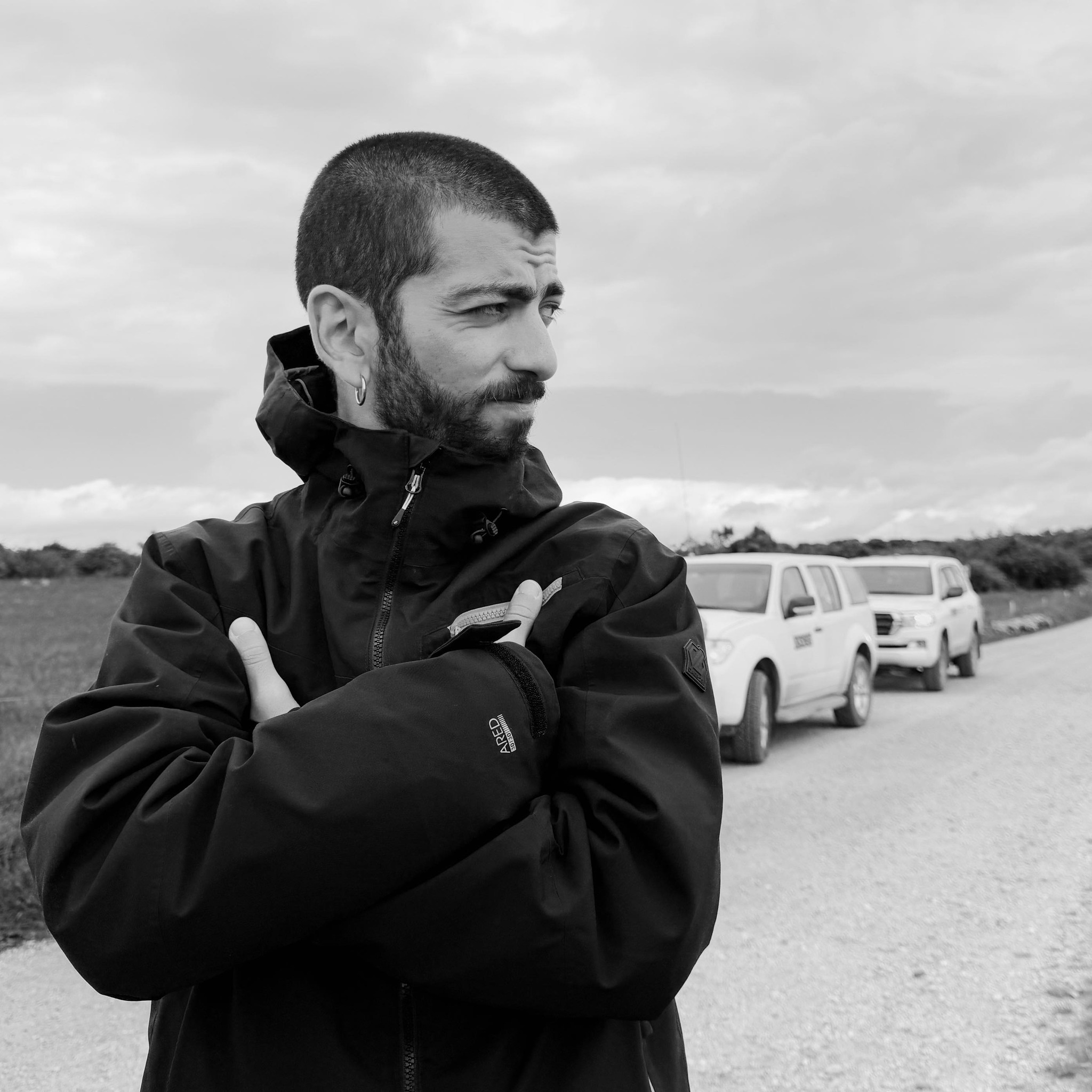
On October 1, 2025, Publika’s journalist, Mindia Gabadze, was threatened with police intervention and faced an attempted physical assault by a Court bailiffl. Gabadze was covering the court hearing of activist Gela Khasaia.
According to Gabadze, before the hearing began, the head of the court bailiff’ service, Davit Matiashvili, threatened him that if he tried to record, he would “call the police and take him into the next room.”
Gabadze says he did not film anything inside the court building. After the hearing ended, when the Court bailiff began forcibly removing attendees and journalists, Gabadze was leaving the building calmly and peacefully. Nevertheless, according to him, Davit Matiashvili made three attempts (twice inside the building and once in the yard) to physically assault him — by kicking and grabbing him by the hand.
“There were two other incidents when another, inexperienced bailiff grabbed me by the neck. Each time, I was frozen in shock, and my editor was pulling me away from the Court bailiffs. Activists were also helping me,” the journalist wrote.
The Georgian Charter of Journalistic Ethics emphasized that recent amendments to the Organic Law on Common Courts of Georgia have severely restricted the media’s ability to cover court proceedings. According to the organization, the media lack even the most basic working conditions in the courts, and the environment has become extremely hostile and dangerous.
“Every time journalists perform their professional duties in court, their health and lives are at serious risk. While working in the courts, journalists also risk losing their freedom — even when they are merely trying to protect themselves or a colleague from violence. Such treatment of journalists bears all the signs of targeted persecution,” the organization’s statement reads.
The Media Advocacy Coalition added:
“The ‘Georgian Dream’ judiciary has become a place of injustice and violence. Violence and brutal incidents against journalists have become a regular part of their professional experience.”
A bailiff from the Tbilisi City Court damaged the phone of a journalist from the TV “Formula”
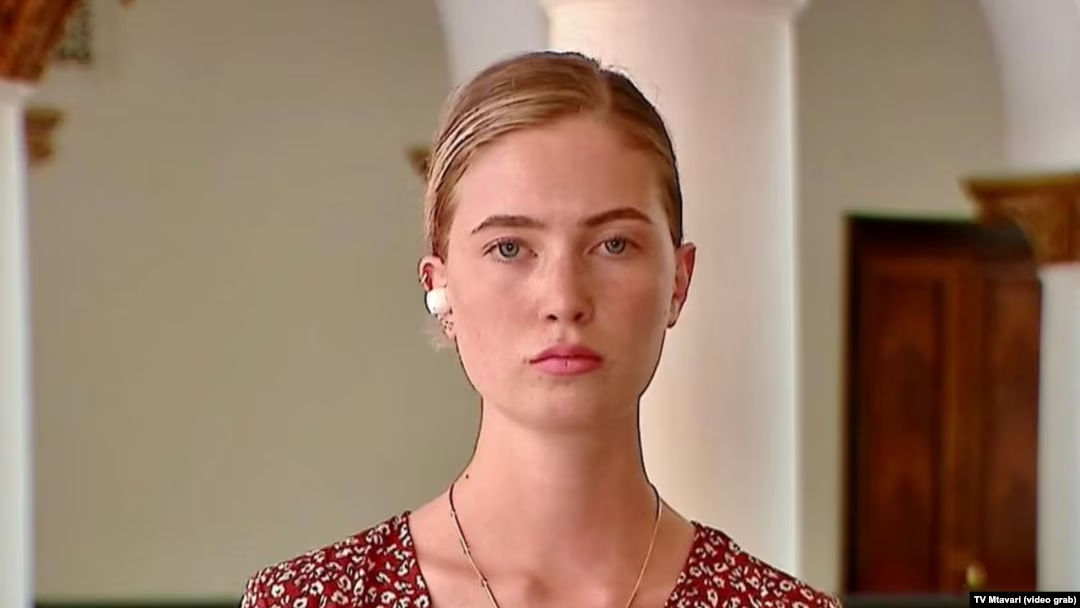
On October 1, 2025, a bailiff of the Tbilisi City Court confiscated the phone of Natali Jakhutashvili, a journalist for the TV company “Formula”, and returned it broken.
The incident occurred when the trial of opposition activist Gela Khasaia in the City Court ended. The imposition of imprisonment as a preventive measure for Gela Khasaia was followed by a confrontation in court. Court bailiffs physically assaulted the detainee’s friends. The journalist was trying to cover these processes.
According to her, after the bailiff confiscated her phone, she tried to return it for 15 minutes. In the end, the bailiff handed over the broken phone.
This is not the first time that media representatives have been targeted by violence in court. With the amendments to the Law on Common Courts, starting from June 30, it is forbidden to take photos/videos and make audio recordings in courtrooms, corridors or courtyards. After the new rule came into effect, media outlets applied to the Council of Justice – a legally established body – for the right to record, but so far none of them have received a response.
Before the adoption of the repressive legislation, independent media representatives were illegally hindered in the performance of their professional duties in court buildings. Since the amendment, the bailiff’s office has been using disproportionate and unjustified force, including against the media, to enforce the repressive legislation.
Anti-Corruption Bureau requests information from media to enforce repressive laws
Since May 2025, after the repressive laws came into force, the Anti-Corruption Bureau has requested large amounts of information from more than 60 non-governmental organizations, including several media outlets. The basis for this request is the Law on Grants. The Georgian Dream adopted an amendment to the Law on Grants on April 16, 2025. According to the amendments, the grantor (donor) must apply to the Government of Georgia for consent to issue a grant; the grantee, if receiving a grant without consent, will be fined double the amount of the grant.
On September 29, Razhden Kuprashvili’s bureau applied to the independent investigative journalism association iFact and GMC and requested information about grants, donors, financial transactions and contracts.
Previously, on September 26, Kuprashvili’s bureau sent a letter to the publication “Mountain News”.
“You are in a hurry to put us down. The answer is urgent! We will continue our work! “To create investigative films about government violations of laws, corruption, environmental destruction, and violations of fundamental human rights,” wrote Gela Mtivlishvili, founder and editor-in-chief of “Mountain News.”
On September 28, “Mountain Community” received a letter from the Anti-Corruption Bureau with the same demands. Nugzar Suaridze, the organization’s director, wrote about this on Facebook.
Project 64 also received a letter from the Anti-Corruption Bureau. “We have never faced a crisis of this magnitude, and this is not just a financial crisis,” said Giorgi Gogua, editor-in-chief of Project 64.
The Anti-Corruption Bureau also sent a letter to the Georgian Charter of Journalistic Ethics.
“The proceeding initiated by the Anti-Corruption Bureau is the first practical step under the new legislation to destroy a highly reputable organization, created through the great efforts of many good journalists,” — reads the statement of the Charter of Journalistic Ethics.
Three foreign reporters faced problems entering Georgia, and two of them were turned away
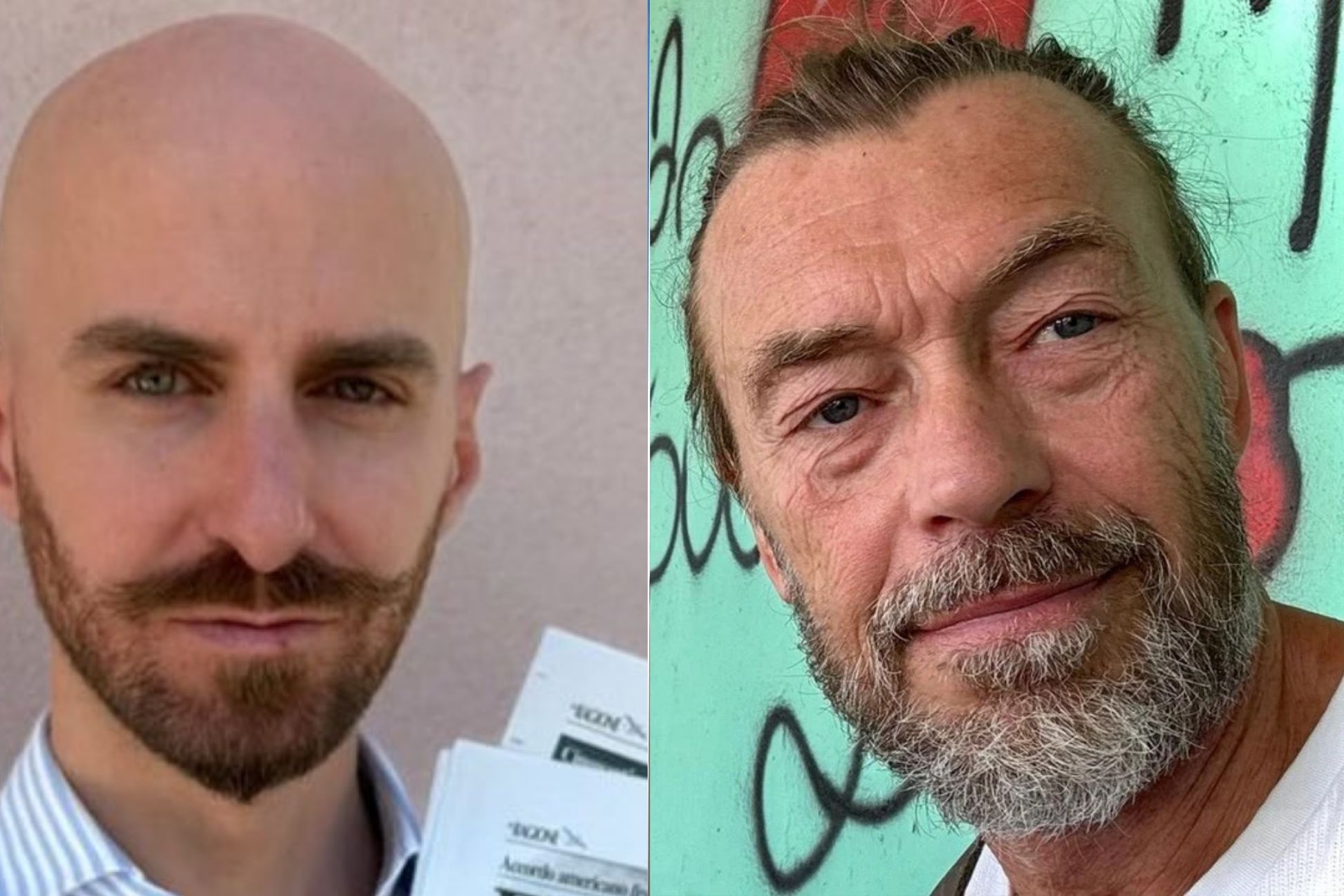
In the last week of September 2025, three foreign photographers were denied entry into Georgia. Two of them were scheduled to cover the planned local self-government elections in the country. All three photojournalists had been to Georgia before, and they had covered the pro-European protests.
Specifically, on September 28, 2025, Swiss photojournalist Gregor Ziemer was not allowed into Georgia. At the border, he was informed that two fines totaling 10,000 GEL (approx. $3,700) were registered in his name “on the grounds of artificially blocking the road” and that he would not be allowed into the country until he paid this amount. The photojournalist refused to pay the fine and was turned back from the country. Speaking to OC Media, the photojournalist recounts that after the refusal, he was taken to “some room” and detained there for eight hours: “I had to book a return flight. After that, they took my phone away. I tried to get the phone back, but they did not return it. I tried to ask to make a call, but they told me it was impossible and took my phone away.”
On September 29, Italian journalist Giacomo Ferrara was denied entry into Georgia. He was entering Georgia from Armenia. At the border, the police told him that he was subject to a 5,000 GEL (approx. $1,900) fine and would not be allowed into the country without payment. Ferrara said this information was unexpected for him. According to his account, he was fined for being at a protest rally in Tbilisi on March 31, but the argument that he was not participating in the demonstration and was only covering it did not work. The journalist refused to pay the fine and requested his passport, which was returned to him after 2 hours. The journalist says he informed the Italian Embassy in Georgia and the International Federation of Journalists about the incident.
According to Mari Nikuradze, founder of OC Media, on October 1, a German journalist was also detained at the border in Georgia for 6 hours. The reason given was also a fine registered in their name—5,000 GEL ($1,900), for “artificially blocking the road.” The German journalist was only able to enter the country after paying the amount.
This is not the first time foreign reporters have faced problems entering Georgia. Based on publicly available sources, the “Center for Media, Information and Social Studies” has registered more than 10 such cases in the last two years.
Shalva Papuashvili Continues Attacks on Independent Outlet Netgazeti
On September 22, 2025, Shalva Papuashvili, Speaker of Parliament from Georgian Dream, referred to the independent online outlet Netgazeti as propaganda media.
Shalva Papuashvili shared the statement against Netgazeti on his social media page. In his post, Papuashvili attached a screenshot of a Netgazeti article in which Mikheil Kavelashvili was referred to as “Georgian Dream’s president.”
“There is no test that would show that media covering news in this manner is not propaganda. There is no test that would show that whoever pays them is not financing propaganda…” Papuashvili wrote.
Recently, Shalva Papuashvili has often attacked Netgazeti with similar posts. He made a similar statement against Netgazeti on September 9. In the archive of the Center for Media, Information, and Social Studies, his verbal attacks can also be found against the outlets Publika, On.ge, and Tabula, as well as against Gela Mtivlishvili, editor of the outlet Mtis Ambebi. Papuashvili also tried to discredit Netgazeti/Batumelebi’s imprisoned manager, Mzia Amaghlobeli, referring to her as an “inciter of violence.”
“Georgian Dream’s Tbilisi mayoral candidate, Kakha Kaladze, called journalists ‘abusers’ and verbally insulted them
On September 21, 2025, Kakha Kaladze, the current mayor of Tbilisi and mayoral candidate from Georgian Dream, called journalists “abusers” and verbally insulted them.
“You are the first abusers, you are the ones who abuse and who try to… then you’re surprised when sometimes a microphone is hit against your head… then you wonder why.”
After this comment, a journalist asked Kaladze whether his statement was an encouragement of violence. The Georgian Dream mayoral candidate replied that he had not attempted to encourage violence and continued verbally insulting the journalists.
“This kind of politeness, generally, is taught in the family… It is clear and obvious what you represent, who you are, what you are, and that’s why you are so miserable, wretched, and degraded.”
Pro-government media tries to discredit TV Pirveli
On September 17, 2025, the Georgian Dream-supporting propaganda television station – Post TV published a Facebook post stating that TV Pirveli did not cover the fact that the government was transferring apartments to Internally Displaced families. The post also accused TV Pirveli of reporting
“only fake news.” It included a call to “turn off TV Pirveli.”
The publication of such material clearly shows how pro-government media uses the strategy of discrediting opposition media to deepen distrust towards and boycott critical media.
The independent TV company TV Pirveli has repeatedly become the target of attacks by Georgian Dream representatives, supporters, and state agencies.
Six journalists injured near Tbilisi mayoral candidate, Kakha Kaladze’s, campaign headquarters
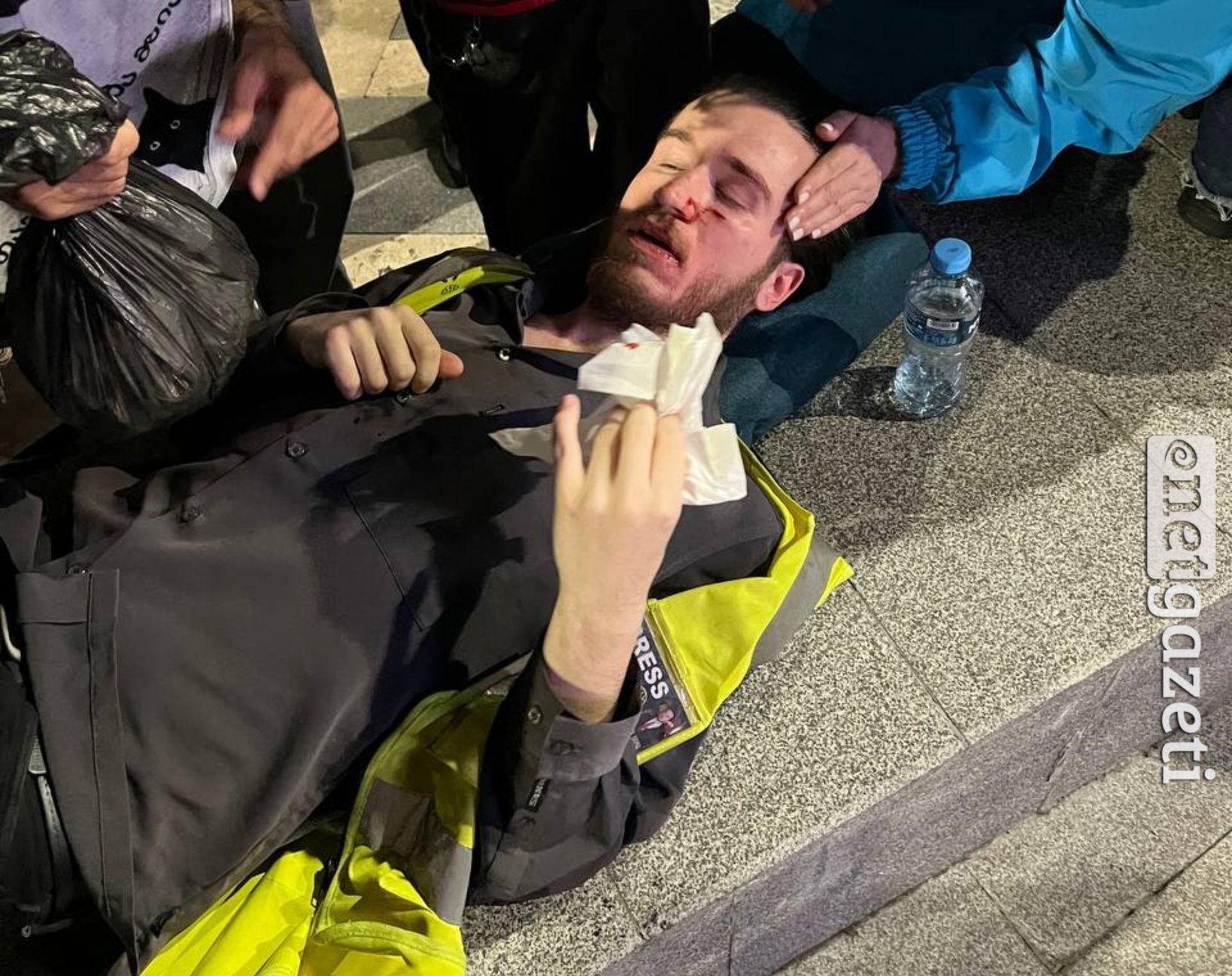
On September 8, 2025, while covering a rally outside the election headquarters of Georgian Dream’s Tbilisi mayoral candidate, Kakha Kaladze, party supporters and law enforcement officers assaulted journalists, verbally abused them, and confiscated mobile phones. One journalist required medical treatment.
According to the online outlet Publika two reporters, Aleksandre Keshelashvili and Keto Mikadze, were physically assaulted by Georgian Dream supporters while on assignment, and their mobile phones were seized. With the help of a Netgazeti journalist, they recovered only one device Keshelashvili’s phone [timecode: 1:14–1:20]. The outlet reports that it has video evidence showing who took the other phone and has called on that individual to return it, and on the Ministry of Internal Affairs to respond to the theft of editorial equipment and interference in journalistic work.
According to online Netgazeti, a police officer swore at its reporter Ketevan Khutsishvili, physically grabbed and dragged her, and interfered with her work while she was broadcasting live and filming the confrontation outside the headquarters, including the attack on the colleague – Aleksandre Keshelashvili. “They used rude and vulgar gestures to swear. Then a policeman came up to me, saying, ‘Don’t provoke me,’ grabbed me by the arms and dragged me. Then a second and a third came, and one of the policemen cursed me. After that, a man in a blue shirt came and also cursed me. Finally, they dragged me and threw me among the policemen, and one of them even grabbed my hand,” Khutsishvili says. [Video material, timecode: 0:30–2:32]
A Georgian Dream supporter poured a bottle of water over Mariam Nikuradze, OC Media’s founder and photojournalist, as she filmed police clearing protesters. “At that moment, one of the Georgian Dream supporters approached me and poured a whole bottle of water on my head in the presence of the police. The police didn’t say anything to him, I pushed him aside,” Nikuradze told MediaChecker.
An investigative journalist with Studio Monitor, Keti Tutberidze was also poured a bottle of water while she was performing her professional duties.
Hungarian journalist László Róbert Mézes suffered serious physical injuries after being assaulted by Georgian Dream supporters, who also attempted to seize his phone. He required medical attention.
The Media Advocacy Coalition condemned the incidents, stating that “attacks on independent media and impunity for perpetrators are part of Georgian Dream’s consistent policy,” and expressed solidarity with journalists “forced to perform their professional duties under a violent regime.”
The Georgian Charter of Journalistic Ethics “strongly condemns” the violence against journalists “against the backdrop of the criminal inaction and indifference of the police,” calling on the Ministry of Internal Affairs for an immediate response and on the Prosecutor’s Office to conduct an effective investigation.
Azerbaijani student studying journalism at GIPA, living in Tbilisi, was denied entry to Georgia
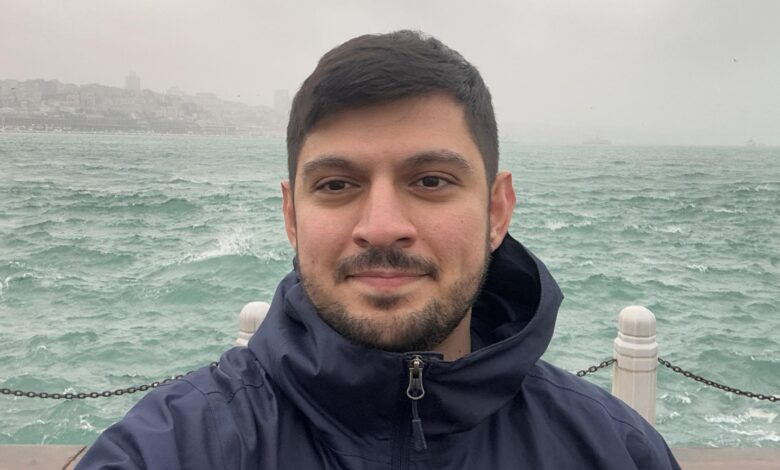
On September 6, 2025, Azerbaijani student Javid Ahmedov, who lives and studies in Tbilisi, was denied entry into Georgia. The 26-year-old Ahmedov told Radio Free Europe/Radio Liberty that authorities initially cited fines under “grounds for road closure” in his name, totaling 10,000 GEL (two fines), as the reason for the refusal. He was then informed that even if he paid this amount, he would still not be allowed into the country. Ultimately, the document he received at the border justifying the denial listed the reason as “other reasons.”
Ahmedov links the incident to his professional activities. He said he had been on Rustaveli Avenue several times, not as an activist, but as a journalist, carrying a camera. He first learned about the fines on August 24, when leaving Georgia, but was told he could pay them upon return and that they would not prevent him from leaving the country. Upon returning, he discovered he had not one but two fines and was unable to enter Georgia. He was sent back to Turkey.
Ahmedov has been living in Georgia since September 2024 and is studying journalism at the Georgian Institute of Public Affairs (GIPA). On September 8, he was scheduled to fly from Kutaisi to Germany, where he is going to study on a scholarship.