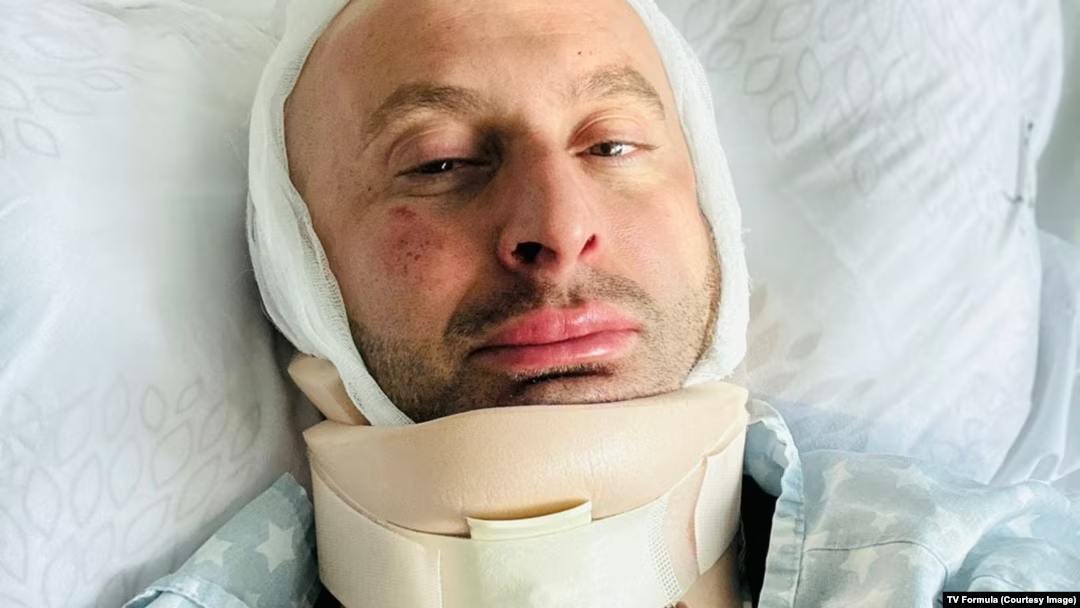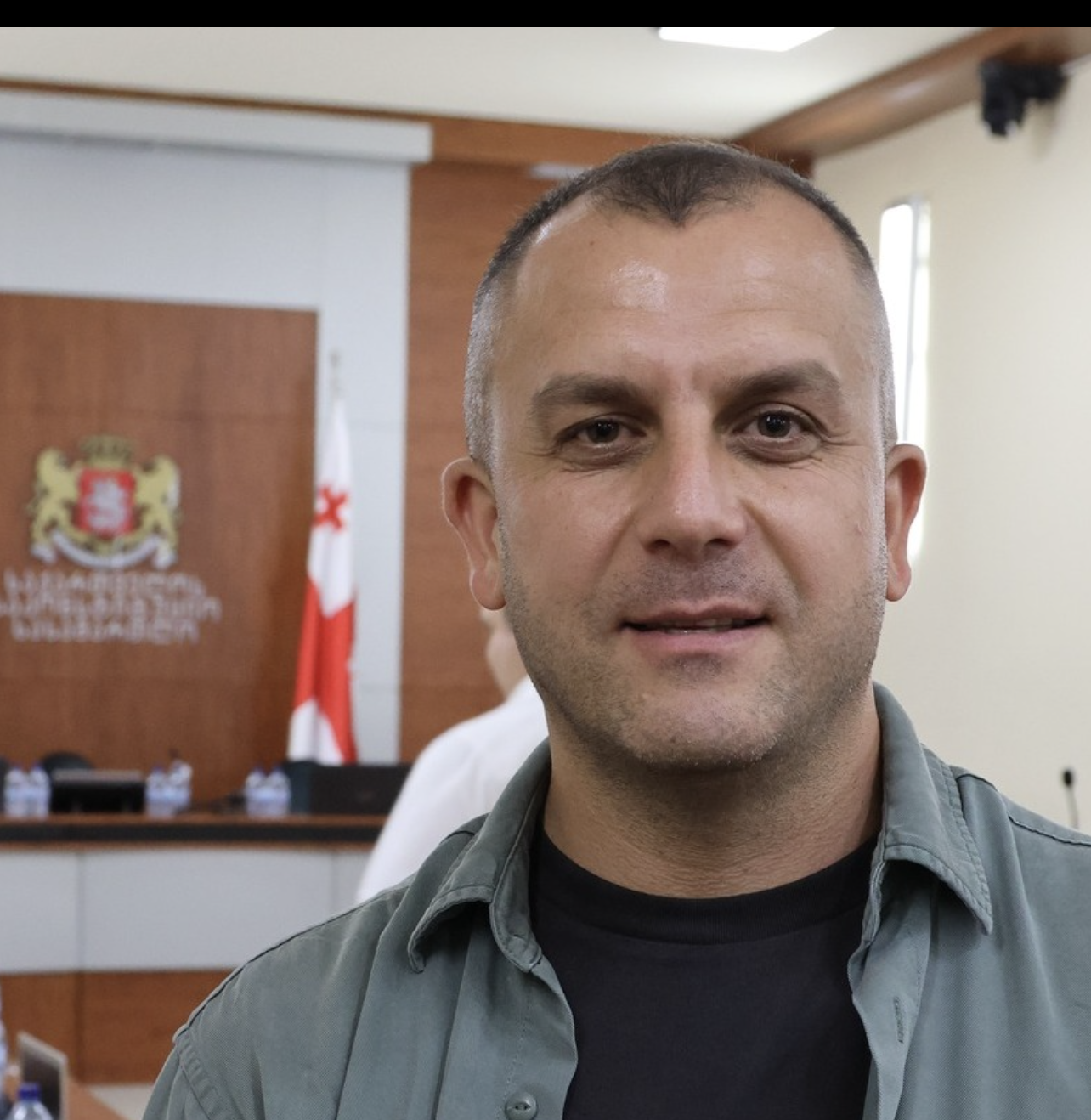
On November 5, 2025, during a protest rally in Tbilisi, the police arrested “Formula” TV company journalist Liza Tsitsishvili. At the time of the arrest, the journalist was performing her professional duties—interviewing rally participants. Video footage recorded by journalists present at the scene shows the police forcibly putting Liza Tsitsishvili into a car. The voices of other journalists can be heard in the video—they tell the police that Liza Tsitsishvili is their colleague; the police reply, “We’ll figure it out.” Liza Tsitsishvili was released ten minutes after her arrest. She says they apologized to her.
This is the second instance in a short period where a journalist is first detained and then released with an apology. On October 24, “Publika” online publication journalist Basti Mgaloblishvili was arrested near her home and released only a few hours later. She was told they had mistaken her for someone else. This is also the second instance where a journalist was detained while performing her professional duties at a rally. Two days before this incident, on November 3, “Media Checker” journalist Ninia Kakabadze was arrested on her way home, despite having a press badge, covering the rally, and having photo and video evidence confirming this.
Since October 19, 2025, after the “Georgian Dream” parliament adopted another set of repressive changes through an accelerated procedure, a total of 12 media representatives have been arrested for participating in, and in some cases covering, the ongoing protest on Rustaveli Avenue in Tbilisi. Administrative imprisonment was applied to most of them.
The Georgian Charter of Journalistic Ethics calls the frequent detentions of journalists “show detentions aimed at intimidating journalists” and urges the Ministry of Internal Affairs (MIA) to stop the persecution and harassment of journalists, and to properly inform its employees of journalists’ rights and instruct them to protect and respect those rights before sending them on assignment.
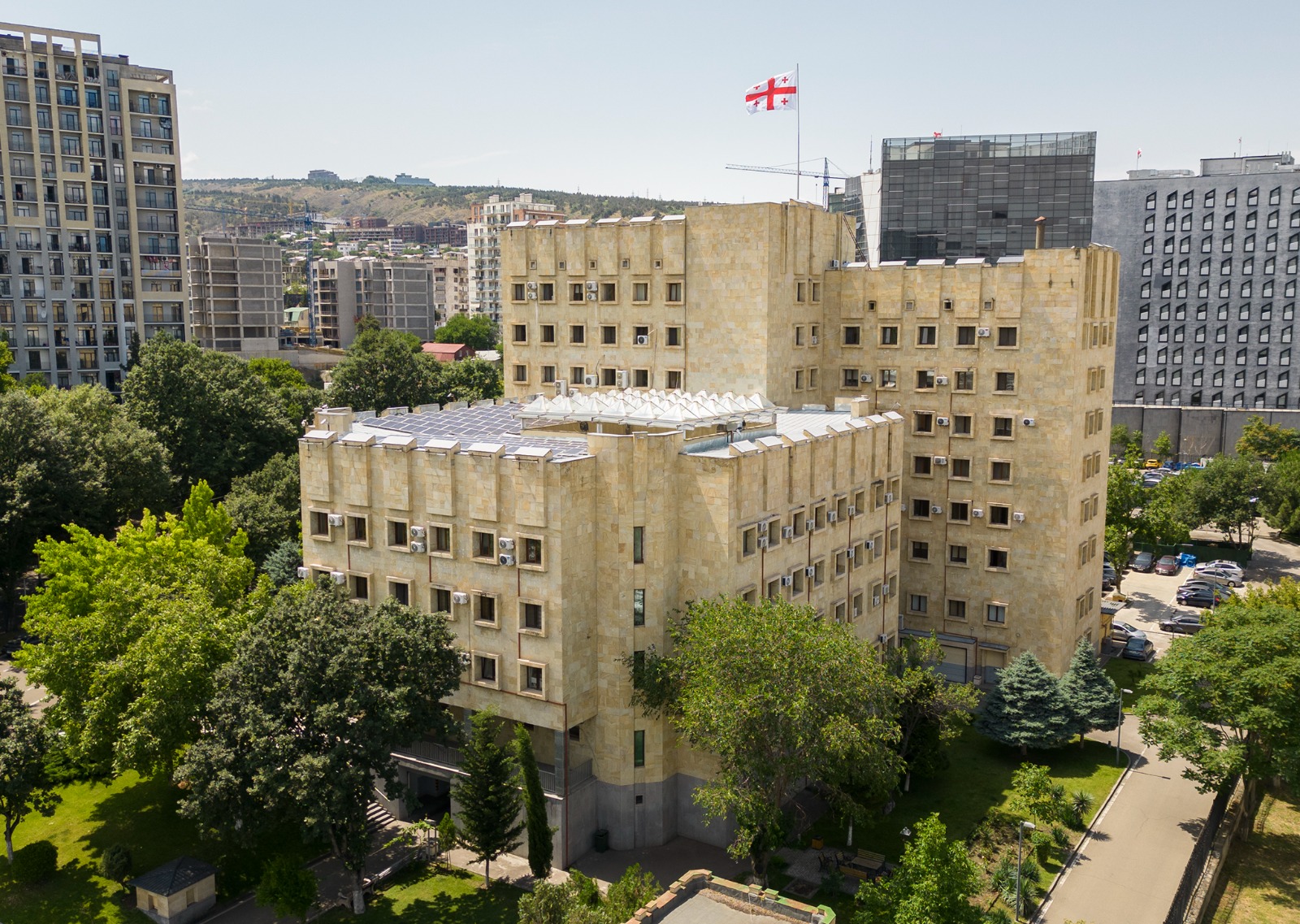
On November 3, 2025, the police arrested Ninia Kakabadze, a journalist for the Media Platform “Media Checker” of the Georgian Charter of Journalistic Ethics. That day, the journalist was at the rally with a press identification badge; she was performing her professional duties. Ninia Kakabadze was arrested while returning home. She was taken to the building of the Ministry of Internal Affairs in Tbilisi. The journalist recounts that for a long time, she was not allowed to call her minor child. The journalist was released a few hours after the arrest. Ninia Kakabadze is accused of artificially blocking the road. The Tbilisi City Court started deliberation on her case on November 4, but postponed the hearing until November 12.
Since October 19, 2025, after the “Georgian Dream” parliament adopted another set of repressive changes through an accelerated procedure, 11 media representatives have been arrested for participating in, and in some cases covering, the ongoing protest on Rustaveli Avenue in Tbilisi. Administrative imprisonment was applied to most of them.
The Georgian Charter of Journalistic Ethics considers the arrest of Ninia Kakabadze and other journalists while performing their professional duties as an attempt to pressure independent media and suppress critical voices. The Charter demands the immediate cessation of administrative proceedings against its media platform “Media Checker’s” journalist, Ninia Kakabadze, and the annulment of the drawn-up administrative offense protocol.
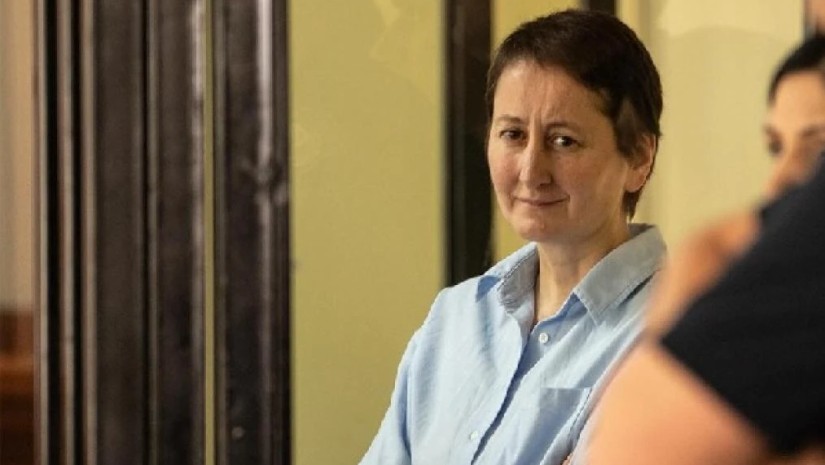
On October 22, Mzia Amaghlobeli, the founder of Batumelebi and Netgazeti, who has been imprisoned for more than nine months, received the European Union’s highest human rights honor, the Sakharov Prize. This recognition of the journalist was followed by yet another attempt by pro-government television stations to discredit her.
Imedi TV published a series of propaganda-style social media posts about Mzia Amaghlobeli’s receipt of the Sakharov Prize. Among them were posts highlighting the Prime Minister from the Georgian Dream party referring to the journalist as a “foreign agent.”
Rustavi 2 published photos of former Georgian President Mikheil Saakashvili together with Mzia Amaghlobeli and included a quote from Saakashvili about the journalist in the accompanying text – an apparent attempt to associate Amaghlobeli and her work with a political party.
Alongside Mzia Amaghlobeli, the Sakharov Prize was also awarded to imprisoned Belarusian journalist Andrzej Poczobut. The Sakharov Prize honors individuals, groups, or organizations that have made an outstanding contribution to the defense of freedom of expression.
On October 31, Georgian Dream representative from Tbilisi City Council, Otar Chrdileli, verbally abused journalists from TV companies “Formula” and “Pirveli”.
Otar Chrdileli told the journalists that they did not leave a “normal impression” mentally. The journalists asked Chrdileli questions about those detained during pro-European protests. The Georgian Dream representative also called critical TV channels “propagandists”.
On October 25, 2025, TV company “Formula’s” cameraman Nika Pataraia was detained. The court sentenced Pataraia to 4 days of administrative detention for blocking the road.
A total of 7 journalists/cameramen have been detained for blocking the road, including 4 representatives of TV company “Formula.”
The new legislative changes adopted by “Georgian Dream” significantly restrict freedom of assembly and expression. Citizens and activists are also being arrested for participating in the pro-European protest.
On October 24, Publika journalist Basti Mgaloblishvili was arrested and released a few hours later.
According to Publika, Mgaloblishvili was told that he had been “mistaken for someone else” and was then released.
“They stopped a taxi near my house, dragged me out of the car like a terrorist. Two of them weren’t in uniform. Only the one in the car waiting for me was wearing one. They snatched my phone and locked me inside the vehicle. At the same time, they kept saying I wasn’t under arrest… They knew exactly who I was — this so-called ‘special operation’ was meant to intimidate me and pressure independent media,” Mgaloblishvili said after his release.
Similarly, several other journalists were arrested and sentenced to prison during protest demonstrations — including Formula TV reporters Vakho Sanaia, Keta Tsitskishvili, and Tsira Zhvania, as well as Georgian Public Broadcaster board member Lika Basialia-Shavgulidze and journalist Afgan Sadigov.
On Wednesday, October 22, Azerbaijani journalist Afgan Sadigov was detained at a protest for blocking the road.
Judge Zviad Tsekvava sentenced the journalist to 14 days of administrative imprisonment.
In recent days, journalists from the TV company “Formula” — Vakho Sanaia, Keta Tsitskishvili, and Tsira Zhvania — were detained on the grounds of blocking the road.
The Parliament of “Georgian Dream” passed amendments to the law that further restrict freedom of assembly and expression. Based on the amendment, more than 80 people have been detained in the past few days.
Both local and international organizations have reacted to the detention of journalists.
“The detention of journalists by ‘Georgian Dream’ is a direct attack on media and freedom of expression. Under such conditions, the work of independent media is under serious threat, which significantly limits the democratic society’s right to be informed,” states the Media Advocacy Coalition’s statement.
On Tuesday, October 21, Tsira Zhvania, a social media journalist for TV Company “Formula”, was detaned for blocking a road during a protest. According to the TV company, she was met by two police officers at her home.
The Tbilisi City Court sentenced the journalist to 10 days of administrative detention.
This is the third case when, based on the tightened legislation, journalists have been detained on the grounds of blocking a road during a protest. On October 19, Vakho Sanaia, a journalist and TV presenter for TV Company “Formula”, was arrested and sentenced to 6 days in prison. On October 20, Keta Tsitskishvili, a journalist for the same TV company, was arrested and sentenced to 5 days in prison. “The arrest of journalists by the Georgian Dream is a direct attack on the freedom of the media and expression. In such conditions, the activities of independent media are facing serious threats, which significantly restricts the right of a democratic society to be informed,” the Media Advocacy Coalition said in a statement.
On Monday, October 20, journalist and TV presenter Keta Tsitskishvili from the TV company Formula was detaned. According to media reports, she is accused of blocking a road. A day earlier, on October 19, journalist Vakho Sanaia was detaned on the same charge and sentenced to five days in prison.
The Media Advocacy Coalition condemned Tsitskishvili’s arrest, calling it an act of pressure and an attack on independent media.
“The arrest of journalists by Georgian Dream is a direct assault on the media and freedom of expression. Under such conditions, the work of independent media faces serious threats, severely limiting the public’s right to information in a democratic society,” the coalition said in a statement.
On October 5, the Ministry of Internal Affairs stated that the October 4 gathering “aimed at overthrowing the government” and “soon acquired an unlawful character,” after which the ministry took “proportionate measures.” According to the agency, “based on yesterday’s events,” any gathering from October 5 will be considered a “continuation of an attempted overthrow” and the ministry will take appropriate measures “to protect public order and security.” In effect, this means that peaceful protesters may face legal prosecution simply for participating in the gathering. The statement came after the arrest of five organizers of the October 4 rally and a few hours before the announcement of a new rally by citizens and the Federalist Party.
Such rhetoric threatens both freedom of assembly and expression and freedom of the media. The wording used by the Ministry creates a vague legal framework, under which journalists’ coverage of protests or voicing critical positions may be perceived as support for an “attempted coup.” Such a statement creates a chilling effect and violates the activities of the media and the right of the public to freely receive and disseminate information, which contradicts fundamental rights guaranteed by both the Constitution of Georgia and international conventions.