On October 21, 2025, journalist Vasil-Ivanov Chikovani was reportedly arrested for participating in a protest. According to media reports, his spouse was also detained. A judge imposed a fine of 5,000 GEL on him.
In the spring of 2025, Vasil-Ivanov Chikovani was dismissed from the Georgian Public Broadcaster due to his critical stance toward the broadcaster and his participation in protests.
New legislative changes introduced by the ruling party, Georgian Dream, have significantly restricted the freedoms of assembly and expression. Citizens and activists are being arrested for taking part in protests. In addition to Vasil-Ivanov Chikovani, Formula TV journalists Vakho Sanaia, Keta Tsitskishvili, and Tsira Zhvania were also detained. On October 22, Lika Basialia-Shavgulidze, a member of the Georgian Public Broadcaster Supervisory Board, was arrested. Azerbaijani journalist Afgan Sadigov was also detained for participating in protests.
The arrests of journalists by Georgian Dream have been widely criticized by both local and international organizations, which view them as an attack on media freedom and freedom of expression.
On October 22, 2025, Lika Basialia-Shavgulidze, a member of the Georgian Public Broadcaster Supervisory Board, was arrested at a protest.
Footage shows the journalist standing on the sidewalk, addressing the police. She was neither wearing a mask nor blocking the road.
Police used excessive force to detain Lika Basialia-Shavgulidze. Later, her lawyer reported that she sustained injuries to her neck during the arrest.
Lika Basialia-Shavgulidze is the fifth journalist to be detained since the ruling Georgian Dream party passed new restrictive legislative amendments in Parliament.
The Georgian Dream Parliament introduced several changes to laws that further limit the freedoms of assembly and expression. Over 80 people have been detained in the past few days under these changes.
The arrest of journalists by Georgian Dream is a direct attack on media freedom and freedom of expression. Under such conditions, the work of independent media faces serious threats, significantly restricting the public’s right to be informed, according to a statement by the Media Advocacy Coalition.
On October 16, “Georgian Dream” passed another set of legislative changes in an accelerated procedure, within two days, which further tighten sanctions against citizens participating in protest demonstrations and significantly restrict the freedom of assembly and expression. Amendments have been introduced to both the Criminal Code of Georgia and the Code of Administrative Offenses.
According to the amendments, administrative detention of up to 15 days is now imposed without a fine for wearing masks at protests, possessing tear gas, or blocking roads. Furthermore, judges will no longer have the authority to impose fines as an administrative penalty in cases of administrative offenses, and demonstrators may face administrative detention of up to 60 days if:
- Firearms, flammable substances, cold weapons, or pyrotechnics are found at the protest;
- The police decide to disperse the assembly and the demonstrator does not comply.
Additionally, the changes also affected the Criminal Code, according to which the repeated commission of such actions will result in criminal liability and imprisonment of up to one year, and in each subsequent instance, up to two years.
Moreover, the amendments introduced criminal liability for repeated offenses against law enforcement officers. Specifically, if a citizen verbally insults a police officer multiple times or refuses to comply with their lawful order, this action will be punishable by imprisonment of up to one year. In cases of repetition, the punishment is stricter and may result in imprisonment of up to two years.
Non-governmental organizations have sharply criticized these changes, stating that they pose a threat to the fundamental principles of democracy. According to them, the new regulations not only restrict the right to peaceful protest but also create an atmosphere of fear and self-censorship in society, where citizens may be punished merely for expressing their opinions.
These changes are a continuation of the recent trend of repressive legislation adopted by “Georgian Dream.”
On October 19, Vakho Sanaia, a journalist and TV presenter for the TV company Formula, was detained. He is accused of blocking a road, and the Tbilisi City Court sentenced him to six days of administrative detention.
That same day, police also arrested several other participants of the rally, accusing them of blocking the road and covering their faces during the protest. The ruling Georgian Dream party recently tightened legislation, replacing fines with imprisonment for concealing one’s face at rallies.
The Media Advocacy Coalition condemned the journalist’s arrest, calling it “a gross violation of media freedom and freedom of speech.”
On October 15, Sulkhan Meskhidze, the founder and director of “Adjara Times,” published a post on social media, stating that he had received a threatening and insulting message. According to Meskhidze, the message concerned him and his family members.
According to the journalist, the reason for the threat was most likely his publication, which concerns the resignation of Akaki Beridze, the head of the Batumi City Hall’s Department of City Infrastructure and Public Works.
In the post, he writes that this is not the first case of threats, but since he has not received a response from the investigative agencies on previous cases, he will not make an official statement on the matter.
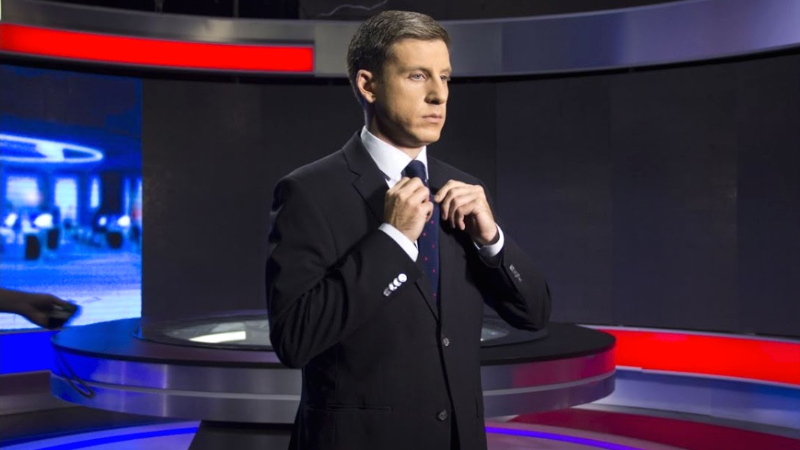
On October 10, 2025, Tbilisi City Court Judge Meia Melkadze dismissed the lawsuit of Vasil Ivanov-Chikovani, a former employee of the Public Broadcaster’s First Channel and host of the program “Moambe”. Vasil Ivanov-Chikovani appealed his dismissal from service in court. He requested the cancellation of the dismissal order, reinstatement in service, and compensation for his severance pay. After the submission of the reasoned part of the verdict, the plaintiff will appeal the decision of the City Court to the Court of Appeal.
Vasil Ivanov-Chikovani was dismissed from the Public Broadcaster on April 11, 2025, along with journalist Nino Zautashvili, host of the program “Real Space”. The official reason for his dismissal was a disciplinary investigation. Both journalists are involved in the movement “Guardians of the Public Broadcaster,” which criticizes the broadcaster’s management decisions, its editorial policy, and speaks out about political influences within the broadcaster.
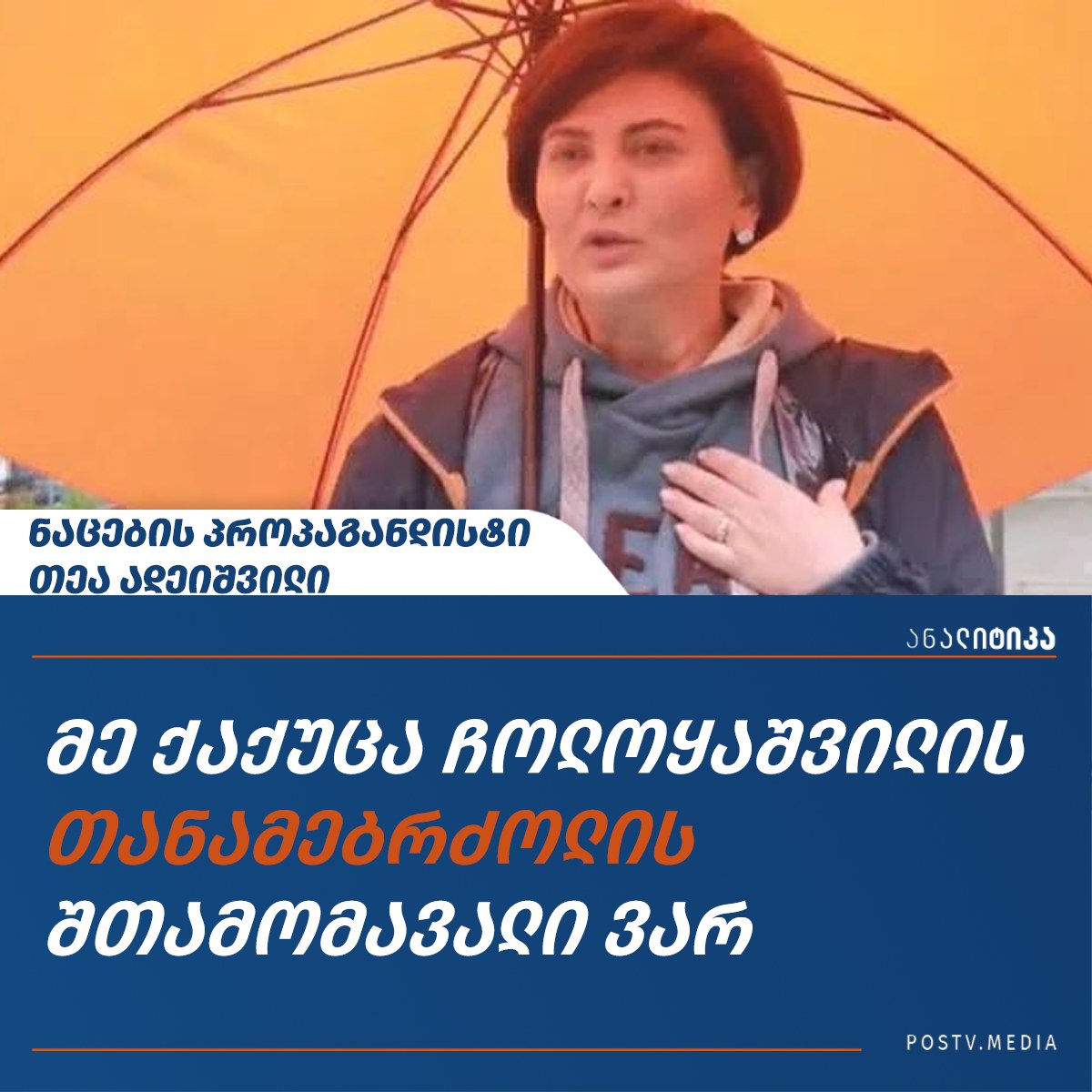
On October 5, 2025, the propaganda television station POSTV referred to “TV Pirveli” journalist Tea Adeishvili as a “national propagandist.” “I am a descendant of Kakutsa Cholokashvili’s comrade-in-arms” – this phrase, mentioned by Tea Adeishvili during the election broadcast, has been placed on the POTSV card without context, and Tea Adeishvili’s regalia reads – “National propagandist Tea Adeishvili”.
Media outlets and journalists with critical editorial policies have recently become targets of discrediting POSTV more than once. The propaganda, affiliated with the “Georgian Dream” government, POSTV continues the vicious trend of discrediting independent media by high-ranking public figures of the “Georgian Dream”.
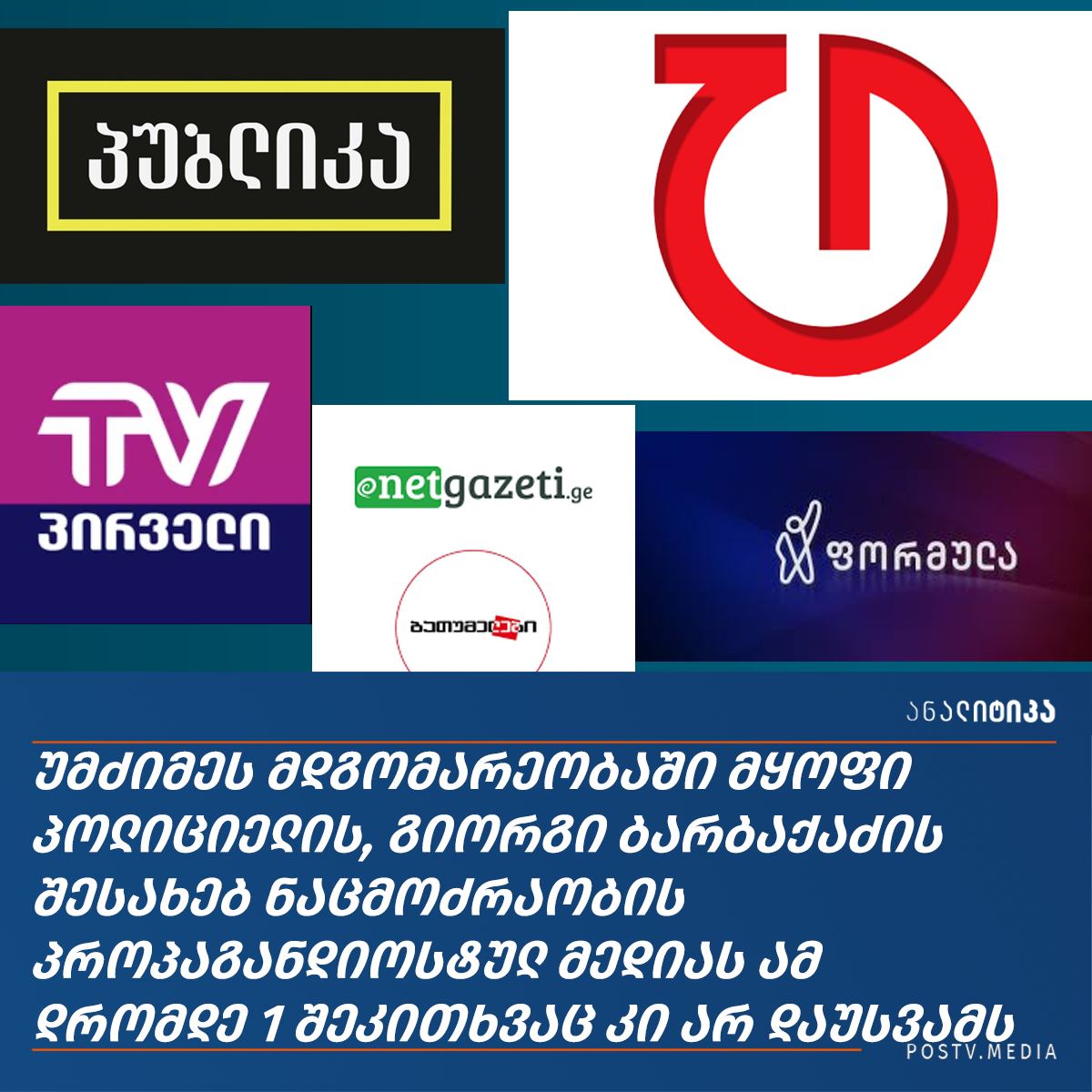
On October 5, 2025, the propaganda television station POSTV, affiliated with the Georgian Dream, referred to the independent online media outlets Netgazeti, Publika, and Tabula, as well as TV Pirveli and Formula, as “propaganda media of the National Movement.” POSTV accused the aforementioned media outlets of concealing information about a police officer injured during a protest the previous day, October 4.
The visual material (card) distributed by POSTV bears the logos of these media outlets and the following text: “The propaganda media of the National Movement have not asked a single question about the critically ill police officer Giorgi Barbakadze so far.”
The editor of “Publika”, Zura Vardiashvili, responded to this fact on social media. He noted that he would not have responded to the information spread by the propaganda media if it were not for the coordinated attacks of recent days. He said that in fact the publication has prepared a number of materials on the topic of the injured policeman and added links to all the materials in the comments to his own statement.
On October 4, 2025, a large-scale protest rally in Tbilisi witnessed numerous cases of verbal and physical attacks on media representatives, obstruction of their work, and damage to equipment. For the first time during this rally, some online media outlets were unable to operate their Drone cameras, likely due to an artificial disruption.
Publicly reported incidents:
- For Studio Monitor journalist Keti Tutberidze, two employees of the criminal police tried to interfere with her work and take away her phone. The incident occurred when the journalist was trying to film the arrest of citizens. “Special forces rushed to Orbeliani Square to arrest two citizens, one of whom is Irakli Tsulaia. “I was filming and two employees of the criminal police rushed at me with a roar, grabbed my hand and tried to take away my phone,” Tutberidze wrote in a post.
- A tear gas canister was allegedly fired at the camera crew of TV Pirveli – journalist Irakli Bakhtadze and his cameraman, reportedly hitting the helmet Bakhtadze was wearing. The incident occurred while they were broadcasting live from the Presidential Palace on Orbeliani Square. In the video footage released by the TV company, the sound of tear gas being fired and canisters falling and exploding can be heard. At that time, the protesters had already left the surrounding area. There was no prior warning before the shooting. The journalist and cameraman were not injured.
- Radio Liberty journalist Giorgi Diasamidze was physically and verbally assaulted by police. In a video released by the publication, the journalist can be heard explaining to the law enforcement officer that he is a journalist and asking why he is interfering with his work.
- Niko Kokaia, a cameraman for TV Pirveli, was injured twice while covering the events at the rally. The first incident, as the TV company reports, occurred on Atoneli Street, near the presidential residence. Kokaia became incapacitated after the Special Tasks Department fired tear gas canisters. He required emergency medical assistance.
- The second incident occurred at Orbeliani Square. According to information released by the TV company, the cameraman was allegedly hit in the leg by a gas capsule.
- According to information released by the Public Broadcaster, a protester allegedly threw an “unknown liquid” at the news program “Moambe,” injuring journalist Shalva Sumbadze and cameraman Nika Tsirekidze.
- According to Mediacheker, documentary photographer, Mariam Giunashvili, suffered burns after allegedly being pepper-sprayed. “They sprayed me [with pepper spray] from three different directions, from the front right in the face and from the sides all over my body. I got particularly bad burns on my hands and arms,” Giunashvili told Mediachecker.
- The publications “Project 64”, “Netgazeti” and “Mautskebeli” have lost their aerial cameras. The founder and journalist of “Project 64”, Giorgi Gogua, writes on social networks that the camera was filming near the parliament, when suddenly the camera started flying strangely, and he lost control. “I was only controlling the direction of the camera, but I could not control the trajectory of the drone. The last shot, before the signal was lost, is somewhere from Rustaveli to Mtatsminda. The flight history on the map shows that the drone flew towards the airport.”
According to information disseminated by “Netgazeti”, they lost their drone on Rustaveli Avenue. “Netgazeti’s” drones, as well as those of other media outlets, were allegedly specially shot down on Rustaveli Avenue, where we were trying to film a demonstration,” the publication said in the information.
According to information, the publication “Mautskebeli” also lost its drone. During filming, the drone suddenly malfunctioned, like other media outlets,” a journalist from “Maudereli” told MediaChecker.
On September 17, 2025, the Georgian Dream-supporting propaganda television station – Post TV published a Facebook post stating that TV Pirveli did not cover the fact that the government was transferring apartments to Internally Displaced families. The post also accused TV Pirveli of reporting
“only fake news.” It included a call to “turn off TV Pirveli.”
The publication of such material clearly shows how pro-government media uses the strategy of discrediting opposition media to deepen distrust towards and boycott critical media.
The independent TV company TV Pirveli has repeatedly become the target of attacks by Georgian Dream representatives, supporters, and state agencies.