Tbilisi City Court Dismisses Former Moambe Host Vasil Ivanov-Chikovani’s Lawsuit

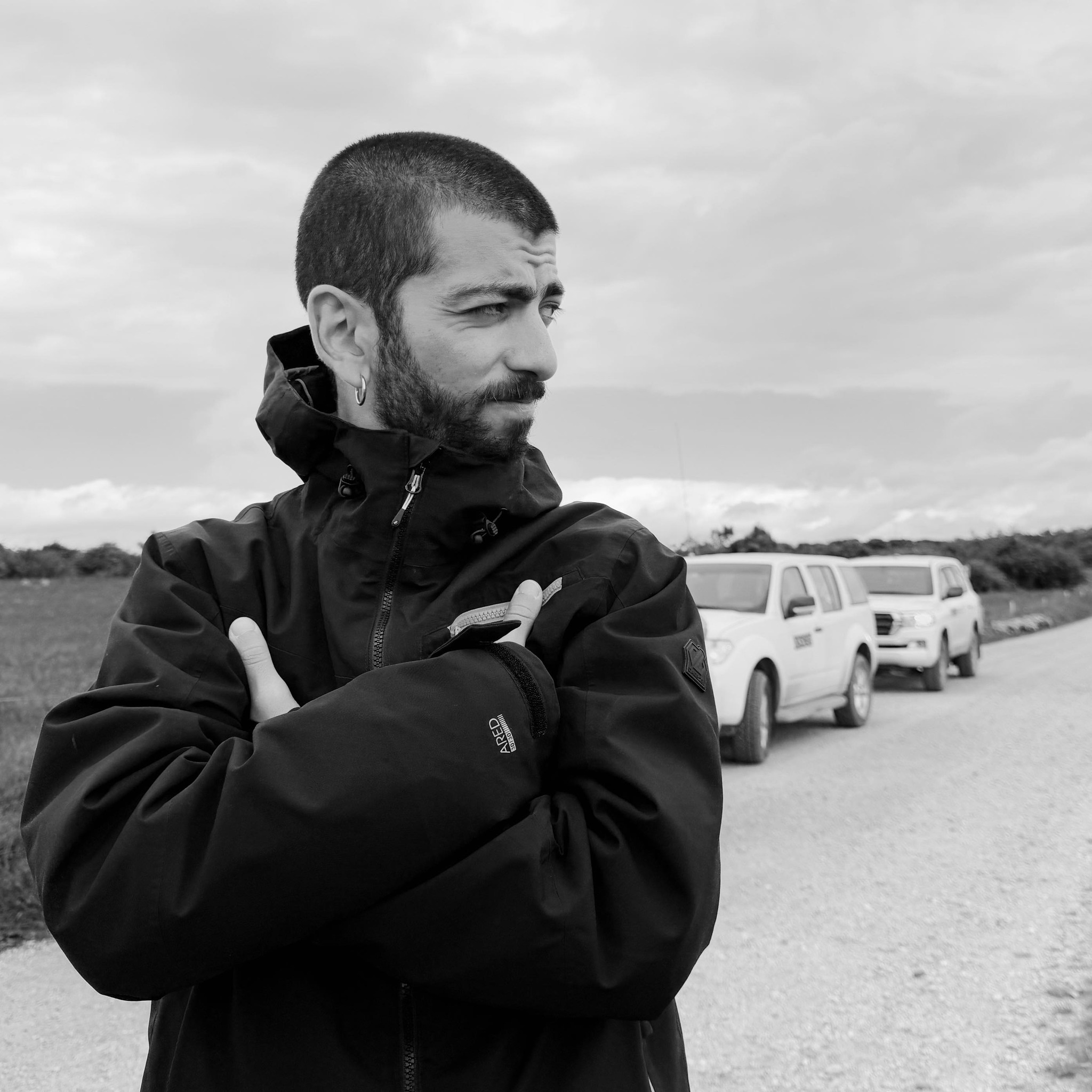
On October 10, 2025, Tbilisi City Court Judge Meia Melkadze dismissed the lawsuit of Vasil Ivanov-Chikovani, a former employee of the Public Broadcaster’s First Channel and host of the program “Moambe”. Vasil Ivanov-Chikovani appealed his dismissal from service in court. He requested the cancellation of the dismissal order, reinstatement in service, and compensation for his severance pay. After the submission of the reasoned part of the verdict, the plaintiff will appeal the decision of the City Court to the Court of Appeal.

Vasil Ivanov-Chikovani was dismissed from the Public Broadcaster on April 11, 2025, along with journalist Nino Zautashvili, host of the program “Real Space”. The official reason for his dismissal was a disciplinary investigation. Both journalists are involved in the movement “Guardians of the Public Broadcaster,” which criticizes the broadcaster’s management decisions, its editorial policy, and speaks out about political influences within the broadcaster.

A “Publika” journalist was threatened and an attempt was made to physically assault him by a Tbilisi City Court bailiff, who also threatened to call the police

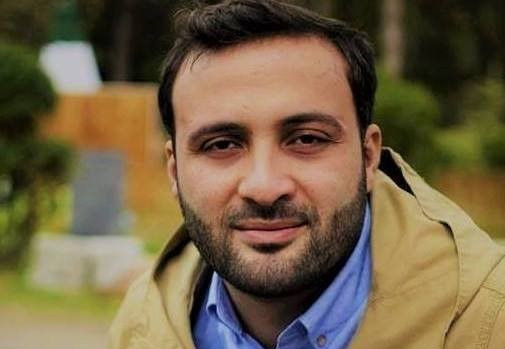
On October 1, 2025, Publika’s journalist, Mindia Gabadze, was threatened with police intervention and faced an attempted physical assault by a Court bailiffl. Gabadze was covering the court hearing of activist Gela Khasaia.

According to Gabadze, before the hearing began, the head of the court bailiff’ service, Davit Matiashvili, threatened him that if he tried to record, he would “call the police and take him into the next room.”

Gabadze says he did not film anything inside the court building. After the hearing ended, when the Court bailiff began forcibly removing attendees and journalists, Gabadze was leaving the building calmly and peacefully. Nevertheless, according to him, Davit Matiashvili made three attempts (twice inside the building and once in the yard) to physically assault him — by kicking and grabbing him by the hand.

“There were two other incidents when another, inexperienced bailiff grabbed me by the neck. Each time, I was frozen in shock, and my editor was pulling me away from the Court bailiffs. Activists were also helping me,” the journalist wrote.

The Georgian Charter of Journalistic Ethics emphasized that recent amendments to the Organic Law on Common Courts of Georgia have severely restricted the media’s ability to cover court proceedings. According to the organization, the media lack even the most basic working conditions in the courts, and the environment has become extremely hostile and dangerous.

“Every time journalists perform their professional duties in court, their health and lives are at serious risk. While working in the courts, journalists also risk losing their freedom — even when they are merely trying to protect themselves or a colleague from violence. Such treatment of journalists bears all the signs of targeted persecution,” the organization’s statement reads.

The Media Advocacy Coalition added:

“The ‘Georgian Dream’ judiciary has become a place of injustice and violence. Violence and brutal incidents against journalists have become a regular part of their professional experience.”

A bailiff from the Tbilisi City Court damaged the phone of a journalist from the TV “Formula”

On October 1, 2025, a bailiff of the Tbilisi City Court confiscated the phone of Natali Jakhutashvili, a journalist for the TV company “Formula”, and returned it broken.

The incident occurred when the trial of opposition activist Gela Khasaia in the City Court ended. The imposition of imprisonment as a preventive measure for Gela Khasaia was followed by a confrontation in court. Court bailiffs physically assaulted the detainee’s friends. The journalist was trying to cover these processes.

According to her, after the bailiff confiscated her phone, she tried to return it for 15 minutes. In the end, the bailiff handed over the broken phone.

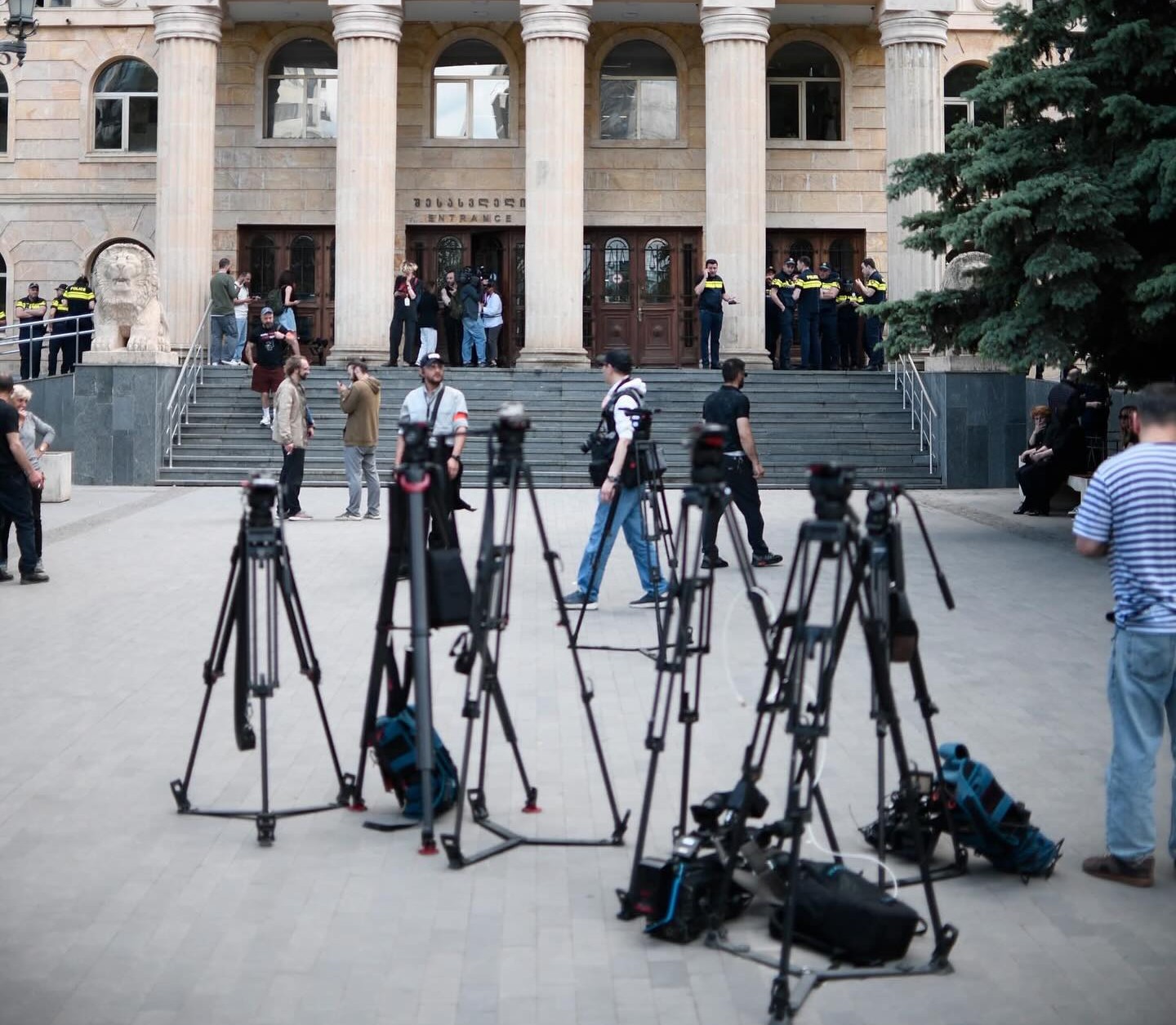
This is not the first time that media representatives have been targeted by violence in court. With the amendments to the Law on Common Courts, starting from June 30, it is forbidden to take photos/videos and make audio recordings in courtrooms, corridors or courtyards. After the new rule came into effect, media outlets applied to the Council of Justice – a legally established body – for the right to record, but so far none of them have received a response.

Before the adoption of the repressive legislation, independent media representatives were illegally hindered in the performance of their professional duties in court buildings. Since the amendment, the bailiff’s office has been using disproportionate and unjustified force, including against the media, to enforce the repressive legislation.

The accounts of the member organizations of the “Media Advocacy Coalition” were frozen

The Georgian Prosecutor’s Office launched an investigation against non-governmental organizations, including member organizations of the “Media Advocacy Coalition,” on charges of “sabotage, attempted sabotage under aggravating circumstances, assistance in hostile activities to a foreign organization and an organization under foreign control, and mobilization of funds for activities directed against the constitutional order and foundations of national security of Georgia.”

On August 27, 2025, Tbilisi City Court satisfied the Prosecutor’s Office’s request and froze the bank accounts of these organizations.

Minutes after the Prosecutor’s Office released its statement, the pro-government TV company “Imedi” broadcast a story supporting the investigation, specifically using comments from civil sector representatives from pro-European rallies. The Prosecutor’s Office’s accusation charges the organizations with mobilizing funds to purchase special equipment (such as special gas masks, helmets, face coverings, medical masks, protective goggles) for participants of the pro-European rallies.

More than 50 civil society and media organizations expressed solidarity with the seized organizations.

“Taking punitive steps against Georgian non-governmental organizations, similar to the Russian authorities, confirms that the Ivanishvili government’s interest is the complete destruction of dissenting opinion and pro-European groups in Georgia,” the statement said.

Based on the request of the Prosecutor’s Office, the accounts of seven organizations were seized on August 27. These are: “Civil Society Foundation,” “International Society for Fair Elections and Democracy” (ISFED), “Institute for Development of Freedom of Information” (IDFI), “Guardians of Democracy,” “Georgian Democratic Initiative” (GDI), “Sapari,” and “Social Justice Center.” Among these, “Civil Society Foundation,” ISFED, IDFI, and GDI are members of the “Media Advocacy Coalition.”

Founder of “Batumelebi”/“Netgazeti” outlets, Mzia Amaglobeli, sentenced to 2 years in prison

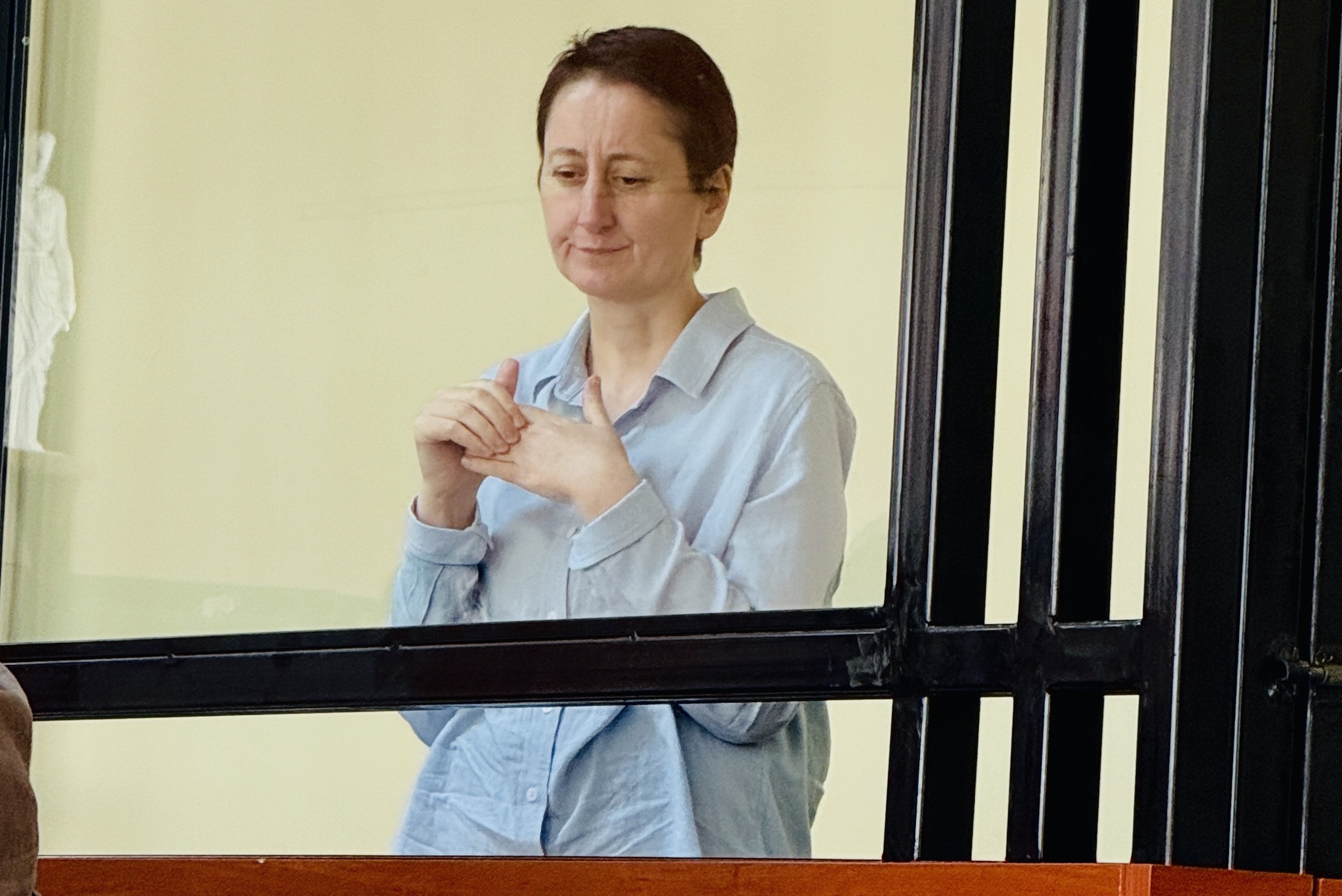
Judge Nino Sakhelashvili of the Batumi City Court reclassified the charges against the founder of the online publications Batumelebi and Netgazeti, journalist Mzia Amaglobeli, and sentenced her to two years in prison.

Mzia Amaglobeli was charged with assaulting a police officer after slapping the Chief of Batumi Police, and was charged under Article 353 Prima of the Criminal Code, which envisions 4 to 7 years in prison. On the day of the verdict, the judge reclassified the charges to Article 353 Part One of the Criminal Code. The article in question refers to resisting a police officer, a special penitentiary service employee or another government official with the aim of obstructing the maintenance of public order, interrupting or changing his activities. The article provides for a fine or house arrest for a term of up to two years or imprisonment for a term of 2 to 6 years.

Mzia Amaglobeli’s attorneys plan to appeal the case after the verdict is handed down.

Mzia Amaglobeli was first arrested on January 11 of this year under administrative law, and a few hours later, on January 12, under criminal law.

Founder of Batumelebi/Netgazeti outlets, Mzia Amaglobeli, sentenced to 2 years in prison

Judge Nino Sakhelashvili of the Batumi City Court reclassified the charges against the founder of the online publications Batumelebi and Netgazeti, journalist Mzia Amaglobeli, and sentenced her to two years in prison.

Mzia Amaglobeli was charged with assaulting a police officer after slapping the Chief of Batumi Police, and was charged under Article 353 Prima of the Criminal Code, which envisions 4 to 7 years in prison. On the day of the verdict, the judge reclassified the charges to Article 353 Part One of the Criminal Code. The article in question refers to resisting a police officer, a special penitentiary service employee or another government official with the aim of obstructing the maintenance of public order, interrupting or changing his activities. The article provides for a fine or house arrest for a term of up to two years or imprisonment for a term of 2 to 6 years.

Mzia Amaglobeli’s attorneys plan to appeal the case after the verdict is handed down.

Mzia Amaglobeli was first arrested on January 11 of this year under administrative law, and a few hours later, on January 12, under criminal law.

After the court banned filming, for the first time, the right to film was granted to pro-government media

Television channels controlled by the Georgian Dream party, “Imedi” and the Public Broadcaster, were granted the right to film the court proceedings of businessman Giorgi Bachishvili, considered Bidzina Ivanishvili’s “personal prisoner.” This is the first case since amendments to the law banned the media from filming court hearings unless permission was granted by the High Council of Justice. Journalists from “Imedi” and the Public Broadcaster stated that they applied to the High Council of Justice on July 28 and received permission the following day.

On June 26, 2025, the Georgian Dream-controlled Parliament adopted amendments to the “Law on Common Courts,” which prohibited photo and video recording, audio recording, and broadcasting in court. Permission to film must be granted by the High Council of Justice. Since the law came into effect, media outlets with a critical editorial policy have submitted multiple requests to the High Council of Justice, but to date, none have received a response.

Moreover, organizations working on media issues have repeatedly called on the High Council of Justice to promptly develop procedures for granting permission to film court hearings, which would allow the media to receive timely responses to applications before the start of sessions, without unnecessary bureaucracy. However, so far, no feedback has been received from the High Council of Justice.

The head of the Tbilisi City Court’s bailiffs threatened the editor of ‘Publika’ with accountability before the law

On July 22, 2025, the head of the Tbilisi City Court’s bailiff service, Davit Matiashvili, threatened Zurab Vardiashvili, editor of the publication Publika, with accountability before the law over video recording. Vardiashvili was attempting to document how the bailiff service forcibly removed a member of an opposition party from the court building.

The incident occurred during the trial of Giorgi Akhobadze, a prisoner of conscience. According to Vardiashvili, Matiashvili forcefully removed Nodar Chachanidze, a member of the opposition party “Akhalis”, who had come to attend the trial. As soon as they left the building, the journalist began filming: “I started recording at the stairs. When he saw this, he pushed me and dragged me inside. He took my ID, saying it was confiscated, and threatened me with legal accountability.” Vardiashvili was held in a room inside the court building for several minutes before his ID was returned and he was released.

According to amendments to the Law on Common Courts, effective June 30, photo and video recording, as well as audio recording, are prohibited in courtrooms, corridors, and courtyards. Following the implementation of the new rule, media outlets submitted applications to the Justice Council for permission to record, but none have received a response so far.

Before the adoption of this repressive legislation, representatives of independent media were unlawfully obstructed while performing their professional duties in court buildings. After the changes, the bailiff service has been using force disproportionately and without justification, including against media representatives, to enforce the repressive legislation.

Judge Moved Mzia Amaghlobeli’s Court Proceedings to Smaller Courtroom

On July 14, 2025, Judge Nino Sakhelashvili moved the court proceedings of journalist Mzia Amaghlobeli, who is in illegal imprisonment, to a smaller courtroom. According to information from online media “Batumelebi,” the judge made the decision after, according to her, shouts could be heard from the street in the courtroom – “Freedom for Mzia! Freedom for political prisoners!” According to the online media’s information, a large part of those wishing to attend the court session could not enter the proceedings, among them were members of Mzia Amaghlobeli’s family, colleagues, and representatives of the diplomatic corps.

The judge also did not satisfy the defense’s request that journalist Mzia Amaghlobeli be allowed to testify from the witness stand. In the end, the journalist testified from a glass-enclosed booth.

For more than 6 months, journalist and media manager Mzia Amaghlobeli, founder of “Batumelebi” and “Netgazeti,” has been in illegal imprisonment. On July 9, the European Parliament adopted a resolution on Georgia, demanding Mzia Amaghlobeli’s release. Her release is also demanded by local and international organizations.

Judge Completely Closed Court Proceedings Due to Photo Distribution

On July 10, 2025, due to the distribution of photos from the courtroom, Judge Nino Galustashvili closed the Lomidze-Zasokhashvili trial and had everyone present, including journalists, leave the courtroom.

On June 26, the “Georgian Dream” parliament adopted amendments to the Organic Law on Common Courts through an expedited procedure. Under the new norms, which came into force immediately upon publication of the law, photo-video recording for media at court sessions was prohibited. As a result of the changes, recording is restricted both inside the courtroom space, as well as in the yard and corridors.