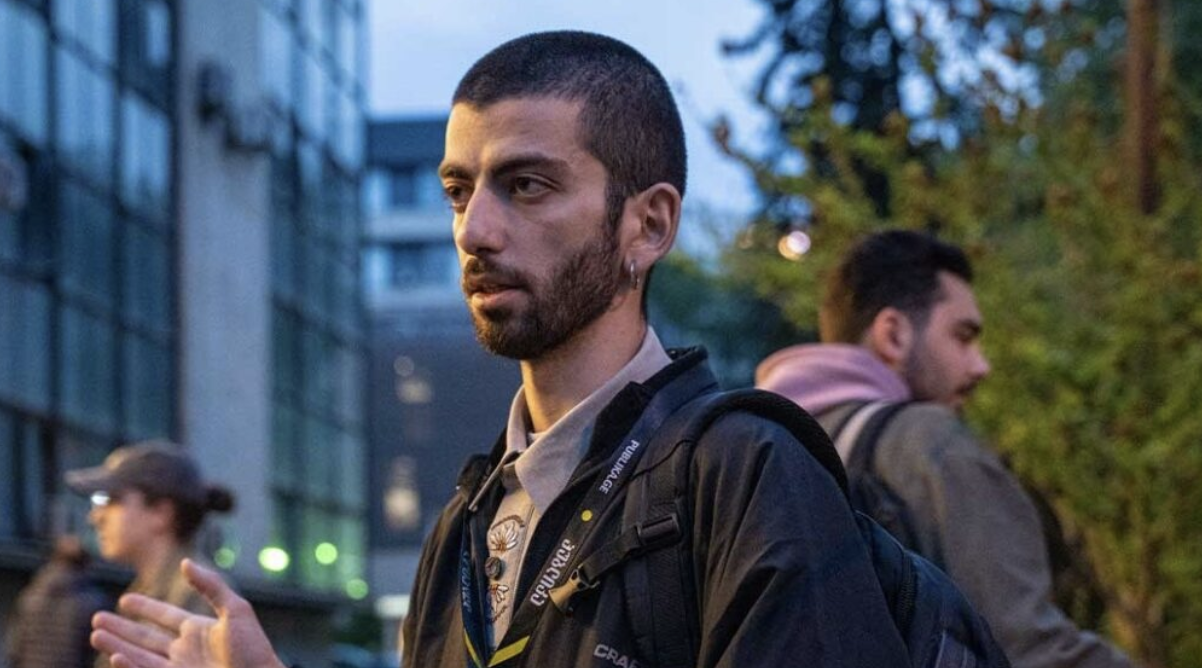
The Parliament has denied one-time special accreditation to Mindia Gabadze, a photojournalist for the online media outlet “Publika.”
In a corresponding application sent to the Chairman of the Parliament on June 16, 2026, “Publika” requested the issuance of a one-time special accreditation for photojournalist Mindia Gabadze for the period of June 22–26, so that he could cover Irakli Kobakhidze presenting his report in Parliament.
A month earlier, on May 21, the Parliament also revoked the one-year accreditation of four “Publika” reporters, including Mindia Gabadze. At the time, the reason given was that the accredited journalists from “Publika” had not visited the legislative body for ten consecutive weeks.
For the same reason, the accreditation of four journalists from “Monitor” was also revoked.
The tightening of rules for the media in the legislative body began in February 2023. Several security measures were introduced in the Parliament, during which non-accredited journalists are banned from entering the Parliament. Also, it became possible to suspend a journalist’s accreditation based on a Member of Parliament’s request. Furthermore, from January 1, 2026, a new rule for issuing one-time special accreditation came into force, which also created additional barriers for journalists. All these measures have been repeatedly used against journalists.
Pro-government television stations—Imedi, Rustavi 2, and POSTV—are labeling independent online publications Netgazeti, Publika, and On.ge as anti-Georgian media, discrediting and stigmatizing them because these outlets refer to high-ranking officials as the “Georgian Dream” Prime Minister and Minister.
All three channels published nearly identical text on social media, accompanied by a short screenshot of a text prepared by these online media outlets regarding the visit of Armenian Prime Minister Nikol Pashinyan to Georgia.
“So-called online media outlets funded by foreign countries refer to Nikol Pashinyan as Prime Minister, while referring to Irakli Kobakhidze and Maka Bochorishvili as the ‘Georgian Dream’ Prime Minister and Minister,” states Rustavi 2, referring to the online outlets as “so-called” media. POSTV also places the term online media in quotation marks: “The anti-Georgian policy of ‘online media’ funded from abroad: publications refer to Nikol Pashinyan as the Prime Minister of Armenia, while referring to the Prime Minister and the Foreign Minister of Georgia as the ‘Georgian Dream’ Prime Minister and Minister.” Imedi goes even further, calling these publications tools of hybrid warfare: “Another anti-Georgian act by the anti-Georgian online ‘media’ in Georgia—all three tools of hybrid warfare refer to Nikol Pashinyan as the Armenian Prime Minister, while referring to Irakli Kobakhidze and Maka Bochorishvili as the ‘Georgian Dream’ Prime Minister and Minister.”
Notably, all three channels published this visual material almost simultaneously on the same day that “Georgian Dream” passed the law in its third and final reading, which made the “systemic non-recognition of Georgian Dream” a criminal offense.
On June 27, 2025, the Georgian Parliament held a hearing on the annual report of the Prime Minister of the Georgian Dream, Irakli Kobakhidze, and in connection with this, the administrative body has been placed on a yellow security alert.
“In accordance with the Order of the Chairman of the Parliament of Georgia dated September 4, 2023 N1/259/23 “On Approval of the Rules for Security Protection in the Palace of the Parliament of Georgia”, on June 27 of this year, the yellow security level will be in effect in the Palace of the Parliament – visitors are restricted from entering the Palace of the Parliament” – the statement released by the Parliament reads.
The announcement of the yellow security level restricts and imposes an artificial barrier to the work of the media, especially online media, and this is not the first time that such a restriction has been imposed in the Parliament of Georgia or other administrative bodies.