During the hearing on December 17 of the so-called “October 4 case,” involving 13 detained individuals, Tbilisi City Court Judge Tamar Makharoblidze stated in court, in response to television journalists’ request to briefly leave the courtroom for a live broadcast, that if the journalists left, they would not be allowed to return. According to her explanation, media representatives could cover the trial only after its conclusion. All 13 individuals are charged with group violence and attempting to seize or block a strategic facility the President’s Palace.
Journalists have stated that, under conditions where photography and video recording are prohibited in court, leaving the courtroom effectively deprives them of the opportunity to follow the proceedings and provide the public with complete information. This is particularly problematic in multi-hour, all-day hearings, where leaving the courtroom during the trial means missing the remainder of the proceedings entirely.
According to media representatives, against the backdrop of already limited resources, this practice makes it virtually impossible for journalists to cover court proceedings of public interest effectively.
The current practice of media coverage of court proceedings is linked to amendments to the Organic Law “On Common Courts,” adopted on June 26 under an expedited procedure. These amendments significantly restricted media access to court hearings, including banning photography and video recording within court buildings and abolishing the previously existing special coverage regime for broadcasters.
On November 24, the Parliament suspended the accreditation of Dea Badzagua, a journalist for the investigative program “Shabatis Formula” of the TV “Formula,” for one month. The suspension of accreditation was requested by the “Georgian Dream” MP Maia Bitadze.
A report aired on “Shabatis Formula” [at 18:41 and 20:02], showing Dea Badzagua trying to ask questions to “Georgian Dream” MP Aluda Gghudushauri regarding the case initiated against the chairman of the party “For Georgia,” Giorgi Gakharia. The interview was recorded by phone by Parliament member Maia Bitadze from “Georgian Dream.” According to the journalist on “Formula,” she did not even have questions for Maia Bitadze, but the MP became irritated by listening to questions directed at her colleague.
“It is noteworthy that she [Maia Bitadze] immediately threatened us with sanctions and, apparently, carried them out… Representatives of ‘Georgian Dream’ in the parliamentary body do not answer any questions from critical media,” said journalist Dea Badzagua on “Formula.”
On November 13, another journalist from “Formula,” Tiko Eradze, had her accreditation suspended after she published a video shot in the parliamentary plenary hall, where she filmed “Georgian Dream” MP Eka Chichinadze from the journalists’ designated gallery, while the MP was watching the video recording on her phone.
On November 26, the “yellow level” of security came into effect in the building of the Parliament of Georgia, which fully restricts online media from working in the Parliament. The restriction is linked to the speech of the “Georgian Dream” Prime Minister, Irakli Kobakhidze.
During the operation of the “yellow level” in Parliament, only journalists from TV broadcasters (no more than three groups from each broadcaster) and invited guests are allowed in the building.
The Parliament of Georgia approved the controversial restrictive rules for the media by Order N1/259/23 of September 4, 2023.
On November 12, Tiko Eradze released a video filmed in the Parliament’s Plenary Hall, where she recorded “Georgian Dream” MP Eka Chichinadze listening to a video recording on her phone from the lodge designated for journalists. Shortly after the video was published, Tiko Eradze herself posted on Facebook, expressing her assumption that her accreditation would be suspended.
On November 13, the journalist was informed by a letter from the Head of the Parliament Apparatus that her accreditation had been suspended for a period of one month. The letter explained the grounds for the suspension: “You filmed the mobile phone screen of Member of Parliament Eka Chichinadze from the location designated for the media without permission.”
The restriction of journalists’ activities in the Parliament building by “Georgian Dream” is linked to the approval of the Rules of Accreditation for Media in the Parliament of Georgia on February 6, 2023. The new regulations included restrictions such as a ban on filming without prior permission, the journalist’s obligation to stop an interview if a Member of Parliament refuses, and the requirement that a journalist must not film a Member of Parliament’s phone or other electronic device screen without their consent in a way that allows the information or image on it to be perceived. These changes drew criticism from the Georgian Charter of Journalistic Ethics, which stated that such regulations made it impossible to obtain and deliver information to the public.
This is not the first time that the Parliament has used the media accreditation rules against representatives of independent media.
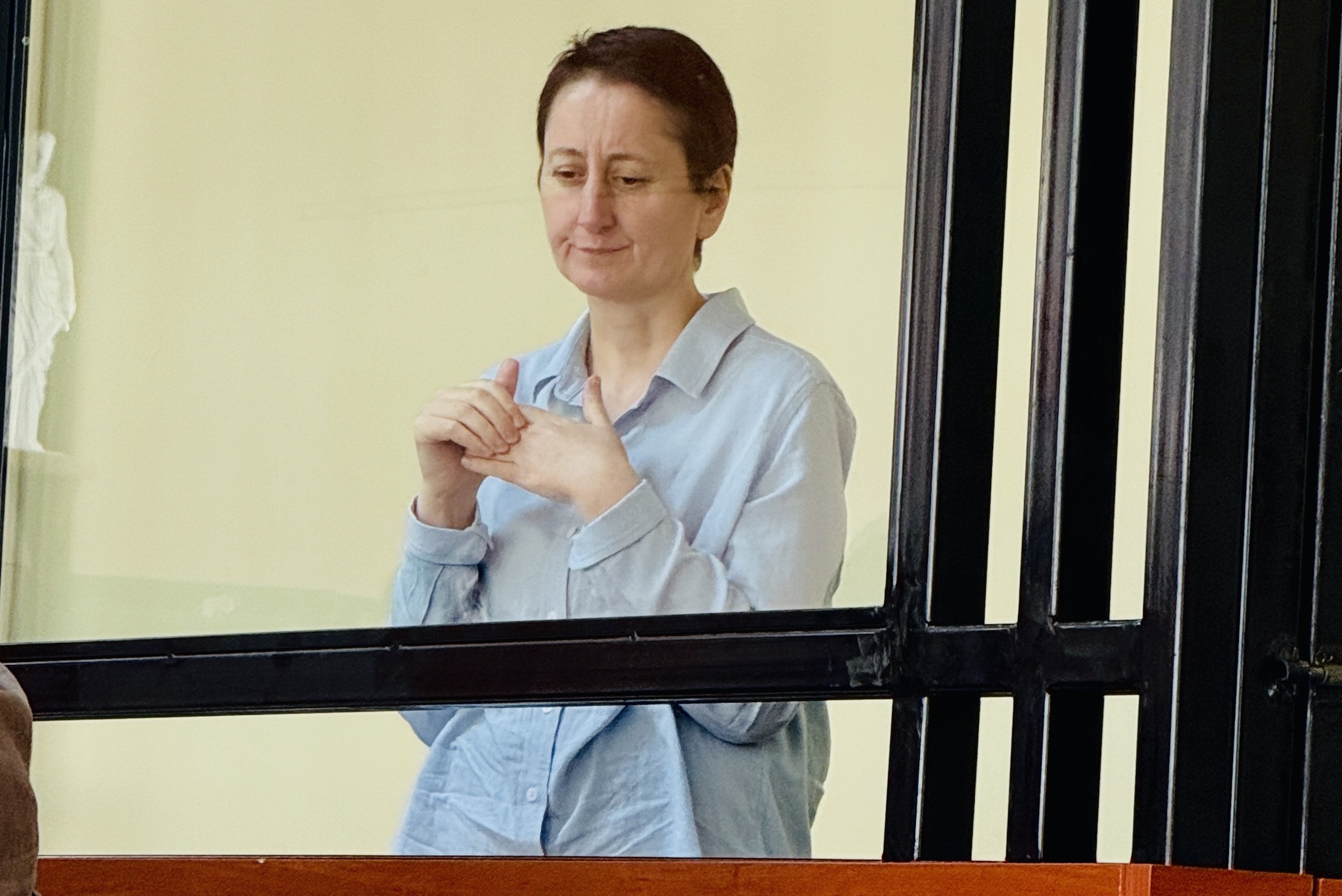
On November 11, 2025, the Kutaisi Court of Appeals began reviewing the appeal of Mzia Amaghlobeli, a prisoner and founder of the publications “Batumelebi” and “Netgazeti.” Due to high public interest, her colleagues and supporters traveled to Kutaisi from various cities in Georgia to attend Mzia Amaghlobeli’s court trial, but most of them could not enter the courtroom – the trial was held in a small, 24-person hall, and seats were quickly filled. Journalists who wished to cover the proceedings were also unable to attend. Furthermore, the court security locked the yard gate, restricting the entry of Mzia Amaghlobeli’s colleagues and supporters even into the court yard.
Mzia Amaghlobeli was arrested twice on the night of January 11-12, 2025. She was initially detained for putting up a protest sticker on a police building. She was released on recognizance a few hours after her detention, but was soon re-arrested under criminal law for the fact of slapping Batumi Police Chief, Irakli Dgebuadze. She was accused of assaulting a police officer, which carries a sentence of 4 to 7 years in prison. On August 6, 2025, Batumi City Court Judge Nino Sakhelashvili reclassified the charge, found Amaghlobeli guilty not of assaulting a police officer, but of resisting a police officer, and sentenced the journalist to 2 years in prison. The defense is appealing this verdict to the Court of Appeals and is demanding Mzia Amaghlobeli’s release; the prosecution is also appealing the verdict, with the prosecution again demanding a sentence of 4 to 7 years.
According to authoritative international and local human rights organizations, as well as Members of the European Parliament, Mzia Amaghlobeli is facing politically motivated retribution, and they are demanding the immediate release of the journalist.
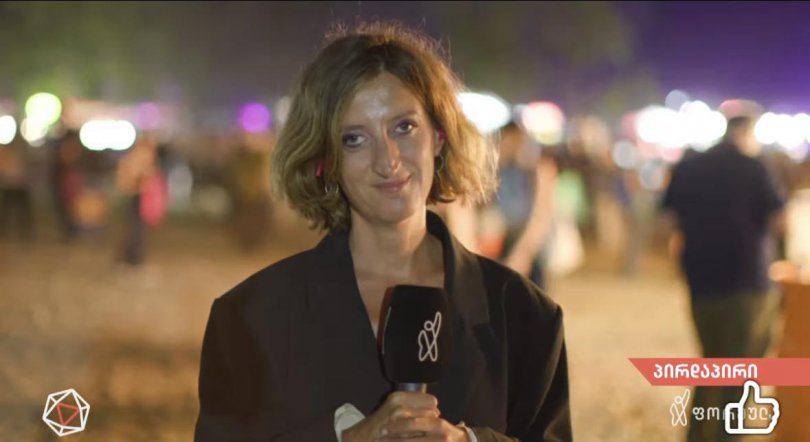
On November 5, 2025, during a protest rally in Tbilisi, the police arrested “Formula” TV company journalist Liza Tsitsishvili. At the time of the arrest, the journalist was performing her professional duties—interviewing rally participants. Video footage recorded by journalists present at the scene shows the police forcibly putting Liza Tsitsishvili into a car. The voices of other journalists can be heard in the video—they tell the police that Liza Tsitsishvili is their colleague; the police reply, “We’ll figure it out.” Liza Tsitsishvili was released ten minutes after her arrest. She says they apologized to her.
This is the second instance in a short period where a journalist is first detained and then released with an apology. On October 24, “Publika” online publication journalist Basti Mgaloblishvili was arrested near her home and released only a few hours later. She was told they had mistaken her for someone else. This is also the second instance where a journalist was detained while performing her professional duties at a rally. Two days before this incident, on November 3, “Media Checker” journalist Ninia Kakabadze was arrested on her way home, despite having a press badge, covering the rally, and having photo and video evidence confirming this.
Since October 19, 2025, after the “Georgian Dream” parliament adopted another set of repressive changes through an accelerated procedure, a total of 12 media representatives have been arrested for participating in, and in some cases covering, the ongoing protest on Rustaveli Avenue in Tbilisi. Administrative imprisonment was applied to most of them.
The Georgian Charter of Journalistic Ethics calls the frequent detentions of journalists “show detentions aimed at intimidating journalists” and urges the Ministry of Internal Affairs (MIA) to stop the persecution and harassment of journalists, and to properly inform its employees of journalists’ rights and instruct them to protect and respect those rights before sending them on assignment.
On October 17, the security guards of the TV “Pirveli” did not allow the camera crew to move around the area surrounding the residential building of Otar Partskhaladze and interfered with their activities.
Due to high public interest, the journalist tried to film the situation near the house of former Prosecutor General Otar Partskhaladze, but the security guards on site stepped forward and did not allow the journalist to approach the house, at which time they restricted the possibility of filming.
On the same day, the Prosecutor’s Office of Georgia held a briefing, where acting Prosecutor Giorgi Gvarakidze stated that searches were conducted in the homes of former Prime Minister Irakli Gharibashvili, former Head of the State Security Service Grigol Liluashvili, and former Prosecutor General Otar Partskhaladze. The Prosecutor’s Office has not specified under which articles the investigation is ongoing, whether the case is related to a new investigation, and whether the arrest of former high-ranking officials is planned.
The Public Relations Department of the Georgian Patriarchate announced that on October 14, due to a violation of internal regulations, the film crews of the TV companies “TV Pirveli” and “Formula” will not be accredited for the upcoming church holidays.
“Today, October 14, for violating the internal regulations in the courtyard of the Svetitskhoveli Cathedral, under the pretext of journalistic activity, despite repeated warnings, and for arbitrarily leaving the space allocated for the press, the film crews of TV Pirveli and TV Formula will not be accredited for the upcoming church holidays,” the statement said.
The Patriarchate has imposed additional regulations for the media since 2022. Journalists need to obtain special accreditation to cover church events, and they can only work in zones specially designated for the media.
While covering the protest on October 4, 2025, the online media outlet Mauwkebeli lost its drone. “The drone suddenly malfunctioned during filming, as happened with other media outlets,” a journalist from Mauwkebeli told MediaChecker.
Project 64 and Netgazeti also lost control of their drones that day.
At the October 4, 2025 rally, “Netgazeti” lost its drone. According to the information released by the publication, they lost their drone on Rustaveli Avenue. “Netgazeti’s” drones, as well as those of other media outlets, were allegedly specially shot down on Rustaveli Avenue, where we were trying to film the demonstration,” the publication said in the information released.
On the same day, “Project 64” and “Mauwkebeli” lost their drones too.