On July 14, the Tbilisi City Court upheld the civil lawsuit of Giorgi (Goga) Khaindrava, a director and supporter of “Georgian Dream,” against the television company “Formula.” The decision was made by Judge Liana Kazhashvili. The court ordered “Formula” to pay 10,000 GEL on the grounds of causing “moral damage” and instructed it to retract on its own air the “information defaming the name, honor, and dignity” of the plaintiff.
The dispute concerned reports aired on “Shabatis Formula” (Saturday’s Formula) on December 20, 2025, and January 17, 2026. In the January 17 report, “Formula,” citing a source, disseminated information that in 2016-2017, Goga Khaindrava, in possible agreement with the State Security Service, brought citizens of India and Pakistan into Georgia in exchange for a certain amount of money.
Khaindrava claimed that the report spread “fundamentally false” information intended to deliberately mislead the public. “Formula’s” lawyer, Eto Katamadze, assessed the decision as unsubstantiated and stated that the television company will fully utilize the legal mechanisms available within the country, after which it will likely continue the dispute in Strasbourg.
Because of this same report, the Prosecutor’s Office of Georgia launched an investigation involving the television company “Formula” under Part 1 of Article 373 of the Criminal Code, which implies false denunciation. According to the Prosecutor’s Office, the investigation concerns the fact of a possible crime committed by “Formula” against Goga Khaindrava. Within the framework of this investigation, “Formula” journalists Natuka Lomadze, Misho Martashvili, and Davit Kashiashvili were summoned to the Prosecutor’s Office for questioning.
On July 14, Tbilisi Court of Appeals Judge Shalva Kakauridze dismissed the appeal of the employees of “Real Space” (Realuri Sivrce)—a program closed by the Public Broadcaster—regarding their dismissal from the television station.
Ketevan Kapanadze, Ioseb Katsitadze, Tamar Mshvenieradze, Omar Tsotsoria, and Tukha Kvinikadze were demanding the annulment of their dismissal order. The Court of Appeals left the decision of Tbilisi City Court Judge Liana Kazhashvili unchanged.
On April 11, 2025, the Public Broadcaster dismissed the host of “Real Space,” Nino Zautashvili, and the host of “Moambe,” Vasil Ivanov-Chikovani. From May 1, the program “Real Space” was closed, and the contracts of those team members who refused new offers were terminated.
Tbilisi City Court Judge Tornike Kochkian has fined Vakho Sanaia, a journalist and TV host for the “Formula” television company, 6,000 GEL for opinions he expressed on a social network. The Ministry of Internal Affairs (MIA) accused the journalist of insulting state political officials. Social media posts published by Vakho Sanaia regarding the Speaker of the Parliament of Georgia, Shalva Papuashvili, and Member of Parliament, Lado Bozhadze, were ruled to be administrative offenses.
Sanaia had already been fined 4,000 GEL once before for an opinion expressed on a social network. Therefore, the judge made the decision in accordance with the article designated for a repeat offense.
Administrative disputes against citizens for opinions expressed in public spaces are initiated based on protocols from the newly established “Department for the Fight Against Hate Speech” within the MIA. This new department has been operational within the Ministry of Internal Affairs since June 1. The department’s task is to monitor and proactively detect statements in the public sphere that damage human dignity, are insulting, or contain hate speech, provided they show signs of an administrative offense.
According to Radio Free Europe/Radio Liberty, between its launch and July 2, this department identified 170 alleged offenses, 150 of which have already been submitted to the court. Out of these 150 cases, decisions have already been made on 33—resulting in 31 individuals being fined and two receiving verbal warnings. The majority of those fined are citizens and activists. Vakho Sanaia is the first journalist to be fined based on a protocol from this department.
Within the scope of the criminal case launched against the “Formula” television company, a third employee of the channel, camera operator Misho Martashvili, was also summoned to the Prosecutor’s Office of Georgia for questioning.
Following his questioning, the host of Shabatis Formula told Media Checker that by interviewing the camera operator, the Tbilisi Prosecutor’s Office had concluded its questioning of everyone who could potentially provide any kind of information to the investigation.
As a reminder, on June 16, 2026, the Investigative Division of the Tbilisi Prosecutor’s Office launched a criminal case against Formula TV under Article 373, Part 1 of the Criminal Code of Georgia, which pertains to false denunciation (false accusation). The investigation was initiated based on a statement filed by Goga Khaindrava, a film director and supporter of the “Georgian Dream” party. He accuses “Formula” of falsely implicating him in a potential crime. The case concerns reports broadcast on Shabatis Formula on December 20, 2025, and January 17, 2026. According to the source in these reports, Goga Khaindrava was bringing foreign citizens into Georgia in exchange for money. Reportedly, the Prosecutor’s Office is disputing the false denunciation against Formula’s source.
Within the scope of the same case, the author and host of the program, Davit Kashiashvili, and the journalist who authored the report, Natuka Lomidze, have already been questioned at the Prosecutor’s Office.
Due to the same reports, Goga Khaindrava also has an ongoing civil dispute against “Formula.” He is suing the television company for defamation and is demanding 10,000 GEL in compensation for moral damages.
Within the scope of the criminal case launched against the “Formula” television company, another journalist from the channel and author of the report, Natuka Lomadze, was summoned to the Prosecutor’s Office of Georgia. The journalist’s questioning lasted for three hours.
“The investigator was interested in how I, as a journalist, worked on this report. Who were the people with whom I attempted to verify the information our source was telling us? Of course, there were many such people,” the journalist told Media Checker.
On June 16, 2026, the Investigative Division of the Tbilisi Prosecutor’s Office launched a criminal case against Formula TV under Article 373, Part 1 of the Criminal Code of Georgia, which pertains to false denunciation (false accusation). The investigation was initiated based on a statement filed by Goga Khaindrava, a film director and supporter of the “Georgian Dream” party. He accuses “Formula” of falsely implicating him in a potential crime. The case concerns reports broadcast on the show Shabatis Formula (Saturday’s Formula) on December 20, 2025, and January 17, 2026. According to the source in these reports, Goga Khaindrava was bringing foreign citizens into Georgia in exchange for money. Reportedly, the Prosecutor’s Office is disputing the false denunciation against Formula’s source.
Within the scope of the same case, the author and host of the program, Davit Kashiashvili, was also questioned at the Prosecutor’s Office.
Due to the same reports, Goga Khaindrava also has an ongoing civil dispute against “Formula.” He is suing the television company for defamation and is demanding 10,000 GEL in compensation for moral damages.
The Communications Commission accuses “TV Pirveli” of violating the Law on Broadcasting due to the use of words and phrases such as “prisoners of conscience,” “false witness police officers,” “oligarch,” and “political prisoners.”
The case is being reviewed against the backdrop of tightened content regulations for broadcasters following amendments to the Law on Broadcasting passed by “Georgian Dream.” The changes include, among other things, restricting the expression of positions in news and public-political programs, new rules for the right of reply, and defining standards for covert recording.
The Communications Commission had previously announced that it would put into practice the norms established by the Law on Broadcasting and the “Broadcasters’ Code of Conduct” and would begin monitoring broadcasters. This announcement closely followed the United Kingdom’s sanctioning of the government-propaganda channels “Imedi” and POSTV.
According to the Commission, the monitoring targeted news programs broadcast between May 11 and May 13. The Commission deemed that the broadcaster covered current issues of public policy based on personal attitudes or opinions, and expressed a supportive or opposing position toward political or other interest groups. The Commission reviewed the case during its session on June 18, and the decision will be made public in one week.
On June 16, 2026, the Investigative Division of the Tbilisi Prosecutor’s Office launched an investigation into an alleged case of false accusation. The case is being investigated under Article 373, Part 1 of the Criminal Code of Georgia. According to the Prosecutor’s Office, the investigation was triggered by a statement from the lawyers representing film director Giorgi (Goga) Khaindrava, a supporter of “Georgian Dream,” regarding the alleged commission of a crime against Khaindrava by “Formula” TV. Reports indicate that the Prosecutor’s Office is alleging a false accusation made by “Formula’s” source.
The case is linked to reports broadcast on “Formula.” A segment aired on January 17, 2026, discussed the entry of Indian and Pakistani citizens into Georgia in 2016–2017, allegedly in coordination with the State Security Service. Khaindrava calls the information broadcast in the reports false and defamatory. Prior to this, on March 19, 2026, Khaindrava also filed a lawsuit against “Formula,” demanding 10,000 GEL in compensation for moral damages.
According to the Prosecutor’s Office, Giorgi Khaindrava has already been questioned as a witness by the investigative body. The agency stated that investigative and procedural actions will be carried out regarding the case, and the public will be provided with additional information about the results.
The Charter of Journalistic Ethics evaluates the launch of the investigation by the Prosecutor’s Office as an attempt to intimidate the media and punish investigative journalists. The Charter stated that the confidentiality of a source is a protected right of a journalist and a fundamental professional standard, and forcing a journalist to reveal a source is unacceptable.
On June 25, the National Communications Commission fined “TV Pirveli.” The regulatory body accuses the television station of violating Article 54, Paragraph 5 of the Law on Broadcasting, which carries a fine of 2,500 GEL. The Commission is fining the channel for using terms such as “oligarch,” “Ivanishvili’s regime,” “non-existent crime,” “Georgian Dream’s investigation,” “false witness,” and others.
The first instance of a television station being fined under this rule occurred on May 21, when a 2,500 GEL sanction was imposed on “Formula” TV.
The Media Advocacy Coalition responded to the fines levied against the TV channels, stating: “The Communications Commission is fully cementing its role as an organ of censorship. The Commission continues to enforce repressive legislation.”
According to the Law on Broadcasting, following an initial 2,500 GEL fine, if the violator continues a continuous violation and/or commits a new, one-time violation within one year of being fined, the Commission is authorized to impose a fine of up to 1% of the broadcaster’s annual income (but no less than 5,000 GEL), or initiate public administrative proceedings to suspend its license or authorization.
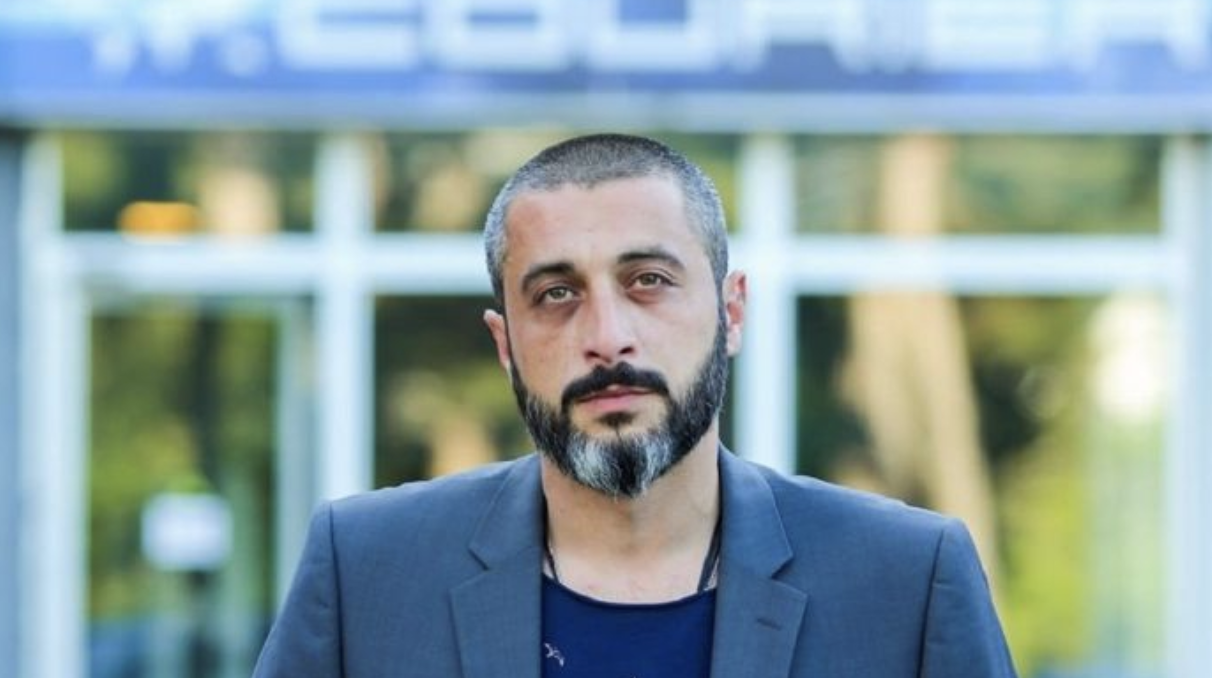
The Prosecutor’s Office has summoned “Formula” TV journalist and presenter Davit Kashiashvili for questioning. His summons is connected to a criminal case initiated against “Formula.”
On June 16, 2026, the Investigative Division of the Tbilisi Prosecutor’s Office launched an investigation into an alleged case of false accusation. The case is being investigated under Article 373, Part 1 of the Criminal Code of Georgia. The investigation was triggered by a statement from the lawyers representing film director Giorgi (Goga) Khaindrava, a supporter of “Georgian Dream,” regarding the alleged commission of a crime against Khaindrava by “Formula” TV.
According to reports, the Prosecutor’s Office is alleging a false accusation made by “Formula’s” source.
Journalists Giorgi Akhalkatsi (Kartlis Ambebi) and Lado Bichashvili (TV Company Formula), who filmed an incident of police violence against a citizen in Gori, Shida Kartli, were summoned to the Prosecutor’s Office for questioning. The journalists spent several hours at the investigative agency.
On May 27, in the Kombinati settlement of Gori, up to ten police officers brutally assaulted two local citizens during an arrest. The journalists filmed the footage of the beating from the window of a residential building, having witnessed the incident purely by chance. The circulation of the video material on public networks triggered a significant public outcry, forcing the law enforcement agency to launch an investigation into the incident.
The Prosecutor’s Office opened an investigation under the article of alleged abuse of official power involving violence by police officers. On May 28, it was announced that six law enforcement officers had been arrested in connection with the incident.