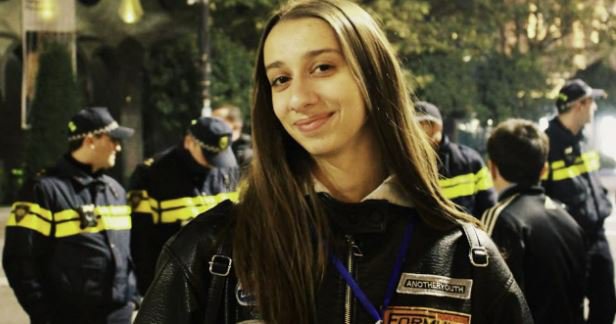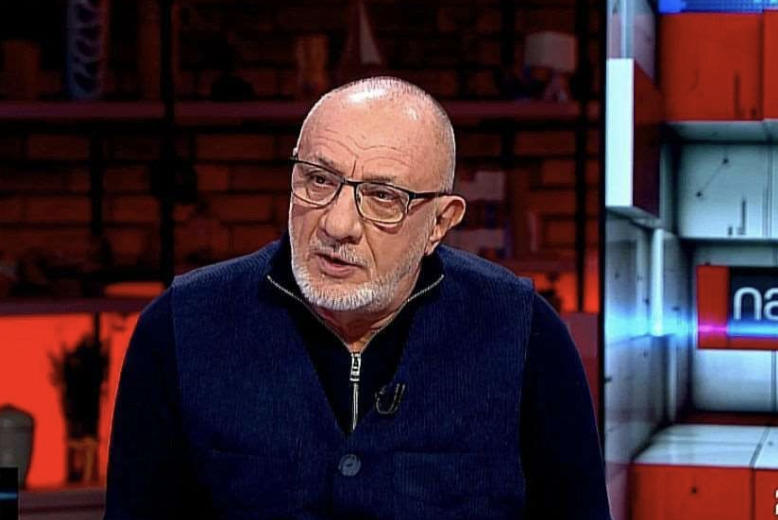
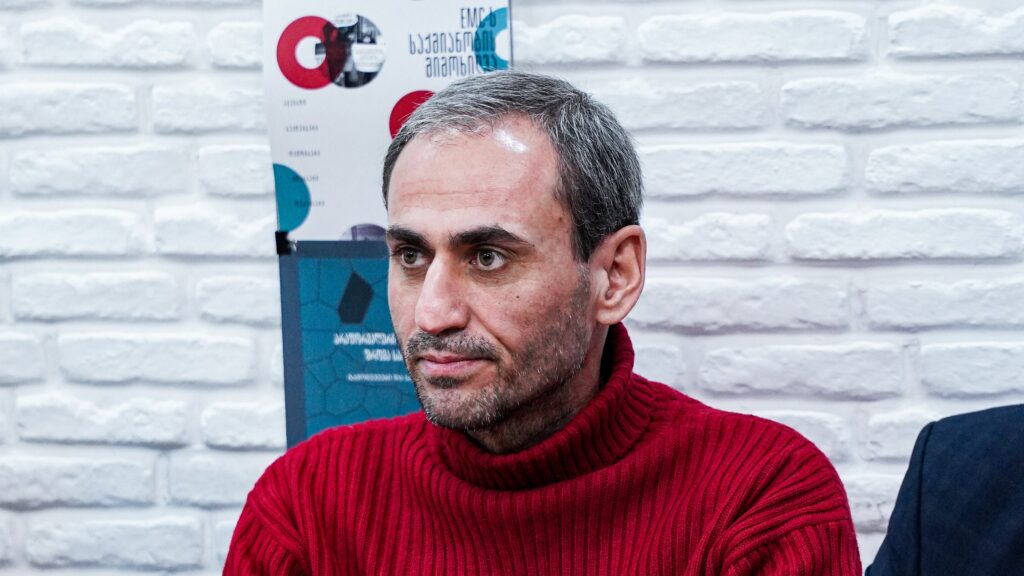
Another “Formula” journalist, Tsira Zhvania, was detaned for participating in the protest

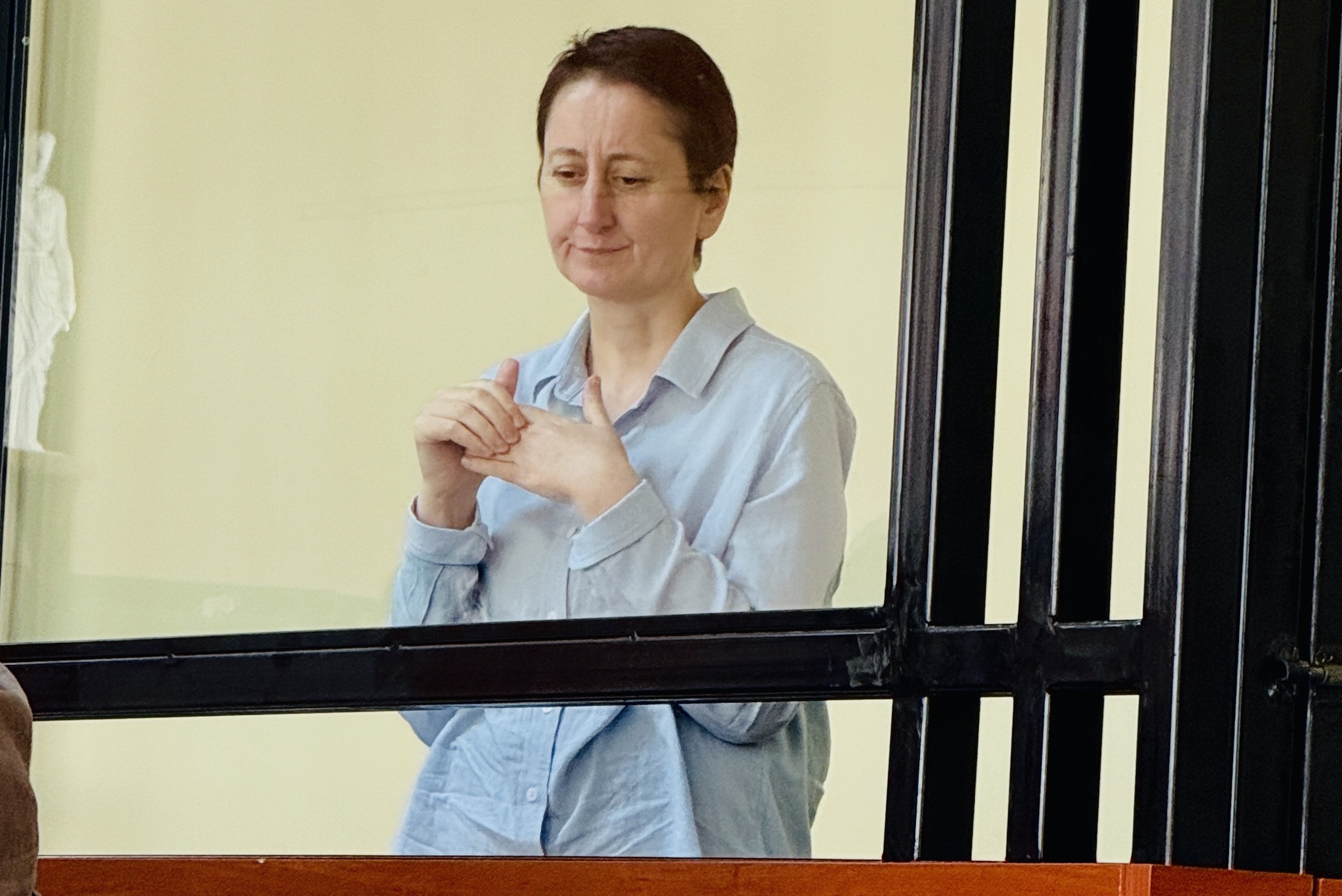
On Tuesday, October 21, Tsira Zhvania, a social media journalist for TV Company “Formula”, was detaned for blocking a road during a protest. According to the TV company, she was met by two police officers at her home.

The Tbilisi City Court sentenced the journalist to 10 days of administrative detention.

This is the third case when, based on the tightened legislation, journalists have been detained on the grounds of blocking a road during a protest. On October 19, Vakho Sanaia, a journalist and TV presenter for TV Company “Formula”, was arrested and sentenced to 6 days in prison. On October 20, Keta Tsitskishvili, a journalist for the same TV company, was arrested and sentenced to 5 days in prison. “The arrest of journalists by the Georgian Dream is a direct attack on the freedom of the media and expression. In such conditions, the activities of independent media are facing serious threats, which significantly restricts the right of a democratic society to be informed,” the Media Advocacy Coalition said in a statement.

New legislative changes further restrict the freedom of assembly and expression

On October 16, “Georgian Dream” passed another set of legislative changes in an accelerated procedure, within two days, which further tighten sanctions against citizens participating in protest demonstrations and significantly restrict the freedom of assembly and expression. Amendments have been introduced to both the Criminal Code of Georgia and the Code of Administrative Offenses.

According to the amendments, administrative detention of up to 15 days is now imposed without a fine for wearing masks at protests, possessing tear gas, or blocking roads. Furthermore, judges will no longer have the authority to impose fines as an administrative penalty in cases of administrative offenses, and demonstrators may face administrative detention of up to 60 days if:

  • Firearms, flammable substances, cold weapons, or pyrotechnics are found at the protest;
  • The police decide to disperse the assembly and the demonstrator does not comply.

Additionally, the changes also affected the Criminal Code, according to which the repeated commission of such actions will result in criminal liability and imprisonment of up to one year, and in each subsequent instance, up to two years.

Moreover, the amendments introduced criminal liability for repeated offenses against law enforcement officers. Specifically, if a citizen verbally insults a police officer multiple times or refuses to comply with their lawful order, this action will be punishable by imprisonment of up to one year. In cases of repetition, the punishment is stricter and may result in imprisonment of up to two years.

Non-governmental organizations have sharply criticized these changes, stating that they pose a threat to the fundamental principles of democracy. According to them, the new regulations not only restrict the right to peaceful protest but also create an atmosphere of fear and self-censorship in society, where citizens may be punished merely for expressing their opinions.

These changes are a continuation of the recent trend of repressive legislation adopted by “Georgian Dream.”

Journalist Keta Tsitskishvili detaned for participating in protest

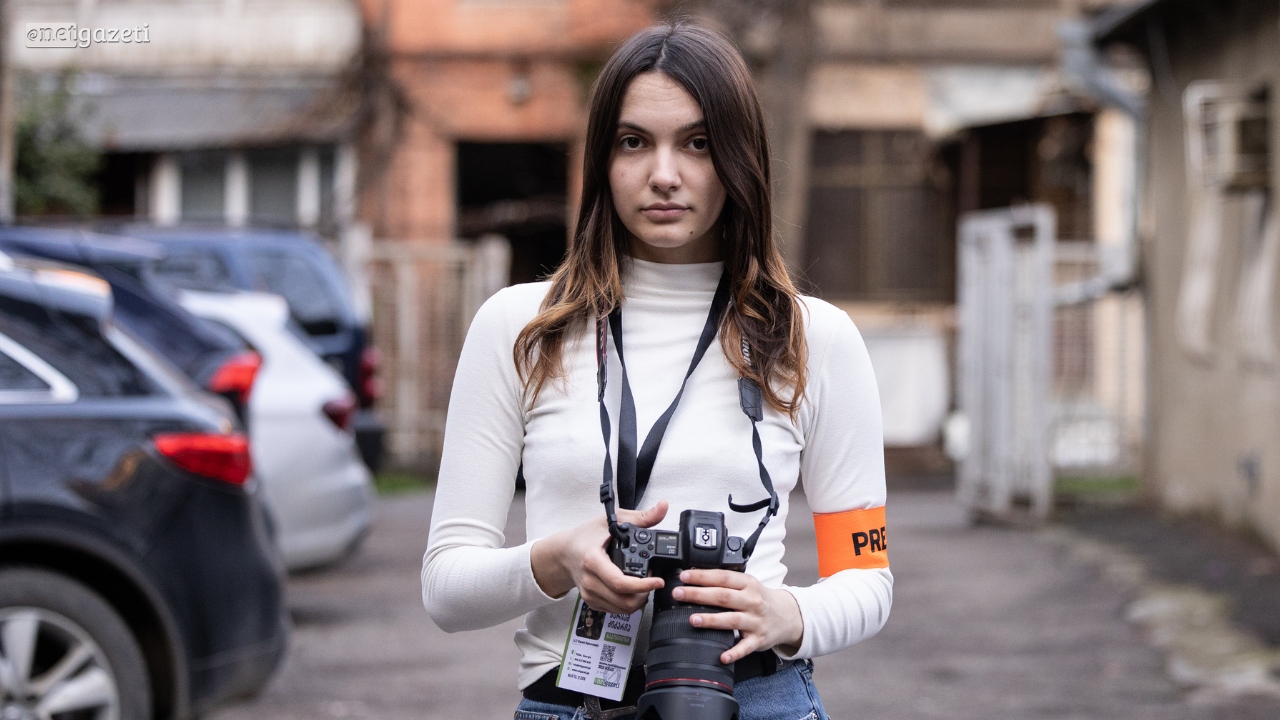
On Monday, October 20, journalist and TV presenter Keta Tsitskishvili from the TV company Formula was detaned. According to media reports, she is accused of blocking a road. A day earlier, on October 19, journalist Vakho Sanaia was detaned on the same charge and sentenced to five days in prison.

The Media Advocacy Coalition condemned Tsitskishvili’s arrest, calling it an act of pressure and an attack on independent media.

“The arrest of journalists by Georgian Dream is a direct assault on the media and freedom of expression. Under such conditions, the work of independent media faces serious threats, severely limiting the public’s right to information in a democratic society,” the coalition said in a statement.

Journalist Vakho Sanaia detaned for participating in protest

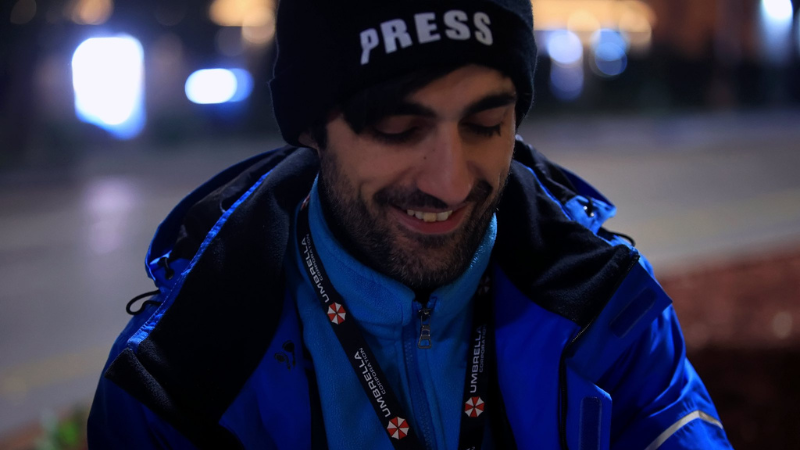
On October 19, Vakho Sanaia, a journalist and TV presenter for the TV company Formula, was detained. He is accused of blocking a road, and the Tbilisi City Court sentenced him to six days of administrative detention.

That same day, police also arrested several other participants of the rally, accusing them of blocking the road and covering their faces during the protest. The ruling Georgian Dream party recently tightened legislation, replacing fines with imprisonment for concealing one’s face at rallies.

The Media Advocacy Coalition condemned the journalist’s arrest, calling it “a gross violation of media freedom and freedom of speech.”

The Georgian Patriarchate has decided to ban TV Pirveli and Formula from broadcasting during church holidays

The Public Relations Department of the Georgian Patriarchate announced that on October 14, due to a violation of internal regulations, the film crews of the TV companies “TV Pirveli” and “Formula” will not be accredited for the upcoming church holidays.

“Today, October 14, for violating the internal regulations in the courtyard of the Svetitskhoveli Cathedral, under the pretext of journalistic activity, despite repeated warnings, and for arbitrarily leaving the space allocated for the press, the film crews of TV Pirveli and TV Formula will not be accredited for the upcoming church holidays,” the statement said.

The Patriarchate has imposed additional regulations for the media since 2022. Journalists need to obtain special accreditation to cover church events, and they can only work in zones specially designated for the media.

Communications Commission begins enforcing new media regulations

On October 9, 2025, the Communications Commission issued a written warning to the television broadcasters “Formula” and “Formula Multimedia”, as well as the radio broadcasters “Journalists’ Union Khalkis Khma”, “Radio-TV Nori” and “Systema Gama” and ordered them to cease receiving funding from foreign powers for violating the Law of Georgia “On Broadcasting”.

According to the Commission’s statement: “Based on the fact that the broadcasters have received the above-mentioned funding after the law was amended and funding from foreign powers was prohibited, and the funding cannot be used in exceptional cases specified by law (commercial advertising, teleshopping, sponsorship or product placement in the program)”, the Commission considered the broadcasters to be violators of the law.

This is the first precedent for the enforcement of the law, which concerns the new regulation included in the Law on Broadcasting, which prohibits direct or indirect funding of a broadcaster from a foreign power from April 1, 2025. Since the date of adoption, the amendments have caused public discussion and criticism, in particular, assessments that the new norm may become a tool for restricting the financial and editorial freedom of independent media. During the session, representatives of radio broadcasters noted that without the aforementioned funding, they may have to stop broadcasting.

Anti-Corruption Bureau requests information from media to enforce repressive laws

Since May 2025, after the repressive laws came into force, the Anti-Corruption Bureau has requested large amounts of information from more than 60 non-governmental organizations, including several media outlets. The basis for this request is the Law on Grants. The Georgian Dream adopted an amendment to the Law on Grants on April 16, 2025. According to the amendments, the grantor (donor) must apply to the Government of Georgia for consent to issue a grant; the grantee, if receiving a grant without consent, will be fined double the amount of the grant.

On September 29, Razhden Kuprashvili’s bureau applied to the independent investigative journalism association iFact and GMC and requested information about grants, donors, financial transactions and contracts.

Previously, on September 26, Kuprashvili’s bureau sent a letter to the publication “Mountain News”.

“You are in a hurry to put us down. The answer is urgent! We will continue our work! “To create investigative films about government violations of laws, corruption, environmental destruction, and violations of fundamental human rights,” wrote Gela Mtivlishvili, founder and editor-in-chief of “Mountain News.”

On September 28, “Mountain Community” received a letter from the Anti-Corruption Bureau with the same demands. Nugzar Suaridze, the organization’s director, wrote about this on Facebook.

Project 64 also received a letter from the Anti-Corruption Bureau. “We have never faced a crisis of this magnitude, and this is not just a financial crisis,” said Giorgi Gogua, editor-in-chief of Project 64.

The Anti-Corruption Bureau also sent a letter to the Georgian Charter of Journalistic Ethics.

“The proceeding initiated by the Anti-Corruption Bureau is the first practical step under the new legislation to destroy a highly reputable organization, created through the great efforts of many good journalists,” — reads the statement of the Charter of Journalistic Ethics.

Three foreign reporters faced problems entering Georgia, and two of them were turned away

In the last week of September 2025, three foreign photographers were denied entry into Georgia. Two of them were scheduled to cover the planned local self-government elections in the country. All three photojournalists had been to Georgia before, and they had covered the pro-European protests.

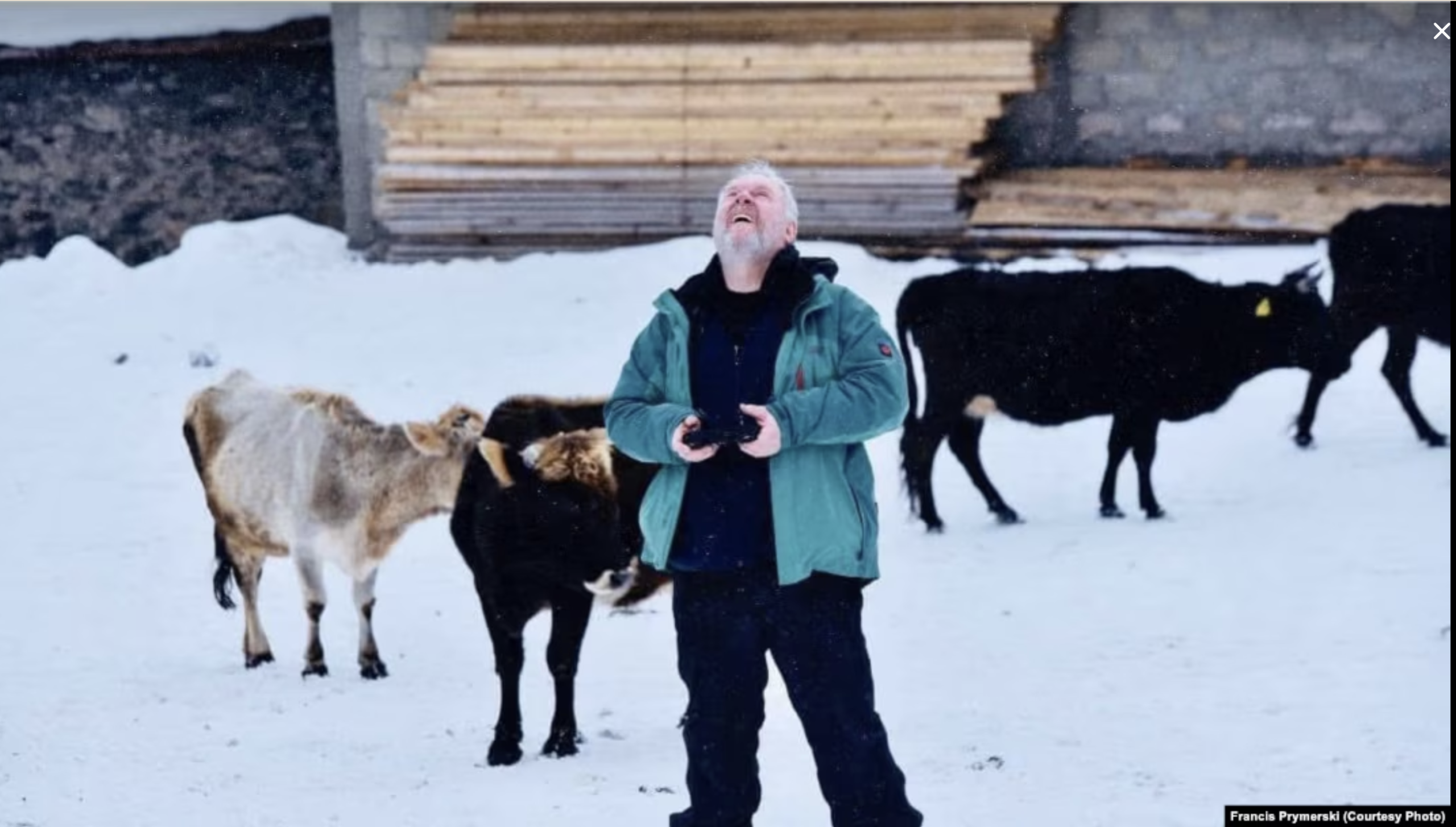
Specifically, on September 28, 2025, Swiss photojournalist Gregor Ziemer was not allowed into Georgia. At the border, he was informed that two fines totaling 10,000 GEL (approx. $3,700) were registered in his name “on the grounds of artificially blocking the road” and that he would not be allowed into the country until he paid this amount. The photojournalist refused to pay the fine and was turned back from the country. Speaking to OC Media, the photojournalist recounts that after the refusal, he was taken to “some room” and detained there for eight hours: “I had to book a return flight. After that, they took my phone away. I tried to get the phone back, but they did not return it. I tried to ask to make a call, but they told me it was impossible and took my phone away.”

On September 29, Italian journalist Giacomo Ferrara was denied entry into Georgia. He was entering Georgia from Armenia. At the border, the police told him that he was subject to a 5,000 GEL (approx. $1,900) fine and would not be allowed into the country without payment. Ferrara said this information was unexpected for him. According to his account, he was fined for being at a protest rally in Tbilisi on March 31, but the argument that he was not participating in the demonstration and was only covering it did not work. The journalist refused to pay the fine and requested his passport, which was returned to him after 2 hours. The journalist says he informed the Italian Embassy in Georgia and the International Federation of Journalists about the incident.

According to Mari Nikuradze, founder of OC Media, on October 1, a German journalist was also detained at the border in Georgia for 6 hours. The reason given was also a fine registered in their name—5,000 GEL ($1,900), for “artificially blocking the road.” The German journalist was only able to enter the country after paying the amount.

This is not the first time foreign reporters have faced problems entering Georgia. Based on publicly available sources, the “Center for Media, Information and Social Studies” has registered more than 10 such cases in the last two years.

Heads of non-governmental organizations summoned for questioning

Leaders of prominent Georgian non-governmental organizations, including members of the Media Advocacy Coalition, have been summoned for questioning by the prosecutor’s office. The questioning is related to the so-called “mask case,” which the prosecutor’s office began investigating in February 2025 on charges of “sabotage, attempted sabotage under aggravating circumstances, and other similar crimes.” According to the organizations, the investigation is unfounded and aims to persecute, intimidate, and dismantle the civil sector.

Based on publicly available information, those summoned for questioning include: Tamta Mikeladze, head of the Social Justice Center; former and current directors of the International Society for Fair Elections and Democracy (ISFED), Nino Dolidze and Levan Natroshvili; Giorgi Mshvenieradze, head of Guardians of Democracy; Baia Pataraia, director of the organization Safar; and Aleko Tskitishvili, head of the Human Rights Center. They have stated on social media that they will agree to questioning only before a magistrate judge. All of them have already been questioned in court.

It should be noted that, in connection with the same case, at the prosecutor’s request, on August 27, 2025, seven organizations’ accounts were frozen: members of the Media Advocacy Coalition – Civil Society Foundation, ISFED, IDFI, GDI – as well as organizations working on human rights and anti-corruption – Guardians of Democracy, Safar, and the Social Justice Center.

“TV Pirveli” cameraman Giorgi Mosiashvili fined 10,000 GEL for “artificially blocking the road”

Giorgi Mosiashvili, a photojournalist for the tv ”Pirveli” was fined twice by the Ministry of Internal Affairs, totaling 10,000 lari. The police accuse him of blocking Rustaveli Avenue on February 21 and March 11. In a post on social media, Mosiashvili noted that he was performing his professional duties at the time the fines were issued.

Georgian Dream increased the amount of fines in the context of the pro-European protests that began after November 28. According to amendments made to Georgia’s Code of Administrative Offence, the fine for illegally blocking a roadway has been increased tenfold from 500 GEL to 5,000 GEL.