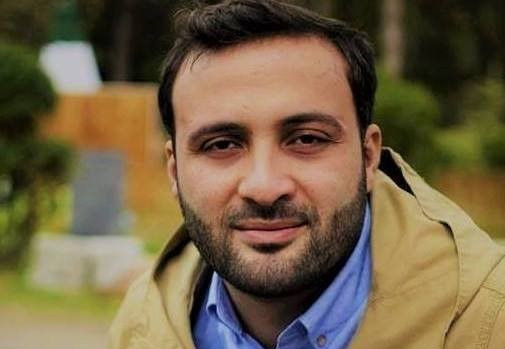
The head of the Tbilisi City Court’s bailiffs threatened the editor of ‘Publika’ with accountability before the law

On July 22, 2025, the head of the Tbilisi City Court’s bailiff service, Davit Matiashvili, threatened Zurab Vardiashvili, editor of the publication Publika, with accountability before the law over video recording. Vardiashvili was attempting to document how the bailiff service forcibly removed a member of an opposition party from the court building.

The incident occurred during the trial of Giorgi Akhobadze, a prisoner of conscience. According to Vardiashvili, Matiashvili forcefully removed Nodar Chachanidze, a member of the opposition party “Akhalis”, who had come to attend the trial. As soon as they left the building, the journalist began filming: “I started recording at the stairs. When he saw this, he pushed me and dragged me inside. He took my ID, saying it was confiscated, and threatened me with legal accountability.” Vardiashvili was held in a room inside the court building for several minutes before his ID was returned and he was released.

According to amendments to the Law on Common Courts, effective June 30, photo and video recording, as well as audio recording, are prohibited in courtrooms, corridors, and courtyards. Following the implementation of the new rule, media outlets submitted applications to the Justice Council for permission to record, but none have received a response so far.

Before the adoption of this repressive legislation, representatives of independent media were unlawfully obstructed while performing their professional duties in court buildings. After the changes, the bailiff service has been using force disproportionately and without justification, including against media representatives, to enforce the repressive legislation.

Photographers Denied Access to Court by Judge Eka Barbakadze

On June 21, 2025, a court hearing was held at Tbilisi City Court in the case of activist Nino Datashvili, related to a criminal investigation stemming from an incident that took place at the court building on May 9 of this year.

Judge Eka Barbakadze prohibited photo and audio recording during the session without providing any explanation or justification. Only video cameras were allowed to be present in the courtroom.

“At the start of the hearing, Barbakadze said she had received media requests for permission to record video, take photos, and make audio recordings, but she only granted permission for video recording and gave no explanation for denying photo and audio access,” reported the news outlet Publika.

This is not the first instance of media restrictions in courtrooms. Just a few days earlier, Tbilisi City Court Judge Giorgi Arevadze also did not allow the media to operate freely.

Tbilisi City Court Once Again Closes Political Prisoners’ Trial to the Media

On June 11, 2025, Tbilisi City Court Judge Mikheil Jinjolia unexpectedly announced the closure of the court session during the trial of Giorgi Akhobadze, who was arrested at a protest. Journalists were once again forced to leave the courtroom without any explanation, including those who had been granted permission to film the proceedings.

Natia Amiranashvili, a journalist from the online outlet Publika, wrote on social media that no order had been disrupted during the hearing: “I have a strong suspicion that the court’s main concern is to silence and neutralize the media — and these steps are being taken to prepare the ground for that.”

In recent months, Georgia’s court system has increasingly restricted the media’s ability to cover legal proceedings. Between May 22 and June 11, 2025, there were four recorded incidents at Tbilisi City Court (on May 22, 23, 29, and 30) in which reporters equipped with photo and video cameras were denied access. On June 10, a court session was completely closed to the media — including to journalists who had previously received permission to record. All these incidents occurred during hearings of high public interest, widely considered to be political cases.

The Media Advocacy Coalition has warned that these actions set a dangerous precedent and reflect a deliberate strategy by the ruling Georgian Dream party to restrict media access.

“Barring media from court proceedings not only violates the rights of journalists but also infringes on the public’s right to be informed. Through such actions, Georgian Dream is attempting to withhold information on critical court decisions from the public and limit citizens’ ability to demand accountability,” the coalition’s statement reads.

Journalists with Cameras Denied Entry to The Court

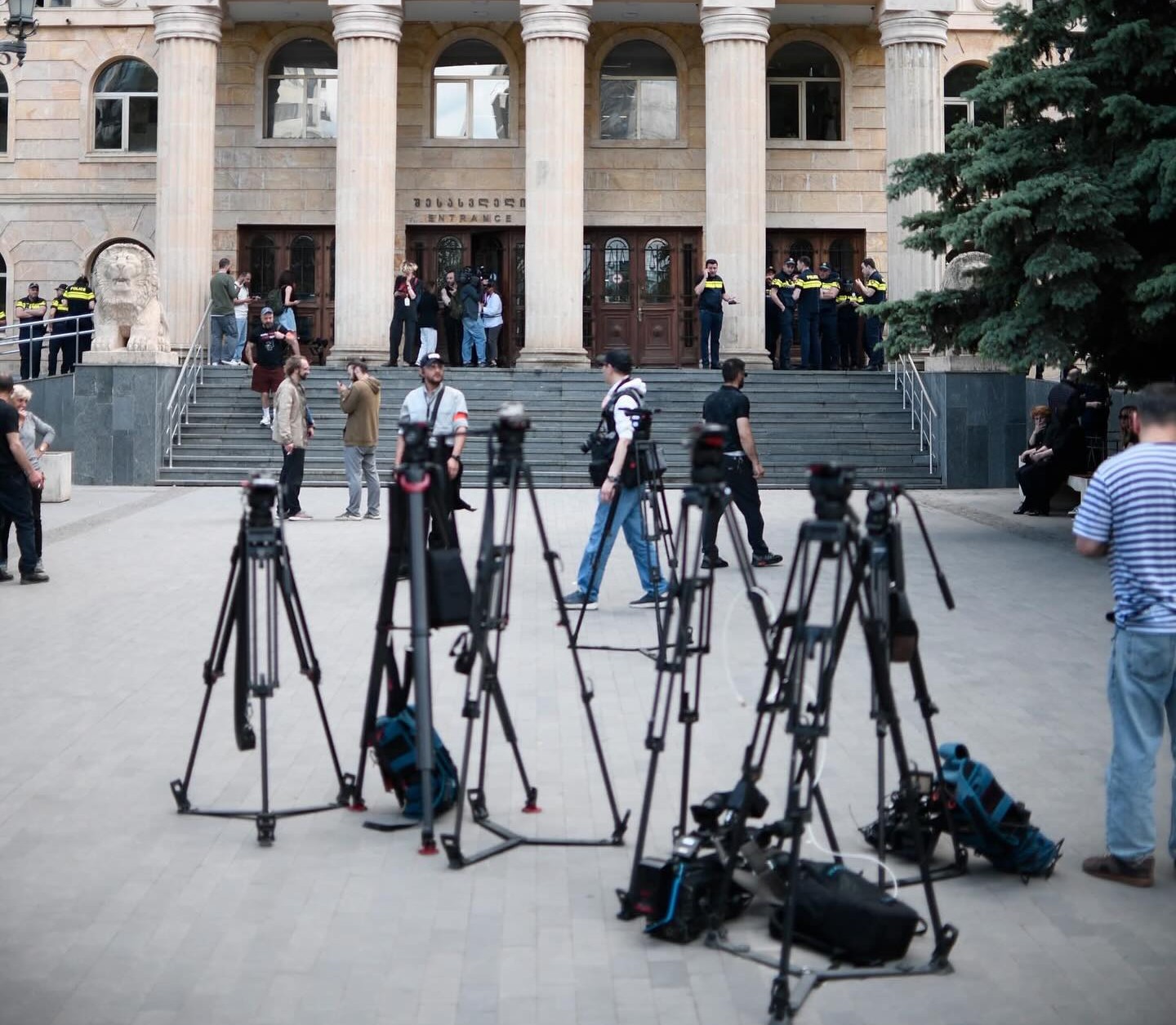
On May 22, 2025, a court hearing for politician Zurab “Girchi” Japaridze was held at Tbilisi City Court. The case has drawn significant public attention, and with it, strong interest from the media. Nevertheless, correspondents who arrived to cover the hearing and were carrying photo or video cameras were not allowed inside the court building. According to the journalists, the rules for entering the building had been changed without any prior notice.

Security personnel at the Tbilisi City Court did not provide an explanation for why the journalists were denied entry. Instead, they referred media representatives to the court’s press office, which did not respond to phone calls.

The issue of media representatives being denied access to court hearings and other public institutions appears to be becoming a recurring trend.

Media with Photo or Video Equipment Still Denied Access to The Court

According to the online outlet Publika, media representatives carrying photo and/or video cameras are still being denied entry to the Tbilisi City Court building.

Under the Law of Georgia on General Court and previous practice, journalists without a judge’s permission to record court sessions were still allowed to film freely in the hallways of the court building.

However, on May 22, 2025, when reporters arrived to cover the trial of politician Zurab “Girchi” Japaridze, they found that this practice had changed and were denied entry. The Tbilisi City Court administration has not explained the reason for this change—either beforehand or afterward.

At a peaceful protest near Tbilisi Mall 11 journalists were unlawfully prevented from doing their jobs

On February 2, at a peaceful protest near Tbilisi Mall 11 journalists were unlawfully prevented from doing their jobs.

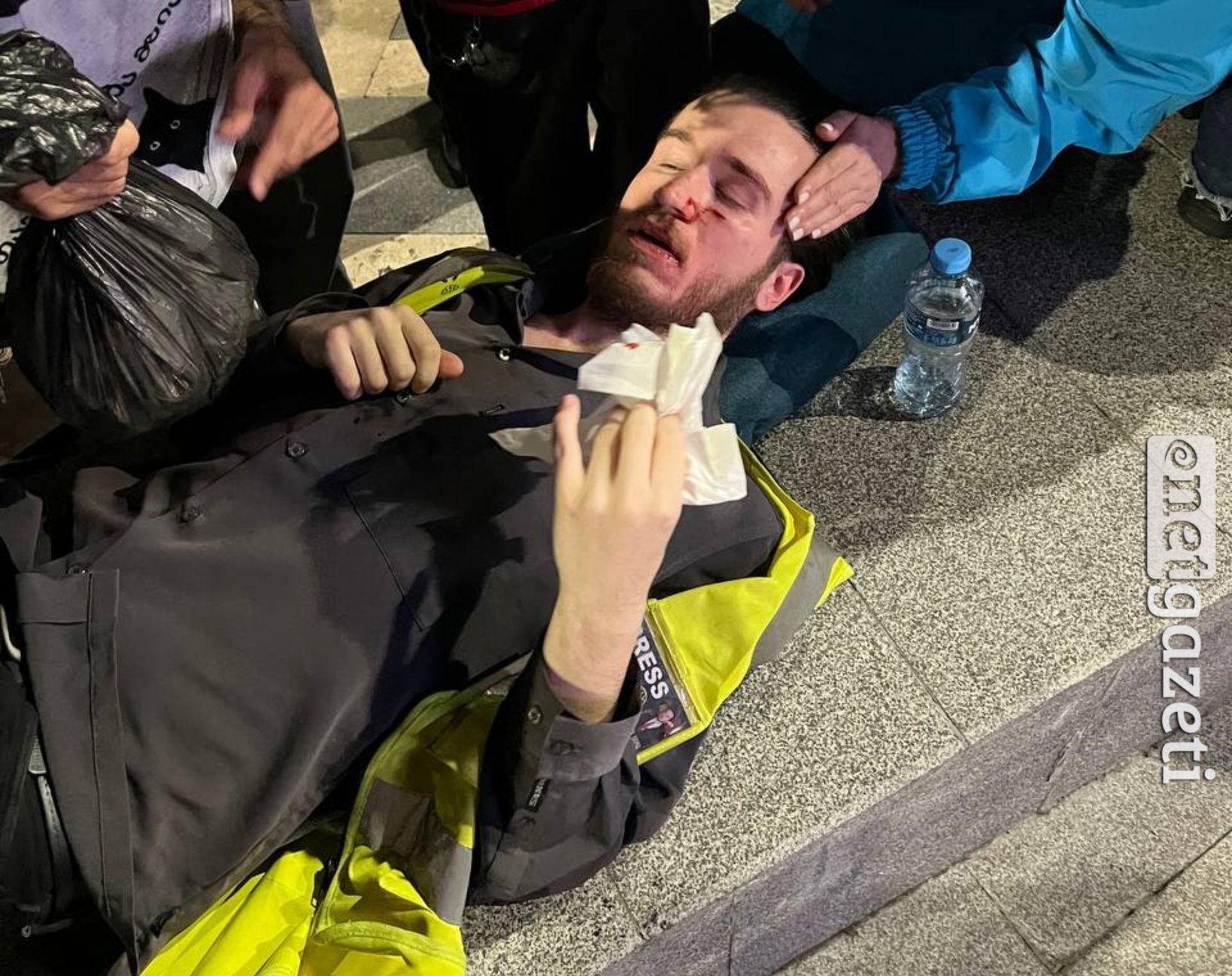
  • TV Pirveli cameraman Niko Kokaia was injured while filming the arrest of a protester by the police. As a result, he had to be hospitalized. Medical examinations confirmed that he suffered a concussion due to the injuries sustained at the protest.
  • A video published by media outlet “April” shows a police officer pushing their journalist, Nata Uridia, and obstructing her work. In the footage, Nata Uridia can be heard identifying herself as a journalist while addressing a masked police officer.
  • During the arrest of protesters, police also interfered with another “April” journalist, Vakho Kareli, demanding that both him and Nata Uridia leave the area. In the same incident, an officer was seen pushing Uridia.
  • Radio Free Liberty’s journalist Gela Bochkashvili was threatened by a police officer. A video published by the media captures a masked officer telling him, “Move that camera away, or I’ll break your head.”
  • TV Mtavari Arkhi’s journalist Dea Mamiseishvili released a video showing a police officer verbally and physically assaulting her.
  • Radio Marneuli journalist Vladimir Chkhitunidze was filming the arrest of an opposition politician when he was stopped by Special Tasks Department (STD) officers, who forcibly moved him onto the sidewalk.
  • TV Pirveli’s camera crew was verbally and physically assaulted by police officers. According to the channel, their broadcasting equipment was also damaged.
  • TV Pirveli also reported that their journalist, Khatia Samkharadze, was attacked by Mirza Kezevadze, the deputy head of the Special Tasks Department. According to media reports, Kezevadze seized and damaged the journalist’s phone.
  • Members of the Special Tasks Department also attempted to take a microphone from Formula TV journalist Giorgi Kvijinadze, obstructing his work, when he was on air.
  • A masked police officer interfered with Guria News’ journalists while they were covering the protest. A video shows the officer pushing away the camera.
  • The police obstructed MediaChecker journalist Ninia Kakabadze from doing her job. A police officer also pushed her.

Media Advocacy Coalition and the Charter of Journalistic Ethics have responded to the injuries sustained by media representatives while covering the peaceful protest near “Tbilisi Mall.” The organizations are calling on international bodies to “properly assess the dangerous actions and systemic violence by law enforcement officers who have acted beyond the framework of the Constitution and the law.