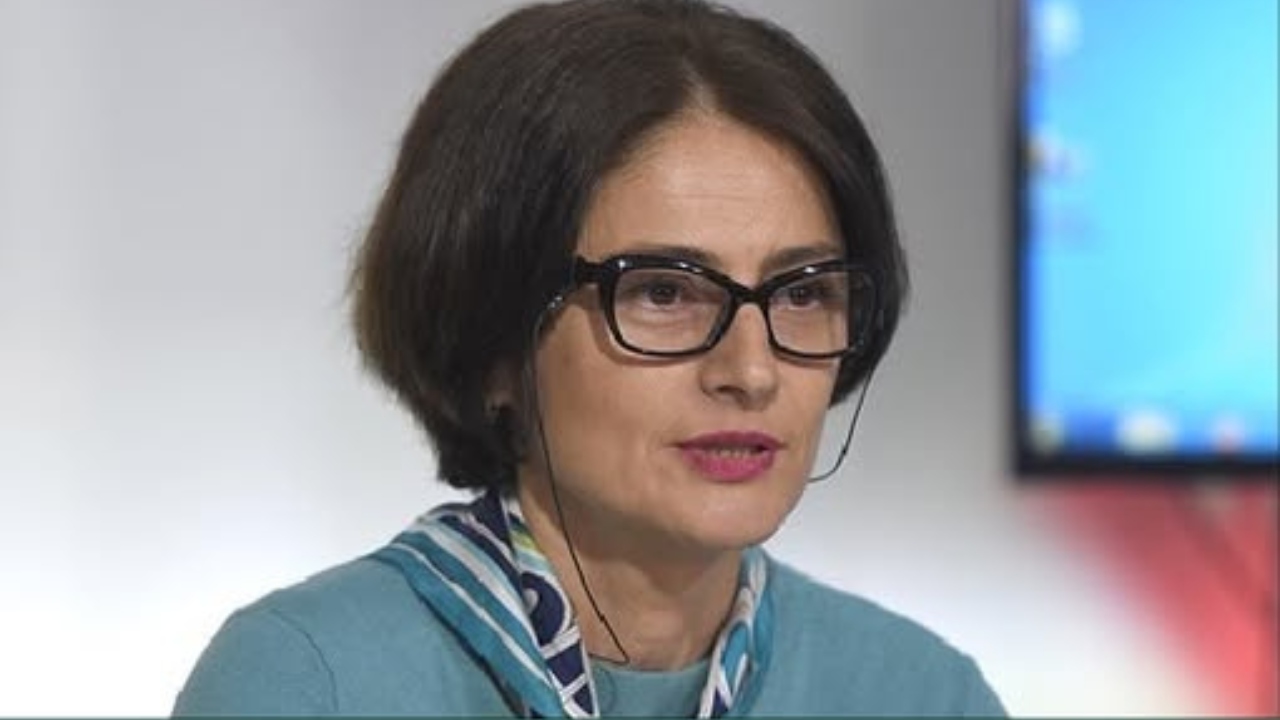
On November 3, 2025, the police arrested Ninia Kakabadze, a journalist for the Media Platform “Media Checker” of the Georgian Charter of Journalistic Ethics. That day, the journalist was at the rally with a press identification badge; she was performing her professional duties. Ninia Kakabadze was arrested while returning home. She was taken to the building of the Ministry of Internal Affairs in Tbilisi. The journalist recounts that for a long time, she was not allowed to call her minor child. The journalist was released a few hours after the arrest. Ninia Kakabadze is accused of artificially blocking the road. The Tbilisi City Court started deliberation on her case on November 4, but postponed the hearing until November 12.
Since October 19, 2025, after the “Georgian Dream” parliament adopted another set of repressive changes through an accelerated procedure, 11 media representatives have been arrested for participating in, and in some cases covering, the ongoing protest on Rustaveli Avenue in Tbilisi. Administrative imprisonment was applied to most of them.
The Georgian Charter of Journalistic Ethics considers the arrest of Ninia Kakabadze and other journalists while performing their professional duties as an attempt to pressure independent media and suppress critical voices. The Charter demands the immediate cessation of administrative proceedings against its media platform “Media Checker’s” journalist, Ninia Kakabadze, and the annulment of the drawn-up administrative offense protocol.
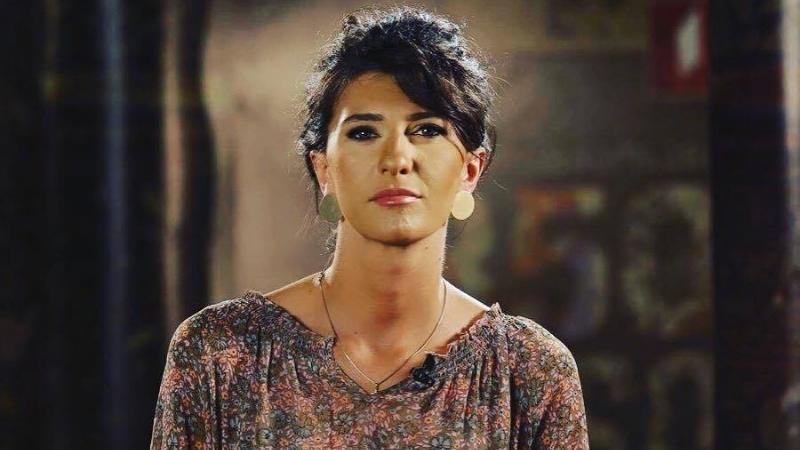
On November 2, 2025, Tea Gabadadze, a member of the supervisory board of the state corporation “Sakrusenergo” and a relative of a businessman close to “Georgian Dream,” threatened journalist Vika Bukia, the host of “TV Pirveli’s” author’s program, with physical violence on social media. Gabadadze’s threat followed a photo posted by Vika Bukia on social media with a sarcastic caption, featuring members of “Georgian Dream” and their supporters, including Gabadadze. “I will cut your fingers with secateurs,” Gabadadze wrote to the journalist, and subsequently repeated the threat of physical violence against the journalist multiple times in the comments.
It should be noted that this is not the first time Gabadadze has publicly threatened a journalist. On June 7, 2025, “TV Pirveli” journalists Nodar Meladze and Tea Dolenjashvili also became the targets of her threats. At that time, her threats followed a story prepared by the journalists: “Nodar Meladze, I will rip your head off (in the full sense of the word) and take Tamta Dolenjashvili with it,” Tea Gabadadze wrote.
On October 22, Mzia Amaghlobeli, the founder of Batumelebi and Netgazeti, who has been imprisoned for more than nine months, received the European Union’s highest human rights honor, the Sakharov Prize. This recognition of the journalist was followed by yet another attempt by pro-government television stations to discredit her.
Imedi TV published a series of propaganda-style social media posts about Mzia Amaghlobeli’s receipt of the Sakharov Prize. Among them were posts highlighting the Prime Minister from the Georgian Dream party referring to the journalist as a “foreign agent.”
Rustavi 2 published photos of former Georgian President Mikheil Saakashvili together with Mzia Amaghlobeli and included a quote from Saakashvili about the journalist in the accompanying text – an apparent attempt to associate Amaghlobeli and her work with a political party.
Alongside Mzia Amaghlobeli, the Sakharov Prize was also awarded to imprisoned Belarusian journalist Andrzej Poczobut. The Sakharov Prize honors individuals, groups, or organizations that have made an outstanding contribution to the defense of freedom of expression.

On October 25, the Speaker of Parliament, Shalva Papuashvili, once again tried to discredit Netgazeti. In a post published on his social media account, Shalva Papuashvili referred to Netgazeti as “a propaganda media outlet supporting terrorists.”
Papuashvili attached to his post a screenshot of a Netgazeti article in which the outlet referred to Zviad Kvaratskhelia, who was detained during a pro-European rally, as a “prisoner of conscience.” It was precisely this term that angered the Speaker of Parliament from the Georgian Dream party. Critical media outlets, including Netgazeti, often use the term “prisoner of conscience” when reporting on those detained during pro-European demonstrations.
Shalva Papuashvili frequently attempts to discredit critical media outlets, including the online platform Netgazeti, through his social media posts.
On October 31, Georgian Dream representative from Tbilisi City Council, Otar Chrdileli, verbally abused journalists from TV companies “Formula” and “Pirveli”.
Otar Chrdileli told the journalists that they did not leave a “normal impression” mentally. The journalists asked Chrdileli questions about those detained during pro-European protests. The Georgian Dream representative also called critical TV channels “propagandists”.
On October 25, Kakha Melikidze, the director of the on-air equipment and technology group at the Georgian Public Broadcaster, wrote on social media that he had received another warning from the channel and would be fined 30% of his November salary.
Melikidze noted that the reason for this was an interview he gave to the international publication Internazionale. In the interview, he spoke about the suspension of Georgia’s EU accession talks by Georgian Dream’s Prime Minister Irakli Kobakhidze and the developments surrounding Channel One.
“I received a second warning, and it will probably be over soon, and I will be fired from the Public Broadcaster,” Melikidze wrote on Facebook.
The Public Broadcaster first imposed disciplinary sanctions on Kakha Melikidze in April, along with other journalists critical of the channel. At that time, the channel’s management considered the employees’ actions to be “calling into question the broadcaster’s editorial independence and impartiality through statements disseminated in public space and, as a result, causing reputational damage to the employer.”
On October 24, 2025, the founder and director of TV Formula, Giorgi Liponava, was arrested for participating in a protest. He was sentenced to three days of administrative detention.
Giorgi Liponava, along with other detained citizens, including media representatives, is accused of blocking the road.
The Georgian Dream party has fast-tracked legislative amendments that significantly restrict freedom of assembly and expression. According to the amendments, administrative detention of up to 15 days, without the option of a fine, is imposed for wearing a mask at a rally, possessing tear gas, or blocking the road. In addition, judges will no longer have the right to impose fines as an administrative penalty in cases of administrative offenses.
The detention of journalists by the Georgian Dream party is a direct attack on freedom of the media and expression. “Under such conditions, the activities of independent media face serious threats, which significantly limits the right to information in a democratic society,” the Media Advocacy Coalition said in a statement.
On October 24, 2025, Zviad Kvaratskhelia, a writer, publisher, and editor-in-chief of Intellect, was arrested for participating in a protest. The court sentenced him to three days of administrative detention.
Zviad Kvaratskhelia, along with other detained citizens, including media representatives, is accused of blocking a road.
The Georgian Dream party has expedited legislative amendments that significantly restrict freedom of assembly and expression. According to the amendments, administrative detention of up to 15 days, without the option of a fine, is imposed for wearing a mask at a rally, possessing tear gas, or blocking a road. In addition, judges will no longer have the right to impose fines as an administrative penalty in cases of administrative offenses.
“The arrest of journalists by Georgian Dream is a direct attack on freedom of the media and expression. Under such conditions, the activities of independent media face serious threats, which significantly restricts the right of a democratic society to be informed,” the Media Advocacy Coalition said in a statement.
On October 25, 2025, TV company “Formula’s” cameraman Nika Pataraia was detained. The court sentenced Pataraia to 4 days of administrative detention for blocking the road.
A total of 7 journalists/cameramen have been detained for blocking the road, including 4 representatives of TV company “Formula.”
The new legislative changes adopted by “Georgian Dream” significantly restrict freedom of assembly and expression. Citizens and activists are also being arrested for participating in the pro-European protest.
On October 24, Publika journalist Basti Mgaloblishvili was arrested and released a few hours later.
According to Publika, Mgaloblishvili was told that he had been “mistaken for someone else” and was then released.
“They stopped a taxi near my house, dragged me out of the car like a terrorist. Two of them weren’t in uniform. Only the one in the car waiting for me was wearing one. They snatched my phone and locked me inside the vehicle. At the same time, they kept saying I wasn’t under arrest… They knew exactly who I was — this so-called ‘special operation’ was meant to intimidate me and pressure independent media,” Mgaloblishvili said after his release.
Similarly, several other journalists were arrested and sentenced to prison during protest demonstrations — including Formula TV reporters Vakho Sanaia, Keta Tsitskishvili, and Tsira Zhvania, as well as Georgian Public Broadcaster board member Lika Basialia-Shavgulidze and journalist Afgan Sadigov.