On May 30, 2025, a meeting of the Public Broadcaster’s Board of Trustees was held. The board made amendments to the regulations document of the Public Broadcaster’s Board of Trustees.
According to the changes, attendance at public meetings of the Public Broadcaster’s Board of Trustees will now only be possible online. Anyone wishing to attend must send a request via email no later than two days before the meeting, following the publication of the meeting agenda. The amendments also define the procedures for attending and participating in the meeting process. These changes will come into effect on June 1, 2025.
Under the previous version of the Public Broadcaster’s Board of Trustees regulations, any interested person could attend the public meetings in person with prior notice.
On May 31, 2025, the editor-in-chief of the news agency “April,” Khatia Ghoghobersidze, published a post on Facebook stating that she had been fined 5,000 GEL for “blocking the road” while performing her professional duties.
According to the journalist, she was contacted by the Ministry of Internal Affairs on April 4 and was informed about the imposed fine. After Khatia Ghoghobersidze explained to the police that she was engaged in journalistic work during a march and even sent them the material she had prepared about the event, the police requested time to investigate the matter. However, despite her explanations and the submitted evidence, she was issued a formal fine notice.
Khatia Ghoghobersidze plans to take legal action against the Ministry of Internal Affairs. According to publicly available sources, since November 28, 2024, around 35 administrative fines have been issued. Most of these cases are still under review, both by the Ministry and the courts. So far, two journalists have been found guilty by the court and were fined administratively.
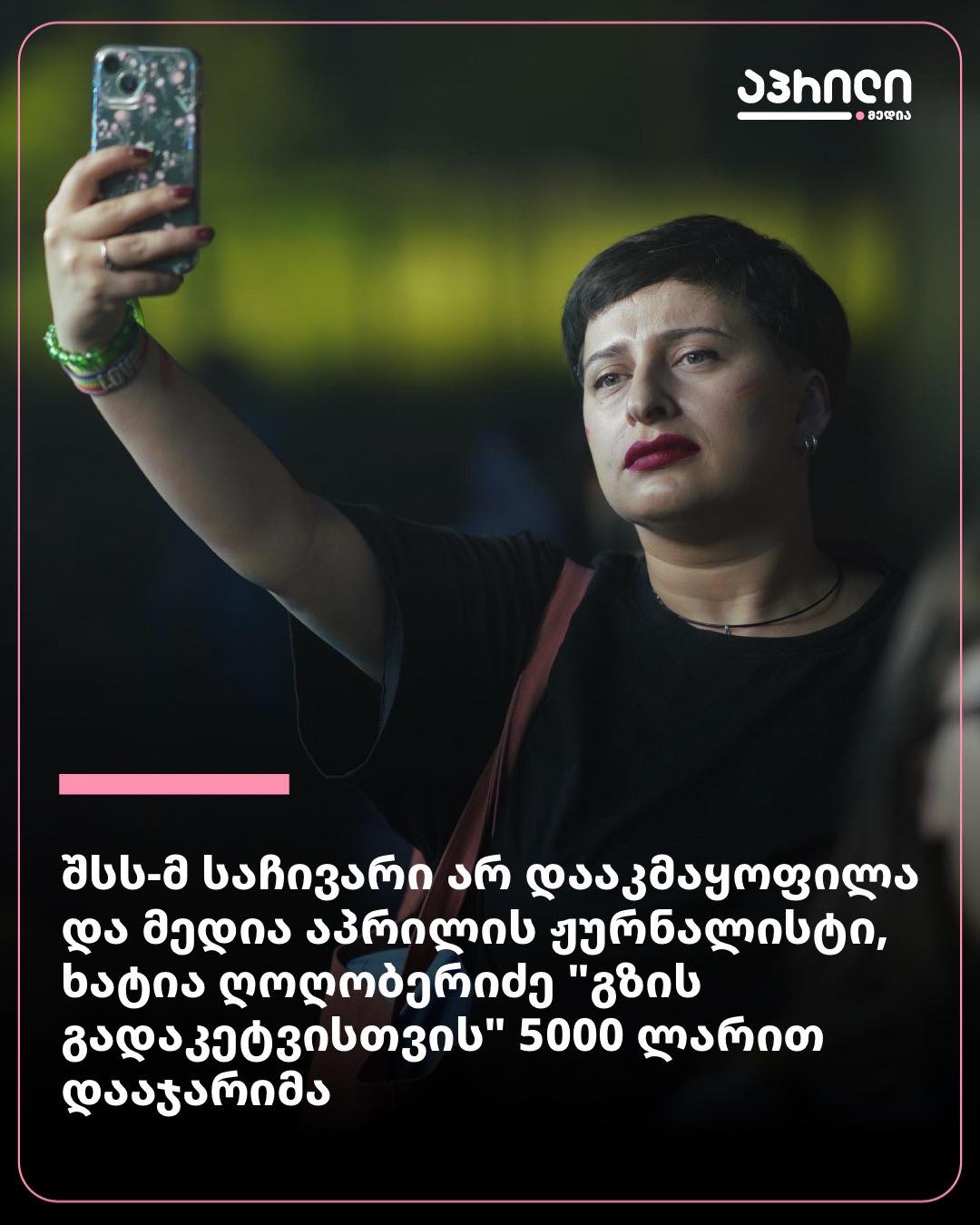
On May 31, 2025, Khatia Gogoberidze, editor-in-chief of the news agency April, posted on the social media platform Facebook that she had been fined 5,000 GEL for “artificially blocking the road” while performing her professional duties.
According to the journalist, the Ministry of Internal Affairs contacted her on April 4 to inform her of the fine. After Gogoberidze explained to the police that she was engaged in journalistic activity during the march and even provided the materials she had prepared about the event, the police requested time to review the matter. Despite her explanations and the evidence submitted, the journalist was still issued a formal notice of the fine.
Khatia Gogoberidze plans to pursue legal action against the Ministry of Internal Affairs.
On May 20, 2025 British journalist Will Neal has been denied entry into Georgia, where he has lived since 2022.
Will Neal is freelance journalist. On March 31 of this year, Neal published an investigatigation about Russian oligarch Roman Abramovich’s UK-registered companies and their connections to Bidzina Ivanishvili, the founder of the Georgian Dream party.
The expulsion follows a hate campaign led by pro-government politicians and media outlets in response to Neal’s investigation into Georgian circles of power, as press freedom continues to deteriorate in the country.
The international organization Reporters Without Borders has issued a article regarding the journalist being denied entry at the border, saying: “The expulsion follows a hate campaign led by pro-government politicians and media outlets in response to Neal’s investigation into Georgian circles of power, as press freedom continues to deteriorate in the country.“
This is not the first time journalists have been denied entry to Georgia.
On May 22, 2025, a court hearing for politician Zurab “Girchi” Japaridze was held at Tbilisi City Court. The case has drawn significant public attention, and with it, strong interest from the media. Nevertheless, correspondents who arrived to cover the hearing and were carrying photo or video cameras were not allowed inside the court building. According to the journalists, the rules for entering the building had been changed without any prior notice.
Security personnel at the Tbilisi City Court did not provide an explanation for why the journalists were denied entry. Instead, they referred media representatives to the court’s press office, which did not respond to phone calls.
The issue of media representatives being denied access to court hearings and other public institutions appears to be becoming a recurring trend.
According to the online outlet Publika, media representatives carrying photo and/or video cameras are still being denied entry to the Tbilisi City Court building.
Under the Law of Georgia on General Court and previous practice, journalists without a judge’s permission to record court sessions were still allowed to film freely in the hallways of the court building.
However, on May 22, 2025, when reporters arrived to cover the trial of politician Zurab “Girchi” Japaridze, they found that this practice had changed and were denied entry. The Tbilisi City Court administration has not explained the reason for this change—either beforehand or afterward.
On May 23, 2025, “Publika” journalist Mariam Kavshbaia was fined 5,000 GEL by Judge Zviad Tsekvava.
The police issued an administrative offense report against Mariam Kavshbaia on February 3 of this year. The Ministry of Internal Affairs accused the journalist of illegally blocking the road while carrying out her professional duties.
Mariam Kavshbaia presented evidence in the court — including photos she had taken that day, as well as her publications posted on “Publika’s” Facebook page. Additionally, video footage submitted by the Ministry of Internal Affairs itself showed the journalist working during the protest. Nevertheless, the court upheld the fine and ordered the journalist to pay 5,000 GEL.
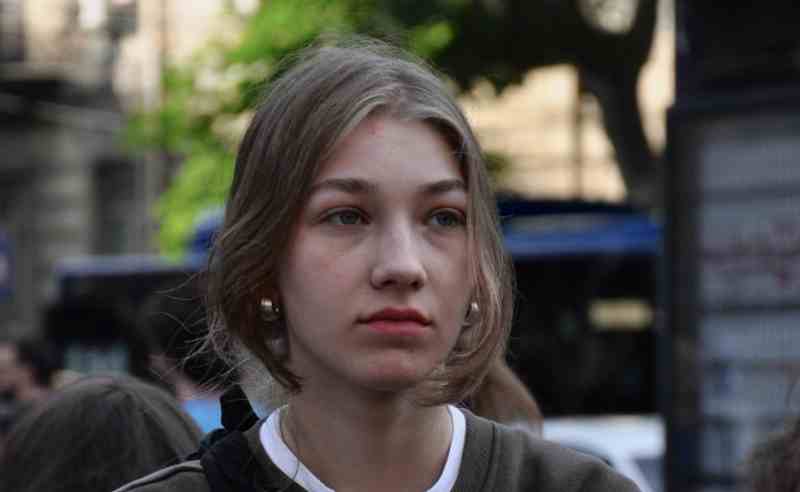
Mariami Kavshbaya, a journalist for the online media outlet “Publika,” was fined twice, totaling 10,000 lari, for “artificially blocking the road.” The administrative offense report against her was issued by the police on February 3, 2025. The Ministry of Internal Affairs accused her of “artificially blocking the road” while performing her professional duties on that day. Kavshbaya presented evidence to the court, including photos taken on that day and materials published on Publika’s Facebook page. In addition, she informed CMIS that even the video provided by the Ministry shows that she was working at the time of the fine. Despite this, the court upheld the fine and ordered her to pay 5,000 lari, which she did. The second fine was imposed for “blocking the road” during a protest on March 14. Kavshbaya appealed this fine, but the court has not yet scheduled a hearing.
On May 14, 2025, a “yellow level” security alert was declared at the Georgian Parliament building, resulting in restricted access for most media outlets. Only accredited television broadcasters were permitted to enter, and even they were limited to no more than two crews per outlet.
The restrictions were introduced on the same day when the Speaker of Parliament Shalva Papuashvili was scheduled to present his annual report and outline the strategic plan for the coming year.
This measure was implemented under the Speaker’s directive (Order No. N1/259/23) issued on September 4, 2023, titled “On the Approval of Security Rules at the Palace of the Parliament of Georgia.” According to the statement, the purpose of the “yellow level” alert was to “ensure a safe and secure working environment at the Parliament.”Since the issuance of this order, non-accredited media have faced repeated restrictions on their ability to operate within the Parliament.
On May 7, 2025, a judges’ conference was held in Tbilisi, where, apart from the Public Broadcaster’s “First Channel,” no media representatives were allowed access. According to TV Pirveli, journalist Mariam Gaprindashvili and her cameraman were even prevented from entering the courtyard.
Mariam Gaprindashvili stated that journalists were not given the opportunity to ask judges any questions, as most of the judges were accompanied by security and avoided the main entrance—entering the building instead through the basement or the kitchen area.
Judges, like Georgian Dream, do not allow independent media to attend public meetings.

